Key Takeaway
Air disc brakes vs drum brakes comes down to duty cycle: air disc brakes offer superior fade resistance and faster friction service, while modern S-cam drums remain federally compliant and outperform discs in abrasive vocational environments. A NHTSA study found a 20% stopping-distance improvement for all-disc over all-S-cam, but that predates current reduced-stopping-distance drum equipment. Condition matters more than brake type – a maintained drum brake outstops a neglected disc every time.
Air disc brakes give you better fade resistance, more consistent performance on repeated stops, and simpler friction service at the wheel end. Modern reduced-stopping-distance drum brakes still meet federal requirements, still stop a loaded truck, and still make operational sense in abrasive vocational work and cost-driven trailer specs. Neither one is obsolete. The idea that drums are finished does not survive contact with a job site. The right answer depends on what the truck actually does every day.
You are probably here for one of three reasons: you are specifying a new tractor or trailer, you are comparing two used units, or someone told you a drum-to-disc conversion is worth the money. Here is the decision that matters, and the parts of it most comparison articles get wrong.
Air Disc Brakes vs Drum Brakes: What Is Actually Different
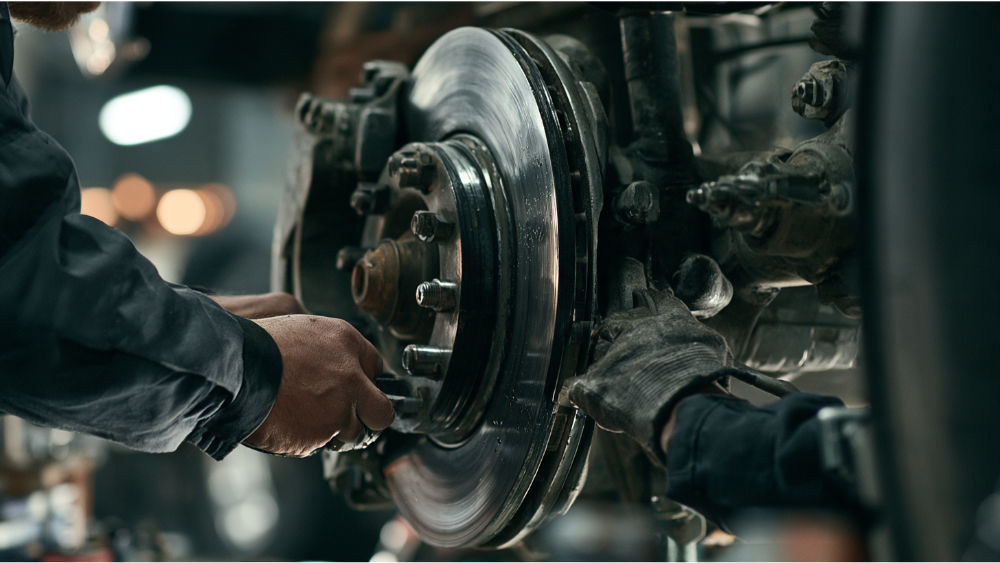
Start with the terminology, because it trips up a lot of equipment conversations. “Air” describes how the force gets to the wheel end. “Disc” and “drum” describe the foundation brake that does the stopping. When you push the brake pedal, air pressure travels to a chamber at each wheel, and the foundation brake converts it into braking force. A truck with air disc brakes and a truck with S-cam drums are both air-braked vehicles. This is not an air-versus-hydraulic comparison. Both operate off the same air supply.
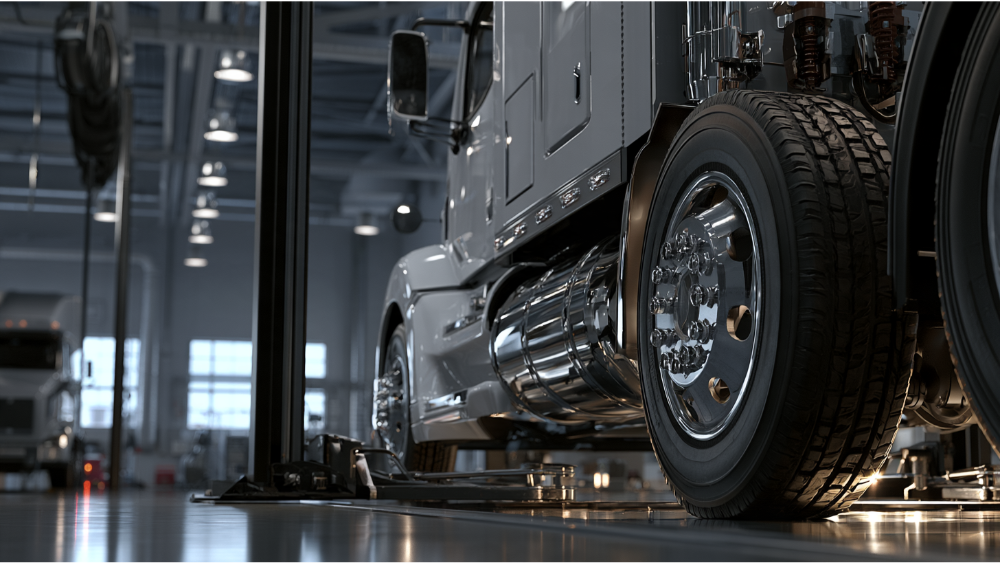
An air disc brake uses a brake chamber to drive an internal caliper mechanism that clamps brake pads against a rotor. Friction material is pressed against the rotor faces from both sides, as opposed to shoes expanding outward from the inside. The adjustment mechanism lives inside the caliper, so there is no external slack adjuster to set or measure. Fewer moving parts at the wheel end, and less un-sprung weight.
An S-cam drum brake uses a brake chamber, pushrod, and slack adjuster to rotate an S-cam, which forces curved brake shoes outward against the inside of a rotating drum. Backing plates and the drum itself enclose the friction package. The shoe geometry is self-energizing, meaning rotation helps pull the shoe into the drum and multiplies applied force. The design dates to 1902 and it has survived because it works. Modern versions pair it with an automatic slack adjuster, which is the component that has to be inspected, lubricated, and diagnosed when stroke goes long.
Air Disc Brakes vs. Drum Brakes at a Glance
Every row below comes back to the same thing: hours off the road and exposure at a roadside inspection.
| Factor | Air Disc | S-Cam Drum |
|---|---|---|
| Repeated-stop consistency | Holds performance better | Degrades as heat builds |
| Fade resistance | Stronger | Weaker under sustained use |
| Routine friction service | Pad access without pulling the drum | Drum, shoes, and hardware come apart |
| Adjustment | Internal, self-adjusting | External automatic slack adjuster |
| Wear inspection at PM | Pad thickness visible | Requires more disassembly or measurement |
| Abrasive environments | Exposed components | Enclosed, shields friction from debris |
| Wet or salted conditions | Rotor corrosion risk from road salt | Less surface exposure |
| Un-sprung weight | Lighter at the wheel end | Heavier |
| Initial equipment cost | Higher | Lower |
| Rotor vs. drum replacement | Can involve hub, bearings, seal | Well-understood, widely stocked |
| Best fit | Grades, stop-and-go, high-utilization linehaul | Vocational, abrasive duty, cost-sensitive trailer pools |
Which Brake Stops a Loaded Truck Better?
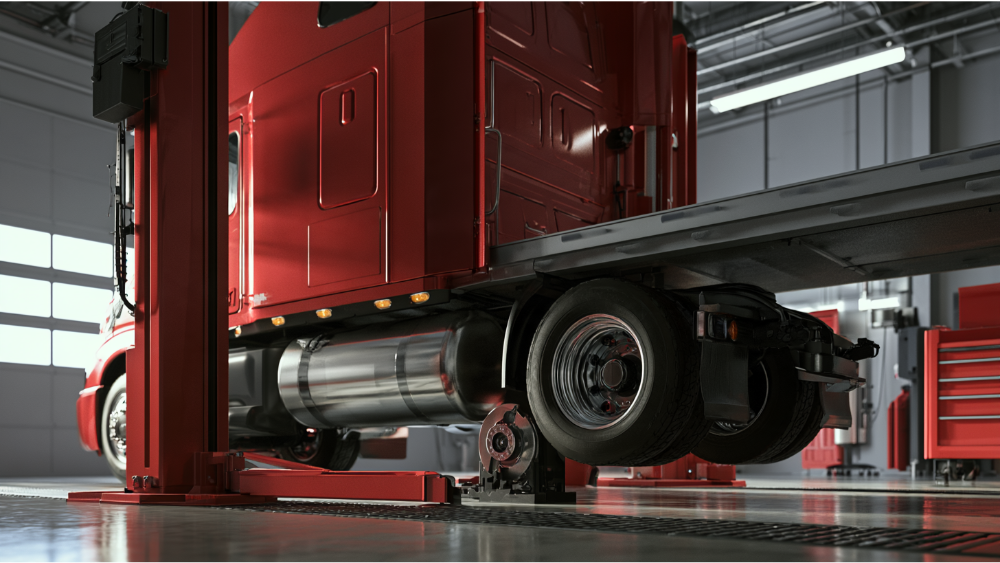
Both designs slow a loaded combination inside the federal limit when they are in spec. In cold, normal stops within available tire traction, a properly maintained reduced-stopping-distance drum braking system performs close to air discs. On flat ground at legal speed the difference is small. The gap opens at higher speeds and as application pressure and brake temperature climb. That is the honest version.
FMVSS No. 121 is a new-vehicle performance and equipment standard for air-braked trucks, buses, and trailers. It sets stopping-distance, air-system, ABS, and automatic-adjustment requirements. It does not mandate disc or drum. From 60 mph, the loaded service-brake limit is 250 feet for two-axle tractors, three-axle tractors at 70,000 pounds GVWR or less, and four-or-more-axle tractors at 85,000 pounds GVWR or less, tested with an unbraked control trailer. Heavier tractor categories and loaded single-unit trucks fall under a 310-foot column. Unloaded truck tractors in the bobtail condition are held to 235 feet. Both foundation-brake types can be engineered to meet these.
Now the claim you will see repeated everywhere. A NHTSA study comparing brake configurations on two Class 8 tractors found a 20% stopping-distance improvement at GVWR and 16% lightly loaded for all-disc versus standard all-S-cam. That study used 1991 and 1996 tractors. It predates current reduced-stopping-distance drum equipment entirely. A 2026 safety-research review specifically warns that the widely quoted disc-braking advantages came from testing conducted before modern FMVSS No. 121 requirements, so the real gap today is likely smaller. Treat “30% shorter” as marketing, not spec.
Actual stopping distance on your truck is governed by load and axle-weight distribution, tire condition and road friction, ABS function, brake balance across the tractor and trailer, friction materials, air-system condition, brake temperature, and adjustment. The badge on the wheel end is one input among many.
Brake Fade: Where Air Disc Brakes Pull Ahead
This is the clearest real difference between the two systems, and it is worth paying for in the right application.
A drum encloses the braking surfaces and traps heat. As it heats, the drum expands outward, away from the shoes, and drums lose effectiveness during prolonged use. A rotor sits in open airflow, moves hot air away from the friction package, and gets better heat dissipation, so repeated high-energy applications do not degrade it the same way. It is a simple fact of geometry. Air discs are superior here, and the benefits show up fastest wherever overheating is the limiting factor.
FMCSA motorcoach guidance reproduces a manufacturer-conducted repeated-stop test that illustrates the mechanism well. Initial 60-mph stops ran roughly 200 feet for discs and 270 feet for drums. After 15 applications, the drum distance stretched to about 450 feet while the disc distance held near 200 feet. That is a specific test on specific equipment, not a promise for your truck, your load, or your road surface. It is still the cleanest demonstration of how differently the two designs handle accumulated heat. If you want the deeper version, see our breakdown of commercial truck brake fade causes and prevention.
One thing no foundation brake fixes: descent technique. Engine brake and retarder discipline still carries the load on a long grade. Air discs give you more margin. They do not give you permission to ride the service brakes down a mountain.
Which System Costs You More Downtime? Brake Components and Service Reality
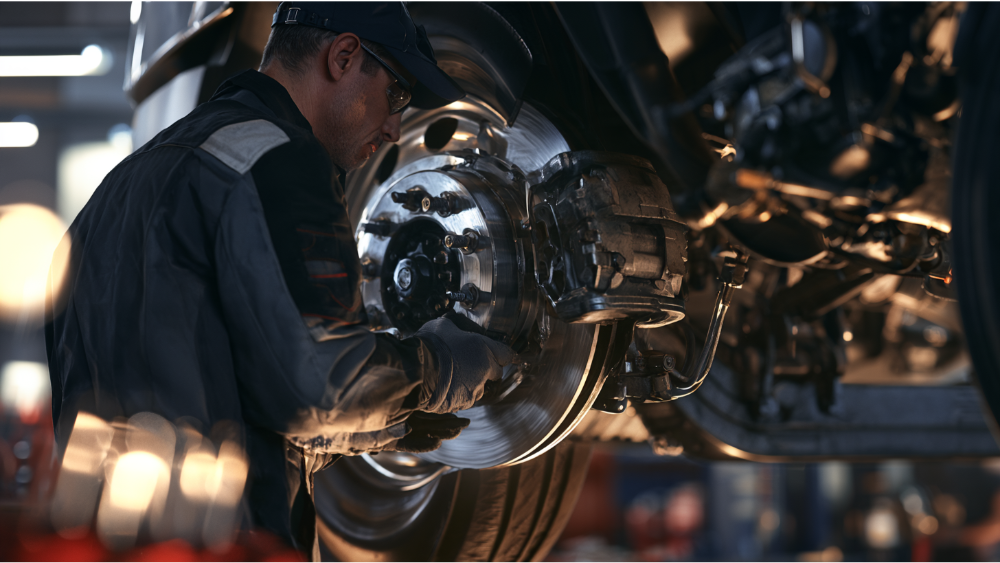
Forget theory. The question is labor hours and how fast the unit gets road-ready.
What Technicians Actually Inspect on Air Disc Brakes
Pad thickness and any tapered or uneven wear pattern. Rotor thickness and cracking. Caliper movement. Tappets, boots, slide pins, and seals. Chamber mounting, plus any sign of water intrusion or corrosion. Friction service is usually faster and more efficient because nobody has to pull a drum and dismantle shoe hardware just to change pads.
Air disc brakes are not maintenance-free. A frozen or restricted caliper, a torn boot, water sitting where it should not be, pad taper, or a cracked rotor all end up putting a truck on the hoist. And a rotor job is not a pad job. On some designs the caliper carrier, wheel hub, bearings, and seal have to come apart to pull the rotor. Newer designs reduce that work, which is exactly why the service procedure for that specific axle and wheel end governs the estimate, not a general rule. Our guide on how to inspect air disc brakes walks the full sequence.
What Technicians Actually Inspect on S-Cam Drum Brakes
Lining and drum condition. Chamber stroke measurement. Automatic slack adjuster operation. S-cam, rollers, bushings, springs, and anchor pins. Lubrication at the slack adjuster and cam. Contamination, heat damage, and abnormal wear patterns.
Take this position seriously: manually readjusting an automatic slack adjuster is not a repair. A wheel end that keeps going out of adjustment has a component, installation, wear, or lubrication problem underneath it. Resetting the stroke and sending the truck out is how you buy an out-of-service violation at the next scale. See S-cam drum brake adjustment and overstroke problems for the diagnostic path.
Either system gets the same treatment here: structured diagnostics first, then an itemized written estimate before a single bolt is turned. No upsell, no surprises.
Which Brake Fits Your Duty Cycle?
Match the brake to the work, not to the spec-sheet argument.
Air disc makes sense for:
- Mountain routes and sustained grades where heat is the constraint.
- Urban and regional pickup and delivery with high brake-event frequency.
- High-utilization linehaul where friction-service hours are the expensive part.
- Fleets that want faster wear inspection at every PM service.
Drums remain the practical call for:
- Construction, industrial, and other abrasive vocational service where mud and grit would sit directly on exposed hardware.
- Trailer pools where initial equipment cost drives the purchase decision.
- Operations with a working drum PM program, trained technicians, and parts on the shelf.
- Equipment running where drum parts and expertise are easier to find on the road.
Tractor and trailer can be specified differently, and often are. If you are buying used, the brake type at each axle position matters less than the condition of what is already there and whether the previous owner kept records. One more thing worth saying plainly: a well-maintained drum brake outstops a neglected air disc brake every time. Stopping power comes from condition, not from the badge.
Can You Mix Air Disc Brakes and Drum Brakes?
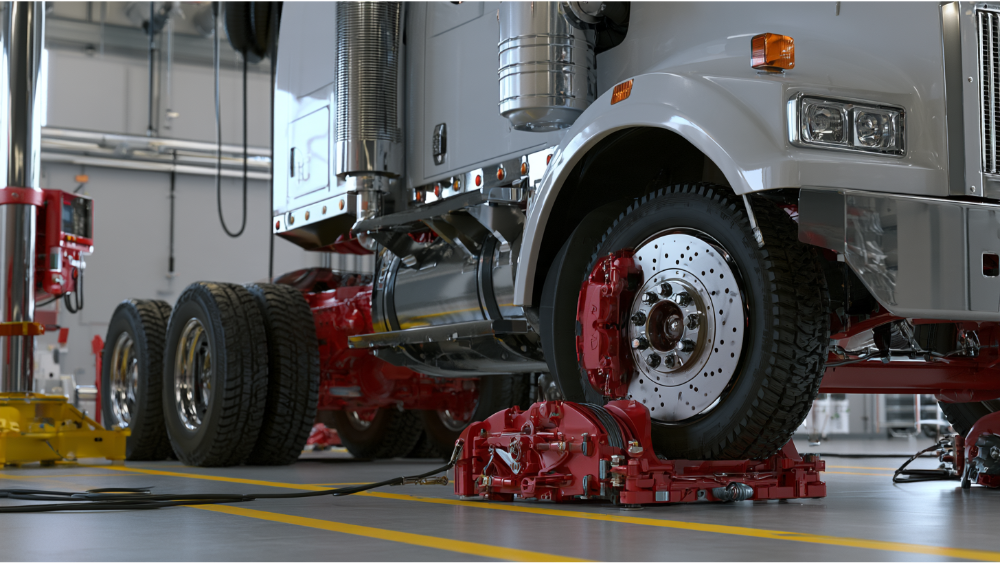
Yes. Air discs on the steer axle with drums on the drives is a factory configuration. A disc-braked tractor pulling a drum-braked trailer is routine freight operation, and properly specified mixed setups meet FMVSS No. 121.
The caution is on conversions. This is an engineered vehicle specification, not a wheel-end parts swap. Brake torque, chamber size, axle rating, ABS and stability-system calibration, wheel clearance, friction selection, and tractor-trailer balance all have to stay inside the vehicle and component manufacturer specs. Verify against the OEM-approved axle, wheel-end, and brake package before anyone orders parts. More detail here: can you convert a heavy-duty truck from drum to air disc brakes.
DOT Brake Limits and Inspection Exposure
Under 49 CFR 393.47, the in-service minimums are:
- Air disc pads, steering and non-steering axles: 1/8 inch (3.2 mm).
- Steering-axle air drum, continuous strip of lining: 3/16 inch (4.8 mm) at the shoe center.
- Steering-axle air drum, two-pad shoe: 1/4 inch (6.4 mm) at the shoe center.
- Non-steering air drum: 1/4 inch (6.4 mm) at the shoe center, or not worn to the wear indicator.
- Drums and rotors: not below the brake manufacturer’s stated limit.
Here is the distinction most comparison articles skip. FMVSS No. 121 governs the vehicle as manufactured. Parts 393 and 396 govern condition, inspection, repair, and maintenance once the truck is working. And a CVSA out-of-service threshold, such as the 1/16-inch figure referenced for air disc pads, is not a maintenance target. Service before the federal minimum, not after it.
Part 396 requires a periodic inspection at least once every 12 months on the tractor, each trailer, and any converter dolly in the combination, with reports generally retained for 14 months. The unannounced Brake Safety Day on April 14, 2026 produced 4,021 inspections, with 574 vehicles (14.3%) restricted from travel for brake violations and 313 meeting the 20% defective brakes criterion. Of 349 performance-based brake tests, 7.45% failed the 43.5% minimum braking efficiency, a small percentage of that sample and still a truck-by-truck problem. Inspectors logged 43 drum or rotor violations, 33 on air disc and nine on S-cam. Those are a very small percentage of the units inspected, and the split tells you nothing about defect rates, because CVSA published no count of how many of each type were inspected. No denominator, no comparison. Use our DOT commercial truck brake inspection checklist and the minimum brake pad and lining thickness reference before your next audit.
Frequently Asked Questions
Why don’t cars use air brakes?
Weight, packaging, and cost. A compressor, dryer, and reservoirs are a lot of hardware to carry on a car that hydraulic brakes already stop fine. Air systems earn their place on heavy vehicles where fail-safe spring brakes and a trailer supply line are required.
What are the disadvantages of air brakes?
Moisture in the system and freeze-up in cold weather. Air dryer and compressor maintenance. Leaks. More brake components to inspect at every PM, and the need for correct adjustment and brake balance across the whole combination.
Why are drum brakes not used anymore?
They are. Modern reduced-stopping-distance S-cam drums are still specified on new equipment, still federally compliant, and still the better fit in abrasive vocational work and cost-sensitive trailer specs.
Do air disc brakes have slack adjusters?
No. The adjustment mechanism is internal to the caliper, so there is no external slack adjuster and chamber stroke is not checked the same way it is on a drum wheel end.
Get the Brakes Inspected Before They Put the Truck Out of Service
Call it in when you see pulling or uneven braking, long or inconsistent application response, an overheated wheel end, uneven pad or lining wear, a wheel end that keeps going out of adjustment, a cracked rotor or drum, air leaks or low-air warnings, an ABS lamp (see ABS warning lights and commercial truck brake diagnostics), or any grinding.
Torpedo Truck Repair was built inside trucking operations, so Truck And Trailer Brake Repair runs the way it should: certified technicians, OEM diagnostic software, an itemized written estimate before work begins, and same-day service when possible. 24/7 emergency road service dispatch is available when the truck is already down.
Call (253) 449-0100 or Request Service Quote. Takes under 60 seconds. No obligation.