Key Takeaway
A diesel engine air filter prevents abrasive dust from destroying turbocharger components and cylinder walls. Replace it when the engine-specific restriction limit is reached (typically 18 to 25 inH₂O depending on platform), when the OEM time cap expires, or when the element or seal is damaged. Dark pleats alone are not a valid reason to replace the filter.
A diesel engine air filter keeps abrasive dust and road grit from entering your turbocharger and cylinders. You replace the engine air filter when the manufacturer’s restriction limit is reached, when the OEM time cap comes due, or when the element or its seal is damaged. Not because the pleats look dark. Dirt entering past a compromised filter grinds piston rings, cylinder walls, and valves, and that damage does not reverse.
Filter minder in the red? Truck going soft under load? Here is how to read restriction correctly, what the real symptoms are, and when the engine air filter is covering for something bigger.
What a diesel engine air filter actually does
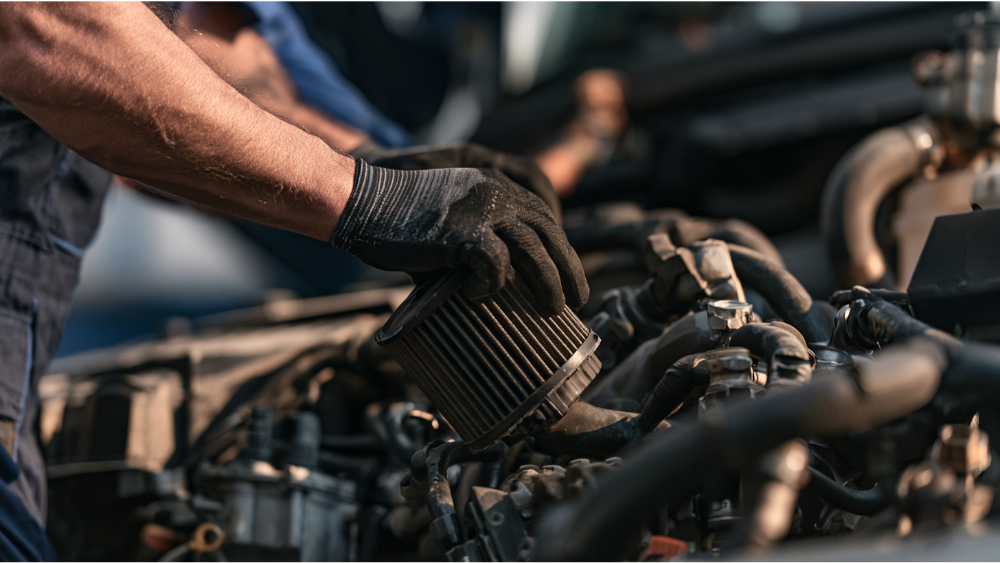
The air path runs inlet and pre-cleaner, housing, element, clean-side duct, turbo inlet, charge air cooler, cylinders. Everything downstream of the element is engineered to stay clean. One pinhole or one bad seal puts abrasive dust into a turbo spinning at six figures of RPM.
The seal matters as much as the media. An element engineered to fit its housing exactly does work no media quality replaces. Deep-pleated elements hold more dirt and keep airflow restriction lower as they load. Media is engineered for a particle range, not for looks. Housings are designed around one element shape and one seal geometry. On diesel pickups the housing sits under the hood, where a loose cover is easy to miss on a walkaround.
Engine air filter vs. DPF, fuel filter, DEF filter, and cabin air filters
Searches for “diesel filter” mix five different parts. They are not interchangeable.
| Filter | Where it sits | What it handles | Failure looks like |
|---|---|---|---|
| Engine air filter | Intake side | Airborne dust and debris | High restriction, low power |
| DPF | Exhaust aftertreatment | Traps particulate matter | Regen trouble, derate |
| Fuel filter | Fuel line | Contaminants and water | Hard start, power loss |
| DEF filter | SCR dosing | DEF contamination | Aftertreatment codes |
| Cabin air filters | HVAC box | Cab air quality | Weak vent airflow |
An air filter warning is not a DPF warning. Treating them as the same thing costs you a day. Oil filters sit on a separate circuit again, and none of these parts substitute for another.
How often should you change engine air filters on a diesel?
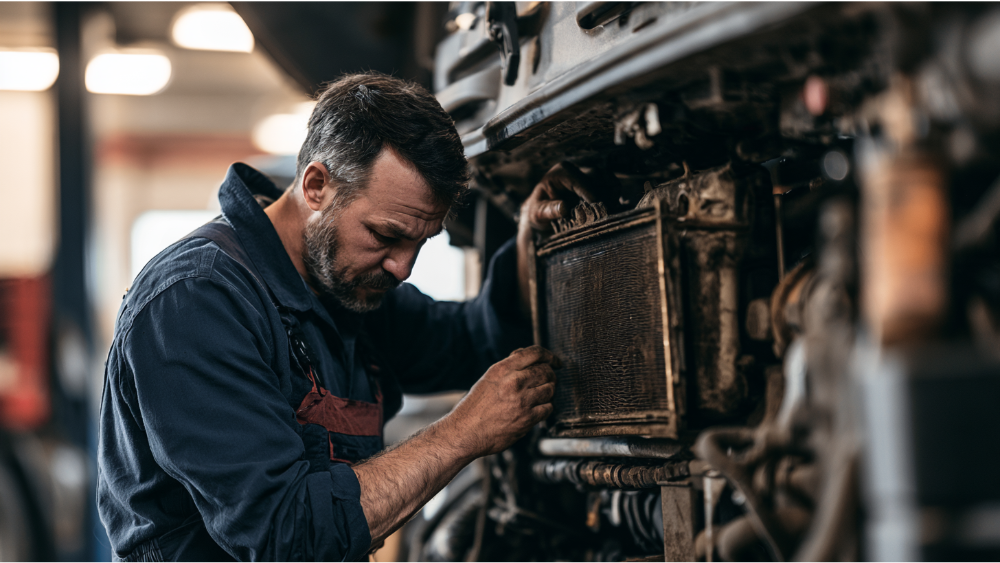
There is no universal mileage, and anyone who quotes you one is guessing. Three things trigger replacement: the restriction limit, the OEM time cap, or damage found during inspection.
Limits vary by engine, not by truck size:
| Platform example | Listed max restriction | Note |
|---|---|---|
| Detroit GHG14/GHG17/GHG21 | 18 inH₂O | Confirm by VIN |
| Cummins (same chassis manual) | 25 inH₂O | Not universal to Cummins |
| Volvo D13 (cited guide) | 20 inH₂O / 5 kPa | Configuration-specific |
| Detroit EPA07/EPA10 | 22 inH₂O / 5.5 kPa | Platform-specific |
One DTNA S2 chassis procedure calls for intake inspection every 6 months if no indicator is fitted, and replacement at 12 months or 25 inH₂O, whichever comes first. The 15,000 to 30,000 mile number repeated to diesel owners online is light-duty vehicle guidance and does not govern Class 6 through 8 PM. Dusty lanes, construction sites, and wildfire smoke shorten the interval. Units working off a gravel lot load elements faster than highway miles do. A clean-looking engine air filter at its limit still goes.
How to read an engine air filter restriction gauge
- The gauge measures vacuum on the clean side, in inches of water, not psi.
- A locking filter minder holds the highest restriction reached under load, so you read it with the engine off.
- Peak restriction happens under load, when the engine pulls the most airflow. An idle check tells you nothing.
- The gauge limit has to match your engine’s spec, not a generic number off a parts counter.
- Rain or snow wetting the element can spike the reading temporarily.
- A suspiciously low reading matters too. The S2 procedure flags 0 to 4 inH₂O after reset as a damaged element, disconnected piping, or a dead indicator.
Resetting the indicator without finding the cause is not a repair.
Signs of a clogged engine air filter: power, fuel economy, and the check engine light
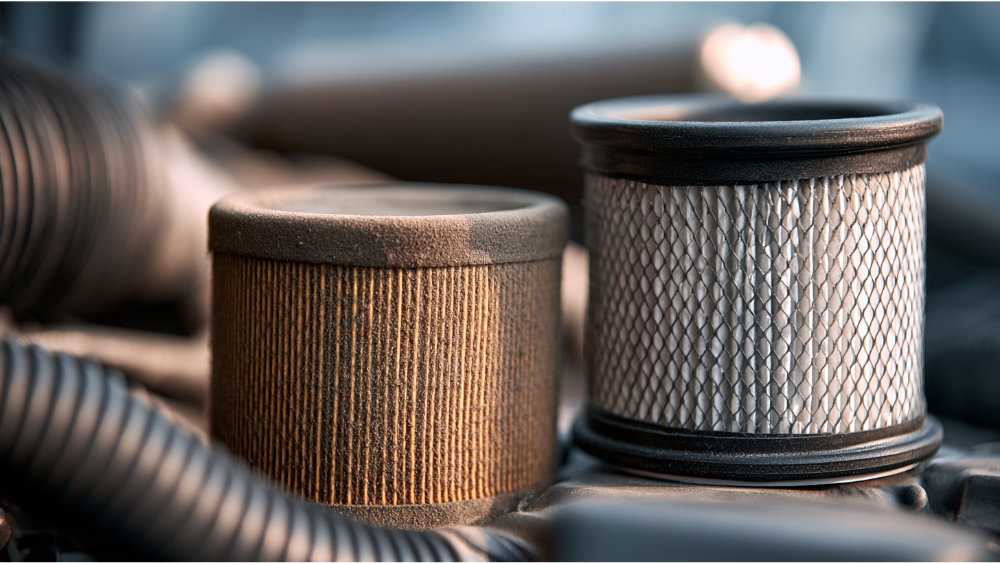
Filter minder at its limit. Soft performance under load. Black smoke pulling a grade. Intake or aftertreatment faults. Rising fuel burn. Smoke alone does not diagnose a filter, and a check engine light can originate anywhere across the intake and aftertreatment side.
On fuel economy, be skeptical of percentage promises. OEM documentation warns that excessive restriction can increase fuel consumption, but a DOE/Oak Ridge study of three modern turbo-diesel vehicles found no measurable fuel economy change on the tested cycles, even though full-power acceleration dropped. Detroit is blunter about the real risk: severe restriction contributes to aftertreatment failure, shorter engine life, and turbocharger oil pull-over into the charge-air system. Engine protection is why you replace on spec.
The diagnostic workflow before anyone sells you parts
- Identify the vehicle, engine, model year, and the exact OEM restriction limit.
- Record the filter minder reading before resetting anything.
- Rule out weather and a blocked inlet or pre-cleaner.
- Open the housing and inspect the cover, its screws and clamps, the element, and every sealing surface.
- Look for dust tracks on the clean side, then inspect boots, ducting, clamps, and the turbo inlet.
- Select the part number by VIN and confirm the element meets the OEM seal design and fit before installation.
- Reset the indicator, then verify the installation under load.
- Keep diagnosing if restriction or the power complaint persists.
You get an itemized estimate before a single bolt is turned. Commonly used parts are stocked in the shop. We do not sell engine air filters off a glance at dirty pleats.
Can you clean a diesel air filter, and the mistakes that cost engines
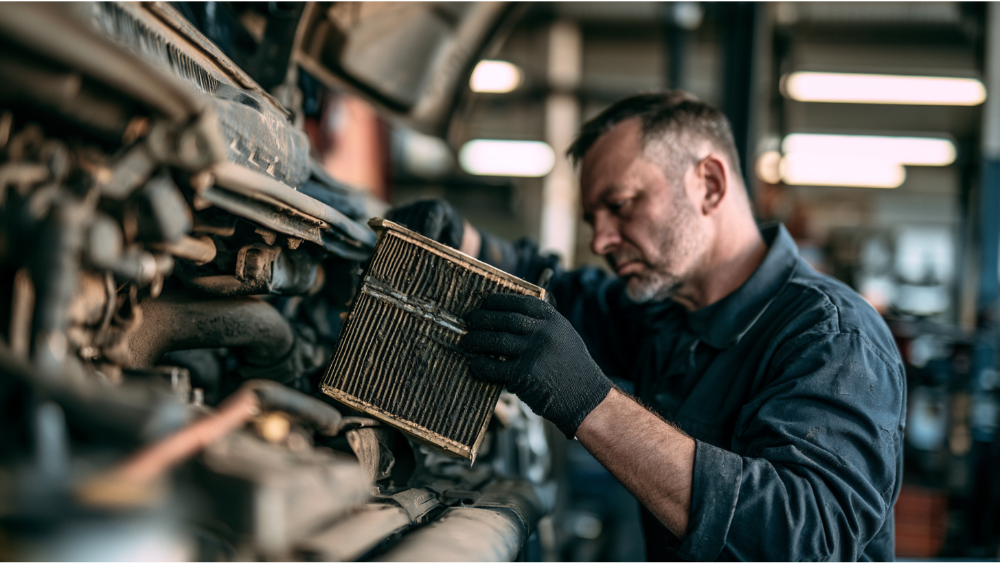
No, unless the procedure is backed by the manufacturer’s published instructions for that exact element. Compressed air and water damage the media, open holes you cannot see, and wreck the sealing surface. Safety elements function as a backup, not as a serviceable part.
Common mistakes: replacing by color, wrong parts or wrong seal design, leaving dirt in the housing, a cover that pops loose under vibration and goes unnoticed, resetting the minder without fixing the cause, ignoring split boots, and reading an air filter warning as a DPF problem.
What fleets should document on every engine air filter service
- Date and unit number
- Restriction reading before reset
- Part number installed
- Reason for replacement: restriction, time cap, or damage
- Intake defects found and corrected
- Reset verification and post-service reading
Trend that by unit and by lane and you will see which vehicle runs the dustiest duty cycle long before it puts you in a derate. That is how our custom PM schedules get built.
Get the restriction diagnosed, not guessed
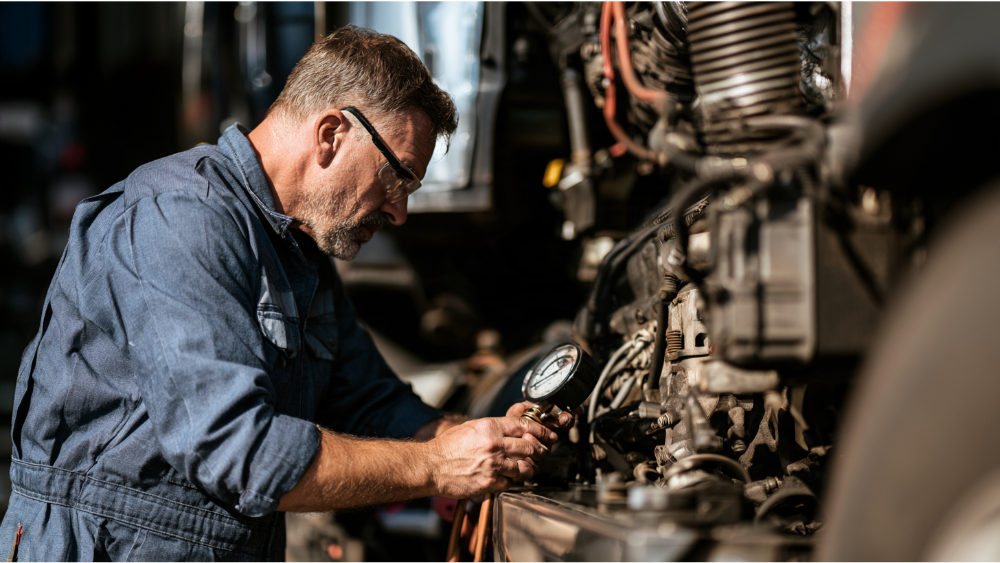
Call us if restriction returns after new engine air filters, clean-side dust shows up, power is still down under load, oil appears in the charge-air system, or the minder will not reset. Certified technicians, OEM diagnostic software, and Class 6 through 8 platforms including Freightliner, Kenworth, Peterbilt, Volvo, Mack, International, and Western Star. Every diagnosis is backed by a structured workflow. Itemized estimate up front, no surprises, same-day service focus when possible. Call (253) 449-0100 or request a service quote.
Frequently Asked Questions
How often should you change engine air filters on a diesel?
At the OEM restriction limit or the OEM time cap, whichever comes first. Light-duty mileage intervals do not govern Class 6 through 8 PM.
Why do diesels have fuel filters as well as air filters?
Separate contamination paths. Air filters stop dust entering the intake. Fuel filters protect injectors and the high-pressure system. Oil filters handle a third path entirely.
Can you clean a heavy-duty truck air filter with compressed air?
No, unless the manufacturer publishes a procedure for that exact element. Compressed air damages the media and the seal in ways a visual check will not catch.
Why is my filter minder still showing restriction after new parts?
Usually a blocked inlet, a wrong or poorly seated element, intake damage, or a faulty indicator. That needs diagnosis, not another filter.