Key Takeaway
Fuel filters for diesel engines remove particles and separate water before contaminated fuel reaches precision injection components operating at pressures up to 35,000 psi on modern engines. Heavy-duty trucks typically run both a primary and secondary filter, with service intervals ranging from 25,000 to 100,000 miles depending on engine, configuration, and duty cycle. A filter that plugs early is a diagnostic signal, not a routine maintenance event.
Diesel fuel filters remove particles and separate water before contaminated fuel reaches the transfer pump, the high pressure pumps, and the injectors. There is no universal filter and no universal replacement interval. The right diesel fuel filter depends on your engine, the filter’s position in the fuel system, the fuel system configuration, and how the truck actually runs.
This is written for owner-operators, fleet managers, and drivers running Class 6 through 8 heavy duty equipment. Our position up front: a fuel filter is a diagnostic checkpoint for the entire fuel system, not just a maintenance part. Treat it that way and you catch problems before they strand a loaded truck.
What Do Diesel Fuel Filters Actually Remove?
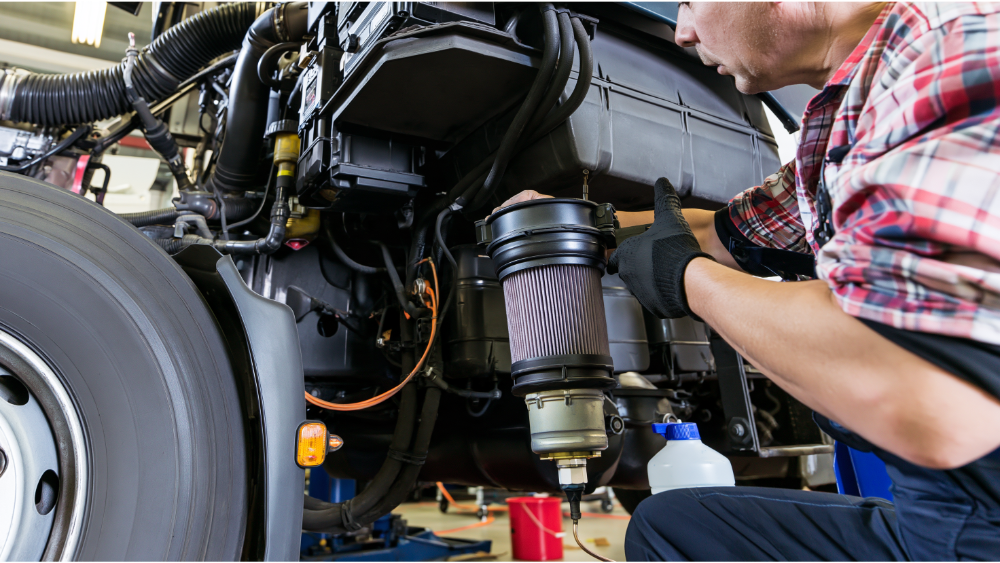
Fuel filters for diesel engines do two jobs. The first is particulate removal: dirt, rust, tank sediment, and other contaminants that circulate through the system. The second is to remove water. Water in diesel fuel causes corrosion, injector deposits, fuel instability, and microbial growth, and it plugs filters. A commonly cited industry figure puts the particle count in an average gallon of diesel in the millions. Whether or not that number holds for your fuel, the point stands: dirty fuel is the normal condition, not the exception.
One clarification worth making because the terms get mixed up: a fuel filter cleans fuel before combustion, and a DPF traps particulate in the exhaust after combustion. Different systems, different problems.
Why Filtration Efficiency Matters More on Modern Engines
A common rail fuel injection system runs at pressures and tolerances that leave no margin for abrasive particles. As one current example, Volvo lists a maximum injection pressure of 35,000 psi on its EPA 2027 D13, with primary-plus-secondary fuel filtration specified. That’s one engine, not a universal number, but it shows where modern hardware sits.
Older diesel engines tolerated coarser filtration. Modern engines do not. The precision components inside the injectors and pumps are the most critical components in the system, and small particles that older systems passed without consequence now score sensitive components. Clean fuel is what keeps high pressure injection systems spraying the way the engine was calibrated to, which protects both power and fuel efficiency.
Run the math on downtime instead of parts. A filter service is hours. Injector replacement or a high pressure pump failure that sends metal downstream is days off the road, plus a fuel system flush and a tow you didn’t budget for. Filtration is the cheapest insurance against costly repairs, and it only works if the correct element is installed and serviced on schedule.
Primary vs. Secondary Fuel Filters: From the Fuel Tank to the Fuel Injectors
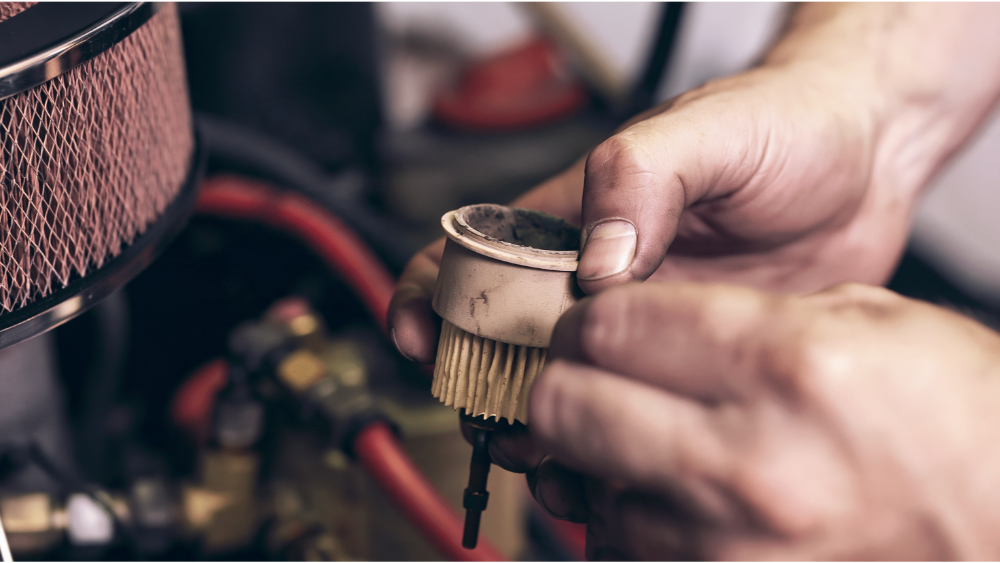
The primary fuel filter sits between the fuel tank and the transfer pump on the suction side, where it works at lower pressure, catches larger particles, and separates water. It is the first line of defense for everything downstream. The secondary filter sits after the transfer pump, just ahead of the fuel injectors, and handles finer particles. Most diesel engines in heavy duty service use both, because one filter cannot balance high fuel flow, water separation, and fine filtration at the same time. Secondary fuel filters provide superior protection exactly where tolerances are tightest.
| Filter stage | Typical position | Main job | Selection concern |
|---|---|---|---|
| Primary / prefilter | Fuel tank to transfer pump (suction side) | Larger contaminants, water separation | Flow capacity, low restriction |
| Secondary / final | After the transfer pump, before the injectors | Finer filtration and particle protection | OEM-rated filtration efficiency |
| Frame-mounted separator | Chassis | Water and bulk contamination management | Configuration-specific service |
Real architecture gets more layered. As one labeled example, Detroit’s operator information describes a three-filter system using a 100-micron prefilter, a 10-micron water separator/coalescer, and a 3 to 5 micron final filter. Versions with two fuel filters combine the coalescer and final filter. That’s one manufacturer’s design, not a template for every truck in the yard.
Fuel Filter Types on Heavy Duty Trucks: Spin-On, Cartridge, In-Line, and Water Separating
- Spin-on: Sealed can that threads onto a base. Common across heavy duty diesel platforms.
- Cartridge: Replaceable element inside a reusable housing. Seals get replaced with the element.
- In-line: Installed in the fuel line between tank and engine, usually as a prefilter that traps larger debris.
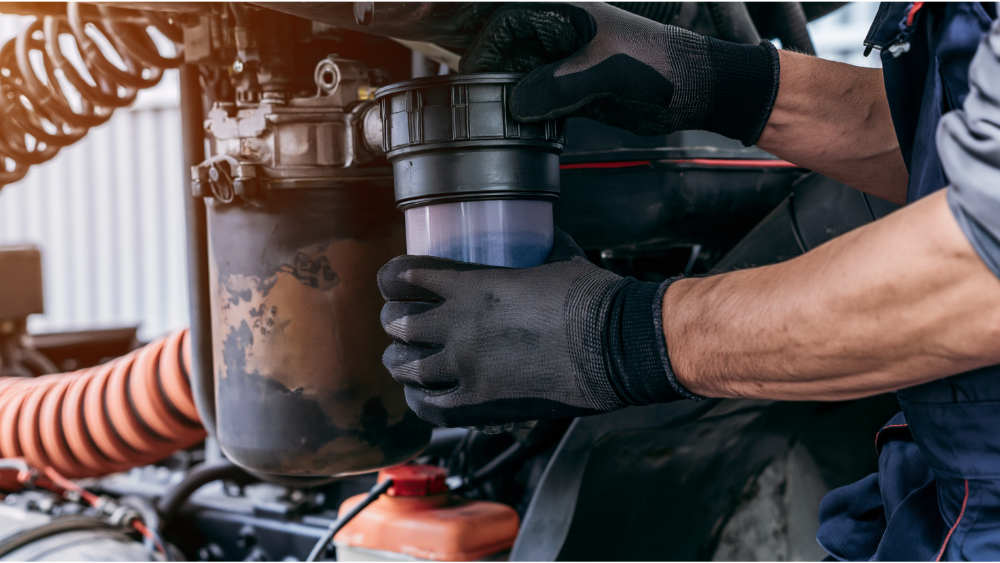
- Water separating filters: Use coalescing media and a collection bowl with a drain to pull water out of suspension.
Housing design, drain valves, water-in-fuel sensors, and fuel heaters are key components of the specification, not accessories. An element that fits the housing but defeats the sensor or heater is the wrong element. Each position calls for media designed specifically for it.
What Micron Rating Does a Diesel Fuel Filter Need?
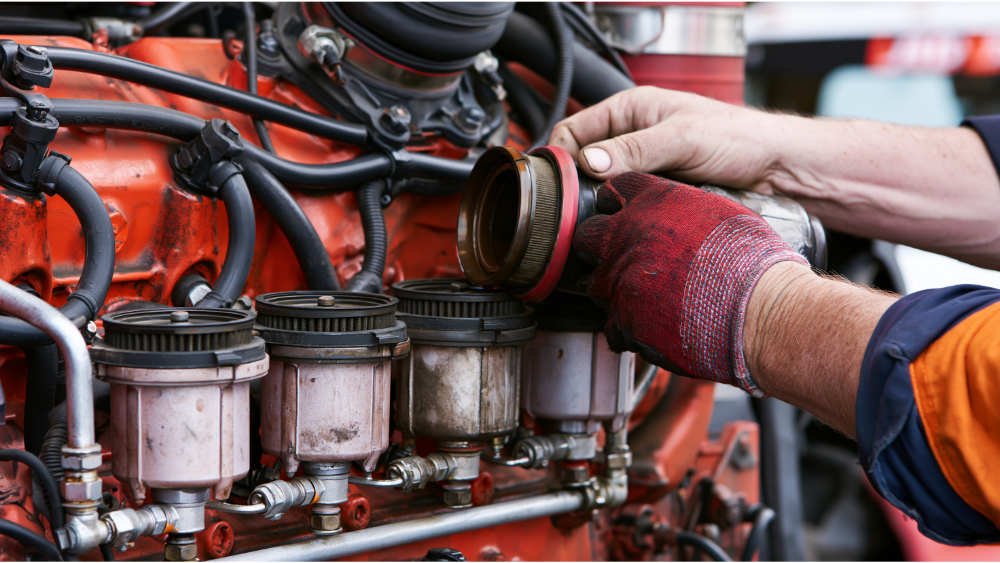
A micron number by itself is incomplete information. It only means something when paired with an efficiency rating and a test basis. Nominal ratings describe an average particle size the media tends to catch. Absolute ratings state a size captured at a defined efficiency. Two filters labeled “5 micron” can perform very differently.
Current filtration guidance puts modern benchmarks at roughly 7 to 25 microns at 99 percent efficiency for primary filtration and 4 to 5 microns absolute at 99.9 percent for secondary. Those are benchmarks, not permission to substitute. ISO 19438:2023 is the current multi-pass standard for particle efficiency, contaminant capacity, and differential pressure at rated flows of 50 to 800 L/h. ISO 16332:2018 covers water-separation comparison testing at 50 to 1,500 L/h. Passing a particle test proves nothing about water separation.
And finer is not automatically better. A too-fine element in the wrong position restricts fuel flow, starves the fuel pump, and plugs early.
How to Choose the Right Fuel Filter for Your Diesel Engine
Match the OEM specification. Not the closest thing on the shelf.
- VIN and engine serial number
- Engine family and model year
- Filter position: primary, secondary, or frame-mounted
- Exact OEM part number or a verified cross-reference
- Rated filtration efficiency, not just a micron figure
- Water-separation requirement for that position
- Flow capacity and pressure-side vs. suction-side design
- Heater, water sensor, drain, and seal compatibility
Hard rule: never select a filter by thread size or outside dimensions alone. We spec and service fuel filtration on Freightliner, Kenworth, Peterbilt, Volvo, Mack, International, and Western Star platforms, and the build data decides the part every time.
How Often Should Fuel Filters Be Changed on a Semi Truck?
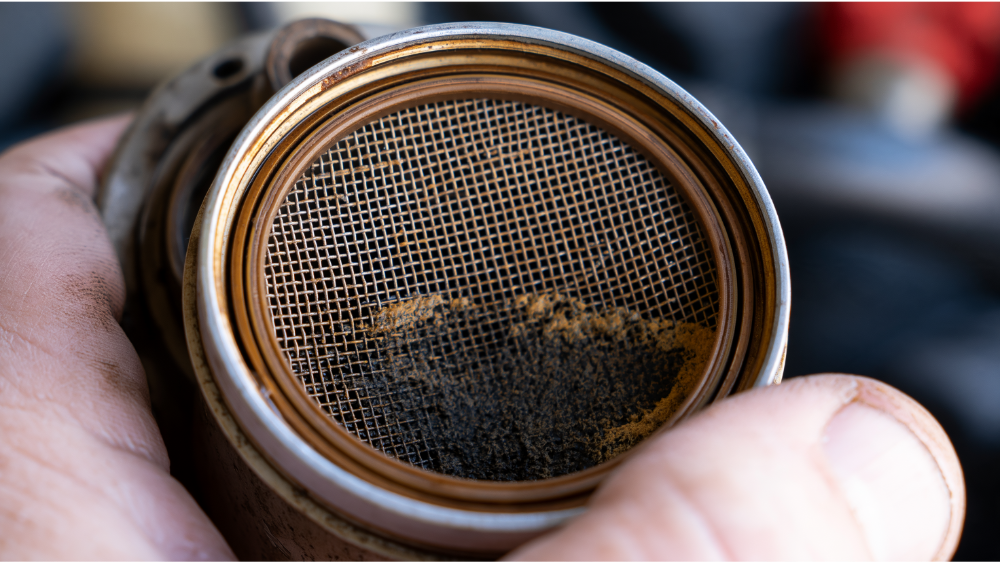
Follow the current OEM schedule for your engine, model year, and configuration, and service at whichever limit comes first: miles, hours, or months. The 10,000 to 15,000 mile advice you see repeated online reflects light-duty applications and does not match heavy-duty OEM schedules.
| Engine (example) | Interval range | Notes |
|---|---|---|
| Cummins X15 | 25,000 (severe) to 75,000 miles (light duty) | Combined idle plus PTO over 40% moves short-haul, normal, and light categories to the next lower interval |
| PACCAR MX (2025 schedule) | 30,000 / 50,000 / 75,000 miles, 800 to 2,250 hours, or 12 months | Line-haul interval changes at under or over 20% idle time |
| Detroit DD15 Gen 5 | Engine filter at every oil change; 70,000 to 100,000 miles with an approved frame-mounted system | Detroit caps engine fuel filters at 100,000 miles under any condition |
These are examples. Verify against the current manual for your unit, because schedules shift by model year and configuration. Any single universal mileage number is misleading. Service indicators, filter change lines, hours, fuel quality, and running in extreme conditions can all pull the interval in earlier.
How a Clogged Diesel Fuel Filter Shows Up in Engine Performance
These are indicators, not proof:
- Power loss under load, especially on grades
- Long cranking or difficulty starting
- Rough running or stalling
- Low-fuel-pressure faults
- A fuel-filter service indicator
- Rising fuel level at an applicable separator change line
- Water-in-fuel warning
- No-start following a filter change
A clogged filter usually drags engine performance down before it sets a code, and the driver feels it as lost power long before dispatch hears about it. The same symptoms fit air leaks, a failing tank pickup, transfer pump wear, pressure-control components, sensors, injectors, and simply bad fuel. Replacing a filter is a testable maintenance step. It is not a diagnosis, and treating it as one is how trucks come back twice.
Why Does a Diesel Fuel Filter Keep Plugging Early?
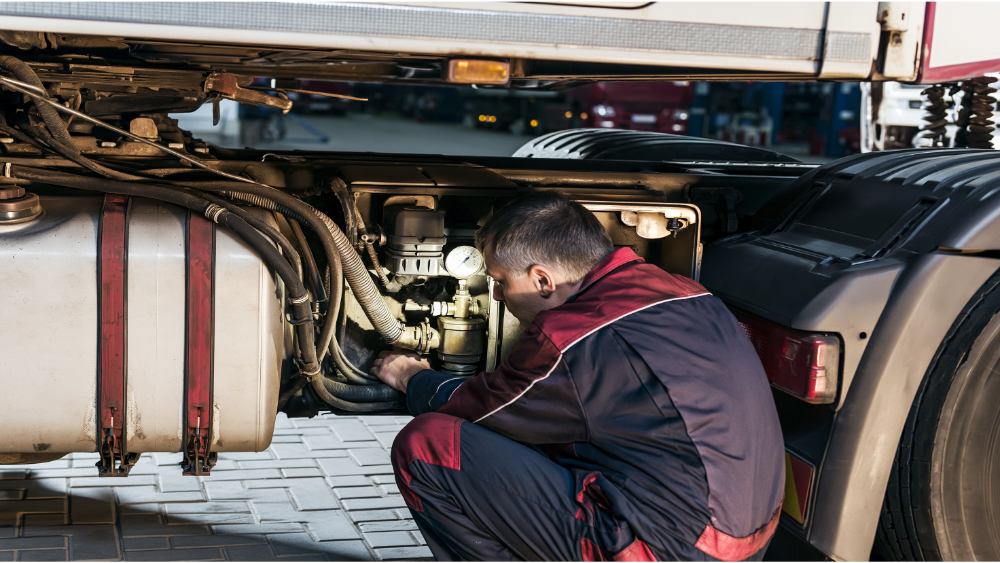
Repeat plugging is evidence, not routine maintenance. Common causes:
- Water contamination in the tank
- Tank sediment and rust
- A bad fuel purchase
- Degraded fuel that has sat too long
- Microbial growth at the fuel-water interface
- Biodiesel deposit release
- Cold-weather wax formation or fuel gelling
- Wrong filter or insufficient contaminant capacity
On-road diesel in the U.S. is capped at 15 ppm sulfur under EPA rules, so sulfur is not your variable. Blend level can be. The Department of Energy notes that B100 and other high-level biodiesel blends loosen existing fuel-system deposits, which can plug filters through the first few tanks. B20 must meet ASTM D7467, and engine approval should be confirmed before changing blends. Fleet signal to watch: when several units plug after the same fuel purchase, the problem is the fuel, not the filters.
Replacing and Priming Fuel Filters Without Creating a New Problem
Improper replacement introduces contamination or air, and creates the exact no-start the service was supposed to prevent. Principles that hold across platforms:
- Clean the housing and work area before opening anything
- Drain the housing so dirty-side fuel never crosses to the clean side
- Replace all required seals, and never clean and reuse a disposable element
- Follow OEM torque instructions
- Follow the engine-specific priming procedure, then check for leaks and verify fuel system pressure and operation
On pre-filling, the guidance genuinely conflicts by manufacturer. Cummins warns against pre-filling a pressure-side filter because unfiltered fuel goes straight to the clean side. PACCAR emphasizes thorough priming before start and warns that dry starting can damage the engine. Detroit warns against extended starter and fuel pump cranking as a priming method. There is no universal pre-fill rule. Use your engine’s procedure.
Fuel Filters in a Fleet Preventive Maintenance Program
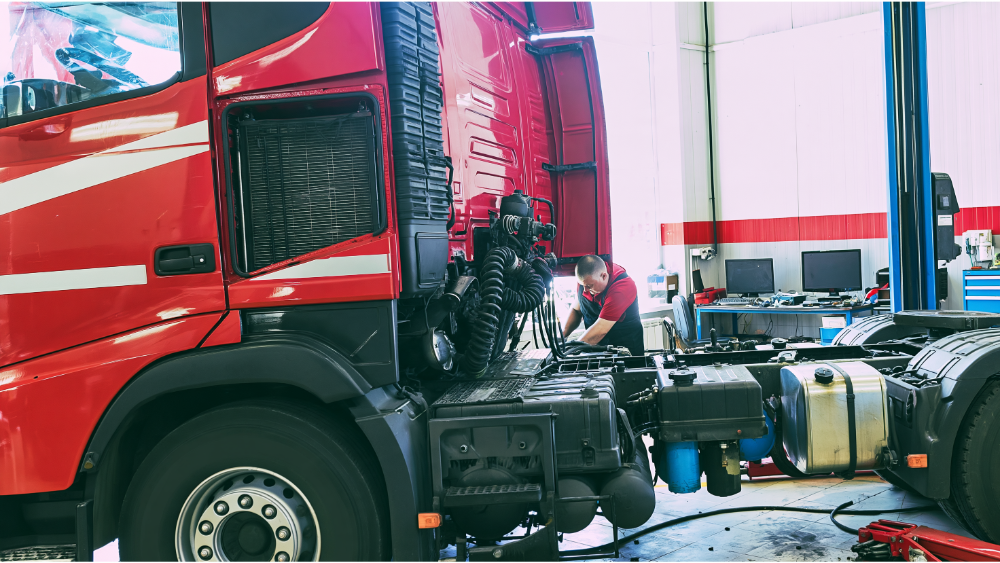
Consistency across units is what makes filtration predictable:
- Record exact filter part numbers by unit, including seals
- Set intervals by engine and duty cycle, not a fleet-wide average
- Track miles, hours, idle percentage, and service dates
- Log water drains and any contamination event
- Stock the correct filters and seals for the units you actually run
- Flag repeat early plugging for diagnosis instead of another filter
Timely replacement on the OEM interval costs a fraction of a fuel system flush. Our Preventive Maintenance PM Service builds custom PM schedules by unit, keeps DOT compliance documentation in order, and holds repair quality consistent across the fleet.
When Replacing the Filter Isn’t Enough
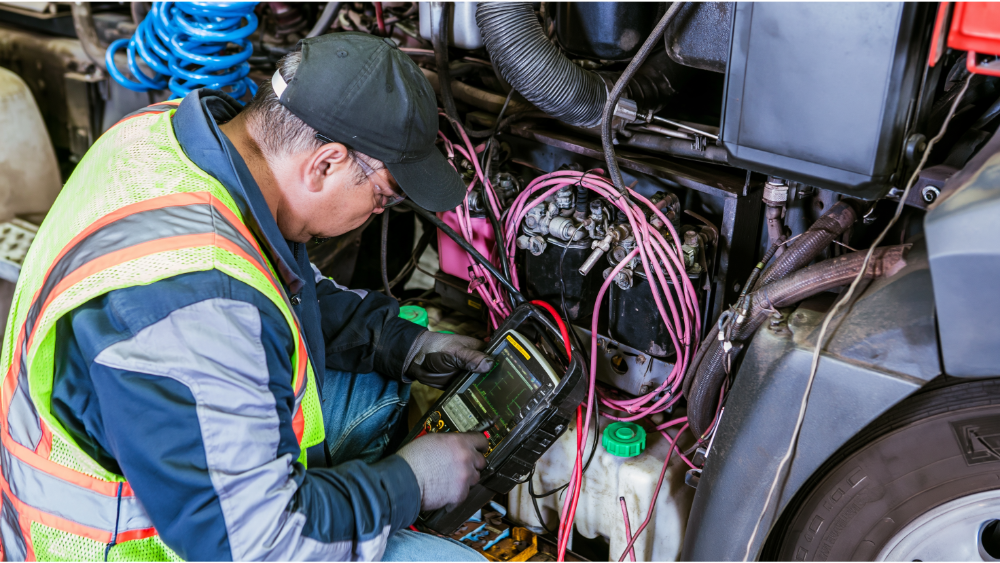
Move to full Fuel System Repair And Diagnostics when you see any of the following: repeated early restriction, persistent low rail pressure, metal or abnormal debris in the filter media, significant water contamination, continued power loss after filter service, air intrusion in the system, a no-start after replacement, or multiple fleet units affected after the same fuel purchase.
Incomplete diagnosis is the root cause of most repeat downtime. We use OEM diagnostic software and structured, verified workflows so steps don’t get skipped and the truck doesn’t come back for the same complaint.
Fuel System Repair And Diagnostics in Fife, WA
Torpedo Truck Repair works on Class 6 through 8 trucks and trailers at 7495 26th St E Ste B, Fife, WA 98424, near I-5 and Hwy 167. We serve the Seattle-Tacoma freight corridor: Fife, Tacoma, Auburn, Sumner, Puyallup, Milton, Algona, and Pacific. You get an itemized estimate before work starts. No surprises, no upsell, with a same-day service focus when possible.
Shop hours are Mon through Fri, 8:00 AM to 5:30 PM. 24/7 emergency mobile dispatch runs within 50 miles of the Fife shop along I-5, Hwy 167, and SR-512. Est. 2017, licensed and insured, DOT certified, 4.9 stars across 146 Google Reviews. Call Now: (253) 449-0100. For planned work, request a service quote. It takes under 60 seconds, no obligation.
Frequently Asked Questions
What is the best fuel filter for a diesel engine?
The one that meets your engine’s OEM specification for position, filtration efficiency, water separation, and flow capacity. There is no universal best filter. A finer element in the wrong position restricts flow and plugs early, and optimal performance comes from matching the spec, not exceeding it.
How often should diesel fuel filters be changed?
Follow the current OEM schedule for your engine and configuration. Heavy-duty examples run from roughly 25,000 to 100,000 miles depending on engine, filtration setup, idle percentage, and duty cycle. General 10,000 to 15,000 mile advice reflects lighter-duty applications.
Where is the secondary fuel filter located?
It is typically located downstream of the transfer pump, just ahead of the injectors, where it handles fine particle protection. The primary sits between the fuel tank and the pump on the suction side and does the bulk particle and water work.
Does diesel go bad sitting in a tank?
Yes. Stored fuel degrades, holds water, and supports microbial growth, which plugs filters fast. Drain separators and sample the tank on units that sit between runs.
Fuel system running rough or a filter plugging again? Call (253) 449-0100.