Key Takeaway
Transmission slipping means engine RPM rises without a matching increase in road speed, and the truck cannot hold its gear or deliver torque under load. It is a symptom, not a diagnosis – common causes include worn clutches, low or contaminated fluid, solenoid faults, and engine-side derates. Every mile driven while slipping adds heat damage that increases repair cost.
Transmission slipping means engine RPM rises without a matching increase in road speed, or the truck can’t hold the selected gear and transfer torque under load. You feel it as a flare between gears, a loss of pull on a grade, or delayed acceleration when you get on the gas.
One position up front: a slipping complaint does not automatically mean a rebuild. Plenty of trucks get a transmission replaced when the real fault was a clutch, a sensor, a parameter, or an engine derate. Slipping is a symptom, not a diagnosis.
What Does Transmission Slipping Actually Mean?
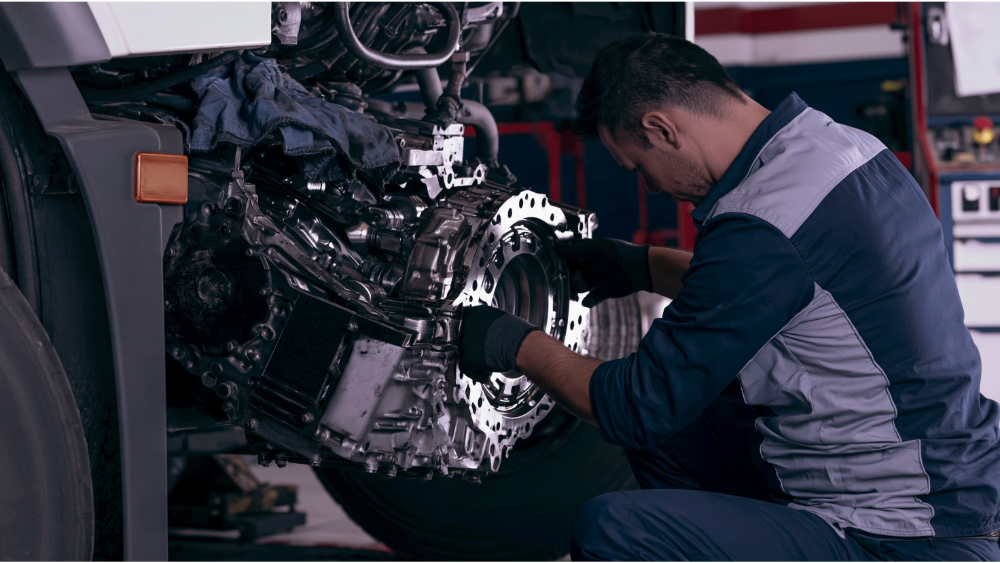
True slip is a disconnect between input speed and delivered road speed. The engine works harder. The truck won’t accelerate. A hard shift, a missed shift, or general loss of power is not automatically transmission slipping, and that distinction sets the entire repair path.
Three architectures behave differently: manual transmissions with a dry clutch, AMTs with electronic clutch control, and automatic transmissions with hydraulic clutches, transmission bands, and a torque converter. A car transaxle does not fail the way a Class 8 drivetrain fails under 80,000 pounds. No RPM number by itself proves slipping. It’s the relationship between RPM and road speed under load.
What Does a Slipping Transmission Feel Like? Delayed Acceleration, Unusual Noises, and Warning Signs
Drivers notice it under load first. You’re into the gas, the tach climbs, the speedometer doesn’t. Here’s how the red flags map to likely causes.
| What you feel | What it may mean | What to do now |
|---|---|---|
| RPM flares between gears, no acceleration | Real clutch or friction-element slip | Stop loading the drivetrain |
| Delayed engagement into Drive or Reverse | Fluid, pressure, control, or clutch | Schedule diagnosis |
| Loses pull climbing a grade loaded | Clutch, pressure, converter, or engine output | Don’t push it |
| Won’t upshift, but RPM does not flare | Derate or data-link issue, not slip | Scan before touching the transmission |
| Drops out of gear into neutral | Control, actuator, range, or mechanical failure | Stop now |
| Unusual noises during gear changes | Worn gears, bearings, or synchronizers | Don’t shift under load |
| Burning smell, smoke, or temperature warning | Active overheating | Stop now |
Does the Check Engine Light Always Come On?
Not always. A check engine light or a Check Transmission lamp may be lit, and it may not be. No light does not clear the truck. Some units drop into limp mode with no engine light, so what you hear under load matters as much as the dash.
Is It Okay to Keep Driving?
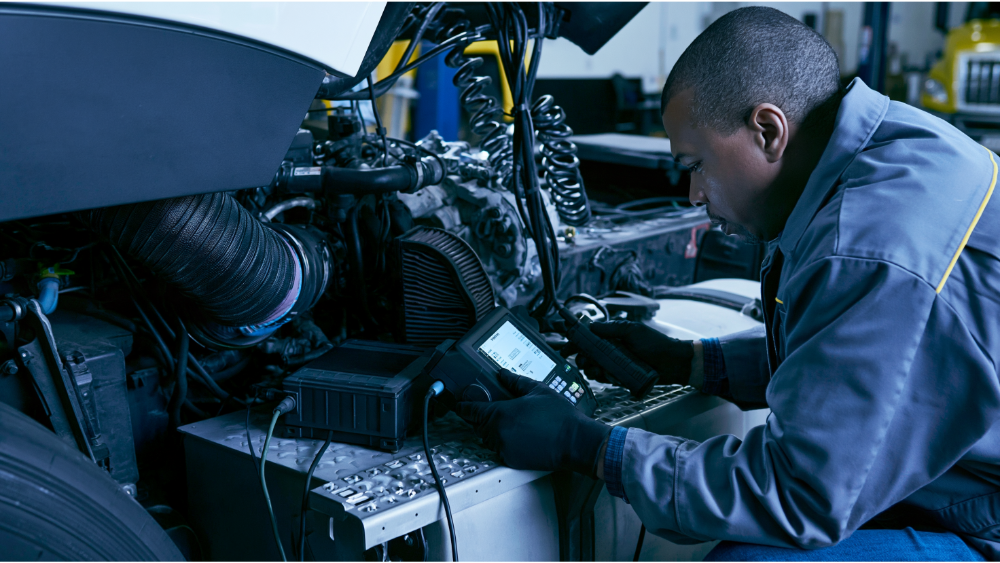
There is no safe number of miles you can drive a slipping truck. Repeated slipping converts engine power into heat instead of driveline torque, and Eaton documents that heat damage to friction material and metal components is a leading cause of clutch failure. Left unchecked it gets worse fast, and every mile in the higher gears is further damage you pay for later.
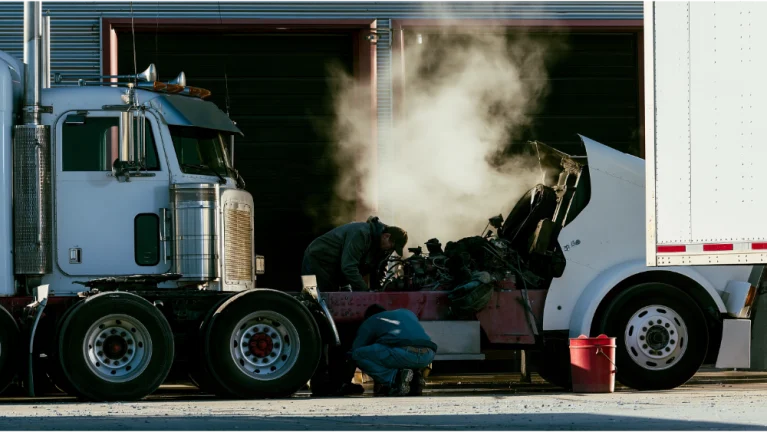
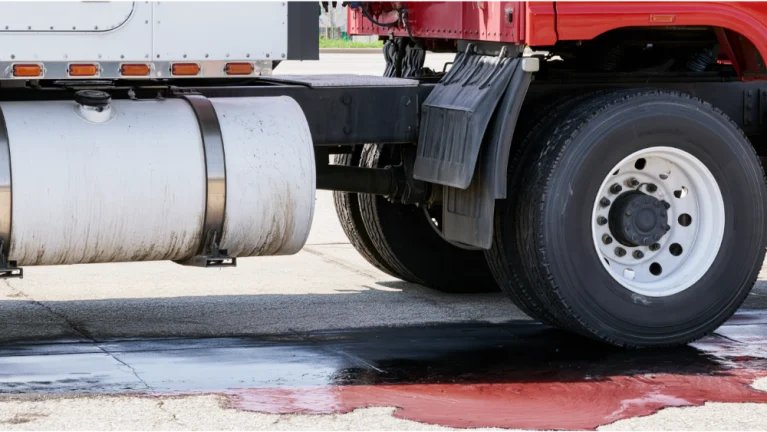
Stop and call for help for severe or repeated slip, loss of Drive or Reverse, an overheating warning, an active fluid leak, burning odor or smoke, grinding, dropping into neutral, or an inability to hold safe road speed. Set out flashers and triangles while you wait.
Under 49 CFR §396.7, a commercial vehicle must not be operated in a condition likely to cause an accident or breakdown, and a vehicle found unsafe may proceed only to the nearest safe repair location.
The Most Common Causes of Transmission Slipping
Manual Transmissions and Worn Clutches
What drivers call manual transmission slipping is almost always clutch slippage. Eaton lists no pedal free play, a binding release mechanism, oil or grease on the facings, and riding the clutch. Failing to start in the proper gear and holding a loaded truck on a grade build heat fast, and heat drives facing wear.
Automated Manual Transmissions (AMT)
- Clutch wear or overheating
- Clutch actuator faults
- Calibration, software, or incorrect programmable parameters
- Skipped gears or aborted gear changes from engine torque limits or derate
- Transmission control faults or data-link communication
- ABS or traction-control intervention
Certain current Endurant applications display a clutch-temperature message and limit launches when overheating protection engages. That behavior is model-specific. Where the system does monitor clutch temperature, treat that message as a stop-now warning.
Automatic Transmissions: Fluid, Bands, and the Torque Converter
Automatic transmissions give you the most places to look.
- Low or contaminated transmission fluid, usually traced to a leak
- Wrong fluid, or fluid degraded past its viscosity and frictional properties
- Clogged filter restricting flow and dropping hydraulic pressure
- Valve body or solenoid faults in the circuit responsible for feeding pressure to a gear
- Torque converter or lockup clutch problems
- Worn clutches, transmission bands, or gears
- Wiring, sensor, or control-module faults
Problems That Feel Like Slipping but Are Not
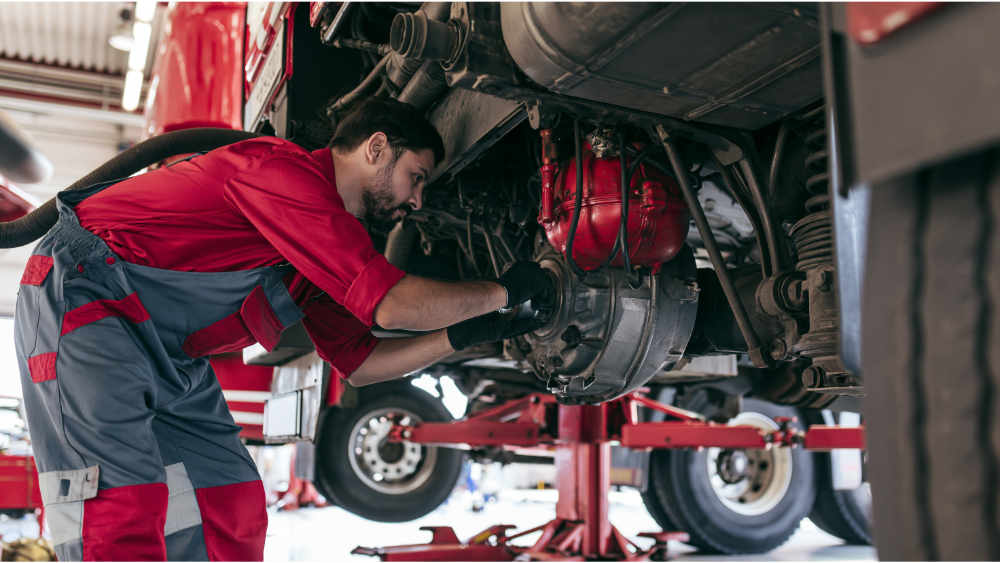
On a car, slip is usually internal. On a heavy-duty truck, it often isn’t. Eaton documents that engine and vehicle-level conditions produce shift complaints even when the transmission has set no fault. Fuel or boost problems, DPF and aftertreatment derate, high coolant temperature, incorrect parameters, data-link dropouts, ABS intervention, and accessory load can all drag performance down in a way that reads like transmission problems.
Replacing a transmission for an engine-side derate is how operators lose weeks and thousands of dollars on repairs that fixed nothing. Diesel engine, DPF, electrical, and cooling system diagnosis belong in the same workflow as your vehicle’s transmission.
Can Low Transmission Fluid Cause Transmission Slipping?
Sometimes, but rarely as a standalone repair. Low transmission fluid means a leak until proven otherwise, often at worn seals, and topping it off without finding it fixes nothing. Without enough fluid, hydraulic pressure drops and the friction elements can’t hold. The wrong fluid causes its own failures, and fresh transmission fluid does not reverse wear on clutches and transmission bands that are already gone.
Dirty fluid matters as much as low fluid. If it smells burnt or carries metal contaminants, the unit is showing signs of internal wear, and clean fluid is essential to keeping the transmission cool under load.
Ignore the “change it every 30,000 miles” line on consumer sites. That is a car interval. Eaton lists certain heavy-duty products on approved synthetic PS-386 at 500,000 miles or 5 years in linehaul, and 180,000 miles or 3 years in vocational service. Follow the manual for your transmission and duty cycle.
What to Record Before You Call a Shop
- Year, make, model, and transmission model
- Loaded or empty, and approximate gross weight
- Which gears or gear changes produce the symptoms
- Cold only, hot only, or constant
- Exact dash message and lamp status
- Fluid leak, burning smell, or new noises
How Transmission Specialists Diagnose Slipping
You cannot diagnose slip from the seat. Transmission specialists start with the whole vehicle, not the gearbox.
- Confirm the complaint and the conditions behind it.
- Identify the transmission and clutch configuration.
- Pull active and stored trouble codes from every module with OEM software and review the live data.
- Rule out derate, fuel, boost, cooling, emissions, ABS, and data-link faults.
- Inspect fluid level, specification, condition, and leaks per OEM procedure.
- Test drive under load when it’s safe, then check pressure, clutch operation, actuator travel, calibration, or converter slip.
- Open the unit only when the evidence supports it, and itemize the estimate first.
Diagnosis isn’t finished until the shop understands the load, route, and duty cycle behind the symptoms. That comes from operating trucks, not just fixing them.
How Do You Fix a Slipping Transmission?
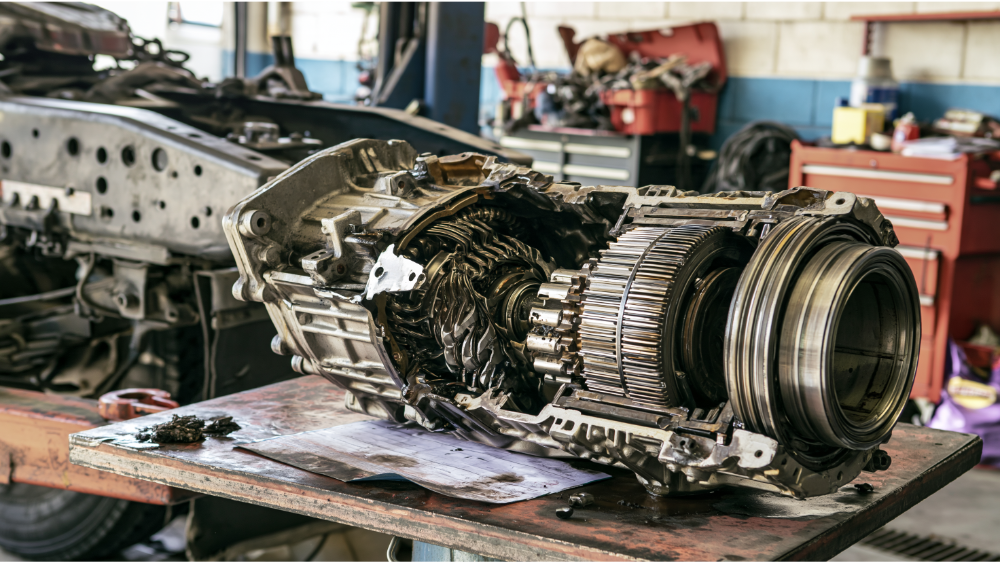
From targeted to extensive: correct the fluid level and repair the leak, move to the correct approved fluid, repair wiring, connectors, sensors, or solenoids, apply a software update or parameter correction, adjust or replace clutches, repair the valve body or hydraulic circuit, service the torque converter, or replace internal parts and rebuild the unit.
Know what failed, how it was verified, and what the repairs include before you authorize a dollar of them.
Driving Habits and PM That Prevent Repeat Slipping
Aggressive driving and skipped services shorten clutch and gear life. Follow the OEM schedule for that transmission and duty cycle. One PM interval across a mixed fleet doesn’t work, because linehaul and vocational wear a driveline differently. Log intermittent gear change complaints instead of waiting for a hard failure, and keep transmission codes, clutch condition, and fluid service in the record. Catching it earlier keeps a small repair small.
Under 49 CFR §396.3, carriers must systematically inspect, repair, and maintain their vehicles and keep the records, which are vital at audit time. FMCSA sets no universal PM interval, which is why custom PM schedules exist.
How Much Does It Cost to Fix a Slipping Transmission?
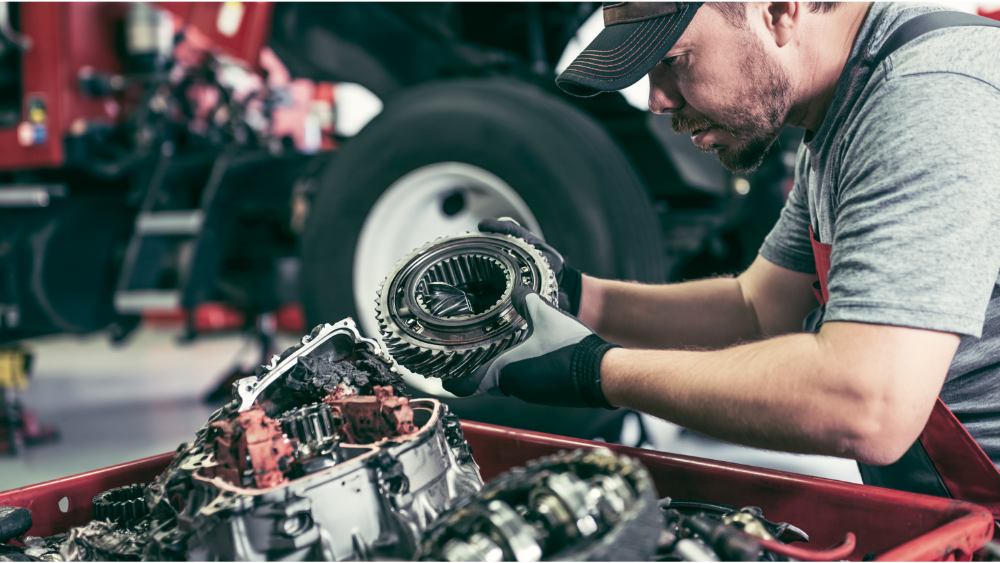
It can’t be priced until the transmission type, fluid condition, fault codes, pressure or clutch data, and internal condition are verified. Torpedo provides a full itemized estimate before any work begins.
Truck Down With a Slipping Transmission? Call Torpedo Truck Repair
Call (253) 449-0100. Torpedo Truck Repair handles Transmission And Clutch Repair, Electrical Diagnostics And Repair, and Preventive Maintenance PM Service from the Fife, WA shop at 7495 26th St E Ste B, near I-5 and Hwy 167. 24/7 Emergency Road Service covers mobile dispatch within 50 miles of Fife along I-5, Hwy 167, and SR-512: Tacoma, Auburn, Sumner, Puyallup, Milton, Algona, and Pacific.
Shop hours are Mon through Fri, 8:00 AM to 5:30 PM, closed weekends; the 24/7 applies to emergency roadside dispatch, not walk-in service. Certified technicians, OEM diagnostic software, and an itemized estimate before a single bolt is turned. No surprises, no upsell, same-day service focus when possible. Licensed and insured, DOT certified, 4.9 stars across 146 Google Reviews.