Key Takeaway
To reduce emissions in diesel engines, fix combustion faults first by checking injectors, turbo, EGR flow, and air handling, then verify that the DOC, DPF, SCR, and DEF systems are all functioning together as designed. EPA-verified particulate filters cut PM by 85 to 90 percent, and SCR reduces NOx by up to 90 percent. Cutting idle time, using ultra-low-sulfur diesel, and tracking regen frequency in preventive maintenance compounds those gains over time.
Reduce emissions in diesel engines by fixing combustion faults first, keeping the EGR, DOC, DPF, SCR, and DEF systems working as designed, and cutting unnecessary fuel burn. If you are sitting with a check engine light, repeat parked regens, or a derate counting down, you need a verified root cause, not a guess. Written for Class 6 through 8 operators and fleets chasing cleaner exhaust without added downtime.
Which Diesel Emissions Are You Actually Trying to Reduce?
Diesel exhaust can carry four harmful pollutants, and each one has its own fix. Name the pollutant before you touch a wrench.
| Pollutant | Main source | Main controls |
|---|---|---|
| PM / particulate matter | Incomplete combustion | Clean combustion, DOC, DPF |
| NOx | High combustion temperature | Cooled EGR, SCR with DEF |
| HC / CO | Unburned or partly burned fuel | Engine repair, DOC |
| CO₂ | Fuel burned | Idle reduction, efficiency |
A DPF does not fix NOx. DEF does not fix particulate matter. Name the wrong pollutant and the truck leaves with the same fault.
Start With a Diagnostic Scan and Road Test, Not a Parts Swap
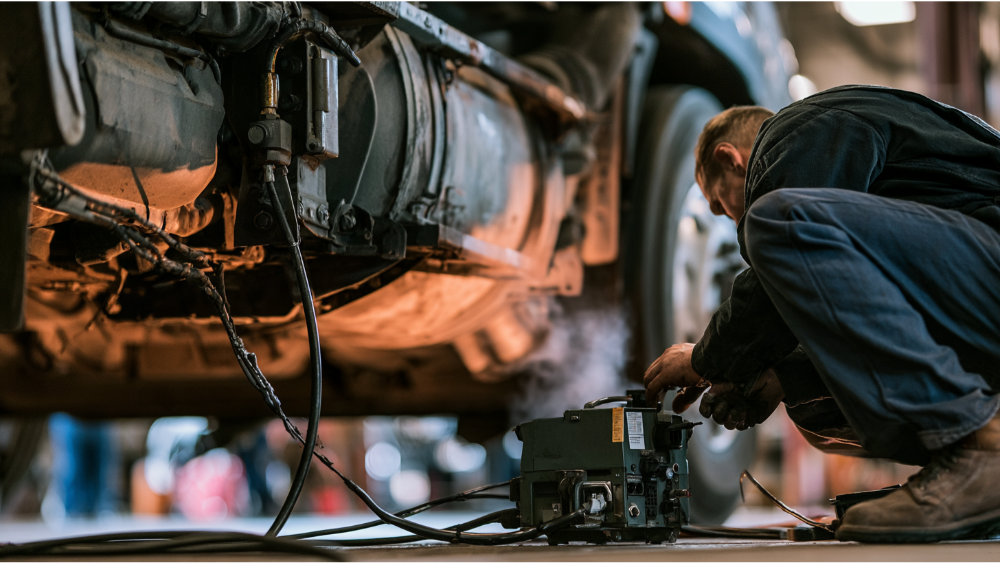
Emissions faults get solved with data. A scan and road test pull:
- Active and inactive codes plus freeze-frame data
- DPF soot load and differential pressure
- Exhaust temperature sensor readings
- NOx sensor data and SCR efficiency
- DEF quality, pressure, and dosing
- EGR commanded flow versus actual flow
- Turbo, VGT, and charge-air performance
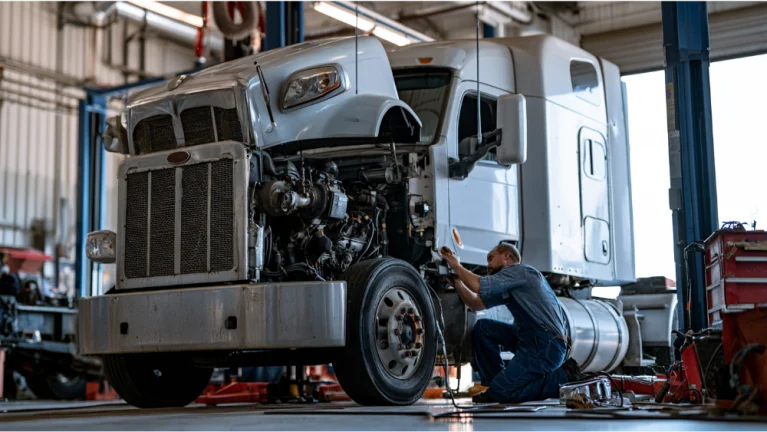
Excess emissions are usually a symptom of an engine fault, not a standalone problem in the aftertreatment systems. Performance there follows engine health. OEM diagnostic software, a structured process to ensure no step gets skipped, then verification before the truck leaves.
Fix Combustion Before You Blame the Diesel Particulate Filter
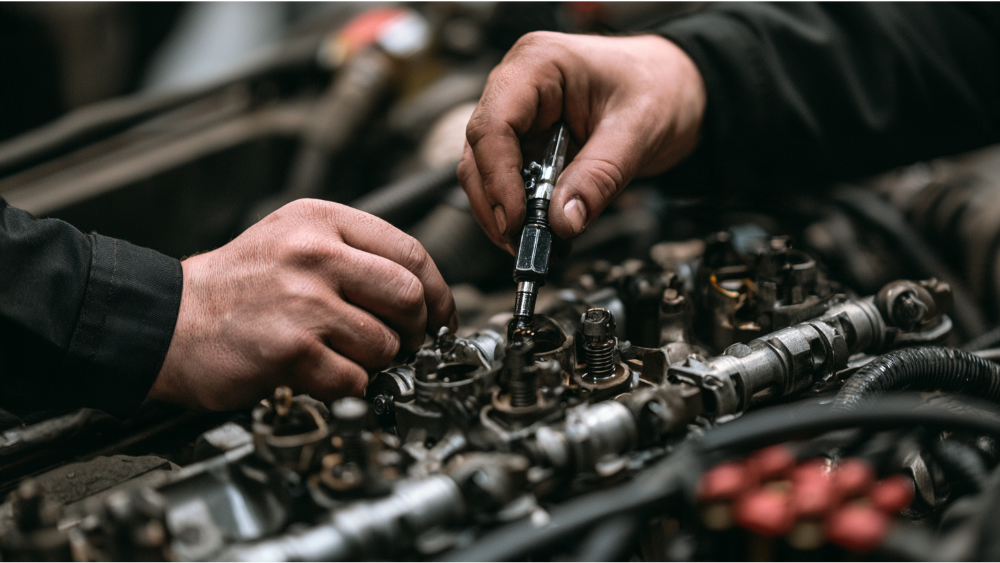
Engine-out soot reduction is the highest-impact emissions work, and it happens upstream of the filter. Check restricted air filters, charge-air leaks, turbo and VGT faults, injector spray pattern, rail pressure, and operating temperature. A cylinder cutout test finds the weak hole fast. Innovations like high-pressure common-rail injection meter fuel tightly, so injector wear in one hole drags down efficiency and performance.
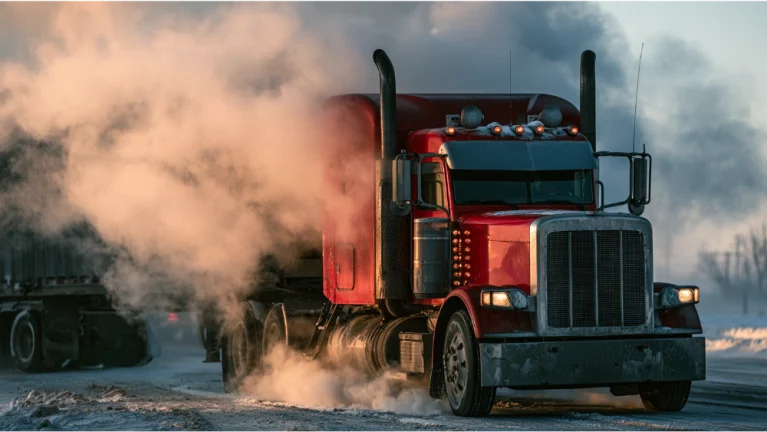
Smoke color is a clue, not a diagnosis: black for a fuel and air imbalance, blue for oil, white for unburned fuel or coolant. Cleaner combustion upstream means less filter work and less clogging.
Keep the EGR, DOC, DPF, SCR, and DEF Systems Working Together
Cooled EGR routes measured exhaust back into the intake to lower combustion temperature and suppress NOx. Wrong flow changes soot output and engine performance.
DOC converts carbon monoxide and hydrocarbons and raises exhaust temperature so regeneration can run.
DPF traps particulate matter. EPA-verified particulate filters are credited with reducing PM 85 to 90 percent or more, and some systems cut HC and CO 70 to 90 percent.
SCR and DEF convert NOx into nitrogen and water before it reaches the atmosphere. SCR cuts NOx by up to 90 percent, depending on exhaust temperature, dosing, calibration, and system condition. Nearly all on-road diesel engines have used DEF since 2010, and OBD monitors DEF level, quality, and SCR performance.
Those components form one certified exhaust system. Pull a piece and everything downstream loses performance.
Regeneration vs. Diesel Particulate Filter Cleaning
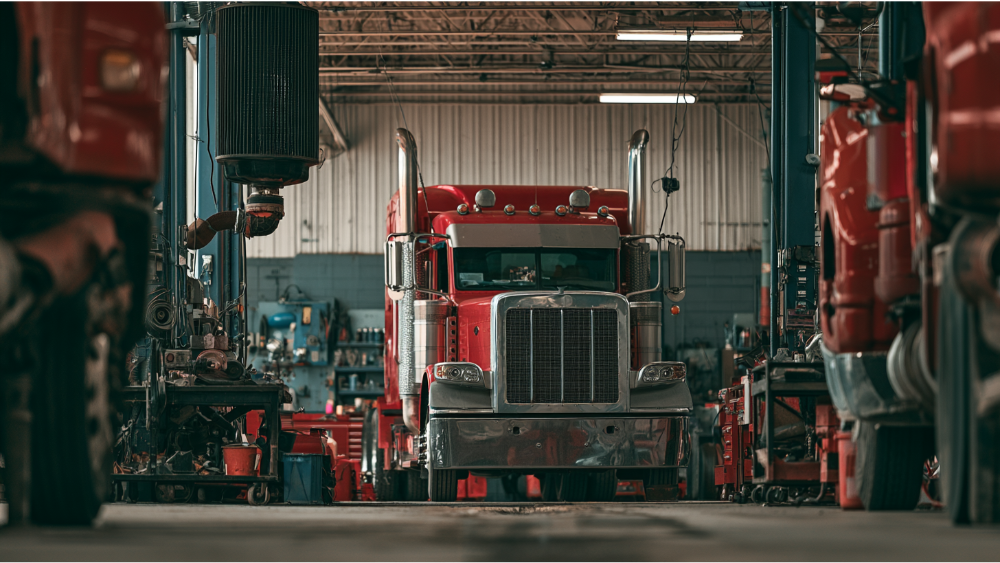
- Passive regen burns soot in normal operation when exhaust temperature stays high enough.
- Active regen injects fuel to raise exhaust temperature while the truck works.
- Parked regen is a commanded process with the truck stationary.
Regen burns soot. It does not remove noncombustible ash. Ash keeps building and eventually requires physical cleaning, and adhering to OEM spec is essential because no honest shop publishes a universal interval. Repeated parked regens lead back to a fault: excess soot, low exhaust temperature, a failed sensor, or interrupted cycles.
Cut Idle Time and Unnecessary Fuel Burn
Idle hours contribute emissions without miles. Heavy-duty idling burns roughly 0.8 gallon per hour by DOE estimate, and every gallon puts about 22.45 pounds of CO₂ into the air by the EIA coefficient.
Set a shutdown policy. APUs, battery HVAC, fuel-fired heaters, and tighter route planning cut that burn further. The benefits land twice: fuel efficiency and better aftertreatment performance. Fewer idle hours also hold exhaust temperature up, which is critical to clean regens.
Fuel Quality, Cetane, and Why Additives Deserve Skepticism

Federal highway diesel caps sulfur at 15 ppm; higher-sulfur fuel raises soot and damages DPF and catalyst hardware. EPA credits ULSD plus modern controls with reducing PM by up to 90 percent and NOx by roughly 25 to 50 percent against older uncontrolled engines.
Cetane in the 45 to 55 range supports consistent ignition and cleaner combustion. Those OEM-approved biodiesel limits apply to your engine for a reason, and DEF that meets spec is crucial to accurate dosing. Clean fuel and completed regens extend filter life. EPA registration of an additive is not proof it improves economy, performance, or emissions, so diagnose the mechanical fault first. Cross-filling diesel and DEF ruins SCR hardware.
Build Emissions Checks Into Preventive Diesel Maintenance
Fleets win on predictability. Emissions data on the PM sheet keeps every unit running efficiently:
- Miles, engine hours, and idle hours per vehicle
- Fault codes, derate events, and regen frequency
- DPF cleaning history and DEF consumption per unit
- Air, fuel, cooling, and charge-air systems on schedule
- Repair records that meet DOT audit requirements
Tracked over time, that data flags units drifting from optimal performance before a derate strands a driver, and it can assist a safety director facing a DOT audit. Fewer roadside failures, longer aftertreatment longevity, audit-ready files.
Repair, Retrofit, Repower, or Replace, and Never Delete
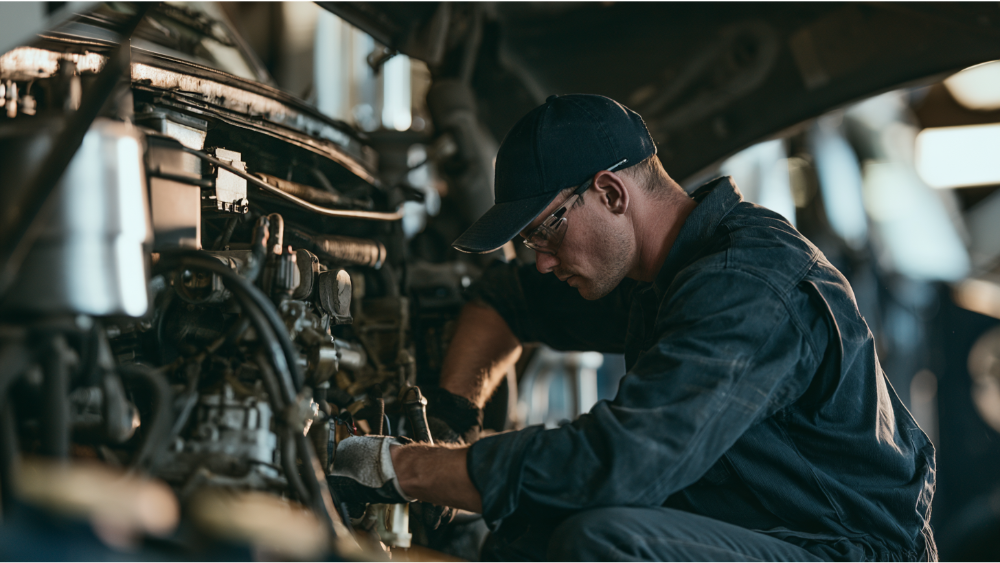
EPA’s clean-diesel guidance sets out four escalating options: repair the fault, rebuild with suitable emission-control systems, explore an EPA-verified retrofit matched to the engine and duty cycle, or repower the truck. Decide on engine condition, utilization, remaining service life, and emissions-system compatibility. Ask a shop that knows your operation to provide guidance before you reach a conclusion.
Many pre-2027 heavy-duty engines certify at 0.20 g/bhp-hr NOx and 0.01 g/bhp-hr PM. Model year 2027 engines must meet 0.035 g/bhp-hr NOx and 0.005 g/hp-hr PM, cutting NOx by more than 80 percent and pushing toward a healthier environment.
Deleting is not an option. Removing, bypassing, or defeating an emission-control device is prohibited under the Clean Air Act. Delete software hides the symptom and leaves the fault running.
Frequently Asked Questions
Are 2027 diesels going to have DEF?
Yes. MY2027 standards tighten NOx and PM limits, and SCR dosing DEF remains the primary NOx control. Confirm where the SCR inducement amendments stand before making fleet decisions.
How do you reduce emissions in diesel engines today?
Scan, road test, and diagnose. Correct engine-out soot, repair EGR and air-handling faults, verify DOC, DPF, SCR, and DEF performance, then cut idle hours and roll the findings into the maintenance schedule.
What is the worst thing for a diesel engine?
Operating it with a known fault. Excess soot, bad fuel or DEF, and chronic low-temperature idling turn a repair into a replacement.
Get the Root Cause Diagnosed, Not Guessed
Torpedo Truck Repair specializes in Exhaust And DPF Repair, Fuel System Repair And Diagnostics, and Diesel Engine Repair And Maintenance on Class 6 through 8 engines from Freightliner, Kenworth, Peterbilt, Volvo, Mack, International, and Western Star. Our team pairs OEM diagnostic software with expertise in the intricacies of modern aftertreatment. Itemized estimate first. No surprises, no upsell, same-day service focus when possible.
Call (253) 449-0100. 24/7 emergency dispatch; shop hours are Mon through Fri, 8:00 AM to 5:30 PM. Or request a service quote. Takes under 60 seconds. No obligation.