Key Takeaway
The annual DOT inspection, formally called a periodic inspection under 49 CFR §396.17, checks every major system on a heavy-duty truck including brakes, steering, suspension, tires, lights, coupling devices, frame, exhaust, fuel systems, and required documentation. Every commercial vehicle must pass this check at least once every 12 months. Brake violations and missing paperwork are the most common reasons trucks fail.
An annual DOT inspection, called a periodic inspection under 49 CFR §396.17, checks every commercial motor vehicle against federal minimum safety standards at least once every 12 months. That means brakes, steering, suspension, tires, wheels, lights, coupling devices, frame, exhaust and fuel systems, windshield and wipers, safe loading, and rear impact guards on trailers, plus the documentation that proves it all passed. If you run one truck or a hundred, and you have an inspection due, here is what a shop looks at and how to walk in ready. This comprehensive guide treats a clean annual inspection as a downtime-prevention checkpoint, not a sticker you chase at the last minute.
What Is a DOT Annual Inspection?

The federal term is periodic inspection, defined by the Federal Motor Carrier Safety Administration in 49 CFR §396.17 and measured against the component list in Appendix A to Part 396. Older articles still cite “Appendix G,” but current eCFR displays Appendix A, so that is the standard your inspector works from. Every commercial vehicle needs a DOT annual inspection at least once every 12 months. In a combination vehicle, each segment counts on its own: the tractor, the semitrailer, a full trailer, and a converter dolly if equipped all need their own inspection and their own proof. No specific federal sticker or decal is required. Documentation is what matters, though a sticker or decal can serve as on-vehicle proof if it carries the required information.
DOT Annual Inspection vs Roadside Inspection vs DVIR
These three get confused constantly. A valid annual inspection does not shield you from a roadside stop, and neither one replaces your daily driver reports.
| Type | When | Purpose |
|---|---|---|
| DOT annual (periodic) inspection | Once every 12 months | Scheduled compliance check against Appendix A |
| Roadside vehicle inspection | Anytime, at a scale or on the road | Enforcement check under North American Standard Inspection levels set by the Commercial Vehicle Safety Alliance; can place a unit out of service |
| DVIR / pre-trip and post-trip (§396.11) | Daily, tied to operation | Driver reporting of defects; records kept 3 months |
Fleets that connect all three through solid PM records catch defects before an officer does. Officers cross-check your duty status and vehicle inspection reports against what they find, so the paper trail matters. That habit protects your safety rating and keeps violations off the record.
What Gets Checked on the Commercial Vehicle and Trailer
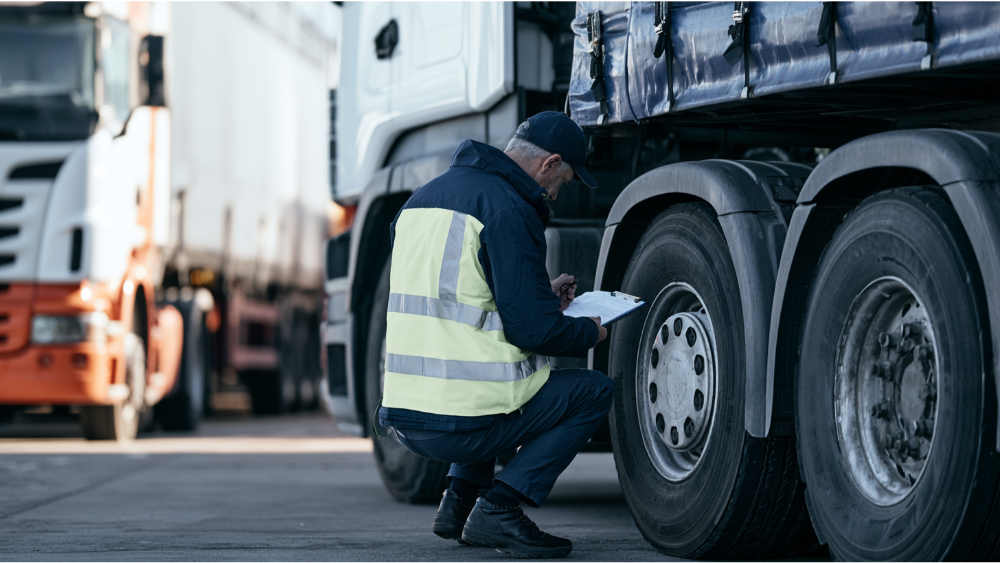
The inspector works through every major system on the tractor and trailer. Here is the working-truck version of the Appendix A inspection requirements and the specific components that draw the most attention.
Brake System and Air Leaks
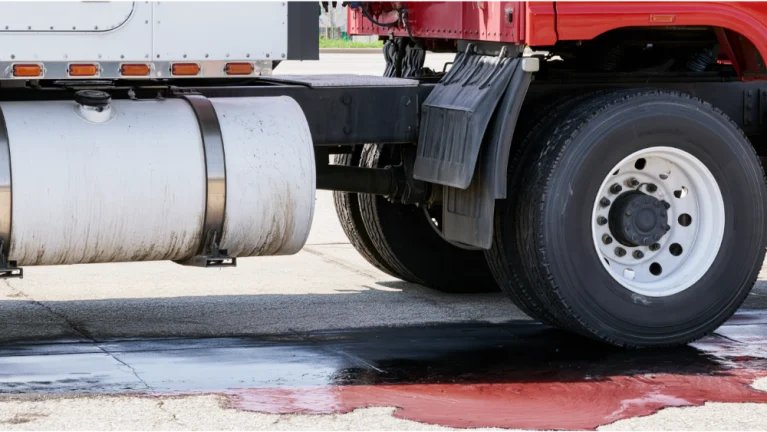
Service brakes and parking brakes, drums and rotors, hoses and tubing, trailer brake connections, the low-pressure warning device, tractor protection valve, compressor, ABS, and automatic slack adjusters. The inspector checks for air leaks and fluid leaks and measures pushrod stroke with the engine off, reservoir pressure at 80 to 90 psi, and brakes fully applied. A worn or out-of-adjustment brake is one of the most common violations an inspector writes up.
Coupling Devices
Fifth wheels, kingpin, pintle hooks, drawbar eyes, safety chains and cables. Excess play or a cracked, loose fifth wheel fails.
Tires, Wheels, and Rims
Steer tires must hold at least 4/32 inch of tread, other tires at least 2/32 inch. Exposed ply or belt material, cuts, separation, cracked wheels, and missing or ineffective fasteners are all tire problems that get flagged.
Steering and Suspension
Steering free play, the column, tie rods, drag links, ball joints, and the gear box make up the steering mechanism. On the suspension: U-bolts, spring hangers, spring assemblies, air bags, and axle-positioning parts. Cracks and leaks stop the pass.
Frame and Body
Cracked, broken, sagging, or loose frame members, missing fasteners, and adequate tire and wheel clearance.
Lights, Exhaust, Fuel, Glass, Loading, and Rear Guard
Required lamps, lights, and reflectors under Part 393 must work, including brake lights and turn signals. Lighting issues are quick, cheap fixes that still fail a truck if ignored. Exhaust cannot leak forward of or below the cab or sleeper. The fuel system fails on a visible leak, missing filler cap, or insecure tank. Vision-reducing windshield damage and inoperative windshield wipers are defects, along with cracked or missing rear vision mirrors. Cargo securement and intermodal container devices are checked, and trailers need a rear impact guard that is present, attached, and correctly positioned.
Driver Credentials and Emergency Equipment
A roadside inspection covers the truck driver as well as the truck. An officer verifies a valid driver’s license or CDL and a current medical certificate, and confirms seat belt use during the stop. Required emergency equipment gets checked too: a working fire extinguisher, spare fuses, and warning devices. These driver-side items are separate from the annual vehicle inspection but count against the same safety record.
What Will Make a Truck Fail a DOT Inspection?

Most failures come down to the same handful of items. These are the common violations an inspector sees on a heavy-duty motor vehicle:
- Brake air leaks or out-of-adjustment brakes
- ABS lamp faults
- Steer tires below tread limit or exposed ply
- Visible fuel leak or missing fuel cap
- Cracked or loose fifth wheel and coupling components
- Loose or missing wheel fasteners
- Cracked frame or suspension parts
- Inoperative required lamps, lights, or wipers
- Missing or damaged rear impact guard
- Missing inspection documentation
A failed inspection means an out-of-service order. The vehicle doesn’t move again until the defect is repaired. The violation follows the CDL and the carrier’s safety record, and failed inspections invite more scrutiny down the road. For an operator running interstate commerce, that’s a lost load, paid hours going nowhere, and costly penalties.
What Is the Most Common DOT Inspection Violation?
Paperwork. In the national roadside report from the Federal Motor Carrier Safety Administration (a snapshot dated February 27, 2026, subject to update), out of 3,172,123 inspections, code 396.17CPI, operating without documentation of a periodic inspection, drew 171,607 violations. A separate code, 396.17C, operating without proof of one, added 60,639. Those are two distinct codes, not one number. The lesson is simple: a mechanically sound vehicle still gets written up if the proof isn’t in the cab. Meeting the documentation side of FMCSA regulations is as important as the wrench work, and ensuring compliance on paper is half the job.
What Paperwork Do I Need to Pass a DOT Inspection?

The inspection report, or a sticker or decal based on it, has to carry the required fields: inspector, motor carrier, inspection date, vehicle ID, components inspected, results, and certification. Keep the report for 14 months from the report date, available to officials on demand. Each truck, trailer, and dolly needs its own proof. No specific federal form is mandated, but the required information is not optional. Before inspection day, pull prior paperwork, log any driver-reported defects, and confirm a copy rides in the cab.
Who Can Perform an Annual DOT Inspection?
A motor carrier can inspect its own vehicles if the inspector meets §396.19: they understand Part 393 and Appendix A criteria, can identify defective components, and know the methods and tools. One qualifying path is training or experience totaling at least 1 year, with qualification evidence kept while they inspect and for 1 year after. A qualified third-party shop can inspect the vehicle as your agent if properly equipped. Brake work carries separate qualification rules under §396.25. When you pick a shop, ask:
- Are your inspectors qualified under §396.19 and current FMCSA standards?
- Do you inspect brakes to §396.25 standards?
- Will I get written findings and an itemized estimate before any repairs?
- Can you handle the truck and the trailer in one stop?
How to Prepare So the Vehicle Passes the First Time
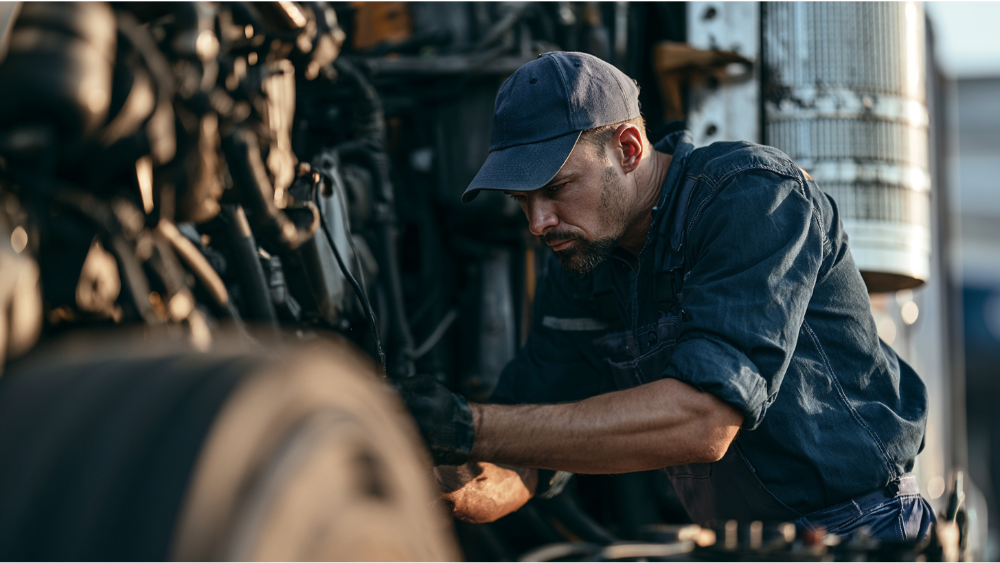
Walk the vehicle before you bring it in. Check every lamp, light, and reflector, tire tread and pressure, and look for air leaks, fluid leaks, or fuel leaks. Run the wipers. Confirm the fifth wheel and coupling are secure. Gather the paperwork. Then schedule ahead of the deadline so there’s room to fix defects before the sticker is due. Booking the day it expires leaves no margin. Typical annual inspection fees run roughly $50 to $125, trailers around $40 to $75, with any repairs added on top. The cleanest inspections start in Preventive Maintenance PM Service, not on inspection day. That maintenance rhythm is where a serious business keeps its units road-ready, and it holds true for semis, box trucks, and every unit in between when the vehicle passes.
Washington and the Seattle-Tacoma Freight Corridor
Washington State Patrol adopts Part 396 under WAC 446-65 for covered intrastate and interstate CMV operations, as those parts existed on April 25, 2025. WSP and CVSA-qualified inspectors run roadside checks and can place a unit out of service, and an out-of-service vehicle generally can’t move under its own power to a repair shop. If you run Fife, Tacoma, Auburn, Pacific, Algona, Milton, Sumner, Puyallup, or the I-5, Hwy 167, and SR-512 corridors, tie your annual inspection prep to PM scheduling before your busy route days. That keeps compliance and safety in line no matter how tight the freight calendar gets.
Get Your Truck Inspection-Ready with Torpedo Truck Repair
Torpedo Truck Repair was built from inside trucking, so we know what an out-of-service order costs a working driver. We line our services up to what an inspector checks: Preventive Maintenance PM Service, Truck And Trailer Brake Repair, Suspension And Steering Repair, Electrical Diagnostics And Repair, and Tires And Wheels Service And Repair. You get written findings and an itemized estimate before a bolt is turned. No surprises, no upsell. For inspection prep or PM, call (253) 449-0100 or request a service quote. Broken down after hours? Call the same number for 24/7 emergency roadside dispatch.
Shop hours are Mon–Fri 8:00 AM–5:30 PM; 24/7 applies to emergency roadside dispatch, not walk-in service.
FAQ
Does my trailer need its own annual DOT inspection?
Yes. Each segment of a combination, including the tractor, trailer, full trailer, and converter dolly, must be inspected and carry its own documentation.
Is a DOT inspection sticker required?
No specific federal form, sticker, or decal is required. The documentation on the vehicle must include the required information, whether that’s the full report or a decal based on it.
Does a brand-new truck need an annual DOT inspection?
Yes. The Motor Carrier Safety Administration (FMCSA) requires new equipment to pass a periodic inspection, though a qualified dealer may provide the documentation for the initial one.
Does a current annual inspection protect me from a roadside inspection?
No. Roadside inspections can happen regardless of a valid annual report, and they can place a unit out of service if defects are found.
How long do I keep the inspection report?
Fourteen months from the inspection report date, kept where the vehicle is housed and available to officials on demand.