Key Takeaway
When a diesel cranks but won’t start, one of five conditions is missing: sufficient cranking RPM, adequate compression and heat, fuel at the required pressure, ECM injection authorization, or a valid crank and cam position signal. A starter can spin an engine all day without a fire if any single condition fails. Diagnose with live cranking data first, not parts replacement. OEM procedures set engine-specific thresholds, such as 150 RPM minimum cranking speed on some Detroit platforms, before fuel testing even begins.
If your diesel cranks but won’t start, the engine is turning without meeting at least one condition required for combustion: enough cranking speed, enough compression heat, fuel at the right pressure, an ECM that authorizes injection, or a valid crank/cam position signal. This is written for owner-operators, fleet managers, and drivers running Class 6 through 8 trucks and heavy diesel pickups who need a diagnostic order, not a list of ten parts to throw at it. You don’t fix a crank-no-start by guessing. You fix it by proving what’s missing.
What does it mean when a diesel engine cranks but won’t start?
A diesel has no spark plug. Ignition comes from compressing air until it’s hot enough to light fuel injected at the right moment. That means five things have to line up at the same time: cranking RPM high enough to build ignition heat, adequate compression and air, fuel delivered at the pressure the system needs, an ECM that has authorized injection, and crank and cam signals the ECM trusts enough to time that injection. Lose any one and the starter will spin the engine all day without a fire. A collapsed air filter or a plugged intake restricts the air side and hurts performance, though it rarely stops a start on its own.
Scope here is commercial equipment. Per DOE Alternative Fuels Data Center weight classes, that’s Class 6 at 19,501 to 26,000 lb GVWR, Class 7 at 26,001 to 33,000 lb, and Class 8 above 33,000 lb, plus the heavy diesel pickups that work alongside them.
No crank, slow crank, or no start? Know which symptom you have
Name the symptom before you touch anything. Each one points at a different system, and plenty of engines crank fine and still never fire.
| What you hear | What it points to |
|---|---|
| No crank at all | Starter circuit, battery bank, ignition or neutral safety input |
| Slow or dragging crank | Battery capacity, cable and ground resistance, cold oil, mechanical or accessory drag |
| Cranks normally, never fires | Fuel delivery, injection authorization, crank/cam signal, compression |
| Fires then immediately dies | Lost prime, air in the fuel, pressure loss, an active shutdown or inducement |
| Long crank, eventually starts | Marginal supply pressure, weak cold-start aid, system leak-down after shutdown |
Getting this right cuts diagnostic time in half. Diagnostic time is downtime.
Does a strong crank mean the battery is fine?

No. This is the most repeated bad advice on the subject. A starter can rotate an engine without ever reaching the RPM or module voltage the ECM requires to command injection. OEM heavy-duty no-start procedures set engine-specific cranking speed thresholds for exactly this reason. One Detroit two-filter diagnostic procedure tells the technician to confirm engine speed above 150 RPM while cranking before going any deeper into fuel testing. That number belongs to that procedure and that platform. It is not a universal spec.
Corroded battery posts, a loose ground strap, and voltage drop across aging cables all produce a crank that sounds acceptable and performs badly. A bank does not have to be dead to leave the starter motor turning too slowly. A multimeter will give you resting voltage. Cranking voltage under load is what decides whether the engine starts.
Fuel system failures: air in the fuel, a clogged fuel filter, or an empty tank
Two questions belong at the top of every crank-no-start decision tree. Has the fuel system been opened recently? And did the truck run low on fuel or sit for an extended stretch? If the answer to either is yes, you likely have air in the system. OEM literature requires a proper priming procedure any time air gets in or the fuel system is serviced, and Detroit warns that prolonged use of the starter and engine fuel pumps to prime can damage the starter, the fuel pumps, and the injectors.
Supply side
Start with actual fuel level in the tank, not the gauge reading. The most common causes on this side are lost prime after sitting, a suction side leak pulling air bubbles past a fitting or filter seal, a restricted primary or secondary fuel filter, a loaded water separator, contamination including water, sludge, or dirt in the tank, a weak transfer or lift pump, and a fuel shutoff solenoid that’s partially or fully closed. Running dry one time is enough to put air intrusion through the entire system.
High-pressure side
On the pressure side you’re looking at pressure-control or relief valve faults, high-pressure pump wear, and injector return leakage bleeding off rail pressure faster than the pump can build it. There’s only one way to settle any of this: commanded rail pressure compared against actual rail pressure during cranking. A guess about the pump is not a diagnosis, and the cost of being wrong lands on you.
Cold weather no-start: glow plugs, grid heaters, and gelled fuel
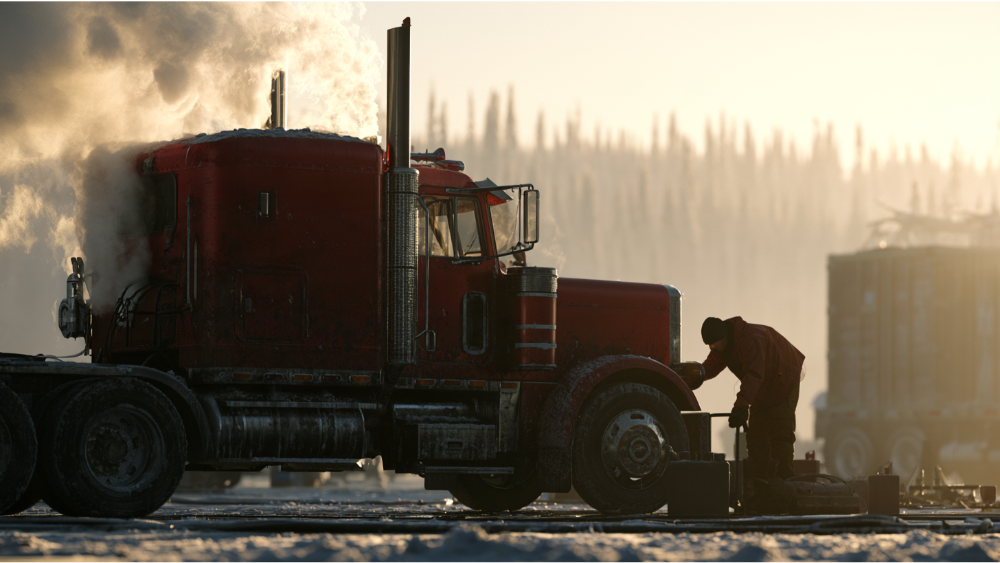
Most medium-duty diesels and diesel pickups use glow plugs to preheat the combustion chambers. Most Class 8 engines use an intake grid heater or preheater instead. Modern glow plugs reach over 1,800°F in a couple of seconds, and a single failed plug can be enough to stop a cold start, which is why the standard practice is replacing the set rather than the single plug. On grid-heater trucks, the relay and controller fail more often than the element. Watch wait-to-start behavior before cranking.
Cold also exposes marginal batteries, heavy oil viscosity, water frozen in a filter, and wax plugging the filter media. A block heater that quit working, or a cord nobody plugged in, leaves the coolant and oil cold enough that cranking heat never arrives. Caterpillar’s winter guidance says gelling may occur around 10°F (-12°C), but treat that as an estimate. Actual cloud and plugging points move with fuel blend, season, region, and biodiesel content. Cold outside does not prove gelled fuel. If a filter is gelled, OEM guidance is to replace it, not heat it externally. Seasonal fuel and approved anti-gel additives prevent the problem far more reliably than anything you can do in a parking lot at 5 a.m.
Electrical and sensor faults that prevent starting
Official troubleshooting literature lists damaged, failed, or incorrectly positioned camshaft and crankshaft position sensors among the causes of an engine that cranks and won’t start. The ECM controls injection timing off those signals, and without confirmed engine position and synchronization it won’t command normal injection. No amount of fuel pressure matters at that point.
Add ECM power and ground faults, chafed harnesses near recent repairs, blown fuses, failed relays, and anti-theft or start-authorization states. One pattern deserves attention: if the engine stalled while driving and now only cranks, move sensor signal, ECM power, and wiring to the top of the list before you touch the fuel system.
What exhaust smoke tells you while cranking (and what it doesn’t)

Smoke is directional. It is never conclusive. No visible smoke during cranking suggests little or no fuel is reaching the cylinders, but confirm that with pressure and ECM data before condemning a pump. White smoke usually means fuel is arriving and not igniting completely, which can come from inadequate preheat, low cranking speed, low compression, incorrect injection timing, poor fuel quality, or injector faults. White smoke does not automatically mean bad glow plugs. Heavy smoke or raw fuel odor after repeated attempts means stop cranking and start testing.
Stop cranking: what not to do while you’re troubleshooting
- Don’t crank continuously. Limits are engine-specific. One Cummins manual allows 30 seconds of cranking with two minutes between attempts. One Detroit priming procedure specifies 20 seconds of cranking, 60 seconds of cool-down, and no more than three cycles before further diagnosis. Follow your engine’s procedure. Repeated long cranking cooks the starter and flattens the bank.
- Don’t use starting fluid or ether unless your engine manufacturer specifically approves it. Cummins warns that ether used with an intake-air heater can cause an explosion, fire, injury, and severe engine damage, which rules it out on many Cummins engines. Some Detroit platforms prohibit it outright because of injector damage.
- Don’t crack a high-pressure fuel line to look for fuel. Common-rail injection pressure runs up to 32,000 psi on a Cummins X15. That old mechanical-diesel trick has no place on a modern truck.
- Stop immediately if the motor sounds mechanically abnormal. Knocking or grinding during crank is a tow, not a troubleshooting session.
Can a DEF, SCR, or DPF fault keep a diesel truck from starting?

Possibly, depending on the truck’s inducement state, model year, and ECM calibration. It is not a blanket yes or no. DEF and SCR problems normally begin with warnings and derates rather than behaving like a fuel-side crank-no-start, but EPA states that SCR/DEF systems can eventually render vehicles inoperable when DEF runs out or certain sensors fail. EPA’s August 2025 guidance letting manufacturers revise in-use inducement behavior is voluntary, and the July 14, 2026 proposed rule that would replace derates with audible or visual notifications remains proposed as of this writing. Emissions behavior varies by OEM calibration, so read the dash state and the codes.
How a technician proves the cause with OEM software and a scan tool
A code scan by itself is not a diagnosis. Live cranking data is. Here’s the order:
- Record every active and stored code before clearing anything.
- Monitor engine RPM and module voltage during cranking, not at rest.
- Confirm cam/crank synchronization and ECM start authorization.
- Compare commanded rail pressure against actual rail pressure.
- Verify low-pressure fuel supply and that the system is actually primed.
- Inspect filters, water separator, and fuel quality in the tank.
- Test the battery bank, grounds, starter draw, and voltage drop across cables.
- Inspect wiring and anything recently serviced on that unit.
- Run relative compression, compression, or valve timing checks only after the electronic and fuel tests pass.
Every likely cause gets a verification step. No parts cannon. Proving the failure first is what keeps the repair honest and the estimate accurate.
Roadside repair or tow it in?
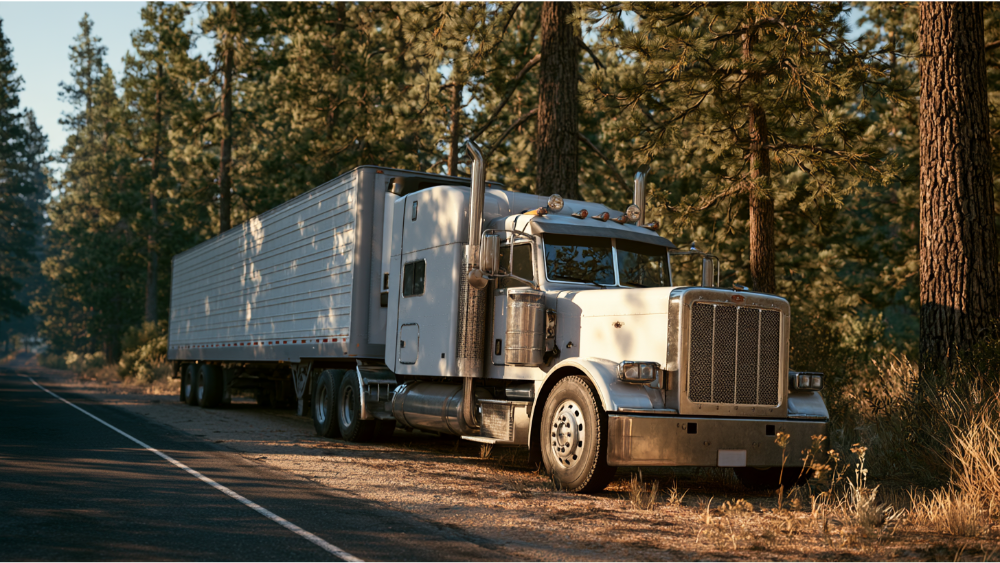
Often repairable where the truck sits:
- Battery, terminal, cable, or ground faults
- Accessible relay, fuse, or wiring faults
- Filter replacement with correct OEM priming afterward
- Scan diagnosis that confirms a repairable external fault
Usually needs shop equipment or a tow:
- High-pressure fuel system faults
- Suspected contamination or wrong fuel in the tank
- Repeated loss of prime with no visible leak, which is a huge red flag for a suction-side failure
- Compression or valve timing concerns, or internal engine noise
- Major harness damage or ECM communication failure
That call should come from scan data, not from a description over the phone.
How fleets cut down on repeat no-starts
Set PM intervals by engine and brand, not by a single fleet-wide number. Load test battery banks and cables on a schedule, and check for parasitic drain on units that sit over weekends. Service fuel filters and water separators, then prime correctly. Plan seasonal fuel and additives before the first cold snap. Review repeat hard-start and no start codes across the fleet rather than unit by unit, keep written service history per unit so patterns surface, and verify the repair before the truck goes back in service.
Frequently Asked Questions
What is wrong if your engine cranks over but won’t start?
One of five conditions is missing: cranking speed, compression and heat, fuel pressure, ECM injection authorization, or a valid crank/cam signal. Which one it is gets determined by live cranking data, not by the sound of the starter.
How do you get air out of a diesel fuel system?
Follow the OEM priming procedure for that specific engine. Do not use the starter as a priming pump, because OEM literature warns it can damage the starter, fuel pumps, and injectors. Then find and fix the suction-side leak, or the air comes right back.
Why does my diesel start but not rev up?
Usually a fuel delivery restriction, air in the fuel, or an active derate or inducement limiting the engine. Check low-pressure supply, filter condition, and the fault codes before assuming a mechanical problem.
What if a diesel generator cranks but won’t start?
The same five conditions apply to standby generators and off-road power units. Confirm fuel shutoff position, supply pressure, and cranking speed first, since units that sit for months lose prime and build weak batteries.
Why is my diesel tractor cranking but not starting?
Verify cranking speed, fuel pressure, injection authorization, crank/cam signal, and compression with scan data and pressure readings rather than swapping parts.
Get a straight diagnosis and get back on the road
The fastest route back on the road is a verified diagnosis, not replacing the most obvious part first. Torpedo Truck Repair runs OEM diagnostic software and structured verified workflows, and you get a full itemized estimate before a single bolt is turned. No upsell. No surprises. Same-day service focus when possible.
Call now: (253) 449-0100. 24/7 emergency dispatch. Shop hours are Mon through Fri, 8:00 AM to 5:30 PM. Not an emergency? Request a service quote. Takes under 60 seconds, no obligation.