Key Takeaway
Diesel engines don’t use spark plugs because compression ignition heats intake air above 500°C (932°F), causing injected diesel fuel to ignite on contact with no spark needed. Glow plugs are electric heating elements that warm the combustion chamber during cold starts so compression ignition happens reliably from the first firing. Once the engine reaches operating temperature, glow plugs shut off entirely. They are starting aids, not ignition sources.
Diesel engines don’t use spark plugs because diesel fuel is ignited by the heat of compressed air inside the cylinder, not by an electrical spark. Glow plugs are small electric heaters that warm the combustion area for cold starts. They don’t fire the fuel like a spark plug does. If you’re a driver, owner-operator, or fleet manager dealing with a diesel vehicle that cranks slow, smokes on startup, or throws a glow plug or intake heater code, here’s the science plus what actually matters when the engine won’t start clean.
Why Gas Engines Use Spark Ignition and Diesel Engines Use Compression
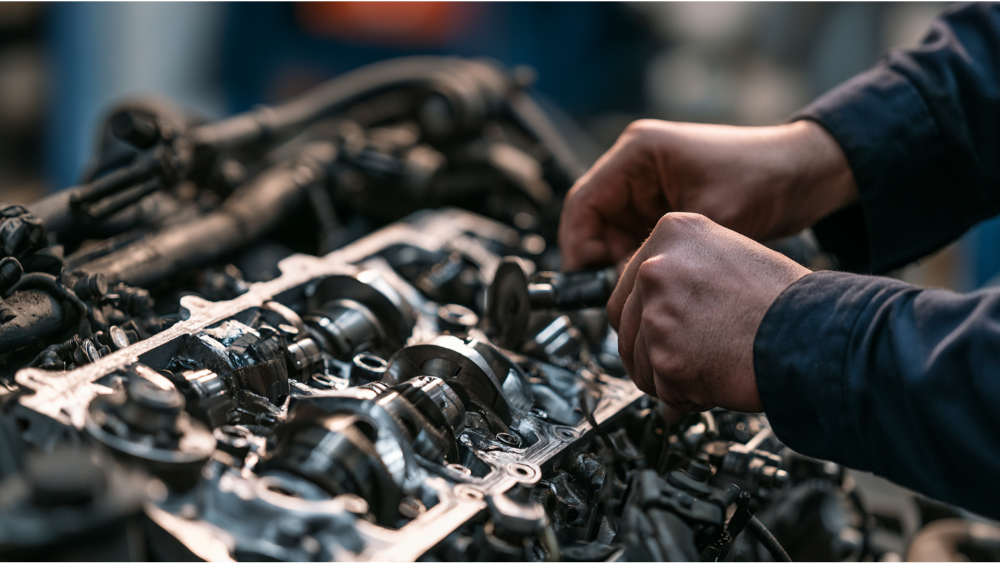
Gasoline engines and diesel engines get to combustion two different ways. A gasoline engine draws in a fuel air mixture, compresses it, then fires it with a spark plug. Diesel engines use air only. They take in air, compress it hard, then spray diesel fuel into that superheated air. The fuel ignites on contact. No spark required. These are simply different engines built around different ignition principles.
The reason comes down to compression. Diesel engines run higher compression ratios, roughly between 14:1 and 25:1, far higher than gas engines. Squeezing air that tightly drives its temperature up over 500°C (932°F). That higher compression produces enough heat to light diesel fuel the instant it’s injected. This is a process called compression ignition, and that higher compression is the whole reason a spark plug is unnecessary. The heat is already there in the combustion chamber before fuel is injected.
So when someone asks whether a diesel engine has spark plugs, the answer is no, and it isn’t a design gap. Diesel engines use a different combustion method built around high compression and precise fuel injection timing instead of spark ignition. Spark plugs exist to light the fuel air mixture in gas engines. Diesel engines don’t need that because the air inside the cylinder does the igniting.
Spark Plug vs Glow Plug vs Grid Heater
Three parts get confused constantly. Here’s how they actually differ.
| Part | Used on | What it does | When it works |
|---|---|---|---|
| Spark plug | Gasoline and natural gas engines | A spark ignites the air fuel mixture across a small gap | Fires continuously while the engine runs |
| Glow plug | Many diesel engines | Heats the combustion area for cold starts and warm-up | Pre-glow, start, and post-glow depending on the system |
| Grid/intake heater | Some diesels, including many heavy-duty engines | Heats the incoming intake air before it reaches the cylinders | Cold start and post-heat depending on the system |
The key split: a spark plug is an ignition source that fires every cycle in gasoline engines. Glow plugs and grid heaters are both heating elements that assist starting in cold weather. They warm the air so compression ignition works reliably. They don’t spark and they don’t run all the time. Spark plugs do the actual igniting in a gas engine. Glow plugs never do.
What Glow Plugs Do During Cold Weather Starts
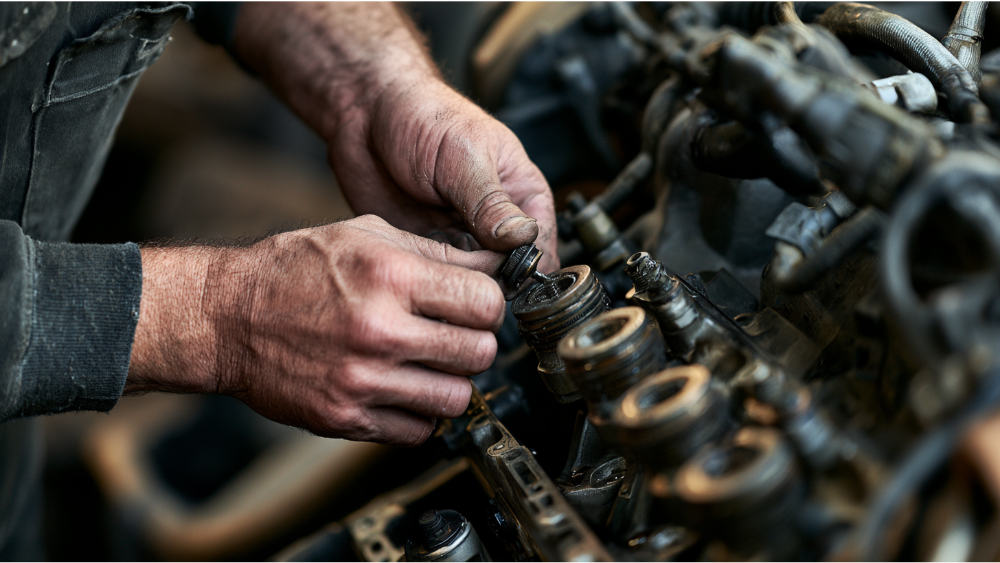
When a diesel engine is cold, the compression stroke alone may not raise the air temperature enough for clean ignition on the first firings. That’s the gap glow plugs fill. They act as a pre heater for the combustion chamber so the diesel fuel lights the moment it’s injected, even at low ambient temperatures. This is exactly why diesel engines require glow plugs or an equivalent starting aid for reliable cold starts, especially in colder climates.
Modern glow plugs heat up fast, reaching operating temperature within a few seconds. On many trucks you’ll see a glow plug light or wait-to-start lamp on the dash. That light is the system telling you the plugs are heating and the cold engine isn’t ready to crank yet. Give it the moment it asks for and the start comes clean.
Without working glow plugs, a diesel can struggle badly in cold conditions. You get long crank times, rough idling as the engine stumbles through its first firings, and white smoke from unburned diesel fuel that never fully ignited. Faulty plugs make every cold morning worse. Good ones cut all of that on startup and protect engine performance from the first firing.
Once the engine warms up, the glow plugs turn off. Compression heat alone provides the heat needed to keep ignition going, so the plugs have no job during normal running. Their whole purpose is the cold start and the first minutes of warm-up. The outcome that matters to you: fast, clean engine starts with no long crank and no smoke show at the truck stop.
Why Diesel Engines Require Glow Plugs and Pre Heating, Not Spark
Here’s where a lot of people get it wrong. A glow plug does not spark, and it does not fire the fuel each combustion cycle the way a spark plug does in a gas engine. It’s a heating element, nothing more.
What it does is bring the air inside the combustion chamber up toward the necessary temperature so that compression ignition happens more reliably when the engine is cold. Glow plugs operate only during that pre heating window. The actual ignition still comes from compression heat plus injection timing, exactly as it does once the engine is warm and the plugs have shut off. Unlike their gasoline counterparts, diesel engines operate on that compression heat to ignite the fuel. There’s no spark anywhere in the process, and there’s no pre ignition problem to manage the way a spark-lit engine has. The glow plug is a starting aid for the cold end of the range, not the ignition source.
Do All Diesel Engines Have Glow Plugs?

No. Cold-start hardware varies by engine type and manufacturer.
Many light-duty and small diesels use individual in-cylinder glow plugs, one per cylinder, heating the combustion chamber directly. That direct injection layout benefits from a heater right at the cylinder for improved cold weather starting. Plenty of heavy-duty diesel engines take a different approach and use an intake air heater or grid heater instead. That single element sits in the intake path and warms the hot air on its way in, rather than heating each cylinder.
Across Class 6 through 8 platforms, the configuration depends on the engine family and the OEM. A Cummins-style engine may run an intake air heater system for cold-weather starting, while another design uses glow plugs. This is exactly why generic diesel advice falls short for truck operators. The cold-start system on a Class 8 tractor is not the same as the one on a diesel pickup. If you’re diagnosing a hard start, the first question is what system the engine even uses. Guessing off a pickup forum wastes your time.
Bad Glow Plug — or Something Else? Symptoms That Overlap
Faulty glow plugs show up in ways that hit you where it hurts, usually on a cold morning when you’re trying to make dispatch. Watch for:
- Hard cold starting, especially in low temperatures
- Long crank before the engine catches
- White smoke at startup and idle
- Rough idle or misfire right after a cold start
- Glow plug lamp or check-engine light
- Poor warm-up behavior and reduced fuel efficiency
- Occasionally, DPF regeneration complaints
Here’s the part most articles skip. Every one of those symptoms overlaps with other faults. Weak or dying batteries. Slow starter speed. A failed intake heater or its relay. A bad control module. Corroded wiring or connectors. Poor injector performance. Low fuel pressure. Air getting into the fuel system. Even low compression.
A hard-starting diesel engine is not automatically a glow plug problem. Throwing a set of plugs at it because that’s the easy guess often leaves the real fault in place and puts the truck right back in the same spot next cold morning. That’s lost time and money you don’t get back. The symptom tells you where to start looking. It doesn’t tell you the answer.
How a Professional Diesel Diagnostic Should Actually Work

Modern diesel engines monitor their glow plug and intake heater circuits electronically, which means the right approach is scan-tool work and a verified sequence, not parts roulette. A structured diagnostic looks like this:
- Scan OEM and heavy-duty codes to see what the ECM has flagged
- Confirm the ECM is actually commanding the glow plugs or intake heater on
- Check current draw and voltage drop across the circuit
- Test the relays and control module
- Inspect wiring and connectors for corrosion or breaks
- Verify battery health and starter cranking speed at the ignition key
- Check fuel delivery and injector behavior
- Confirm compression if the earlier steps point to it
- Clear codes and verify cold-start performance before the truck leaves
This is why diagnosis matters more than guessing. Each step rules something in or out, so you fix the actual root cause the first time instead of chasing symptoms. Getting the fuel air mixture, compression, and heat working together is what gives you a clean burn and lower emissions on startup. At Torpedo Truck Repair, that means OEM diagnostic software and certified technicians running a verified workflow, not a technician poking at parts and hoping. Correct diagnosis also keeps your emissions system from working harder than it should and helps reduce emissions over the life of the truck.
Don’t Reach for Starting Fluid
Do not spray starting fluid or ether into a diesel engine equipped with glow plugs or an electric intake air heater unless the OEM procedure specifically allows it. Manufacturer documentation warns of flash fire, explosion, personal injury, and engine damage from the high temperatures involved. A hard start is a signal that something needs diagnosis, not a can of ether.
When to Call a Diesel Shop
If your truck is hard-starting, smoking on startup, throwing glow plug or intake heater codes, or making you late for dispatch, don’t throw parts at it. Torpedo Truck Repair diagnoses it. Diesel Engine Repair And Maintenance and Electrical Diagnostics And Repair, run with OEM diagnostic software, an itemized estimate before any work begins, no surprises, no upsell, and a same-day service focus when possible.
For breakdowns along the Seattle-Tacoma freight corridor (I-5, Hwy 167, SR-512), 24/7 Emergency Road Service is dispatched from the Fife, WA shop within a 50-mile radius. Call (253) 449-0100, or request a service quote online.
Frequently Asked Questions
Can a diesel engine run with no glow plugs?
Once the engine is warm, yes, because compression heat alone keeps it running. Cold starts suffer badly without them, especially in low temperatures. It’s not a fault to ignore.
Do modern diesel engines still use glow plugs?
Many do. Others use an intake air heater or grid heater instead, heating the incoming air rather than each cylinder. Heavy-duty diesel engines vary by family and OEM.
Is it true that diesel engines don’t use spark plugs?
Yes. Compression ignition heats the air enough to ignite the injected diesel fuel on contact, so no spark is needed. Spark plugs belong to gasoline engines and natural gas engines.
What’s the worst thing for a diesel engine?
Guessing at repairs and ignoring the root cause, along with contaminated fuel and skipped PM service. Repeated cold-start complaints are a diagnostic issue to solve, not a driver annoyance to live with.