Key Takeaway
Bleeding air from brake lines requires pushing fresh, OEM-specified brake fluid through each hydraulic circuit while opening and closing bleeder valves in the correct sequence until fluid runs clear and the pedal is firm. Keep the master cylinder reservoir full throughout so it never draws new air in. This process applies only to hydraulic and air-over-hydraulic systems, not full air brake trucks. Skipping any step, especially an ABS purge, leaves trapped air that increases stopping distance.
Air is bled from brake lines by pushing fresh, OEM-specified brake fluid through the hydraulic circuit while each brake bleeder valve is opened and closed in the correct sequence until no air bubbles come out and the brake pedal is firm. Keep the master cylinder reservoir full the whole time so it never pulls new air in. That’s the short version. But there’s a fork you have to catch first: this only applies to hydraulic brakes, not full air brake systems. If you’ve got a soft pedal, a leak you just fixed, or a truck that came back from brake work feeling wrong, the pedal is the symptom, not the repair.
Why Air In Brake Lines Is A Stopping-Distance Problem
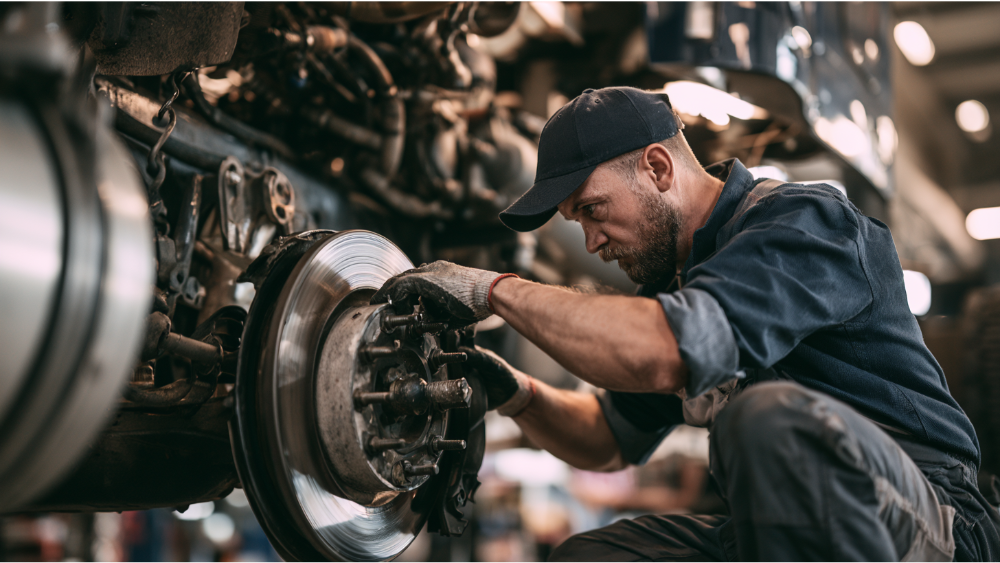
Brake fluid doesn’t compress. Air does. When air gets trapped in a hydraulic line, your brake pedal presses that pocket of air first instead of moving fluid straight to the caliper or wheel cylinder. The result is a soft pedal, delayed application, longer stopping distance, and in the worst case, complete brake failure. Moisture makes it worse. Brake fluid will absorb moisture over time, which lowers its boiling point, and hard braking can drive fluid temperatures toward 1200°F. On a loaded Class 6 through 8 truck, that’s a safety and DOT compliance issue, plus freight sitting when it should be moving. Air in the lines is not something to test on the road.
First Step: Know Which Brake System You Have
Before anyone touches a bleeder screw, confirm what you’re working on. There are three systems, and they don’t get serviced the same way:
| System | Where You’ll Find It | Service Approach |
|---|---|---|
| Hydraulic brakes | Fluid-based, often with disc brakes at the wheel ends, drum brakes at others | These are the ones that get bled |
| Air-over-hydraulic brakes | Medium-duty box trucks and vocational rigs | Air assists, but the hydraulic circuit still moves fluid and gets bled |
| Full air brakes | Most Class 7-8 tractors and trailers | Not bled. Checked for pressure, leaks, moisture, valves, chambers, and adjustment |
Full air brake systems are not bled like hydraulic lines. There’s no fluid to purge. The concern there is air pressure, leaks, moisture, valves, chambers, and brake adjustment. Getting this wrong at the start wastes hours and can leave a truck unsafe.
When Brake Lines Need To Be Bled

Any time a hydraulic fitting is loosened or disconnected, air can enter, and the system has to be bled before the truck moves. Common triggers:
- Brake hose or replacing brake lines
- Caliper or wheel cylinder replacement
- Brake master cylinder service
- ABS, HCU, or modulator service
- Brake fluid leak repair
- Reservoir ran dry
- Spongy brake pedal after brake work
- Brake pads replaced deep enough to disturb the hydraulic circuit
Skip the bleed after any of these and trapped air increases stopping distance. That’s the whole reason the step exists.
Bleeding Air From Brake Lines: How It’s Done Right On Hydraulic Systems
The brake bleeding process is straightforward when nothing gets skipped:
- Confirm the correct OEM-specified brake fluid. Never mix incompatible types, which can damage rubber components and cause loss of braking.
- Inspect the system for leaks first. A leaking hose or loose fitting is why the air got in. Fix the cause, then bleed.
- Park on a level surface. If wheels have to come off, break the lug nuts, lift, and support on jack stands before removing anything.
- Keep the brake fluid reservoir full the entire time so it never sucks air back in. New fluid should be on hand to keep it topped, and clean brake fluid only.
- Follow the OEM bleeding sequence. On most cars and many trucks it starts at the wheel furthest from the master cylinder, often the left rear, then the right rear, but verify the service manual. Sequence varies by vehicle and by split hydraulic circuit.
- Open the bleeder valve to let old brake fluid and air bubbles escape into a hose and bottle, then tighten it before the brake pedal is released.
The method depends on the system:
- Two-person pump-and-hold: one works the pedal from the driver’s seat, one works the bleeder screw.
- Vacuum bleeder: pulls fluid through from the bleeder side.
- Gravity bleed: slow, uses fluid weight alone.
- Pressure or pressure-fill: often preferred on commercial hydraulic ABS.
On the two-person method, one person will slowly pump the brake pedal, hold pressure, then the other opens the bleeder to let old fluid and air out. Keep the tube submerged in the bottle so the tubing forms a closed system and stops the line from sucking air back through the bleeder screw open moment. A DIY bottle-and-hose setup can work on a simple vehicle or car with basic disc brakes, as long as the hose fits snugly over the bleeder. When you’re done, the fluid runs clear with no bubbles and the pedal is firm. That firm feel is what confirms performance is back where it should be. Take a short test drive to confirm the brakes feel firm before the truck goes back to work. No guesswork.
Why ABS Systems Can Change The Bleeding Process
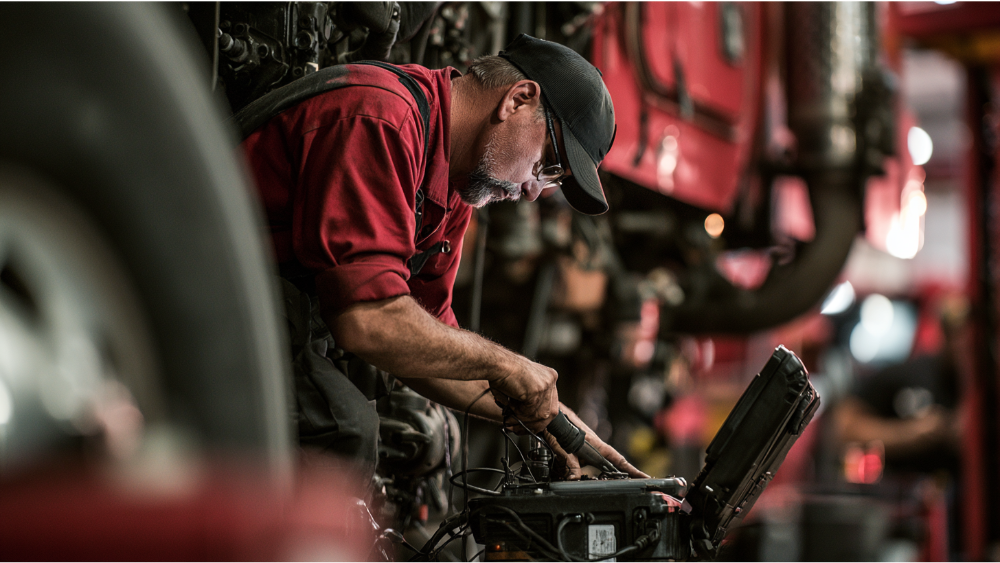
ABS adds a hydraulic control unit, the HCU or modulator, that can trap air pockets a standard bleed can’t reach. If the HCU has ingested air, a compatible scan tool is required to cycle the internal valves and remove air the pedal can’t push out. In many cases the base hydraulic system gets bled before the ABS bleed and again after, working the bleeder valve at each corner and at the wheel at the rear. This is where DIY guides fall short. Torpedo uses OEM diagnostic software for exactly this reason, so ABS air doesn’t get left behind after the wheels feel done.
Common Mistakes That Ruin A Brake Bleed
- Master cylinder reservoir runs dry mid-bleed, pulling new air in and making the system near-impossible to bleed.
- Wrong or mixed brake fluid.
- Bleeder opened or closed at the wrong moment in the cycle.
- Air pulled in around loose bleeder screw threads, so the line keeps managing to get air that shouldn’t be there.
- Leaks ignored instead of repaired.
- ABS air never purged.
- A universal sequence used instead of the OEM procedure.
- Pedal “feels okay,” so the vehicle’s brakes are never actually verified.
Bleed-and-hope is not a repair. A soft pedal that came back is usually one of the above, and more bubbles in the line are the proof.
Air Brake Trucks: What To Do Instead
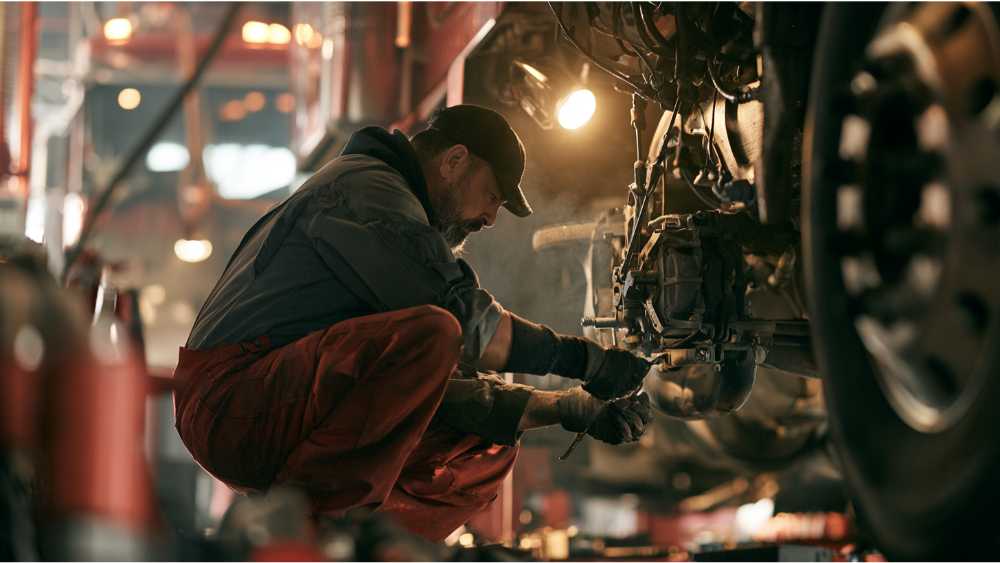
On a Class 7-8 air-brake tractor or trailer, the question changes entirely. You don’t bleed air out of the lines. You check air pressure build-up, listen for leaks, drain moisture and oil from the reservoirs, and inspect valves, chambers, and brake adjustment. Know the markers: the low-air warning must come on before pressure drops below 60 psi, spring brakes apply in the 20 to 45 psi range, and tanks without automatic drains should be drained at the end of each working day to clear moisture and oil.
When To Stop Driving And Call A Shop
If the brake pedal goes soft, the truck is not ready for the road. Stop and call when you see:
- Pedal sinks to the floor
- Pedal pumps up then fades
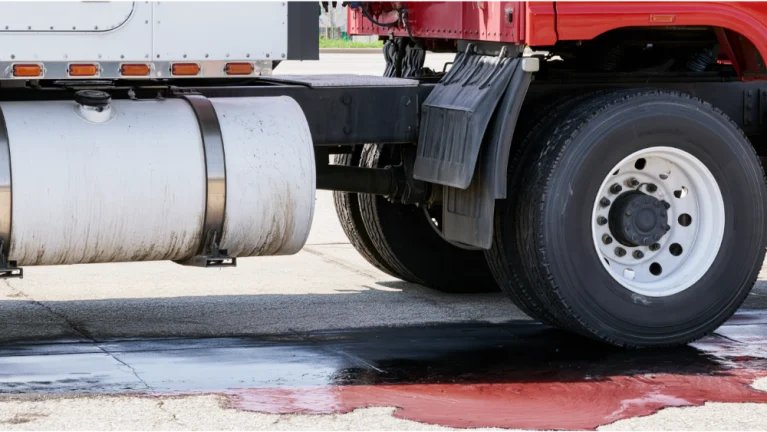
- Visible brake fluid leak
- ABS or brake warning light after service
- Low-air warning on an air-brake truck
- Spring brakes applying unexpectedly
- Any loaded truck with uncertain brake condition
If it happens on the I-5, Hwy 167, or SR-512 corridor, don’t gamble on the next off-ramp.
How Torpedo Truck Repair Handles Brake System Issues
Our Truck And Trailer Brake Repair starts with why the air got in, not just getting it out. We confirm the correct brake fluid, follow the OEM bleed procedure, verify no leaks and no trapped ABS air, work every bleeder in sequence, clear any ABS codes, check the wheel ends, pads, and rotors, and confirm a firm pedal before the truck is road-ready and DOT compliant. In-shop work runs from our Fife, WA home base. 24/7 Emergency Road Service covers the I-5, Hwy 167, and SR-512 corridor within our 50-mile mobile dispatch radius. We hold 4.9 stars across 146 Google Reviews. Shop hours are Mon-Fri 8 AM to 5:30 PM; the 24/7 line is emergency dispatch.
Call Now: (253) 449-0100.
Frequently Asked Questions
How do you properly bleed your brake lines?
Confirm the correct OEM brake fluid, keep the master cylinder reservoir full, and follow the OEM bleed sequence. Open and close each brake bleeder valve until fluid runs clear with no air bubbles, then verify a firm brake pedal.
What are common mistakes when bleeding brakes?
Letting the reservoir run dry, using wrong or mixed brake fluid, ignoring a leak instead of fixing it, skipping the ABS bleed, and using a one-size-fits-all method instead of the manufacturer’s procedure.
Do I leave the brake reservoir open when bleeding brakes?
Keep the cap loose or off to prevent a vacuum, but keep the reservoir topped off with new brake fluid and covered from dirt. The key is never letting the fluid level drop enough to get air pulled in.
Why is my brake pedal still soft after bleeding?
Usually trapped ABS air that needs a scan tool, a reservoir that ran dry mid-bleed, an unrepaired leak, or the wrong bleed sequence leaving bubbles behind.
Do semi trucks need their brake lines bled?
Only hydraulic and air-over-hydraulic systems get bled. Full air brake tractors and trailers are inspected for pressure, leaks, moisture, and adjustment, not bled.