Key Takeaway
Air brakes on commercial trucks use compressed air to apply service brakes and to hold spring brakes off while driving. If air pressure drops too low, typically between 20 and 45 psi, the spring brakes clamp on automatically as a fail-safe. The system operates at 100 to 120 psi, and total stopping distance from 55 mph can exceed 450 feet due to brake lag.
Air brakes use compressed air instead of hydraulic fluid to stop the truck. Unlike the hydraulic brakes in passenger cars, which push hydraulic fluid through hydraulic lines to a piston at each wheel, truck air brakes rely on a steady supply of pressurized air. The compressor builds air and stores it in reservoirs. When you press the brake pedal, that air travels through valves to the brake chambers, which convert air pressure into mechanical force at the drum or disc brakes. Spring brakes work the opposite way: air pressure holds them off while you drive, and if that pressure is lost, spring force applies the brakes automatically. This guide is for working truck operators, owner-operators, and fleet managers who need to know how the system works and when a brake issue becomes a driving or DOT problem.
The Short Version: Air Applies the Service Brakes, Air Releases the Spring Brakes
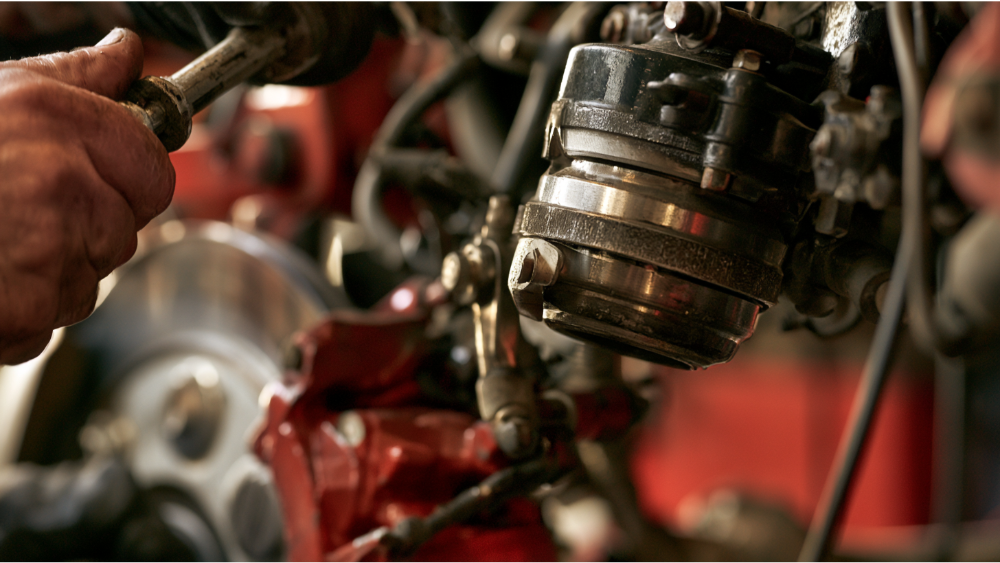
This is the distinction most explanations blur, so start here. Your service brakes are normal pedal braking. You push the pedal, air flows to the chambers, and the brakes apply. Let off, and they release. That braking process happens fast, and it is what slows the truck under load.
Spring brakes are different. They are your parking and emergency brake, and they are held off by air pressure. When you park, you release the air holding them back, and heavy springs clamp the brakes on. If air pressure drops too low while driving, the same thing happens automatically. That is the fail-safe. It means a truck that loses air stops instead of rolling free. On a car, by comparison, hydraulic braking systems have no equivalent spring, which is one reason heavy vehicles are equipped differently.
So when a low air warning comes on, the answer is simple: stop safely. Do not keep driving until the springs pop on their own.
The Main Air Brake Components on a Big Rig
You do not need a technician’s manual to understand how air brakes work. You need to know what each of these air brake components does on a big rig.
- Air compressor: engine-driven pump that supplies high pressure air.
- Governor: controls when the air compressor cuts in and cuts out.
- Air dryer: removes moisture before air enters the tanks.
- Reservoirs (storage tanks): the supply tank, primary reservoir, and secondary reservoir hold enough compressed air for several brake applications even if the compressor stops.
- Foot valve (treadle valve): the brake pedal that meters air to the brakes.
- Air lines and brake valve: route and control air through the air brake system.
- Brake chamber: converts air pressure into mechanical force.
- Slack adjusters: transfer chamber force to the brake mechanism and set travel.
- S-cam drum brakes: air pushes the pushrod, moves the slack adjuster, turns the camshaft, rotates the S cam, and forces the brake shoes against the brake drum.
- Air disc brakes: clamp brake pads against a rotor instead of shoes against a drum.
- Spring brake chambers: house the springs for parking and emergency braking.
- Pressure gauges: show system pressure so you know it is safe to drive.
- ABS: prevents wheel lockup during hard braking.
How the Air Brake System Works Step by Step
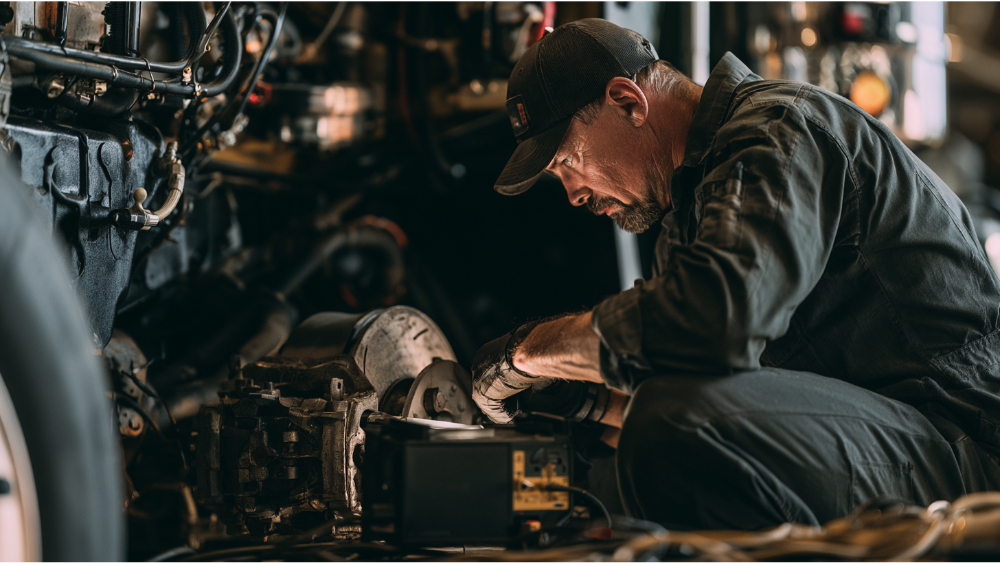
Here is the sequence from the moment the engine starts to the moment you release the pedal.
- The air compressor builds pressure.
- The governor cuts the compressor out around 125 psi and cuts it back in around 100 psi. Check your manufacturer specs, since these vary.
- The air reservoirs store that air, holding enough for several applications if the compressor quits.
- You press the foot valve.
- Air is metered through the valves based on how hard you push.
- The brake chambers push their pushrods.
- The slack adjusters or calipers move.
- Shoes press against the drum, or pads press against the rotor, creating friction.
- You release the pedal.
- Air exhausts, and return springs pull the brakes back off.
The system runs at roughly 100 to 120 psi in normal operation. That constant pressure is what gives air brakes their steady stopping power under heavy loads, and it is why braking systems on commercial vehicles deliver superior performance compared to lighter rigs.
How the Spring Brake and Air Tank Keep Big Rigs Parked
Spring brakes are applied by strong mechanical springs and held off by air pressure while you drive. The yellow park knob on the dash controls the air that holds them back. Pull it, and you exhaust that air from the air tank, so the springs apply. Push it in with enough pressure built, and they release.
When air pressure drops too low, the springs take over on their own. According to the Washington CDL guide, tractor and straight-truck spring brakes fully apply somewhere between 20 and 45 psi, usually 20 to 30 psi. Never wait for that automatic application. Stop when the low air warning first comes on.
How Tractor-Trailer Air Brakes Work
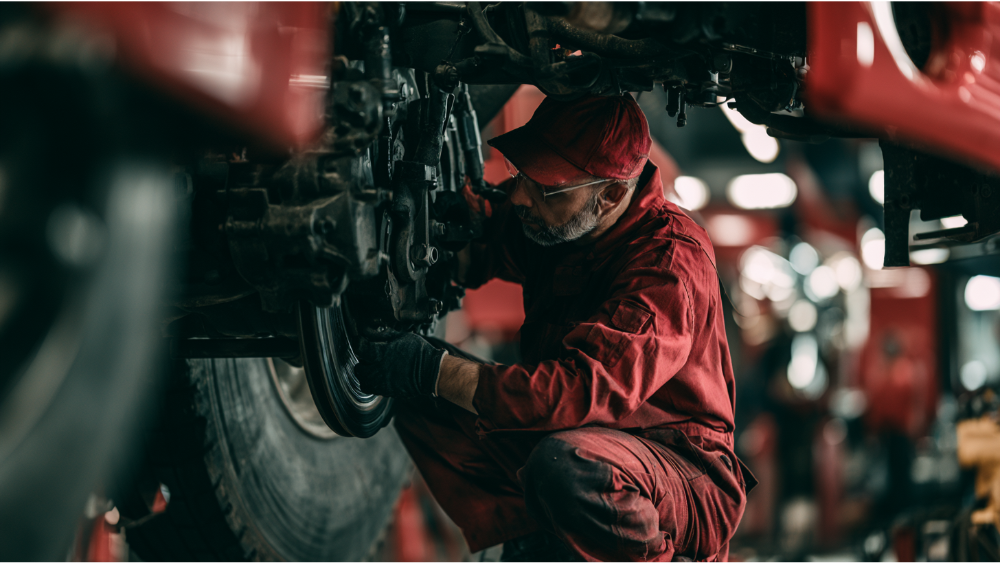
Two air lines run between the tractor and trailer. The service line (usually blue) carries control air from the foot brake or trailer hand valve. The emergency or supply line (usually red) fills the trailer tanks and controls emergency application. The glad hands are the coupler fittings that connect these brake hoses.
The tractor protection valve closes if supply-line pressure is lost, protecting air in the tractor. Each trailer and converter dolly carries its own air tanks, filled through the supply line, and relay valves use service-line pressure to meter tank air to the trailer brakes for faster response.
This is also why air brakes make it practical to couple multiple units. But watch the glad hands. Crossed connections can leave the trailer with no service braking, or leave the trailer spring brakes unreleased. Either one is dangerous. Connect them right every time.
Normal Air Brake PSI: What the Numbers Mean
| Reading | Typical value |
|---|---|
| Governor cut-out | ~125 psi |
| Governor cut-in | ~100 psi |
| Safety relief valve opens | ~150 psi |
| Minimum before driving (dual system, both circuits) | 100 psi |
| Low air warning activates | Before 60 psi (WA CDL); federal 55 psi threshold for certain CMVs |
| Spring brake pop-out | 20 to 45 psi (typ. 20 to 30) |
| Static leak limit | <2 psi/min single, <3 psi/min combination |
| Applied leak limit | <3 psi/min single, <4 psi/min combination |
| Build-up time | 85 to 100 psi within 45 seconds |
The system manages small leaks because the compressor keeps rebuilding pressure, but the limits above still apply at inspection. Drain your tanks daily to clear moisture, since water can freeze and cause brake failure in cold weather.
Brake Lag and Stopping Distance
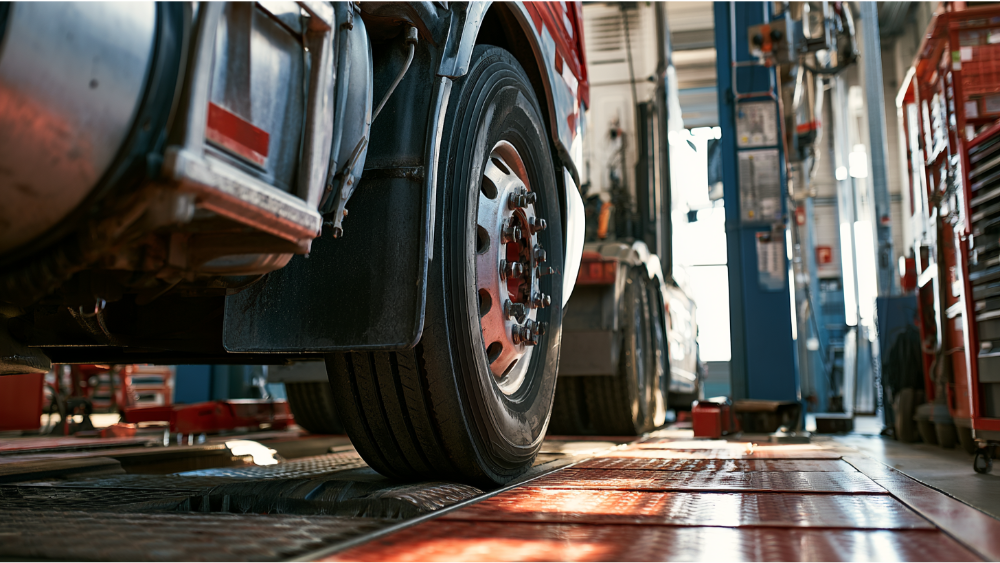
Air takes time to move through the lines after you push the pedal. That delay is brake lag, about half a second or more. At 55 mph on dry pavement, the Washington CDL guide notes lag alone adds roughly 32 feet, and total stopping distance for an average driver runs over 450 feet. A car slows in far less because hydraulic systems act almost instantly, without that lag.
Do not confuse two different numbers. CDL total stopping distance combines perception, reaction, brake lag, and braking distance. FMVSS 121 is a vehicle performance standard: most heavy truck tractors must stop within 250 feet from 60 mph loaded to GVWR. That is why properly maintained air brakes handle heavy trucks up to 80,000 pounds.
Air Brake Checks and Daily Maintenance Every Driver Should Know
You do not need the full CDL script, but you should know the checks that keep you legal and safe.
- Gauge and build-up check: pressure should rise 85 to 100 psi within 45 seconds.
- Static and applied leak tests, within the limits above.
- Low air warning check.
- Spring brake pop-out check.
- Parking brake and service brake roll test.
Then handle the daily basics. Inspect the air system before every trip. Drain the tanks to clear moisture. Keep the air dryer and filters clean. Replace worn shoes, pads, and drums on schedule. Federal lining minimums are enforced at inspection, including a quarter inch for non-steering axle drum lining and an eighth inch for disc pads. Thin linings put you out of service.
Common Air Brake Problems and What They Usually Mean
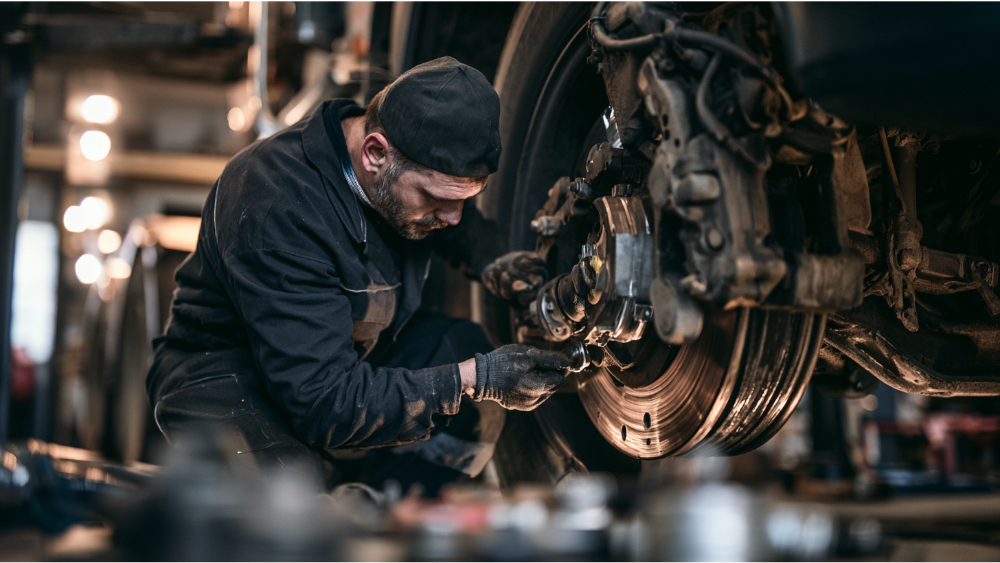
These are possible causes, not a diagnosis. Use them to decide whether to drive or call.
- Air builds slowly: compressor, governor, air dryer, or a restriction.
- Compressor cycles constantly: a leak or an unloader fault.
- Low air warning while driving: likely a major leak. Stop safely.
- Hissing from lines, tanks, valves, glad hands, or chambers: an air leak.
- Brakes drag or smoke: adjustment, return spring, or a stuck valve.
- Truck pulls when braking: brake imbalance.
- Trailer brakes won’t release: supply line, park control, or valve.
- ABS light stays on: a sensor or module fault.
- Excessive pushrod travel: an out-of-adjust automatic slack adjuster, which usually points to a real mechanical problem. Manually adjusting it hides the fault instead of fixing it.
- Moisture in tanks: drain them and check the air dryer.
At Torpedo, we diagnose the system before parts get thrown at it. Guessing wastes your money and your time.
When to Stop Driving, and Why Brake Problems Become DOT Problems Fast
Get off the road safely if any of these show up: the low air warning comes on while driving, you fail a leak or build-up test, spring brakes won’t release, brakes are dragging or smoking or pulling hard, you have a trailer brake issue, you hear a major air leak, or you have any out-of-service condition.
Brakes are also the fastest way to lose your day at a scale. In CVSA’s 2025 International Roadcheck, inspectors ran 56,178 inspections and placed 10,148 commercial motor vehicles out of service. Brake systems were the top vehicle out-of-service category, and brake-related violations accounted for 41.1% of vehicle OOS violations when you combine brake systems and 20% defective brakes. For a fleet, air brake maintenance is compliance work and a safety priority.
How Torpedo Truck Repair Handles Air Brake Issues
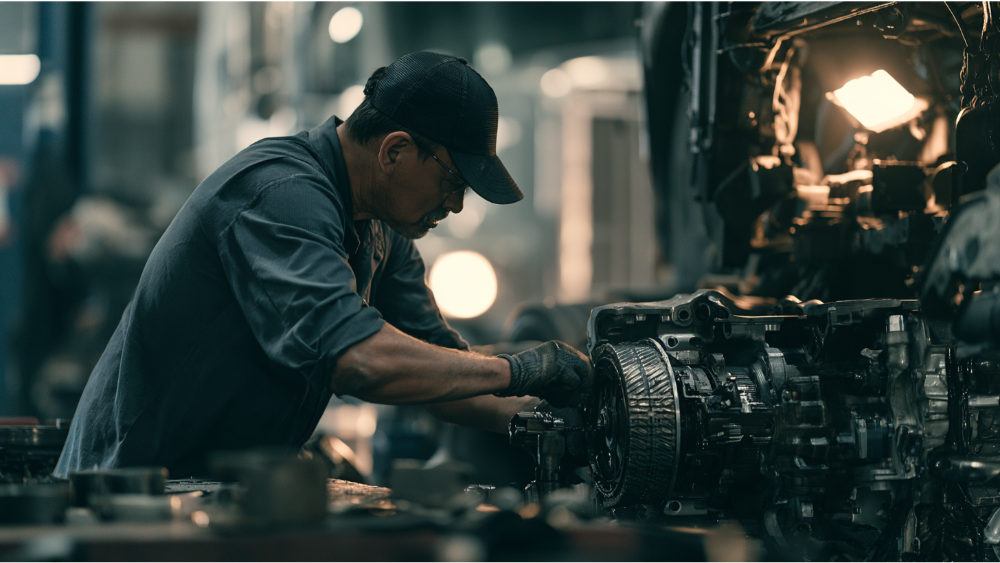
If your truck will not build air, do not guess. If the warning comes on, get off the road safely and call. Torpedo Truck Repair handles Truck And Trailer Brake Repair, 24/7 Emergency Road Service, Preventive Maintenance PM Service, and DOT Inspection And Compliance. Our shop sits in Fife, WA near I-5 and Hwy 167, and mobile dispatch covers 50 miles across the I-5, Hwy 167, and SR-512 corridors.
Call (253) 449-0100. We diagnose the whole system, give you an itemized estimate before work starts, and focus on getting you back on the road.
FAQ
Do air brakes use air to apply or release the brakes?
Both, depending on the brake. Air applies your service brakes when you press the pedal. Air holds your spring and parking brakes off, so losing air applies them automatically.
At what PSI do spring brakes come on?
On tractors and straight trucks, spring brakes fully apply somewhere between 20 and 45 psi, usually 20 to 30 psi. Never wait for that. Stop when the low air warning first comes on.
What happens if a truck loses air pressure?
The low air warning activates, and if pressure keeps dropping, the spring brakes apply on their own. This is the fail-safe that keeps a truck from rolling free when it loses air.
How do trailer air brakes work?
Two lines connect the tractor and trailer. The service line carries control air from the pedal, and the supply line fills the trailer tanks and controls emergency application. Crossed glad hands can leave the trailer with no service braking, so connect them correctly.
When should I call for air brake repair?
Call when you fail a leak or build-up test, hear a persistent air leak, notice brakes dragging or pulling, have a trailer that won’t release, or see the ABS light stay on. Call (253) 449-0100 and we will diagnose it before replacing parts.