Key Takeaway
Transmission coolers are essential for heavy-duty trucks because load, grade, stop-and-go traffic, and high horsepower generate heat that destroys clutches, seals, and fluid. Eaton recommends transmission oil coolers for engines of 350 HP and above, and requires them at 450 HP or higher. Keeping fluid below 250°F is critical, as sustained heat above that threshold accelerates oxidation and shortens transmission life.
Transmission Coolers: Why Heavy Duty Trucks Need Them
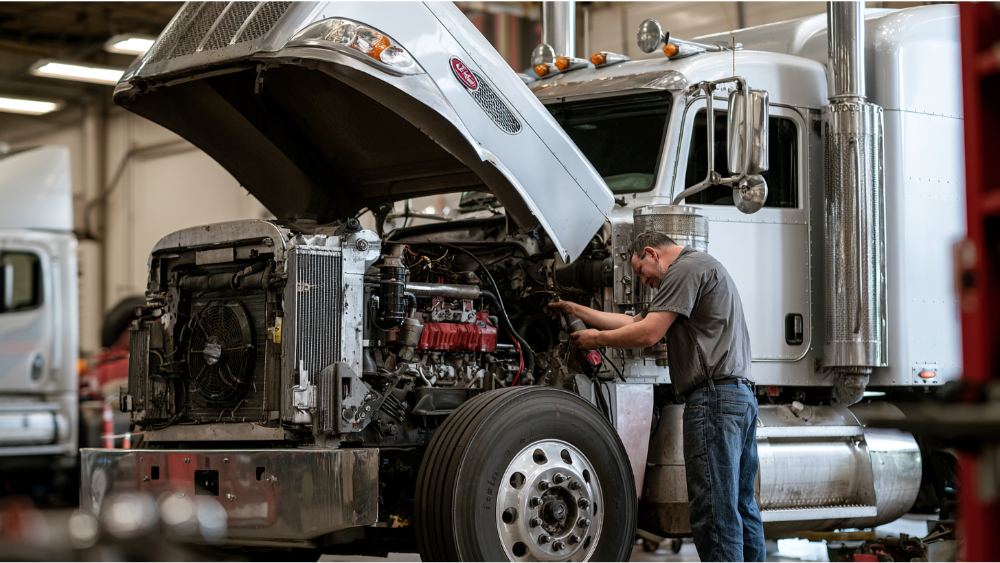
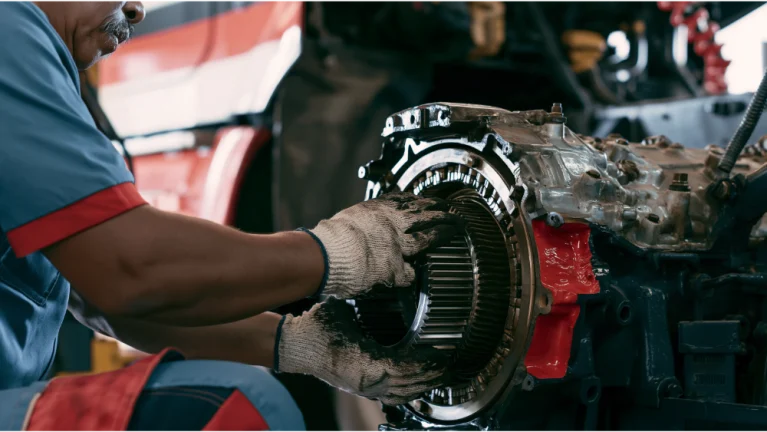
Heavy duty trucks need transmission coolers because load, grade, stop and go traffic, high horsepower, and PTO or retarder work all create heat that transmission fluid has to shed before it damages clutches, seals, bearings, and lubrication quality. The transmission cooler is part of the truck’s thermal management system, not a bolt-on accessory. If you run one truck or a whole fleet, this is the part that protects your schedule.
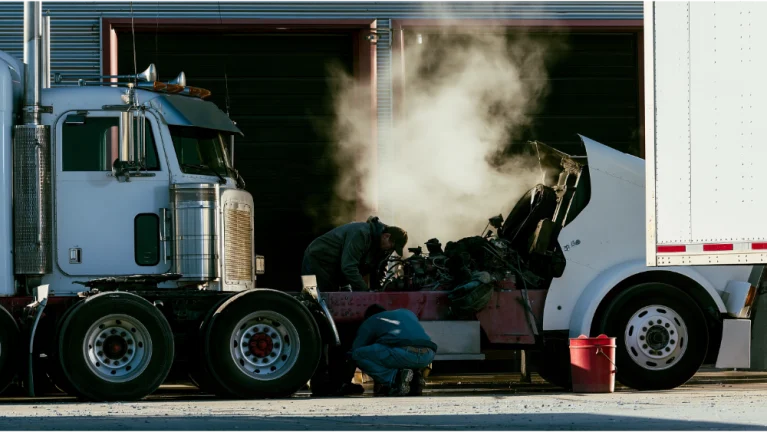
Eaton names the conditions that push heavy-duty transmissions past safe operating temperature: slow-speed operation, high ambient heat, restricted airflow around the transmission, exhaust routed too close, and high-horsepower operation. Eaton recommends transmission oil coolers with engines of 350 HP and above. Heat kills schedules before it kills transmission components, and a vehicle sitting on a derate is a truck not earning.
What A Transmission Cooler Does And Why Heavy Duty Trucks Build More Heat
A transmission cooler is a heat exchanger. Hot fluid leaves the transmission, moves through the cooler, sheds heat into air or engine coolant, and returns cooler than it left. That circulation is what keeps transmission temperatures in a range the vehicle’s transmission can live with. Some trucks run an oil-to-water cooler built into the radiator. Others carry added air-to-oil cooling capacity because the factory setup can’t keep up with the duty cycle.
A pickup rated for light duty use towing a boat on a weekend does not build heat the way a Class 6 through 8 truck does. Federal GVWR classes make the difference plain: Class 6 covers 19,501 to 26,000 lb, Class 7 covers 26,001 to 33,000 lb, and Class 8 is 33,001 lb and over. That weight has to be moved, held on grade, and stopped, and every one of those actions loads the drivetrain as the transmission works to transfer power. Heavy loads and heavy towing are exactly where a factory cooler runs out of margin.
Loaded gross combination weight is the first heat source. Low average speed is the second. When a truck crawls through port traffic or works a stop and go regional route, there is less airflow moving across the cooler right when the transmission is working harder. Add high ambient temperature, restricted airflow, exhaust routed near the transmission, and high horsepower, and you have the exact conditions Eaton warns about. PTO and vocational work stack more excessive heat on top. A factory radiator-integrated cooler may be enough for one truck’s route and not enough for another’s, which is why the answer is never a blanket “add a bigger cooler.”
What Excessive Heat Does To Transmission Fluid And Internal Parts
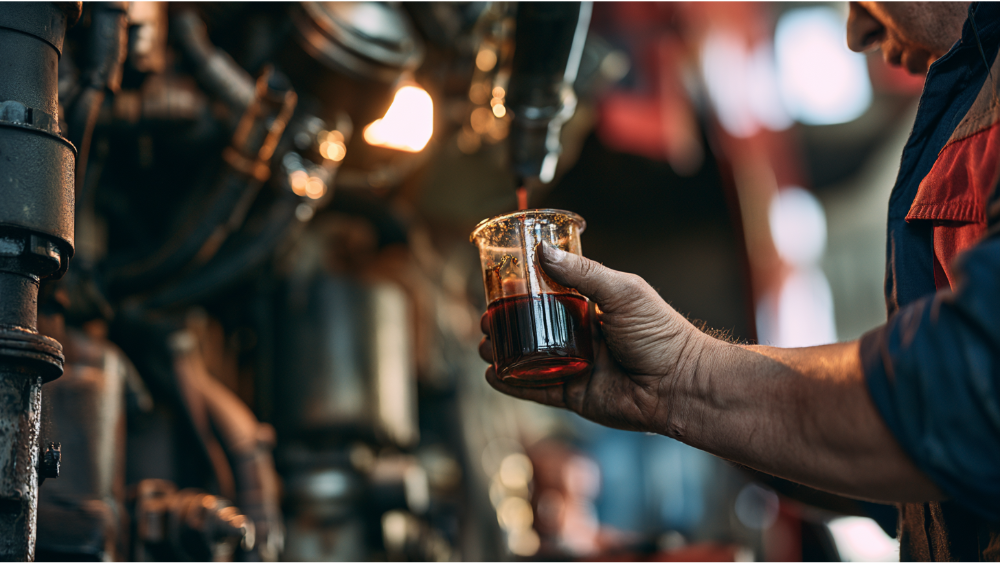
Heat generated under load attacks the fluid first. As transmission fluid temperature climbs, oxidation speeds up and the fluid loses its ability to lubricate and protect. Once the fluid degrades, clutches, seals, and bearings take the stress. You feel it as harsh shifting, delayed engagement, and eventually a derate or failure. High heat is one of the leading causes of premature transmission failure.
Eaton is specific about the limits. A heavy-duty transmission must not be operated consistently above 250°F. Intermittent operation up to 300°F is described as not harmful, but that is a short spike, not acceptable continuous running. Above 250°F, lubricant oxidation increases and effective oil life drops, which is why Eaton says trucks running that hot may need more frequent oil changes or external cooling.
You will also see a lower number in Allison service literature: 71°C to 93°C, or 160°F to 200°F. Read that carefully. That is the operating-temperature range Allison specifies for draining transmission fluid during a service, because hot fluid drains faster and more completely. It is not a universal safe ceiling for every transmission on every route. The point holds either way. Overheating is a schedule problem long before it becomes a parts problem, and by the time the fluid is burnt, the damage is already spreading and cutting transmission life short.
Trans Cooler Types: Tube And Fin, Plate And Fin, And Stacked Plate
Coolers fall into a few practical categories. The three main types of air-to-oil cooler each move heat differently. Knowing which one your truck runs matters when something goes wrong, because the failure mode and the fix are different. It also matters if you ever install added capacity for heavy towing.
- Radiator-integrated (oil-to-water): Built into the radiator, it uses engine coolant to control fluid temperature. Simple, but it links transmission and engine cooling health, and an internal crack can mix fluid and coolant.
- Tube and fin coolers: The basic air-to-oil design. Fluid runs through tubes with fins between them. Durable, but the least efficient of the air-to-oil layouts.
- Plate and fin: Fluid moves through flat plates with fins between. More surface area, better heat transfer than tube and fin.
- Stacked plate coolers: The most efficient air-to-oil design. Stacked plate coolers use turbulators that move heat out fast in a compact aluminum body, which is why heavy duty use favors them.
- Remote fan-assisted: An external cooler with its own fan for trucks that run slow or idle and can’t count on road airflow or off road driving conditions.
Both manual and automatic transmissions can be paired with an added cooler, and many automatic transmission cooler setups on vocational trucks use a stacked plate core for that reason. Retarder-equipped trucks add their own cooling demand, since retarder heat has to go somewhere. Whatever the design, aluminum construction, clean mounting for good airflow and maximum airflow across the core, and sound cooler lines and tubes all decide how well the system actually performs on the road. Choosing the right size for your model and duty cycle matters more than the biggest one you can find.
Warning Signs Your Transmission Cooler Or Cooling Circuit Needs Service

Watch for these in driver language, not code:
- A high transmission temperature gauge reading or over-temp warning
- A P0218 transmission over-temperature code
- A burnt smell from the fluid
- Dark or discolored fluid where it should be in good condition and clean
- Harsh, sluggish, or delayed shifts
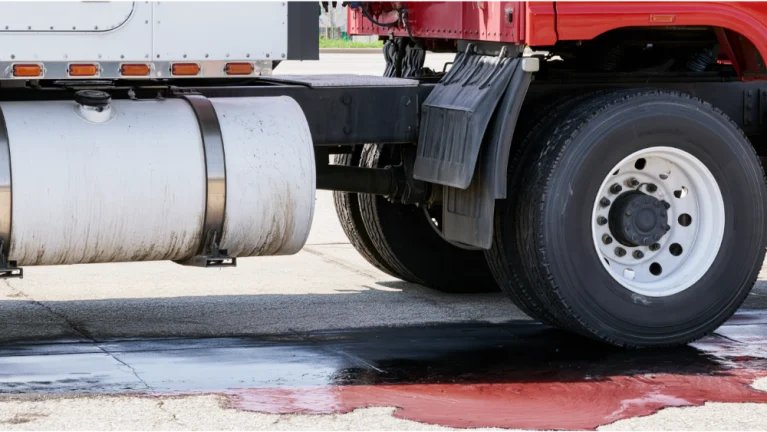
- A red fluid leak under the truck
- Coolant and transmission fluid mixing, a sign of internal cooler failure
That last one is serious. NHTSA investigation material documents a case where a cracked ATF line running through the radiator’s coolant chamber let transmission fluid and engine coolant mix. Contaminated fluid ruins a transmission fast. And if the truck keeps overheating after a “fix,” the real cause was never found. That is the setup for the next section.
Do Not Guess: What A Shop Should Diagnose Before Replacing A Cooler
A bigger cooler will not fix low fluid, a restricted line, a bad sensor, or an overloaded application. Overheating has to be verified, not assumed. A structured workflow separates a failed cooler from a transmission overheating for another reason. Here is the order a competent shop follows:
- Confirm transmission fluid level using the OEM procedure, at the right temperature
- Inspect fluid condition for burning, discoloration, or contamination
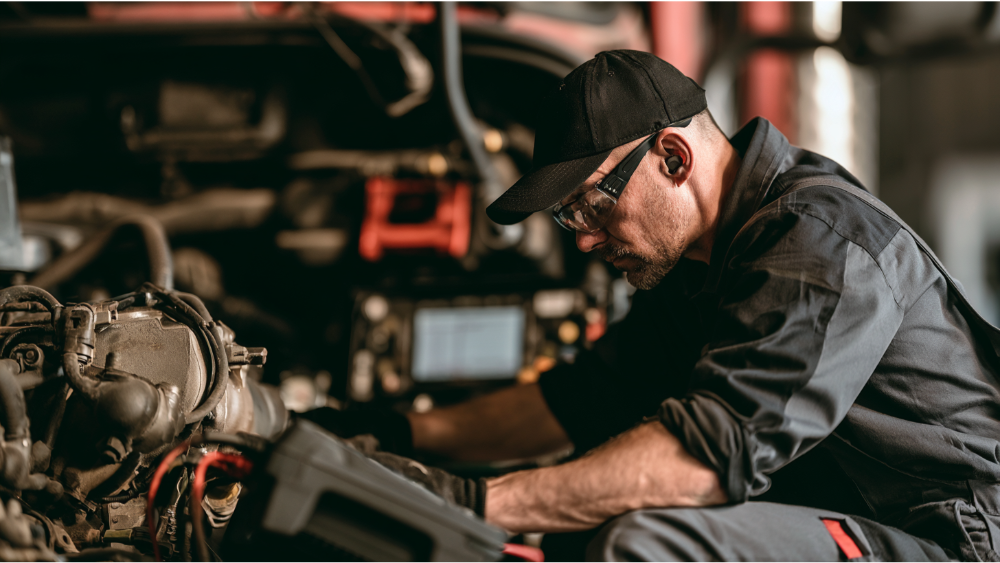
- Pull DTCs and read live transmission temperatures with OEM diagnostic software
- Check cooler lines and tubes for kinks, restrictions, leaks, or wrong routing
- Check cooler fins and airflow for debris or damage
- Verify engine cooling system performance and thermostat and fan operation
- Test cooler flow and pressure drop where applicable
- Confirm the load and duty cycle are within the truck’s transmission setup
A Mack/Volvo bulletin hosted by NHTSA lists the causes of P0218 as low oil level, oil temperature sensor, oil cooler, and overloaded transmission case. Four different roots, one warning light. We read the data before we quote parts, and you get an itemized estimate before a bolt is turned. That is how you get back on the road once, not twice. If the truck can’t move, we can arrange towing so the vehicle reaches the shop without further damage.
Transmission Cooling In Your Fleet PM Program
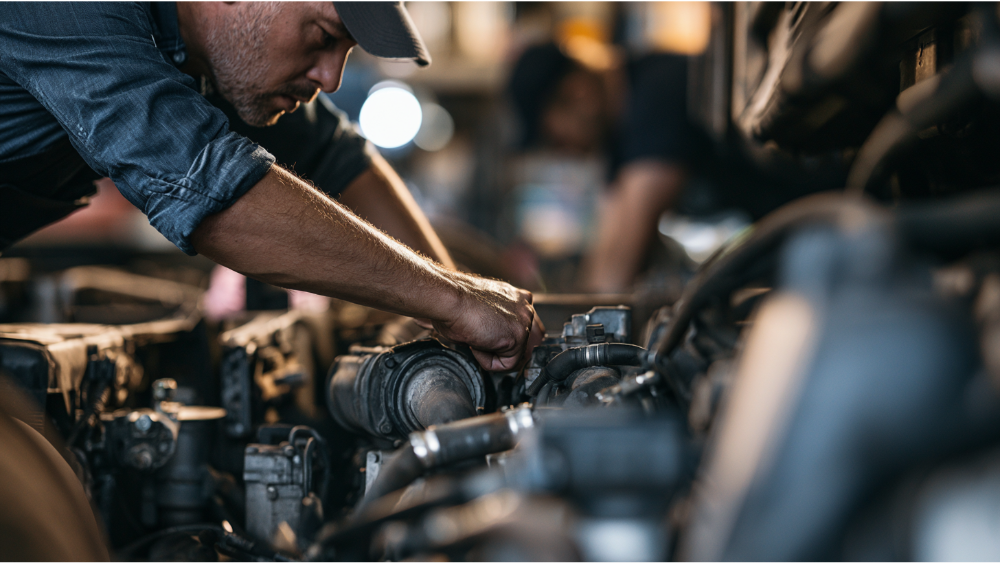
Cooler inspection belongs in scheduled maintenance, not in the roadside reaction after a warning light. Fluid and filter change intervals depend on the transmission model, the vocation and duty cycle, and the fluid type. Allison’s own numbers show the spread. For 3000/4000 Series on TES 668 or TES 295 with prognostics off, general duty runs 300,000 miles / 6,000 hours / 48 months and severe duty runs 150,000 miles / 6,000 hours / 48 months. On TES 389, those drop to 25,000 miles general and 12,000 miles severe. Treat these as examples and follow your data plate and OEM manual.
Service is due at whichever comes first: miles, hours, or months. For high-idle, low-speed units, hour-based service often comes due well before mileage. Allison recommends fluid analysis as the primary method for setting intervals. Remember that published fluid capacities exclude external lines, cooler, and hose, so any cooler work or a new install changes the volume and the level has to be verified by dipstick.
Build cooler-line inspection and fluid analysis into every PM cycle at regular intervals, and check cooler mounting and fins while you’re there. Servicing at generally recommended points is a smart move for any operation running heavy loads. FMCSA §396.3 requires systematic maintenance and records, kept for one year plus six months after a vehicle leaves your control; DVIRs under §396.11 are retained three months. Torpedo builds custom PM schedules and handles fleet account billing so the documentation is there when an audit is.
Frequently Asked Questions
Do you really need a transmission cooler?
For heavy duty duty cycles, yes. Eaton recommends oil coolers with engines of 350 HP and above and requires them in higher-output combinations: 399 HP with GCW over 90,000 lb, 399 HP with 1,400 lb-ft or more torque, or 450 HP and above. For truck owners who tow heavy loads, added cooling is one of the fastest ways to protect the gearbox.
Do I need a transmission cooler if I’m not towing?
Heat comes from more than a trailer. Low-speed and stop and go operation, high ambient temperature, restricted airflow, high horsepower, and PTO work all build heat regardless of what’s hitched behind you. Heavy towing raises transmission temperatures, and drivers regularly towing near their towing capacity see it soonest, but it is not the only source.
What are the benefits of a working transmission cooler?
Lower fluid temperature, longer fluid and clutch life, less oxidation, and fewer heat-related shift problems. In one line: protected uptime.
What happens when a transmission cooler goes bad?
Symptoms range from overheating and harsh shifting to fluid leaks, and with internal failure, coolant and transmission fluid mixing. Diagnose the cause before replacing anything.
Transmission Overheating? Call Torpedo Truck Repair
If your transmission is running hot right now, Call (253) 449-0100. We run 24/7 emergency roadside dispatch and can arrange heavy towing across the I-5, Hwy 167, and SR-512 corridors within 50 miles of our Fife shop at 7495 26th St E Ste B. Shop service runs Monday through Friday, 8:00 AM to 5:30 PM.
We handle transmission and clutch repair and cooling system service for Freightliner, Kenworth, Peterbilt, Volvo, Mack, International, and Western Star. We use OEM diagnostic software, verify the cause before quoting parts, and give you an itemized estimate before work begins. Whether you need a cooler inspected, a new one installed, or the full circuit checked, we do it once. Same-day service when possible, no surprises. For fleet PM or a cooler inspection, Request a Service Quote.