Key Takeaway
Air brake system components include the air compressor, governor, reservoirs, air dryer, foot valve, brake chambers, slack adjusters, S-cam drum brakes or air disc brakes, and spring brakes, each performing a specific job to stop a heavy truck safely. Understanding these parts helps drivers catch problems early. In CVSA’s 2025 International Roadcheck, brake violations accounted for 41.1% of all vehicle out-of-service violations, making air brake knowledge essential for every CDL driver.
Air Brake System Components: A Driver’s Guide to What Every Driver Needs to Know
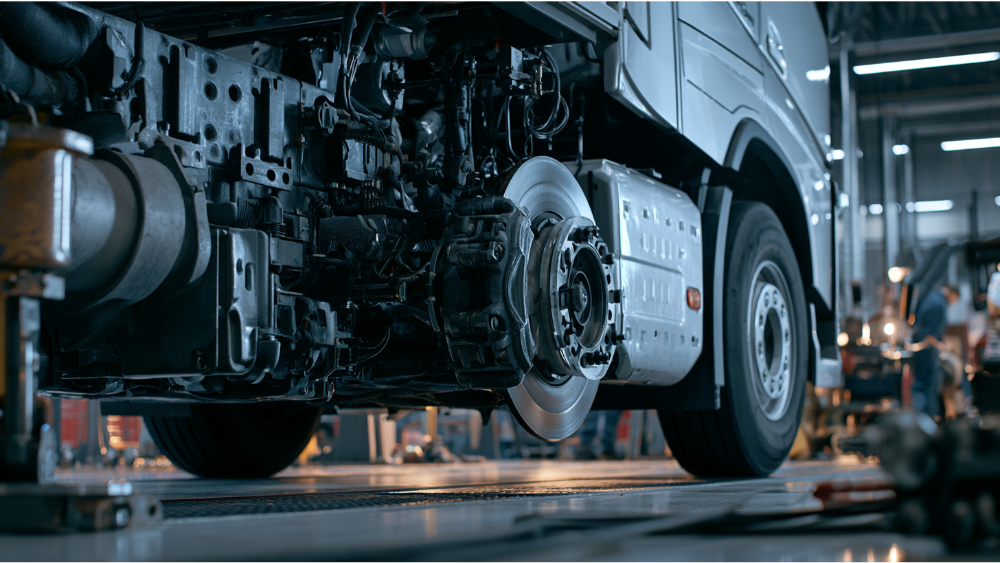
An air brake system uses compressed air to apply, release, park, and emergency-stop a heavy truck or trailer. The core components are the air compressor, governor, reservoirs, drains and dryer, pressure gauges, low-air warning devices, foot valve, air lines, brake chambers, pushrods, slack adjusters, foundation brakes, spring brakes, tractor and trailer control valves, and ABS. Each part has one job, and when one fails, you feel it through the brake pedal, the gauge, or the way the truck stops.
This guide is written for the people who actually depend on those parts: owner-operators watching every hour of downtime, independent drivers running long routes, fleet managers tracking compliance across units, and CDL learners studying the air brake basics. You’ll get what each component does, what it feels like when it goes bad, and when the truck should not keep moving. Understanding how air brakes work is not academic. It is the difference between reading your truck and guessing at it, and guessing is what puts rigs on the shoulder.
One thing up front. If your truck is losing air or the low-air warning is on, stop safely and get it checked. That’s not a suggestion. Air brakes are only as reliable as the weakest part in the chain, and a driver who knows the braking systems on their rig catches trouble in the yard instead of on a downgrade.
Why Air Brake Components Matter More Than You Think
Brakes are the most cited vehicle defect on the road, year after year. In CVSA’s 2025 International Roadcheck, inspectors logged 3,304 brake system out-of-service violations, which was 24.4% of all vehicle OOS violations, the single largest category. Add in the 20% defective brakes rule and combined brake-related violations hit 5,561, or 41.1% of vehicle OOS violations. During 2025 Brake Safety Week, inspectors ran 15,175 inspections and pulled 2,296 vehicles out of service for brake problems, a 15.1% brake-related OOS rate.
Those numbers aren’t trivia. Every one of them is a truck stopped on the shoulder, a load delayed, a driver losing a day, and a carrier answering for a defect that showed up on a pre-trip and got ignored. On the physics side, the stakes are worse. A loaded rig at 55 mph needs over 450 feet to stop under good conditions, and worn or misadjusted brakes stretch that number fast. Heat is part of the same story. Every hard stop dumps energy into the brake drum or rotor as heat, and a component that can’t shed that heat fades exactly when you need it most. Too much heat is what causes brake fade, and too much pressure or dragging brakes only make it worse. That’s why the condition of your foundation brakes and the health of your air supply are not separate concerns. They work together every time you touch the pedal.
Here’s our position, stated plainly: air brake symptoms are not something to gamble with. A dragging brake, a chamber leak, or a warning light isn’t a “watch it and go” problem. Understanding your system is how you keep it off the OOS list and keep your CDL clean. Most of the violations inspectors write are not exotic failures. They are worn brake shoes, out-of-adjustment slack adjusters, and air leaks a driver could have caught with a five-minute walkaround. The rest of this guide walks through every part so you can read your truck instead of guessing.
How Do Air Brakes Work on a Semi Truck?
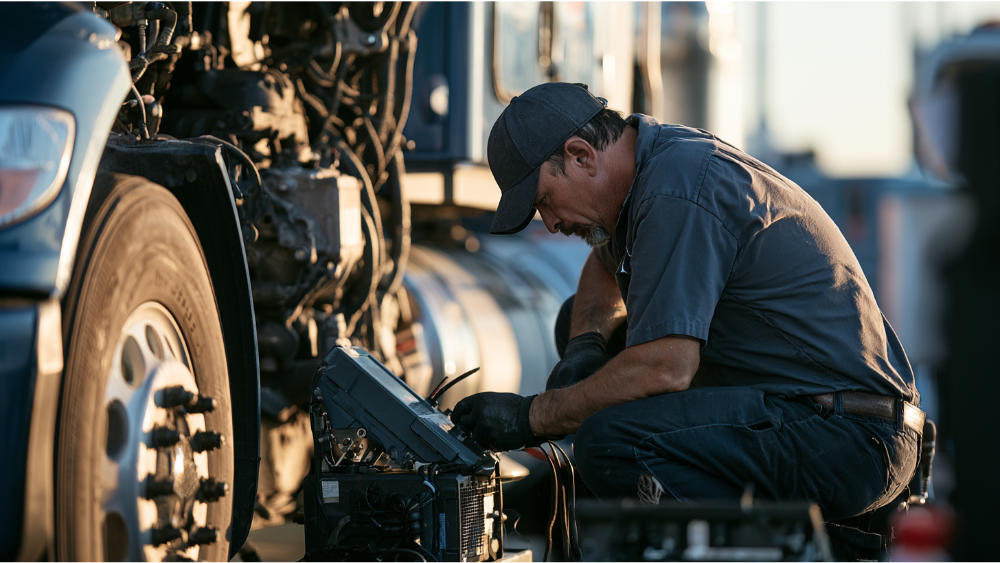
The air compressor pumps air into the air storage tanks. The governor decides when the compressor runs and when it rests. When you press the brake pedal, air moves through the air brake valves and lines to the brake chambers at each wheel. The chambers turn that air pressure into a mechanical push, and the foundation brakes clamp the brake drum or rotor to stop the wheel. Let off the pedal, air vents, and the brakes release. That’s the short version of how air brakes work, and every symptom you’ll ever chase traces back to one link in that chain.
Compared to hydraulic brake systems, the trade-off is simple. Hydraulic fluid can leak away and leave you with nothing. Compressed air can’t run out the way fluid does, because the compressor keeps making more as long as the engine runs, but it takes time to travel through the lines. That’s why air brakes have a built-in lag of about half a second or more before they grab. Add that lag to your reaction time and your braking distance, and you understand why following distance on a loaded rig is not the same math as a car. This is why large commercial vehicles rely on air rather than the hydraulic setups used in most cars.
To keep this straight, think of the whole system in seven jobs: build air, store and protect air, control air, convert air to force, stop the wheel, protect the tractor and trailer when something fails, and monitor and warn the driver. Every component fits one of those jobs. When you can name which job a part does, you can usually name what went wrong when it acts up. The rest of this guide is organized the same way.
The Three Brake Systems Every Driver Should Know
The CDL manual splits air brakes into three systems. They share hardware, but each does a different job. Know which one you’re relying on at any given moment, because in a failure the difference between them is the difference between a controlled stop and a runaway.
Service Brakes
This is your normal stop. Press the foot pedal, air goes to the brake chambers, and the brakes apply. Release the pedal and they let go. Every routine slowdown and stop runs through the service brake system. When the service brakes feel soft, grab late, or pull to one side, you’re feeling a problem somewhere between the foot valve and the wheel end. The service brakes are the part of the system you use thousands of times a day, so they’re also the part that wears fastest and shows trouble first. If the service brakes fail entirely, the emergency system is what stops you.
Parking Brakes
The parking brake control applies and releases through a separate knob, usually a yellow diamond. It uses spring pressure to hold the truck when air is released, which means it stays set even with the engine off. That spring design is also what makes the parking brake system fail safe. You never rely on air pressure to hold a parked truck, because air bleeds down overnight and a truck held only by air would roll. The parking brakes hold with mechanical force that doesn’t leak away.
Emergency Brakes
The emergency brake system isn’t a separate set of hardware. It borrows from the service and parking brakes to stop the truck if the main system fails. If air pressure drops far enough, the spring brakes apply on their own. That’s the safety net, and it’s why a slow-leaking system will eventually stop the truck whether you want it to or not. The catch is that the springs apply hard and without warning once pressure falls into the trigger range. You do not want that happening in traffic or on a curve, which is the whole reason a low-air warning is a stop-now event and not a finish-the-run event.
Air Supply Components: How the System Builds and Stores Air
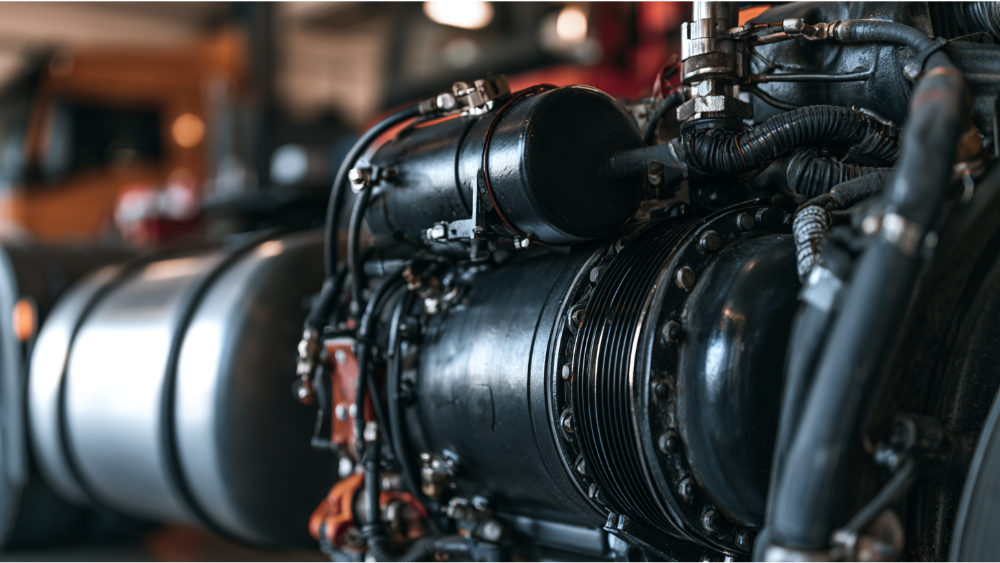
Everything starts with air. Before a single brake can apply, the system has to make compressed air, store it, and keep it clean and at the right pressure. These are the parts that build and hold your air supply, and they’re the first place slow-air and pressure-loss problems show up.
The Air Compressor: What Pumps Air Into the System
The air compressor pumps air into the air storage tanks. It’s driven off the engine, either by gears or a belt, so it runs whenever the engine runs. Some compressors have their own oil supply. Others share the engine cooling system and the engine’s oil. When a compressor starts to fail, you notice it as slow air build or the system cycling far more often than it should. That’s not a break-in quirk. A compressor that can’t pump air fast enough to keep up is a repair, and it’s one that gets worse under load. A weak air compressor can pass a lazy pre-trip and then leave you short of air on a long grade where you’re fanning the brakes and demanding air faster than a tired unit can build it. If you notice the governor cutting the compressor in far more often than it used to, treat that as an early warning, not background noise.
The Governor: What Controls the Air Compressor
The governor tells the compressor when to pump air and when to stop, working like a thermostat for air pressure. The governor controls the compressor by monitoring tank pressure. When tank pressure drops to the cut-in point, the governor puts the compressor to work. When the air tank pressure rises to the cut-out point, it lets the compressor idle. The CDL manual gives typical values of about 100 psi cut-in and 125 psi cut-out, though the compressor governor cutout pressure and actual specs vary by vehicle and manufacturer. During a pre-trip, watch the gauge. You should see pressure climb, hold at cut-out, then cut back in as you use air. A governor that won’t cut out or cut in at the right pressure is a fault worth fixing before you roll. A governor stuck in the loaded position will keep the compressor pumping until the safety valve dumps the excess, and a governor stuck unloaded won’t build enough air pressure to run the brakes at all.
Air Storage Tanks and Reservoirs: How Much Air You Have in Reserve
The air tanks store compressed air so you have a reserve even if the compressor quits. A properly built system holds enough for several brake applications after the compressor stops, often enough for ten to twelve applications depending on the setup. That reserve is your margin. If you’re bleeding air out faster than the compressor can replace it, those stored applications are what stand between you and no brakes at all. Which is exactly why a leak that outpaces the compressor is an emergency, not a maintenance note. Most rigs run more than one reservoir, typically a supply tank plus separate primary and secondary tanks, so a failure in one circuit still leaves you braking on the other. Those air storage tanks are the reason a dual air brake system can lose part of itself and still bring the truck down safely, but only if you stop before you drain the good side too. How much air pressure you have in reserve depends on tank size, but the amount stored across air tanks varies from rig to rig.
Drain Valves and the Air Dryer: Keeping Moisture Out
Compressing air squeezes water out of it, and that water collects in the tanks along with oil. Each tank has a drain valve at the bottom to get it out. Federal rules under 49 CFR Part 393 require either a manually operated drain or automatic drain valves that keep a manual backup method. Manual air tanks should be drained at the end of each driving day, and daily air tank drainage keeps water from piling up. Skip it and moisture builds up, which can freeze in the lines in cold weather and cause brake failure. Water in the air also wrecks valves and seals over time, so draining isn’t only a winter problem. Automatic air tanks that self-drain still need a manual check now and then. Many trucks also run an air dryer that pulls moisture out before it ever reaches the tanks, and some older setups use an alcohol evaporator or electric heating devices to fight freezing. If you’re running the Pacific Northwest through a wet winter, staying on top of draining and dryer service is not optional. A saturated dryer cartridge lets water straight through, so service it on schedule and not just when something already froze.
The Safety Valve: Your Last Line Against Over-Pressure
The safety relief valve is usually set to open at about 150 psi. It exists to dump air if pressure climbs too high, protecting the air tanks and lines from over-pressure. If that safety valve releases air, something upstream is broken, usually the governor or a gauge. The safety valve protects the system by venting before a line or tank ruptures. If the safety valve is releasing air, that’s a repair, not a habit. Don’t run a truck that’s popping its safety valve and hope it settles down. A safety valve that’s venting is telling you the system built past its safe limit, and the next weak point after the valve is a burst line or a cracked tank.
Control and Warning Components: How You Apply Brakes and Read the System
Building air is half the job. The other half is controlling it and knowing what the system is doing. These components let you apply the brakes with precision and read the state of your air supply from the driver’s seat. When they’re working, you always know where you stand. When they’re not, you’re driving blind.
The Foot Valve (Treadle Valve): How the Brake Pedal Applies Air
The brake pedal is also called the foot valve or treadle valve. Push it and air flows to the chambers. The brake pedal controls how much air you send: push it harder and you send more air pressure, which means more braking force. Let off and the brake pedal reduces the air being sent, and the valve vents air, which drops tank pressure the compressor then has to replace. That last part matters more than most drivers think. Riding the brake pedal or fanning it on a long downgrade bleeds your air down faster than the compressor can pump air back, and once you’re behind, you may not get it back until you stop. Use your engine brake and gears on grades. Save your air for the stops that count. A good habit on a grade is to pick a safe speed, apply the service brakes firmly enough to slow below it, then release fully and let the compressed air rebuild while engine braking holds you. Steady dragging on the brake pedal is how drivers cook their brakes and drain their tanks at the same time.
Gauges and the Low Air Pressure Warning
You have two gauges to read. The supply pressure gauge is a pressure gauge connected to your tanks that shows how much air is in them. The application pressure gauge shows how much air you’re sending to the brakes when you press the pedal. Learn to glance at both. A rising application reading with no extra pedal pressure means a brake is dragging somewhere, and a supply gauge that won’t hold means you’re losing air faster than you’re making it.
The low air pressure warning is your alarm, and it comes as a light, a buzzer, or an old-style wig-wag. Low pressure warning devices exist so you never have to guess how bad it is. There are two thresholds worth knowing, and most guides blur them together. The CDL practical and testing standard is that the warning must come on before pressure drops below 60 psi in the tank, or the lowest tank in a dual system. The federal regulatory threshold for older or non-FMVSS-applicable air brake vehicles is a continuous warning at 55 psi and below, or one-half of the governor cut-out pressure, whichever is less. Both matter. The practical number is what you’ll be tested on and what you should expect on the road.
If the low air pressure warning comes on, that is not a suggestion. Get off the road and address it. You’re now running on your reserve, and your spring brakes are going to apply whether you plan for it or not. The warning exists precisely so you can pick where you stop before the springs pick for you.
Air Brake System Components at the Wheel: Where Air Becomes Stopping Force
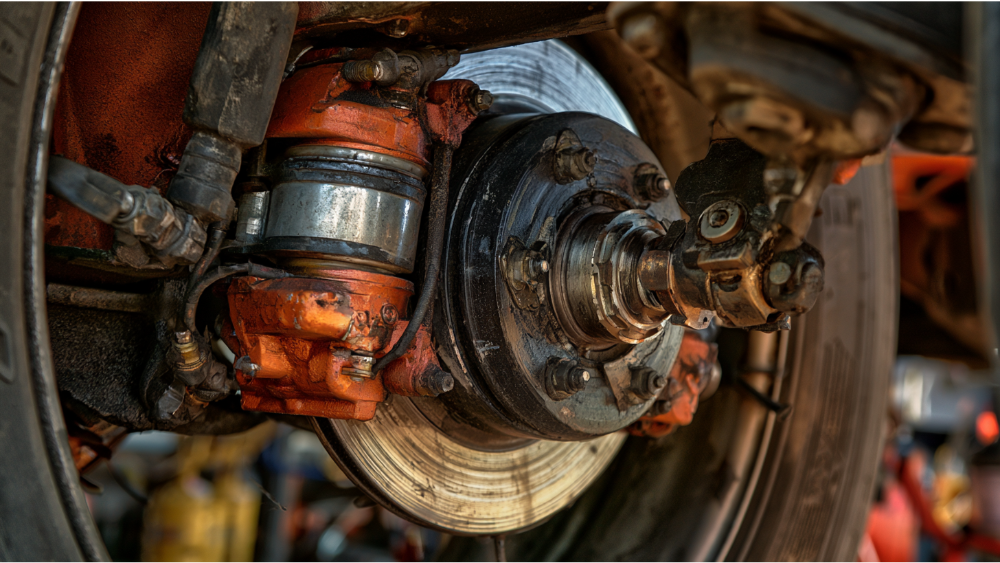
Everything upstream exists to serve this moment. At each wheel, the foundation brakes turn air pressure into the friction that actually stops the truck. There are three types you’ll run into: drum brakes with an S-cam, air operated disc brakes, and wedge brakes on some older equipment. Most heavy trucks run S-cam drum brakes or air disc brakes. This is where wear happens, where heat builds, and where most out-of-service brake violations get written. If you learn one section of your rig cold, make it this one, because the wheel end is where a small maintenance miss becomes a scale-ramp problem.
Brake Chambers and Pushrods
The brake chamber is where air becomes mechanical force. Air pressure pushes on a diaphragm inside the chamber, which drives the pushrod out. That pushrod does the work of applying the brake. Federal rules require the brake chambers on each end of an axle to be the same size, because mismatched chambers give you uneven braking that pulls the truck. Chambers also have a stroke limit. Push the rod out too far and the brake can’t apply full force, because the chamber runs out of travel before the shoes or pads are fully clamped. A Type 30 standard-stroke clamp-type chamber has a readjustment limit of 2 inches, and a long-stroke version of 2.5 inches, measured at 80 to 90 psi under Appendix A. A ruptured diaphragm inside a chamber will leak air continuously when you apply the brake, and you’ll often hear it. Stroke checks are their own subject, so read a dedicated pushrod-stroke guide before you start measuring in the yard.
Slack Adjusters and Automatic Slack Adjusters
The slack adjuster connects the pushrod to the S-cam. It converts the chamber’s straight push into rotation that turns the cam, and it sets the clearance between the brake shoes and the drum. Get that clearance wrong and the whole brake goes out of spec. The CDL check is straightforward: with the brakes released, pull hard on the slack adjuster. If it moves more than about 1 inch where the pushrod attaches, it probably needs adjustment. Too much slack means too much travel, and a truck with too much brake slack can be very hard to stop. It also throws the brake balance off across the axle, so one wheel does more work and wears faster while another barely grabs.
Air-braked CMVs built on or after October 20, 1994 must have automatic slack adjusters under FMVSS 121. Here’s the correction to the most common piece of shop-lot misinformation: automatic does not mean ignore it. Automatic slack adjusters still have to be checked. Worse, if you find yourself repeatedly hand-adjusting an automatic slack adjuster to bring it back into range, you’re masking a real mechanical failure, not fixing it. That’s a sign the adjuster or something in the foundation brake is bad and needs to be looked at, not cranked back and sent down the road. An automatic slack adjuster that keeps drifting out of adjustment is often the first symptom of a worn cam bushing, a dragging brake, or a chamber that’s on its way out.
The S-Cam, Brake Shoes, Linings, and Drums
On drum brakes, the slack adjuster rotates the S-cam, and the brake camshaft forces the brake shoes apart against the inside of the brake drum. This s cam drum brake design is what you’ll find on most heavy trucks. Friction between the brake lining pads and the drum is what slows the wheel. When you release, return springs pull the brake shoes back off the drum, and the wheels roll freely again. The parts that wear are the linings and the brake drum itself. Federal thickness limits under 49 CFR 393.47 are strict. Steering axle air drum linings can’t go below 3/16 inch for a continuous strip, or below 1/4 inch for a two-pad setup. Non-steering axle drum linings can’t go below 1/4 inch. Linings that are oil-soaked, cracked, or not firmly attached fail inspection outright, and drums worn past the manufacturer’s limit are out too. A brake drum that’s been overheated repeatedly can develop heat cracks or a bell-mouth shape that keeps the shoes from making full contact, and a cracked drum can come apart at speed. The S-cam itself rides in bushings that wear over time, and worn bushings let the cam wobble, which shows up as inconsistent adjustment and uneven shoe contact.
Air Operated Disc Brakes: Caliper, Pads, and Rotor
Air disc brakes work differently. Air pressure moves through the chamber and adjuster to turn a power screw, which clamps the brake rotor between the caliper’s brake pads. The power screw clamps the rotor with far more even force than a cam. They tend to run cooler and give more even braking than drum brakes, and they recover faster from repeated hard stops because a rotor sheds heat better than an enclosed drum. But they still wear. Air disc pad thickness, steering or non-steering, can’t drop below 1/8 inch under 393.47, and the rotor has its own minimum thickness set by the manufacturer. Same principle as drums: worn friction material and a scored or thin rotor put you out of service. Disc brakes are increasingly common on new tractors and trailers, and many fleets mix disc brakes on some axles with drums on others, so know what you’re running before you inspect it. A caliper that sticks will drag one pad, overheat that corner, and cook the rotor, which you’ll often catch as a hot wheel end during a walkaround.
Spring Brakes
Spring brakes are your parking and emergency brakes rolled into one clever design. Instead of using air to apply them, they use a powerful spring, and they use air to hold them off. When air pressure is present, the spring is compressed and the brake stays released. When air drops or you pull the parking control, the spring brake chamber lets the spring apply the brake. In that state the air pressure acts against the spring, and the moment it falls away the spring takes over. That’s why they fail safe: lose your air and the springs stop the truck. It’s also why you never manually release a caged spring brake and drive off without fixing the air problem that caused it. Caging a spring brake is a way to move a disabled truck a short distance under control, not a way to keep running a rig that won’t hold air. A spring brake with a broken or corroded spring can lose its holding force, which is one more reason the parking brakes get checked, not assumed.
Tractor-Trailer Air Brake Components
Once you add a trailer, the system gets more parts and more failure points. The tractor has to supply air to the trailer, control the trailer’s brakes, and protect itself if the trailer breaks away. These are the components that make that work, and they’re a frequent source of roadside problems on combination rigs. More connections and more air lines mean more places for a leak to start.
Service and Supply Lines and Glad Hands
Two air lines run between the tractor and trailer. The service line carries the air that applies the trailer brakes when you hit the pedal or the trailer hand valve. The supply line, also called the emergency line, sends air to charge the trailer’s tanks and controls the trailer’s emergency brakes. The lines connect through couplers called glad hands. Cross them or leave one uncoupled and you’ve got a trailer that won’t brake right, so check them every hookup. Damaged seals in the glad hands are a common leak source, and a cross-connected line can send emergency air where service air belongs, which is exactly the kind of mistake a careful hookup routine catches every time.
Trailer Air Supply and the Tractor Protection Valve
The trailer air supply control, usually a red octagon knob, sends air to the trailer and arms its brakes. The tractor protection valve is the part that saves you when a trailer breaks away, ruptures a line, or loses air entirely. If supply-line pressure drops below roughly 20 to 45 psi, the tractor protection valve closes automatically and shuts off the tractor’s air from the trailer. That keeps the tractor’s own reserve intact so you still have working brakes on the truck even if the trailer is losing air fast or has come loose. At the same moment, the loss of supply-line pressure trips the trailer’s own spring brakes, so the trailer stops itself rather than rolling free. Pulling the red octagon knob does the same thing manually, which is exactly what you do when you disconnect a trailer or need to isolate a bad trailer air system before it drags your tractor’s air down with it. Never push that knob back in and try to limp along with a trailer that’s dumping air. The valve closed for a reason, and forcing it open just moves the failure from “trailer brakes are gone” to “tractor brakes are next.”
The Trailer Hand Valve (Trolley Valve)
Many combination rigs also have a trailer hand valve, sometimes called a trolley valve, mounted on the steering column. It applies the trailer brakes only, independent of the tractor’s service brakes. Drivers use it to settle a trailer that’s swaying or to test trailer brake response on a slippery surface before committing to a full service application. It is not a parking brake and should never be used to hold a parked trailer, since it depends on air pressure the same way the service brakes do. Use it to feel out the trailer, not to replace a proper stop.
The Dual Air Brake System: Why Two Circuits Matter
Every modern air-braked commercial vehicle runs a dual system, split into a primary and a secondary circuit. The primary circuit usually feeds the rear axle brakes, and the secondary usually feeds the front axle and, through the tractor protection valve, the trailer. Each circuit has its own tank, and each is plumbed so a failure in one doesn’t take down the other. That’s the entire point of splitting the system: a single leak, a single failed line, or a single cracked chamber diaphragm should cost you one circuit’s worth of braking, not all of it.
This is also why a pre-trip air brake check walks through both circuits separately. With the engine off and the parking brake released, you pump the brake pedal down to around 20 to 25 psi and watch how fast each circuit’s warning comes on, confirming the low-air alarm and the spring brakes activate in the range they’re supposed to. Skipping that check means finding out which circuit is weak on the road instead of in the yard, and by then you’ve already lost the choice of where to stop.
Antilock Braking Systems (ABS) on Air-Braked Vehicles
Since 1997, most air-braked trucks, tractors, and trailers have been required to carry ABS. The system doesn’t change how the foundation brakes generate force. It watches wheel speed sensors at each wheel end and, if it detects a wheel about to lock up and skid, it modulates air pressure to that wheel chamber faster than a driver ever could. The goal is to keep the tire rolling enough to maintain steering control and shorten stopping distance on a slippery surface, not to shorten stopping distance on dry pavement, where ABS mostly stays quiet.
You’ll know ABS is present by the yellow malfunction lamp on the dash, and on trailers built since the mid-1990s, by a similar lamp near the marker lights. That lamp lights briefly at startup as a bulb check and should go out. If it stays on or comes on while driving, the ABS has detected a fault and shut itself off for the axle or wheel it can’t trust, which means you still have full service brakes but no antilock protection at that wheel. That’s a defect to report, not something to shrug off, especially heading into wet or icy conditions where ABS is doing its most important work.
Reading Your Truck: A Quick Pre-Trip Air Brake Reference
Put the whole system together and the pre-trip air brake check follows the same seven jobs laid out earlier. Build air and confirm the governor cuts in and out at the right pressures. Check the tanks by draining them and listening for a compressor that struggles to keep up. Test the controls by watching both gauges as you apply and release the pedal, and confirm the low-air warning triggers in the CDL-tested range around 60 psi. Walk the wheel ends and check chamber stroke, slack adjuster movement, lining and pad thickness, and drum or rotor condition. Check the spring brakes by making sure the parking control holds the truck with the engine off and air released. On a combination rig, check the glad hands, the tractor protection valve response, and the trailer hand valve. Confirm the ABS lamp cycles and goes out. Every one of those checks maps back to a component in this guide, and every one of them takes less time than a single scale-ramp OOS write-up costs you in downtime.
Frequently Asked Questions
How often should I drain my air tanks?
Manual air tanks should be drained at the end of each driving day, since compressing air pulls water out of it and that water settles in the tanks along with oil. Automatic drain valves handle this on their own but still need a periodic manual check to confirm they’re working. Skipping drains lets moisture build up, which can freeze in the lines in cold weather and cause brake failure, and water left sitting in the system also wears out valves and seals over time.
What psi should the low air warning come on?
The CDL practical and testing standard is that the low air pressure warning must come on before pressure drops below 60 psi in the tank, or the lowest tank in a dual system. There’s a separate federal regulatory threshold for older or non-FMVSS-applicable vehicles, which sets a continuous warning at 55 psi and below, or one-half of the governor cut-out pressure, whichever is less. Either way, once the warning triggers, you’re driving on reserve air and should get off the road rather than finish the run.
What’s the difference between drum brakes and air disc brakes?
Drum brakes use the slack adjuster to rotate an S-cam, which forces the brake shoes outward against the inside of the brake drum. Air disc brakes use the chamber and adjuster to turn a power screw that clamps a rotor between the caliper’s brake pads. Disc brakes clamp with more even force, run cooler, and recover faster from repeated hard stops because a rotor sheds heat better than an enclosed drum, but both designs still wear and both have federal minimum thickness limits under 49 CFR 393.47.
Why do spring brakes apply automatically when air pressure drops?
Spring brakes use air pressure to hold a powerful spring in a compressed, released position. When air pressure drops, whether from a leak, a parked truck bleeding down overnight, or a full system failure, there’s nothing left holding the spring back, so it applies the brake on its own. That’s what makes the design fail safe: the truck can’t be left with no way to stop or hold itself, because the spring, not the air, is what actually does the holding.