Key Takeaway
Transmission repair vs. replacement cost depends on the scope of internal damage: repair an isolated fault like a seal, solenoid, or sensor; rebuild when the case and hard parts are sound; replace or install a remanufactured unit when damage is widespread, failures repeat, or downtime and warranty matter most. Remanufactured units from programs like Eaton and Allison ReTran are dyno-tested and carry multi-year warranties, while targeted repairs can cost a fraction of a full replacement.
Your truck is slipping, grinding, hanging up between gears, or stuck. Every hour it sits costs you a load, a delivery window, or a driver’s day. Here’s the direct answer: repair the transmission when the failure is isolated and the major hard parts are still serviceable. Replace it, or install a remanufactured transmission, when internal damage is widespread, the case or gear train is compromised, transmission trouble keeps coming back, or downtime and warranty coverage matter more than saving the existing transmission. For owner operators, fleet managers, and drivers, the right call comes from a verified diagnosis, not a generic price range you found online.
Repair, Rebuild, Reman, or Replacement: What Each Term Actually Means
Before you can compare cost, you need the terms straight. A repair shop can use them loosely, and that’s where confusion and surprise bills start.
- Targeted repair: fixes a specific component or external issue without opening up the whole transmission. Think a leaking seal, a solenoid, a sensor, or a wiring fault.
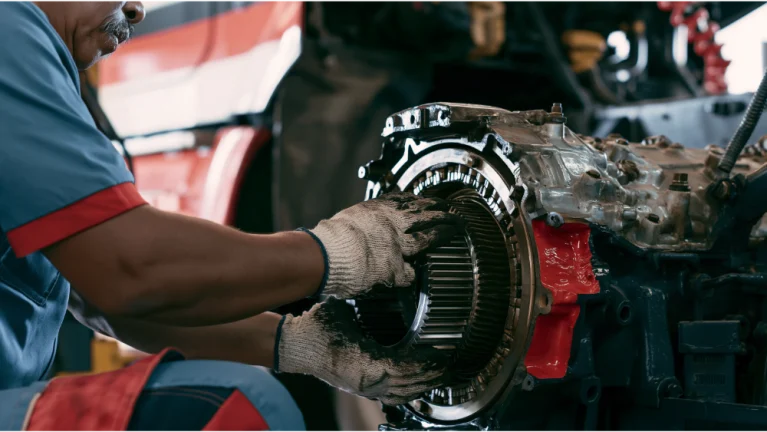
- Transmission rebuild (overhaul): the unit comes out, gets disassembled, and worn components get replaced. The case and serviceable hard parts stay.
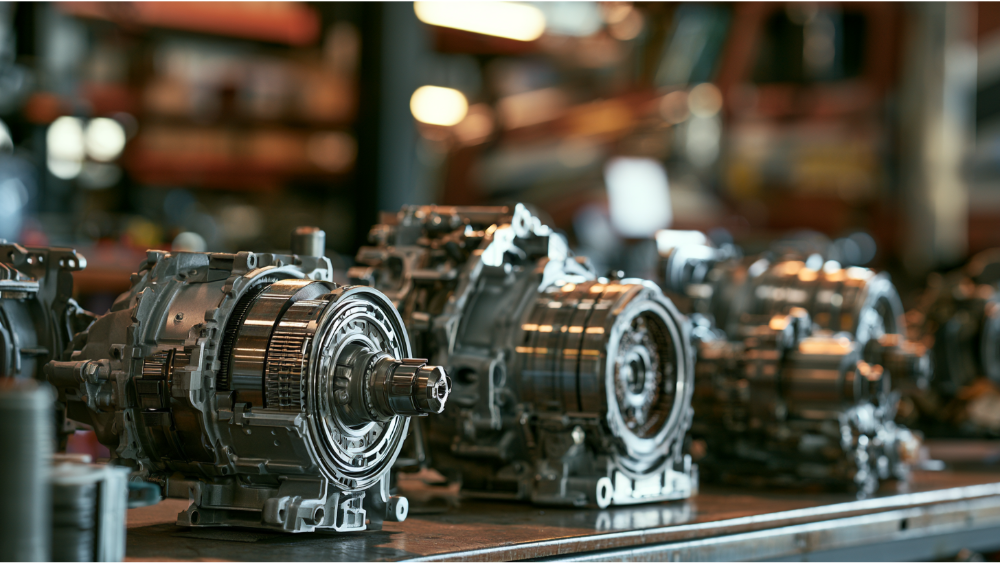
- Remanufactured transmission: a used unit restored through a controlled industrial process to like-new or better condition, then tested. Reman is not the same as used. It is rebuilt to a documented standard and usually carries real warranty backing.
- Used transmission: a unit pulled from another vehicle. Lower cost up front, higher unknown risk on what you’re actually getting.
- New transmission: a brand new transmission installed as a full replacement. Highest cost, longest lead time in many cases, and not always available for older platforms.
- Full replacement: a broad term. It can mean a new unit, a reman, a rebuilt transmission, or a used transmission. Make any shop tell you exactly which one their estimate covers.
Why You Can’t Quote a Heavy-Duty Transmission From a Generic Price Range
You’ve seen the passenger-car numbers: minor fixes, moderate issues, a transmission overhaul, replacement. Those ranges are for cars. They don’t apply to a Freightliner, Kenworth, Peterbilt, Volvo, Mack, International, or Western Star. A Class 6 through Class 8 transmission decision runs on several factors entirely, and the cost of a heavy-duty vehicle transmission moves with the truck, not a chart. The answer depends on the actual condition in front of us.
What actually moves the cost on a heavy-duty job:
- Transmission type: manual, automatic, or AMT
- Truck class, configuration, and PTO or vocational use
- Clutch condition and transmission fluid contamination
- Case, gear, bearing, synchronizer, or shaft damage
- Valve body or torque converter condition where applicable
- Sensor, wiring, TCM, actuator, or calibration faults
- Parts availability and core requirements for a rebuild or replacement
- Labor rates to remove and reinstall the unit
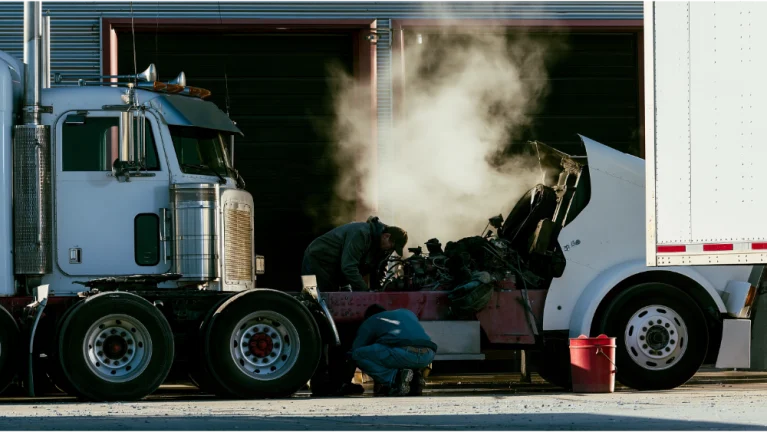
- Whether it’s a tow-in or a mobile dispatch situation
- Warranty coverage and total downtime exposure
A transmission quote without a verified diagnosis is not a decision. It’s a guess with a price tag. That’s why we quote from the truck in front of us, not a chart.
The First Step Is Diagnosis, Not Replacement

Most shop failures start with a skipped diagnostic step. A slipping, grinding, or hard-shifting complaint can trace back to a sensor, a voltage drop, or a clutch issue that has nothing to do with worn gears. Our experienced technicians work a structured, verified sequence before we recommend anything:
- Confirm the driver’s complaint and when it happens.
- Scan codes with OEM-capable diagnostic software.
- Check transmission fluid level, condition, contamination, and leaks.
- Inspect the clutch, linkage, and actuator where applicable.
- Check wiring, voltage, sensors, and controls. A solenoid, speed sensor, or voltage fault can mimic a mechanical failure.
- Road test or run a controlled functional test when it’s safe.
- Verify the root cause.
- Present an itemized estimate before any work begins.
Certified technicians and OEM software exist so nobody condemns a transmission that a $40 sensor would have fixed. A professional mechanic who addresses issues promptly keeps a small fault from becoming expensive repairs.
When Transmission Repair Makes More Sense
A targeted repair is the right call more often than drivers expect, especially when a symptom got caught early. Repair usually wins when the problem is one of these:
- An external leak from a seal or gasket
- A sensor, harness, voltage, or control-system fault
- A solenoid or valve body issue where applicable
- A clutch or release problem mistaken for a failing transmission
- An isolated bearing, seal, or synchronizer issue while the hard parts are still good
- Early symptoms caught before they caused secondary damage
Fix the isolated failure and you’re back on the road faster, with no unnecessary teardown and no upsell. On a job like a valve body or solenoid repair, you keep your existing unit and skip the cost of a full replacement entirely.
When It Makes Sense to Rebuild a Transmission
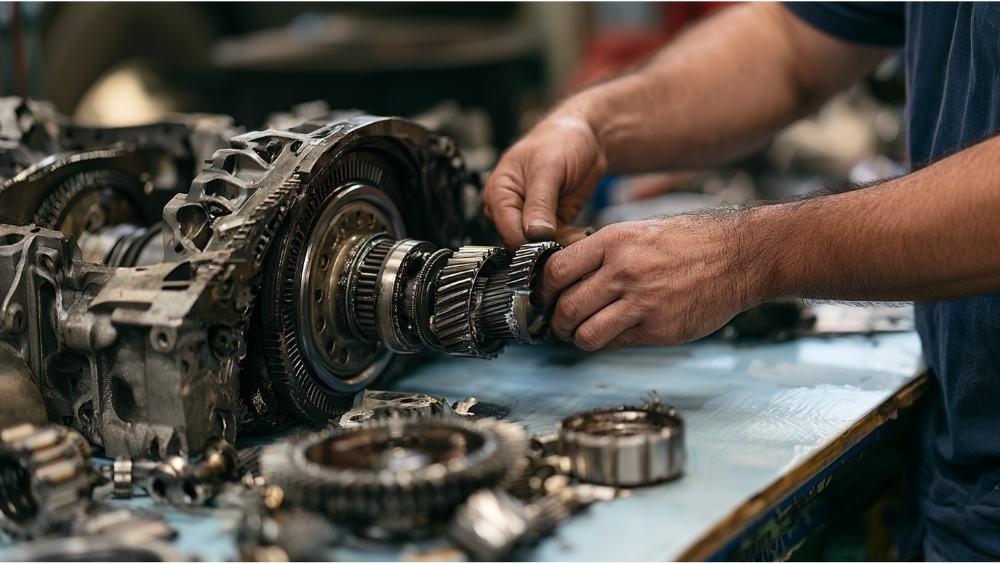
To rebuild a transmission means pulling the unit, tearing it down, inspecting every internal part, replacing damaged parts, reassembling, and verifying it works. The clutch packs and torque converter get evaluated as part of the teardown. That rebuild process is the right path when:
- Internal wear is confirmed, but the case and major hard parts are still usable
- Parts availability supports a rebuild over a swap
- Your downtime window allows teardown-to-reinstall time
- The fleet wants to keep the existing transmission when it’s feasible
A properly rebuilt transmission backed by correct maintenance can last as long as a new transmission and give you a longer lifespan out of the platform. Long term reliability comes down to PM after the rebuild, not the rebuild alone. For many operators, a quality transmission rebuild is a budget friendly option when the case is sound and keeps the vehicle running smoothly.
When to Replace a Transmission or Install a Remanufactured Unit
Some failures make saving the original unit a bad bet. To replace a transmission, whether new or reman, is the smart move when you see:
- Widespread internal damage or a cracked case
- Severe gear train damage
- Burnt transmission fluid with metal contamination, the signature of complete transmission failure
- A repeat failure history on the same unit
- High downtime exposure on a revenue-critical vehicle
- A reman unit that’s available faster than a rebuild can be finished
Replacement involves installing a complete unit, so warranty is where remanufactured transmissions earn their place. OEM reman programs like Eaton and Allison ReTran are dyno-tested to meet manufacturer specifications for like-new performance and carry multi-year warranty coverage (verify current terms at approval). Treat that warranty as downtime insurance, not just a line on a spec sheet. For a fleet that needs predictable turnaround, a covered new unit protects the schedule as much as the vehicle, and it often beats waiting on a rebuild.
Rebuild vs Replacement: The Cost Comparison and Key Considerations
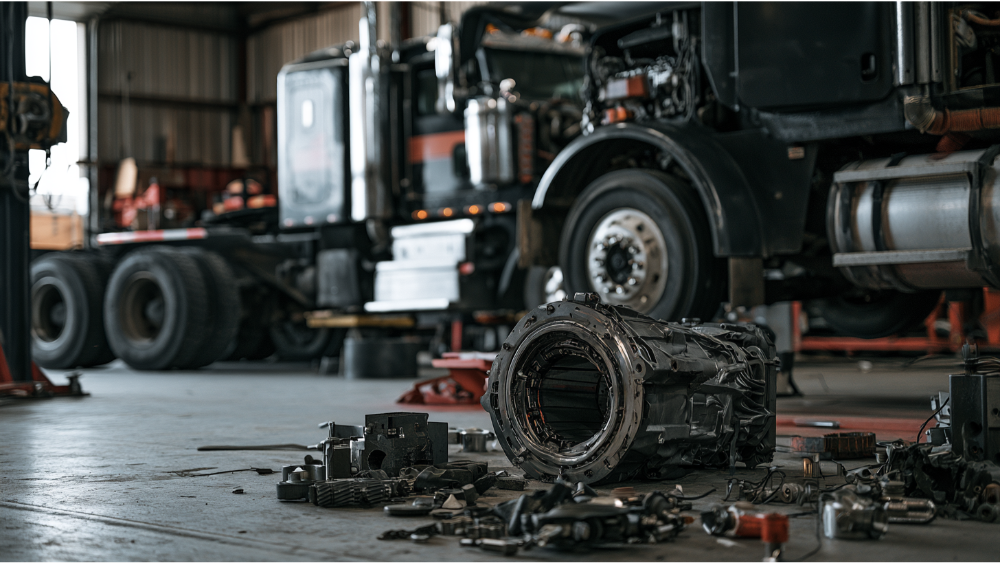
The cost comparison between a rebuild and a replacement is not just the invoice. It’s replacement parts, labor, lead time, warranty, and total downtime added up. A rebuild keeps your original case and can lower the initial cost, but it ties the truck up through the full rebuild process. A reman or new transmission can cost more up front while cutting the downtime, because the entire unit is ready when it arrives.
| Factor | Repair | Rebuild | Reman / Replacement |
|---|---|---|---|
| Original unit kept | Yes | Yes | No |
| Up-front parts cost | Lowest | Moderate | Higher |
| Downtime | Shortest | Longer (teardown) | Often shorter than rebuild |
| Warranty backing | Component-level | Shop workmanship | Standardized, multi-year |
| Best when | Isolated fault | Case is sound | Case or gear train is done |
Key considerations: how much longer the vehicle needs to run, the vehicle age, whether the same transmission trouble has repeated, and how much a day off the road actually costs you. Those answers, not a generic range, decide the job and help you make informed decisions.
Older Car or High-Mileage Truck: Is the Transmission Worth Saving?
Vehicle condition drives this one. On an older car or a high mileage rig, weigh what the platform is worth against the fix. If the rest of the truck is sound, a rebuild or reman can be the better play. If the vehicle is near the end of its service life, a cheaper targeted repair may be the smart temporary fix while you plan the replacement. Whether a transmission worth saving comes down to the truck around it, not the transmission alone.
The Estimate Checklist: What to Confirm Before You Approve Any Work

Get all of this in writing before you authorize a single bolt:
- The confirmed failure cause and the diagnostic steps performed
- Codes found and what they mean
- Whether the issue is transmission, clutch, wiring, sensor, TCM, driveline, or fluid-related
- Parts choice stated clearly: new transmission, reman, rebuilt, or used transmission
- Labor scope, fluid and filter requirements, and any programming or calibration
- Warranty terms and expected turnaround, qualified as an estimate
- A requirement for written approval before any added work
We give you a full itemized estimate before work starts. No surprises, no upsell. Under Washington law (RCW 46.71), estimates over $100 generally have to be in writing, and a local shop can’t exceed 110% of that written estimate without your authorization. That’s a floor we already work well above.
How Fleets Decide Between a Rebuild and a Transmission Replacement
For a fleet, the decision runs past one invoice. What matters is total downtime, consistency, and audit-ready records. Weigh these:
- Unit age and route role: spare, primary, or revenue-critical
- A repeat failure pattern of transmission trouble showing up across similar units
- PM history and whether transmission fluid intervals were actually met
- DOT documentation and audit-readiness
- Warranty standardization across the fleet
- Whether replacement cuts total downtime, not just the downtime on one vehicle
FMCSA §396.3 requires systematic inspection, repair, and maintenance, with records kept for vehicles you’ve controlled 30 or more days. Every commercial vehicle also needs a periodic inspection at least once every 12 months under §396.17. Custom PM schedules, priority fleet scheduling, and fleet account billing keep those records clean and your units moving.
Preventing the Failure: PM, Fluid, and Catching Symptoms Early

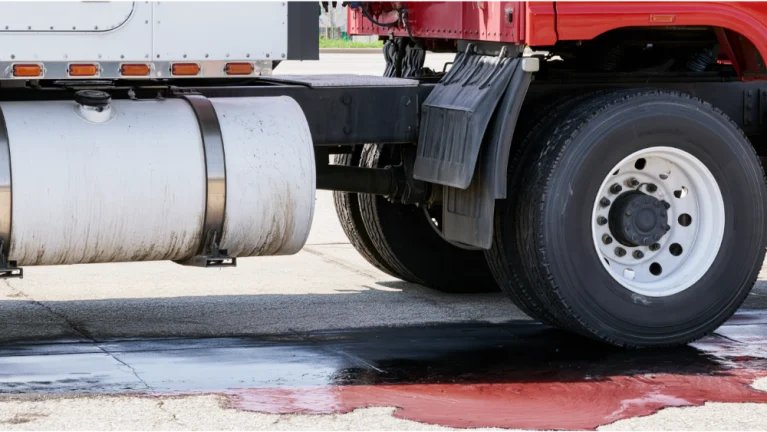
Most transmission repairs trace back to heat and neglected fluid. Regular maintenance and good driving habits stop many failures before they start. Train drivers and dispatch to report the obvious signs of a failing transmission: slipping gears, delayed engagement, unusual noises, strange noises when shifting gears, burning smells from overheating fluid, or fluid leaking under the truck. Older vehicles and modern transmissions alike depend on catching these early.
Fluid and filter intervals depend on OEM, model, duty cycle, and fluid analysis. Eaton’s spread makes the point: synthetic PS-386 runs up to 500,000 miles or 5 years in linehaul, 180,000 miles or 3 years in vocational service, while mineral lubricant drops to 60,000 miles or 1 year. Filters get inspected and changed at those lube intervals. Duty cycle changes the maintenance decision, so we build custom PM schedules and keep DOT-compliant records. ATRI reported truck repair and maintenance costs rose 8.6% in 2025, which is one more reason to diagnose correctly the first time.
Get a Verified Diagnosis and a Written Estimate: Call Torpedo
Don’t authorize a major transmission job off a guess. Bring your vehicle to our Fife shop for in-shop diagnosis and transmission services across the Seattle-Tacoma freight corridor, and you’ll get a verified root cause and an itemized estimate before work starts. Broken down on I-5, Hwy 167, or SR-512? Our 24/7 emergency dispatch gets a truck to you. Call (253) 449-0100 now, or Request a Service Quote for planned fleet and PM work.
FAQs
Is it better to repair or replace a truck transmission?
Repair when the failure is isolated and the case and hard parts are still good. Replace or install a reman unit when internal damage is widespread, failures repeat, or warranty and downtime outweigh saving the original transmission.
What is the difference between a rebuild and a remanufactured transmission?
A rebuild reuses your original unit and replaces only the worn or failed internal parts. A remanufactured transmission is restored to like-new or better through a controlled industrial process, tested, and usually backed by a stronger, standardized warranty.
Can a clutch problem feel like a bad transmission?
Yes. A worn clutch, release bearing, or actuator can cause slipping and shifting complaints that feel exactly like a failing transmission. That’s why the clutch and linkage get inspected before anyone condemns the transmission.
Should I keep driving if the transmission is slipping or grinding?
Usually no. Driving on a slipping or grinding transmission can turn a targeted repair into a full replacement by spreading the damage. Get it diagnosed before it gets worse. If you’re stuck on the road, call for dispatch.
How can preventive maintenance reduce transmission failures?
Heat and neglected transmission fluid kill transmissions. Meeting the right fluid and filter intervals for your model and duty cycle, and reporting early symptoms fast, catches problems while they’re still small and cheap to fix.