Key Takeaway
To adjust air brakes correctly, first measure applied pushrod travel at 90 to 100 psi with the engine off and compare it to the federal stroke limits in 49 CFR 393.47(e) for your chamber size. Only a true manual slack adjuster gets physically adjusted, and only by someone qualified under 49 CFR 396.25. If an automatic slack adjuster shows excessive stroke, the fault lies in the foundation brakes, not the hex.
You found a long pushrod on a pre-trip, or the brake pedal feels soft, and the truck can’t sit. Most modern trucks and trailers run automatic slack adjusters, and you do not fix excessive stroke with a wrench on the hex. Measure applied pushrod travel first. Only a true manual slack adjuster gets adjusted, and only by a qualified person following the manufacturer’s procedure.
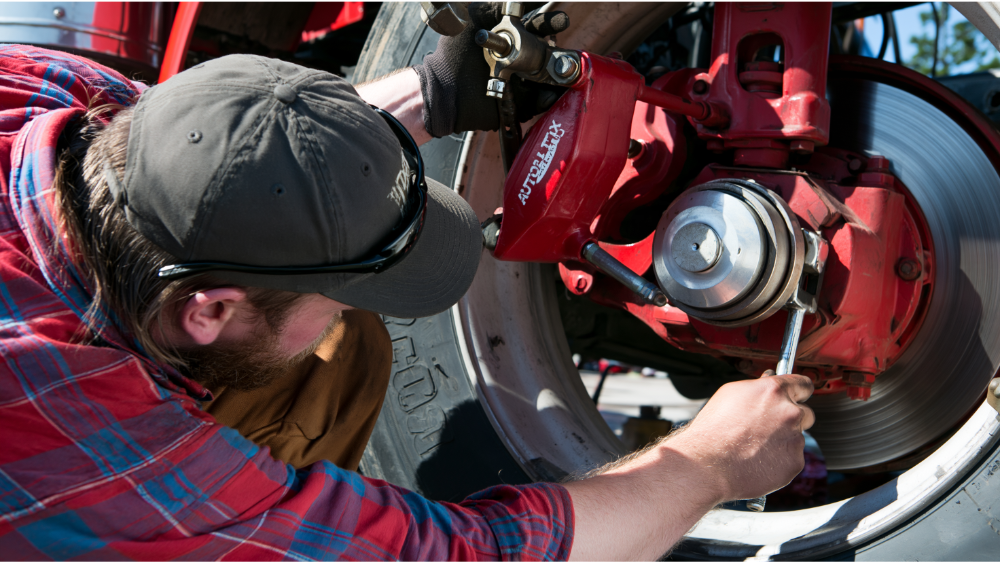
Air-braked commercial vehicles built on or after October 20, 1994 are generally required to meet the automatic brake adjustment requirements of FMVSS 121 (49 CFR 393.53). This guide covers S-cam air drum brakes; air disc brakes adjust internally through the caliper.
Understanding Your Slack Adjusters: Manual vs. Automatic
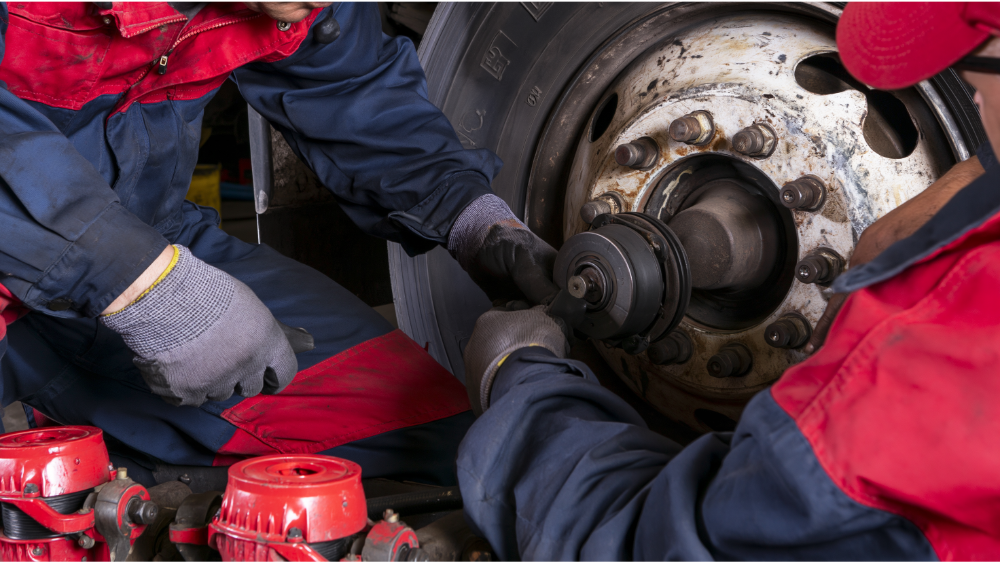
Which adjuster is on the axle decides everything, and at a glance the two are easy to confuse. An automatic slack adjuster carries a control arm anchored to the chamber bracket or axle. Its function is to take up lining wear on its own. A manual slack adjuster has an adjusting hex with a lock sleeve and nothing anchoring it to the chassis. Vehicles with an exposed pushrod also need a brake adjustment indicator.
Under a late-model Freightliner, Kenworth, Peterbilt, Volvo, Mack, International, or Western Star, assume automatic. A rented trailer, though, can still run manual slack adjusters under an otherwise identical air brake system.
| What you have | What to do |
|---|---|
| S-cam drum + manual slack adjuster | Adjust per manufacturer procedure |
| S-cam drum + automatic slack adjuster | Diagnose the wheel end. Don’t turn it. |
| Air disc brake | No external adjuster. Inspect pads, rotor, caliper travel. |
Can’t confirm the adjuster type? Stop there.
Before You Go Underneath: Wheel Chocks, Air Pressure, and Who Is Qualified
- Level ground, securing the vehicle with wheel chocks front and back.
- Engine off during the measurement.
- Spring brakes released with air. Never cage a chamber without the correct procedure.
- A second person to hold the service brake application.
Inspecting brakes and repairing brakes are two different jobs under federal rules. Under 49 CFR 396.25, a carrier can’t assign brake inspection, maintenance, or repair to anyone lacking the knowledge, tools, training, or experience required. The CDL air brake test qualifies a person to inspect, not to repair. Under 396.13, the driver still owns the safety call.
A pry bar on the slack adjuster screens free stroke, nothing more. It tells you which wheel end deserves a closer look. It does not prove the brakes are legal under full application.
How to Check Air Brake Adjustment: Measure Applied Pushrod Travel
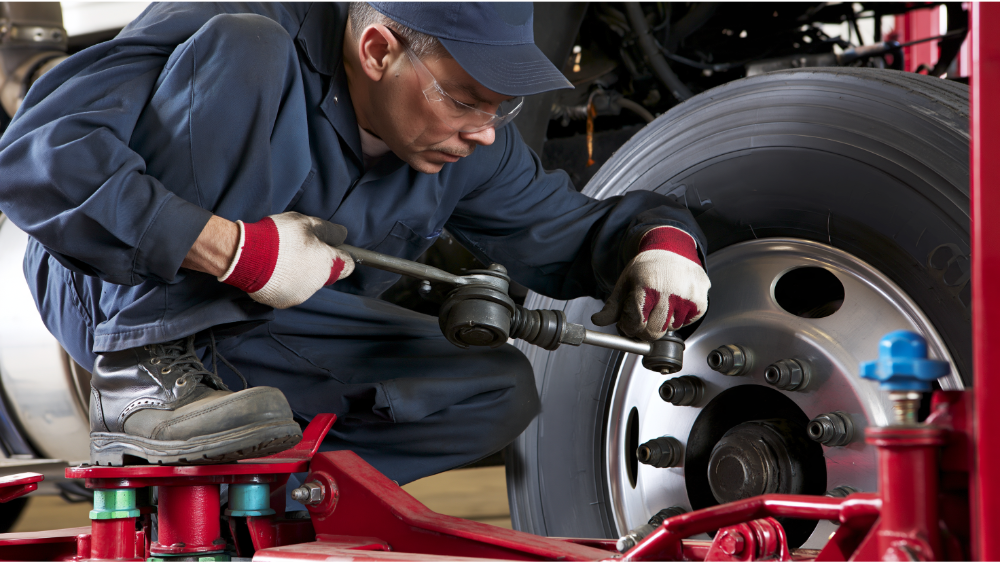
- Park on level ground and chock the wheels.
- Release the spring brakes.
- Pump the air brake system up, then fan it into the 90 to 100 psi window.
- Shut the engine off.
- Mark the pushrod at the chamber face.
- Have your second person hold a full brake application.
- Measure how far the mark moved.
- Compare it to the limit for that chamber size.
Air pressure matters, and most guides get it wrong. CVSA’s roadside-style check runs at 90 to 100 psi; above 110 psi you can get an incorrect stroke assessment. Appendix A to 49 CFR Part 396 measures the periodic inspection at 80 to 90 psi, engine off. Log the number per wheel end. “Brakes checked” is not a record.
| Type of check | Applied pressure | Engine | Why it matters |
|---|---|---|---|
| CVSA roadside-style stroke check | 90 to 100 psi | Off | Above 110 psi reads wrong |
| Periodic inspection, Appendix A to 49 CFR Part 396 | 80 to 90 psi | Off | Annual inspection window |
| Normal charged system pressure | Neither window | Running | Fan it down first |
Air Brake Pushrod Stroke Limits by Chamber Size
| Clamp-type chamber | Standard stroke | Long stroke |
|---|---|---|
| Type 12 | 1⅜ in. | 1¾ in. |
| Type 16 | 1¾ in. | 2 in. |
| Type 20 | 1¾ in. | 2 in. (2½ in. for the specified 3-in.-rated chamber) |
| Type 24 | 1¾ in. | 2 in. (2½ in. for the specified 3-in.-rated chamber) |
| Type 30 | 2 in. | 2½ in. |
| Type 36 | 2½ in. | Not listed |
Limits come from 49 CFR 393.47(e). For an actuator not in the federal tables, stroke can’t exceed 80% of the manufacturer’s rated stroke or the marked readjustment limit. Start with the marking stamped on the chamber. That marking is the key detail and more important than eyeballing it: standard and long-stroke Type 30 chambers, for example, carry different limits.
How a Qualified Person Adjusts a Manual Slack Adjuster
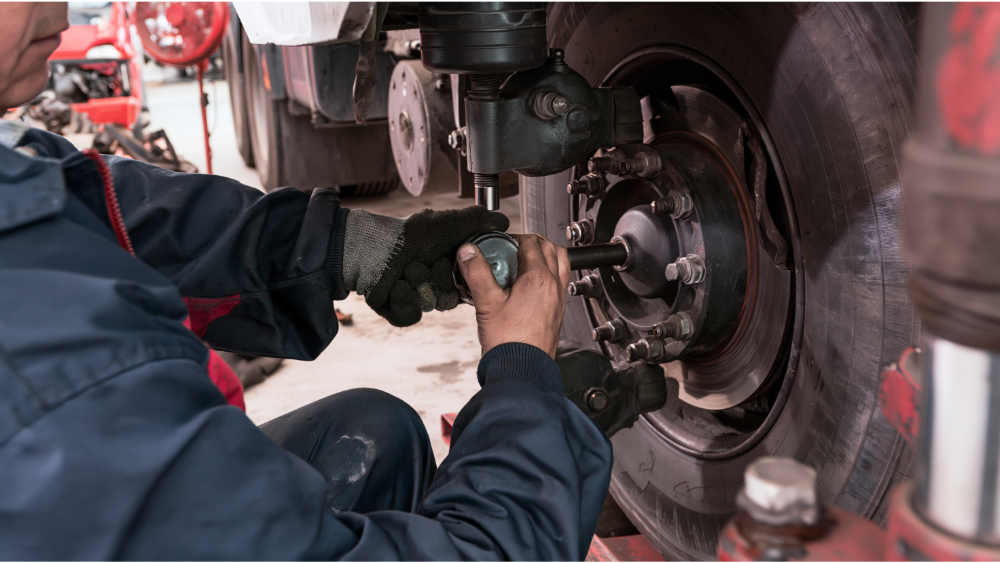
- Confirm it is genuinely a manual slack adjuster.
- Chock the wheels and release the spring brakes.
- Determine which direction the adjusting bolt rotates the S-cam toward application. Orientation varies by side of the axle.
- Release the lock sleeve if the design requires it.
- Turn the hex until the shoes contact the drum.
- Back off only the amount the manufacturer specifies, not a rule-of-thumb quarter turn.
- Ensure the lock re-engages.
- Repeat on the matching wheel end.
- Pump the system back up and re-measure applied pushrod travel.
- Verify no drag and that the brakes release completely.
Wrong direction, wrong back-off, or a lock that never re-seats, and the result is brakes that drag or slide right back out of adjustment. If the unit fails to hold, replace it.
Automatic Slack Adjuster Over Stroke? The Fault Is in the Air Brake System, Not the Hex
Manually correcting an automatic slack adjuster is not a fix. It’s a countdown to the next roadside stop. CVSA is direct: excessive stroke on a self-adjusting adjuster points to a fault in the foundation brakes, drum, chamber, or hub. Turning the hex to reset stroke can damage the adjuster, hide the defect, and put the travel right back within a few applications. A working adjuster takes up slack on its own, and you may hear it click during normal braking. Leave the hex alone and find the problem.
What to look for instead:
- Worn or seized clevis pins
- Worn S-cam bushings
- Cracked chamber bracket or cam-tube welds
- Worn rollers, weak or broken return components
- Worn linings or drums, loose mounting hardware
- Incorrect adjuster installation or control-arm anchoring
- Air leaks and incomplete release anywhere in the air brake system
Find the fault, replace the worn part, then verify stroke. A repeat adjustment is the tell, and repeat adjustments are repeat downtime. Don’t wait for the next PM.
What Out-of-Adjustment Brakes Cost You at Roadside
During the 2026 International Roadcheck, inspectors ran 44,047 Level I, II, and V vehicle inspections and placed 10,350 vehicles or combinations out of service, 23.5%. Brake systems and the 20% defective-brake category made up 5,451 violations, 39.1% of all vehicle out-of-service violations.
One over-stroke brake is a violation. The vehicle-level out-of-service call generally runs on the 20% defective wheel-end calculation plus stand-alone OOS conditions. Out-of-adjustment brakes stretch stopping distance, and after an accident that difference gets argued in court. PM records that log actual per-wheel-end stroke numbers survive an audit.
Found an Over-Stroke Brake on the I-5 Corridor? Call Torpedo
We measure every wheel end, find the fault behind the stroke, and document the numbers. That’s Truck And Trailer Brake Repair on Class 6 through 8 tractors and trailers at our Fife shop, 7495 26th St E Ste B, near I-5 and Hwy 167. Itemized estimate before a single bolt is turned. Licensed and insured, DOT certified, 4.9 stars across 146 Google Reviews.
Broken down instead? 24/7 emergency mobile dispatch covers a 50-mile radius from Fife: I-5, Hwy 167, and SR-512 through Tacoma, Auburn, Sumner, Puyallup, Milton, Pacific, Algona, and Seattle. Shop hours are Mon through Fri, 8:00 AM to 5:30 PM, with same-day service when possible. Call (253) 449-0100. Fleets can Request a Service Quote instead. Takes under 60 seconds, no obligation.
Frequently Asked Questions
Can you adjust your own air brakes?
Only a manual slack adjuster, and only if you qualify under 49 CFR 396.25. The CDL air brake test qualifies you to inspect, not to repair.
Do you adjust air brakes with the parking brake on?
No. Spring brakes have to be released with the wheels chocked. Adjusting against applied parking brakes gives a false reading.
How do you properly adjust air disc brakes?
You don’t adjust them externally. Air disc brakes self-adjust through the caliper, so in that case excessive travel means inspecting pads, rotor, caliper slide movement, and the chamber.
How do you tell if your brakes are out of adjustment?
Mark the pushrod, hold a full application at 90 to 100 psi with the engine off, then measure the movement against the chamber’s stamped limit. Long pedal or heat at one wheel are warnings, not measurements.
How often should air brake adjustment be checked?
Every PM service, and any time a driver reports a change in pedal feel. On trucks working the Seattle-Tacoma freight corridor, grade and stop-and-go traffic put heat into the wheel ends fast.