Key Takeaway
The EGR system works by routing a measured amount of exhaust gas back into the intake manifold to lower peak combustion temperatures, which cuts NOx emissions by displacing oxygen in the air-fuel mixture. Understanding how the EGR system works and why it fails means recognizing it as a full flow system, not a single valve: soot buildup, cooler cracks, actuator failure, sensor faults, and DPF backpressure all trigger codes. Diagnosing with live scan data before replacing parts is the only reliable fix.
An EGR system routes a measured amount of exhaust gas back into the intake so the engine burns with less oxygen and lower peak combustion temperatures. That drop in temperature is what cuts NOx emissions, the nitrogen oxides that feed smog and fail emissions standards. It fails because that same exhaust gas carries soot, heat, pressure, and sometimes coolant through valves, coolers, sensors, and passages that clog, leak, stick, overheat, or start reporting wrong data. If you run a Class 6 through 8 truck and you’re staring at an EGR code, here’s the part most explainers skip: exhaust gas recirculation is a controlled flow system, not one bad valve. Knowing that is how you avoid paying for the wrong repair.
How Exhaust Gas Recirculation Works on Diesel Engines
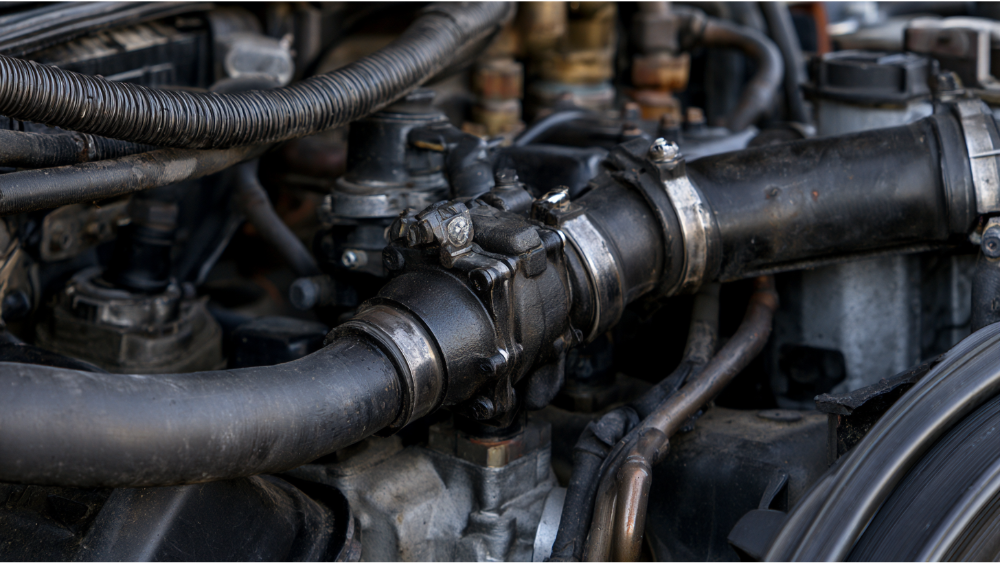
The system does one job: lowering combustion temperatures to hold down NOx emissions. Nitrogen oxide forms when the combustion process gets hot enough, so if you cool the burn, you make less of it. The exhaust gas recirculation valve pulls that off by mixing inert, already-burned gas back into the fresh air charge before it enters the combustion chamber. That recirculated exhaust gas replaces some of the incoming oxygen, and the diluted mixture burns slower with lower peak temperatures.
Here’s the flow in working-truck terms. Exhaust leaves the cylinders through the exhaust manifold. The ECM decides how much of it to recirculate based on engine load. The valve gradually opens, sometimes as much as 90% open at low load or idle, and the EGR valve, normally closed, meters that flow. On some setups a vacuum solenoid or electric actuator moves it. The EGR cooler drops the gas temperature before it goes back in. Then the inert gas mixes with intake air in the intake manifold. Less oxygen in the combustion chamber plus lower peak combustion temperatures, and NOx drops sharply, often by well over 100°C worth of combustion heat. When the load lifts, the EGR valve closes and normal airflow returns.
There’s a tradeoff. Less NOx means more soot, more particulate emissions. That’s why modern engines pair exhaust gas recirculating with a diesel particulate filter and SCR downstream. EGR knocks down NOx emissions before the exhaust gas ever reaches the SCR catalyst, the DPF traps particulate, and DEF-fed SCR cleans up the rest. This aftertreatment chain is how engine manufacturers meet exhaust emissions targets. Cooled EGR has been standard on heavy-duty diesel engines since the mid-2000s emissions phase-in. The whole point is meeting stringent federal standards without choking power. Recirculated exhaust is a normally inert gas that displaces oxygen, which is exactly why it works. This is different from how gasoline engines handle recirculation at lighter loads, including downsized GDI engines that use it for fuel economy, and the diesel version runs hotter and dirtier by design. Keep that mental model: EGR is a flow system tied to combustion temperatures and the rest of the aftertreatment. Nothing about it works in isolation.
The Main EGR Components (It’s Not Just the Valve)
When a shop says “it’s the EGR,” ask which part. An EGR code can point at any piece in the chain, and they don’t cost the same or fail the same way.
- EGR valve: the exhaust gas recirculating valve meters exhaust flow, normally closed, opens on command.
- EGR cooler: a heat exchanger with hot exhaust on one side and engine coolant on the other.
- Actuator: electric motor or solenoid that moves the valve.
- EGR passages and pipes: the routing where carbon particles collect and choke flow.
- Sensors: MAF, MAP, temperature, and NOx sensors that tell the ECM what’s actually happening.
- ECM / engine management: commands flow and reads results.
- Turbo / VGT: boost and backpressure directly affect EGR flow.
- DPF and SCR: downstream aftertreatment tied to EGR performance.
- Coolant circuit: feeds the cooler and shares its failure risk.
Every one of these lives in extreme heat and corrosive exhaust gas. That’s why EGR failures are common, and why a code doesn’t automatically mean the valve. Loading the whole system onto one part is how trucks come back with the same fault two weeks later.
Why a Failing EGR Valve Fails: Carbon Buildup and Beyond
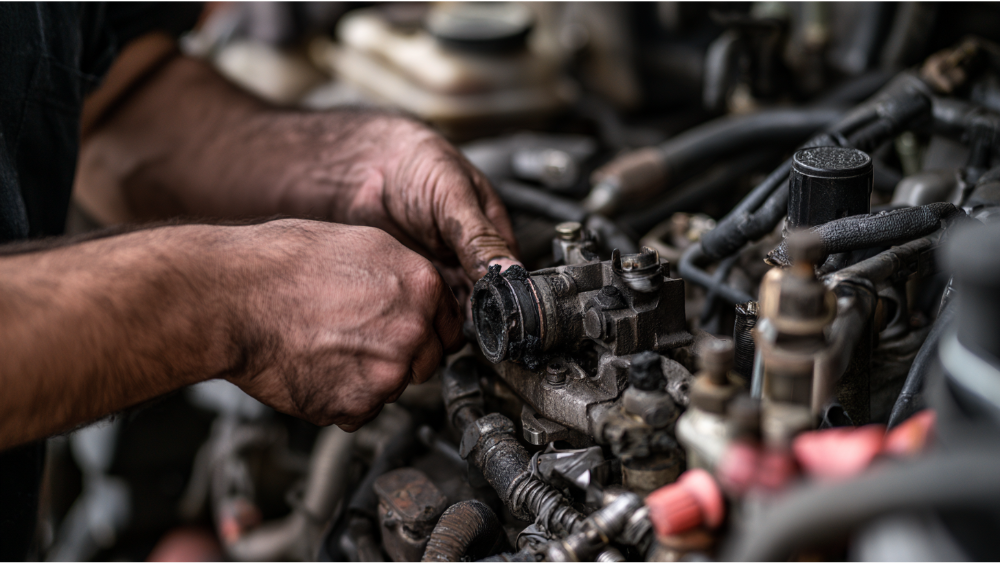
The number one cause is soot and carbon buildup. Exhaust gas is loaded with soot, and over miles it cakes onto the valve and inside the passages, cutting the flow cross-section. When flow drops, the ECM sees it, and you get a low-flow code. MAHLE’s technical data calls excessive soot accumulation in the intake and exhaust the most common cause of EGR valve and cooler failure. That much is settled.
But a faulty EGR valve usually didn’t fail alone. Something upstream or downstream loaded it up. The rest of the list:
- Oil vapor and sludge contaminating the intake system and gumming the valve.
- Cooler thermal cycling from repeated hot-cold swings that crack the heat exchanger.
- Coolant problems: low flow, wrong or old coolant, or trapped air after a repair that cooks the cooler.
- Actuator failure: the motor or solenoid quits and the valve won’t move.
- Sensor and wiring faults: bad MAF, MAP, or NOx data makes the ECM chase a ghost.
- Turbo and boost problems that throw off the pressure balance EGR depends on.
- DPF restriction and backpressure that pushes soot back through the system.
Usage patterns drive a lot of this. Heavy idle time and frequent short runs never get the system to normal operating temperatures, so it never burns off deposits, and carbon builds fast in the inlet manifold and around the valve seat. Running a cold engine hard makes it worse. Delayed oil service, poor-quality diesel fuel, and ignored warning lights all speed it up. Modern diesel engines are built around ultra-low sulfur diesel at 15 ppm, so high-sulfur or dirty fuel accelerates buildup and works against the whole design. Clogged EGR valves that get cleaned but never traced back to a root cause return fast. The takeaway: treat the symptom, and you’ll be back. Find what loaded the valve.
Faulty EGR Valve Symptoms and Engine Performance Loss
A failing EGR valve mostly gets stuck one of two ways, and the symptoms tell you which.
Stuck Open
Too much exhaust gas flows in at the wrong time, choking the air fuel mixture. You get rough idle, black smoke, sluggish throttle response, noticeable power loss, and increased fuel consumption. The engine runs like it’s starved because it partly is, and an over-diluted charge means unstable combustion. Excessive EGR at the wrong moment kills combustion efficiency.
Stuck Closed or Restricted
No exhaust gas recirculates, so combustion runs hotter than the calibration wants. That drives peak combustion temperatures up, which means higher NOx emissions, EGR flow codes, sometimes diesel knock, and on modern trucks a derate that puts you in limp mode to protect the engine and stay in compliance. Proper EGR flow helps reduce diesel knock by tempering that burn.
Across both, the general failing-valve symptoms overlap: check engine light, poor engine performance, unsteady running, hard starting, worse fuel economy, smoke, and emergency mode. Here’s the problem. A stuck-open valve and a stuck-closed valve can share symptoms, and both can look identical to a bad sensor or a leaking cooler. A rough idle and a lit dash don’t tell you which part failed. That’s exactly why you verify with scan data before anyone touches a wrench. Guessing here is how the parts cannon gets loaded.
EGR Cooler Failure: When a Coolant Leak Gets Into the Mix
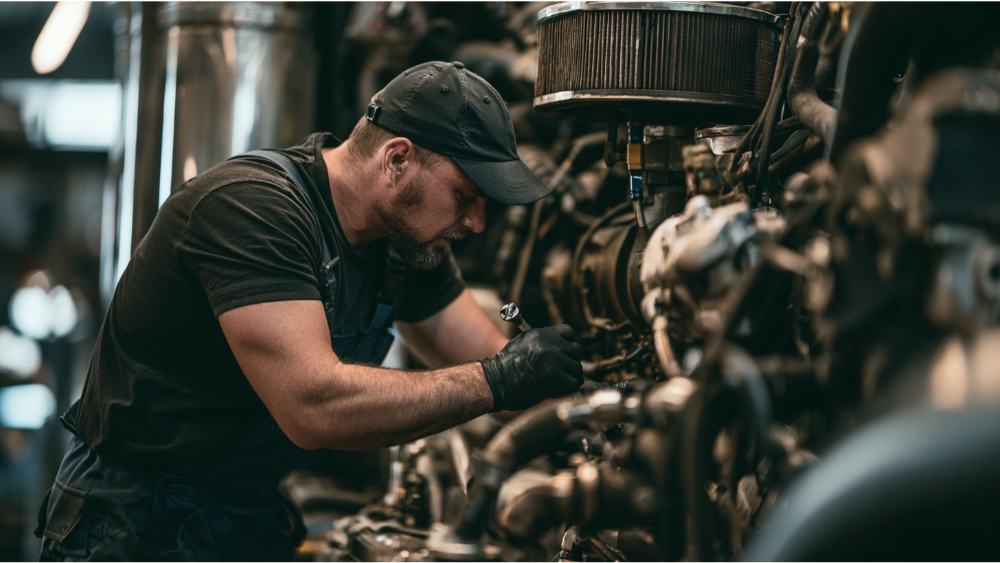
The cooler deserves its own section because most explainers get it wrong. It’s a heat exchanger: hot exhaust gas runs through one side, engine coolant through the other, with a thin wall between them. When that wall cracks, the two mix. Now you have a coolant leak going somewhere it should never go.
Watch for these signs:
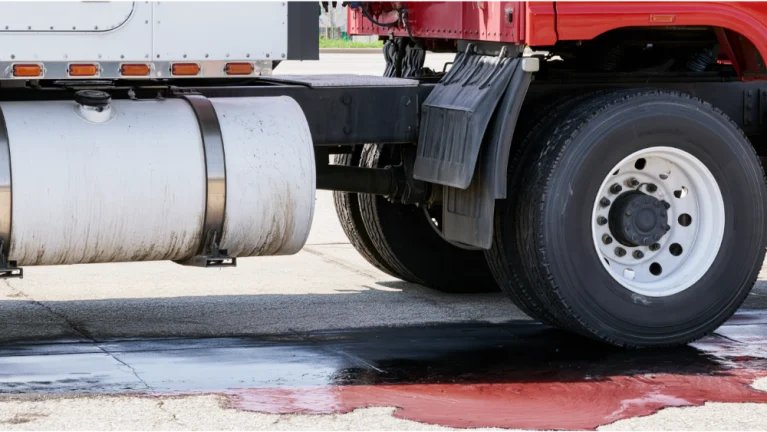
- Gradual coolant loss with no puddle or external leak.
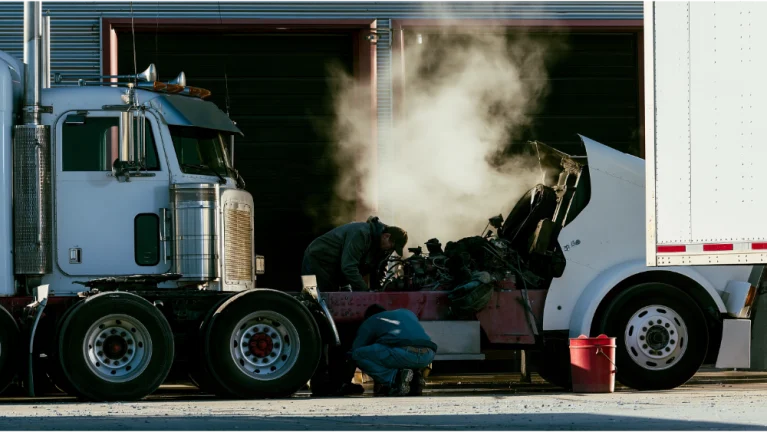
- White smoke or steam from the tailpipe.
- A sweet exhaust smell.
- Overheating and a cooling system that stays pressurized.
- Low boost and weak performance as exhaust energy leaks away from the turbo.
- Worst case: coolant pooling in a cylinder, which can cause water hammer and mechanical damage on the next start.
Here’s the trap. A leaking EGR cooler looks almost exactly like a blown gasket at the cylinder head. Coolant loss, white smoke, overheating, pressurized system, all of it. Swap a head gasket when the cooler is the real problem and you’ve spent serious money and days of downtime on the wrong repair. This has to be verified by pressure-testing the cooling system and the cooler, not guessed from symptoms. On a loaded truck, that difference is your whole week. (We break down the cooler-versus-head-gasket question in more detail separately.)
How EGR Valve Work Gets Diagnosed Correctly
This is where a real repair separates from a parts swap. A verified EGR diagnosis follows a workflow, and every step earns its place before anything gets replaced:
- Scan codes and pull freeze-frame data to see conditions when the fault set.
- Compare commanded EGR flow against actual flow. A gap tells you whether the valve is doing what the ECM asked.
- Check MAF, MAP, temperature, and NOx sensor data for readings that don’t add up.
- Inspect the valve, cooler, and passages for soot restriction and carbon buildup.
- Pressure-test the cooling system and the EGR cooler whenever coolant loss is present.
- Check turbo and VGT response and boost pressure.
- Review DPF restriction and regen history, since backpressure feeds EGR faults.
- Verify the fix with a data-backed road test before the truck leaves.
At Torpedo, that’s the standard, not the exception. Our certified technicians run OEM diagnostic software and a structured, verified workflow because the fastest way off the road is diagnosing right the first time. We built the shop from inside real trucking, so we know a second visit for the same code costs you more than the repair ever did. And you get a written itemized estimate before a single bolt is turned. No surprises, no upsell. You approve the work, then it happens.
Clean, Replace, or Delete? The Honest Answer
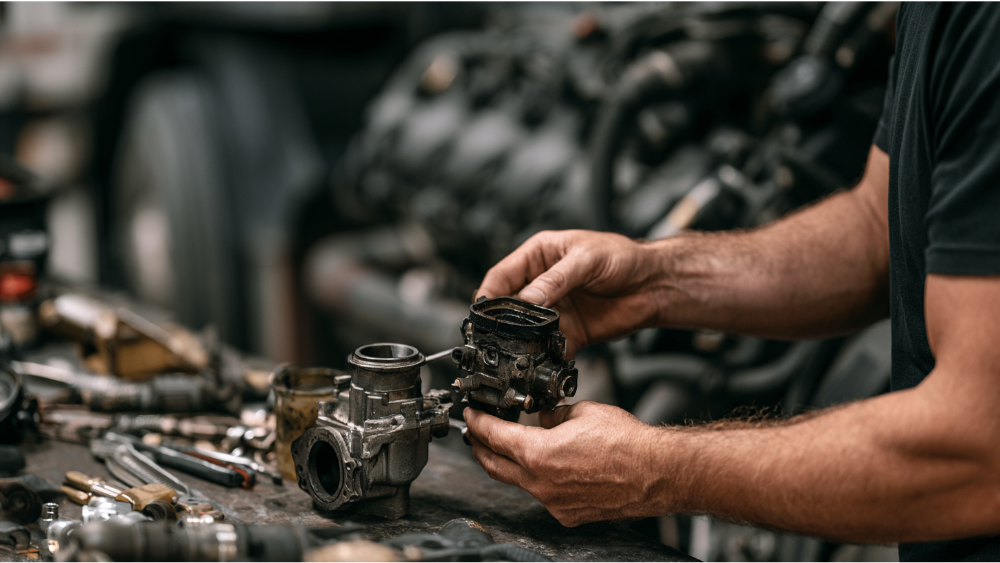
Three options get thrown around. Only two are real repairs.
Cleaning works in one situation: a still-functioning component restricted by removable soot. Clean the valve and passages, use new gaskets, follow the bleed and valve adaptation procedures, and road test it. That’s it. Cleaning does nothing for a leaking cooler, a failed actuator, a dead sensor, a wiring fault, or DPF restriction. If someone offers a “clean” as a cure-all, they haven’t diagnosed it. Understanding how the EGR valve works tells you why: soot in the passages is one problem, and it isn’t the same as a cracked cooler wall.
Replacement is required for cracked or leaking coolers, failed actuators, dead sensors, damaged electronics, or restriction too severe to clear. On a cooler job especially, the cooling system has to be bled and the coolant checked, or the new part overheats the same way the old one did.
Delete is not a repair. Removing an emissions control device is illegal under federal anti-tampering law, and that law now applies to owners, not just installers. Gutting the emissions systems doesn’t clean up your exhaust; it dumps raw nitrogen oxide and other pollutants back into the air. For fleets it creates DOT and compliance exposure that follows you through inspections. On a calibration-dependent modern diesel engine, deleting doesn’t fix the underlying problem, it breaks the system and often triggers new ones. The “runs better without EGR” idea ignores that your engine and efficient exhaust aftertreatment were engineered as one unit to reduce emissions. EPA has finalized 172 defeat-device enforcement cases in recent years totaling $55.5 million in penalties. Fix the fault. Don’t create a bigger one and add to air pollution.
When to Call a Heavy-Duty Diesel Shop and Get Back on the Road
Stop guessing and call when you see any of these: an active derate, a coolant leak, white smoke, overheating, EGR codes that keep coming back, or EGR faults paired with DPF or SCR faults. Same goes if you’re loaded and on a deadline. Those are not “watch it and see” situations.
Torpedo Truck Repair diagnoses before parts, puts the estimate in writing, and works toward same-day service when possible. Our shop is in Fife, WA, serving the Seattle-Tacoma freight corridor, with mobile dispatch along I-5, Hwy 167, and SR-512 within a 50-mile radius.
Broken down or in derate? Call Now: (253) 449-0100. Our 24/7 emergency dispatch is always live. For non-urgent work, Request a Service Quote online. It takes under 60 seconds, no obligation. Shop hours are Monday through Friday, 8:00 AM to 5:30 PM. The 24/7 line is emergency dispatch, not walk-in.
Frequently Asked Questions
What causes a faulty EGR valve?
Soot and carbon buildup restricting the valve and passages is the most common cause. Beyond that: oil contamination in the intake system, cooler cracks from thermal cycling, coolant flow problems, actuator failure, bad sensors or wiring, turbo issues, and DPF restriction. Heavy idle time and skipped oil service speed it all up by raising intake temperature and letting deposits settle.
Can a bad EGR cooler look like a blown head gasket?
Yes. A leaking cooler and a failed head gasket share the same signs: coolant loss, white smoke, overheating, and a pressurized cooling system. The only way to tell them apart is pressure-testing, which is why you verify before replacing anything.
Can a bad EGR system cause a derate?
Yes. A stuck-closed or restricted valve, flow faults, or EGR problems tied to the DPF and SCR can trigger a derate or limp mode to protect the engine and hold emissions compliance. When peak combustion temperatures climb because no exhaust gas is recirculating, the ECM steps in.
Should I clean or replace the EGR valve?
Clean it only if it still functions and is restricted by removable carbon. Replace it for leaks, a failed actuator, dead sensors, damaged electronics, or severe restriction. A scan and inspection tell you which, not a guess.
Can I drive with an EGR fault code?
Sometimes briefly, but not safely if you have a derate, coolant loss, white smoke, or overheating. Those point to failures that get worse fast, and coolant reaching a cylinder can cause serious engine damage. A check engine light with poor engine performance means get it diagnosed.