Key Takeaway
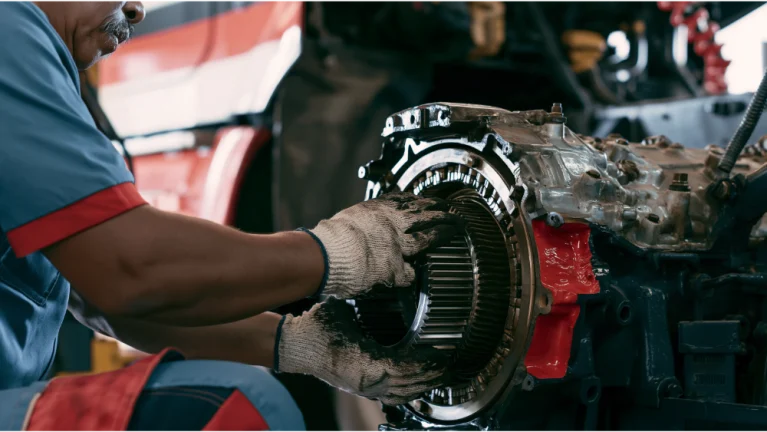
Signs of low transmission fluid in a semi truck include delayed gear engagement, slipping gears, erratic shifts, whining or grinding noise, overheating, a burning smell, and warning lights or low-oil messages on the dash. In a full automatic, the transmission loses hydraulic pressure and slips first; AMTs restrict shifting and report fault codes. A red stop lamp, heavy slipping under load, or active leaking means stop driving immediately. Low fluid that caused a seal-and-fill repair can escalate to a full rebuild if ignored.
Common symptoms of low transmission fluid are delayed gear engagement, slipping gears or engine RPM flare, hard or erratic shifting, whining or gear noise, transmission overheating or a burning smell, a transmission warning light or low-oil message, poor acceleration under load, and visible leaks under the truck. Transmission fluid lubricates internal components, carries heat out of the case, and in a full automatic it transfers engine power through the torque converter. When the fluid is low, the transmission starts protecting itself or starts destroying itself.
You are reading this because you need to decide something right now: does this truck finish the route or get shut down? Here is our position. The symptoms of low transmission fluid are clues, not a diagnosis. Class 6 through 8 trucks run different transmission types, different fluids, and different check procedures. Catching low transmission fluid early is the difference between a seal and a fill and a rebuild that costs you a week.
What are the symptoms of low transmission fluid?

- Delayed gear engagement, a pause before the truck takes the gear
- Slipping gears, engine RPM flare, or poor acceleration with no matching road speed
- Hard, erratic, or restricted shifts, or a refusal to shift gears above a certain range
- Whining, humming, or grinding noise from the gearbox
- Transmission overheating or a burning smell
- A transmission warning light, low-oil message, or check engine light
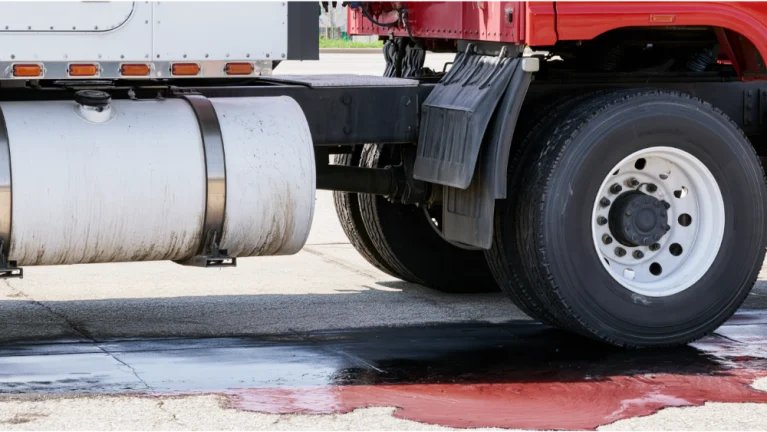
- Wetness, spray, or visible leaks under the transmission
- Failure to engage or hold a gear
Any one of these means you check the transmission fluid level and pull codes before the next load, not after it. Low transmission fluid symptoms rarely stay mild. They escalate under load, on grade, and in stop-and-go traffic, and the repair bill escalates with them.
When you should stop driving right now
Stop at the nearest safe location if any of the following is true:
- A red stop lamp or an explicit low-oil message is displayed
- The transmission will not engage or will not hold a gear
- The truck is slipping heavily under load
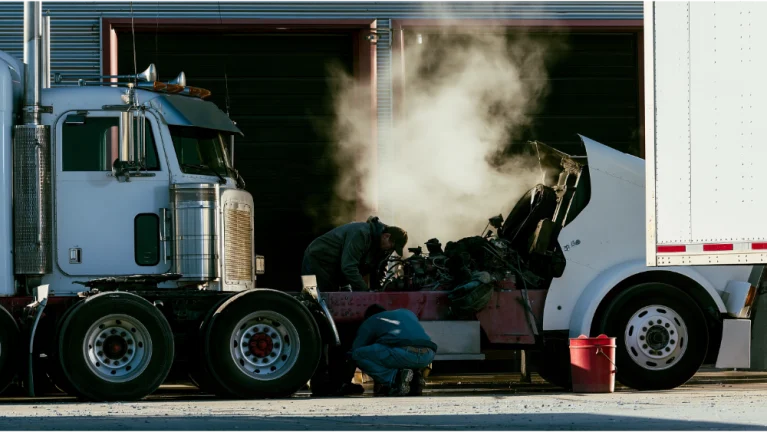
- There is an active leak or fluid spraying beneath the truck
- The transmission is overheating or you smell something burning
- The truck has dropped into restricted-shift or protective operation
Current Endurant XD driver instructions spell out the sequence for a transmission low-oil message: proceed to the nearest safe location, select Neutral, apply the parking brake, shut down the engine, and contact a service facility. The manual warns that transmission damage may occur if the condition is not addressed.
Running a heavy-duty transmission low on fluid is how an external leak becomes internal transmission failure. These warning signs are cheap to act on and expensive to ignore. To avoid costly repairs, finish the diagnosis instead of the load.
Symptoms of low transmission fluid by transmission type
| Full automatic (Allison-type) | Automated manual (Endurant, DT12, I-Shift, mDRIVE) | Manual |
|---|---|---|
| Delayed Drive or Reverse engagement | Low-oil or oil-pressure message | Gear or bearing whine |
| Hydraulic slippage and RPM flare | Restricted shifts or no upshifts | Added heat in the gearbox |
| Harsh or erratic shifts | Amber warning lamp or red stop lamp | Hard shifting (clutch and synchronizer faults also possible) |
| Failure to engage a gear | Protective operating mode | Visible fluid leak |
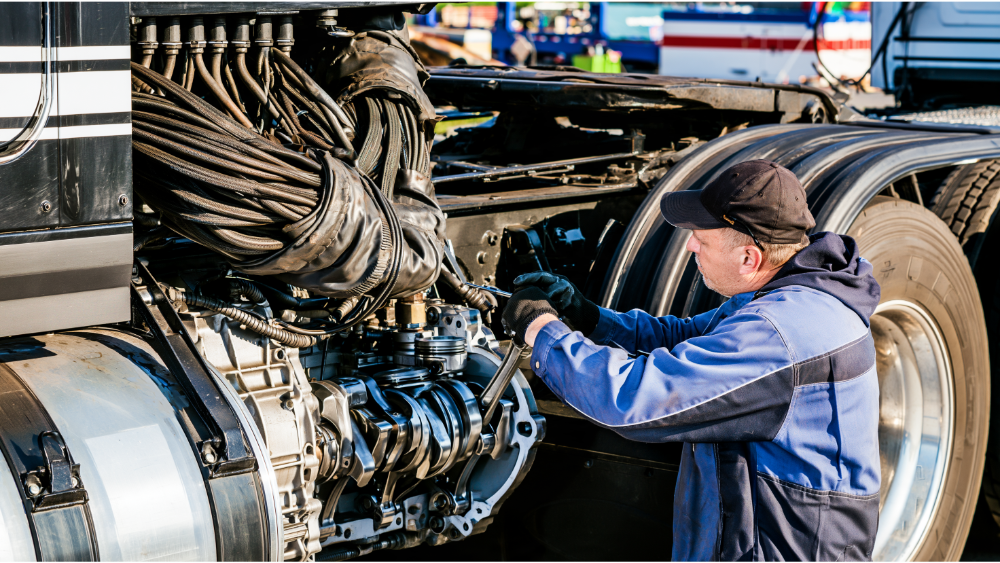
Automatic transmissions use fluid to build hydraulic pressure, so they slip or hesitate first when the fluid is low. AMTs are more likely to report the problem electronically, restrict shifting, or throw a code. Manual transmissions tell you with noise and excessive heat.
Most articles on this topic were written for passenger cars, then applied automatic behavior to gearboxes that do not work that way. That advice sends AMT and heavy-duty manual operators looking for the wrong symptom in the vehicle’s transmission system.
Slipping gears and delayed gear engagement
The engine revs climb and the road speed does not follow. Or there is a beat of hesitation before the truck takes the gear. In a full automatic, low transmission fluid means the pump cannot maintain hydraulic pressure. Official Allison-related operating information warns that when the fluid level is too low, the converter and clutches do not receive an adequate supply.
The “2 to 3 second delay” threshold quoted online is a passenger-car rule of thumb. On a loaded Class 8 truck, the signal is any new hesitation or flare that was not there last week.
Slipping gears is not proof the fluid is low. Worn clutch packs, an AMT clutch or actuator fault, air supply problems, and calibration issues all produce similar behavior. If it is slipping under load, stop. If it is intermittent, get the transmission inspected before the next dispatch.
Erratic shifting, delayed shifting, and rough gear shifts
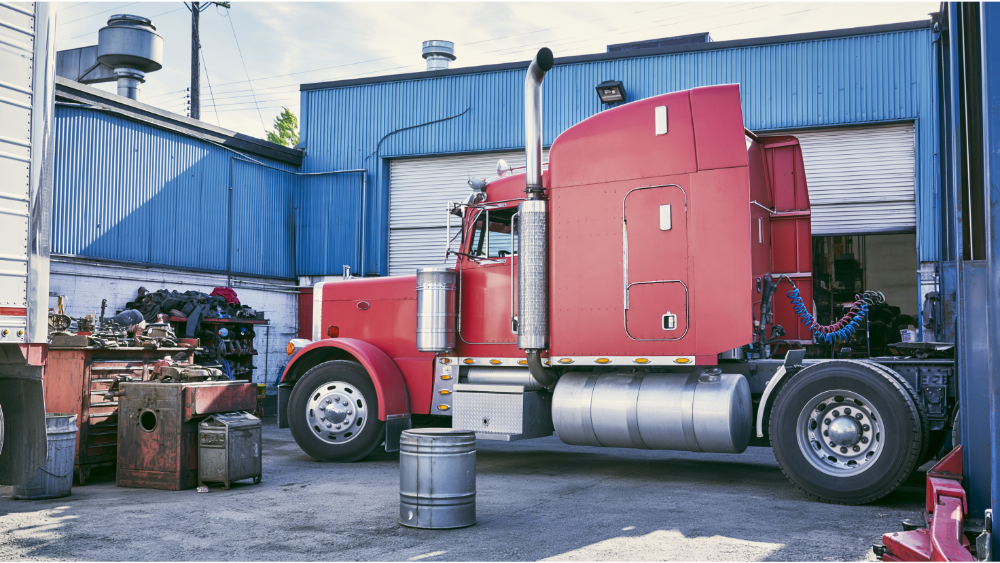
This shows up as clunking into gear, banging upshifts, delayed shifting, or an inability to shift gears above a certain range. Low transmission fluid stops an automatic from shifting smoothly because there is not enough fluid to modulate clutch apply pressure. The truck still moves. It just cannot shift smoothly, and every rough engagement drives shock load into components that were never designed to absorb it. Smooth operation depends on fluid volume, not driver technique.
Too much fluid does the same thing. Excess fluid aerates, and aerated fluid causes erratic shifting and overheating just like a low level does. Overfilling after a symptom is a real way to make the problem worse.
On an AMT, restricted shifting may be deliberate. The TCM limits gears to protect the gearbox. That is a protective response, and it means something upstream already went wrong.
Unusual noises: whining, humming, and grinding noise
Listen for a whine that rises and falls with engine or road speed, a hum, gear howl, or grinding noise on engagement. Insufficient fluid means gears and bearings are not lubricated properly, so they run with increased friction and metal-to-metal contact. That contact makes the noise and shortens the life of the unit.
In manual transmissions and AMTs, noise is often the first warning you get, because there is no hydraulic slip to tip you off earlier. Bearings, driveline components, PTO, and clutch problems make noise too, so sound alone does not name the failure. Strange noises out of a heavy-duty gearbox are not a watch-it-for-a-week item.
Transmission overheating and a burning smell
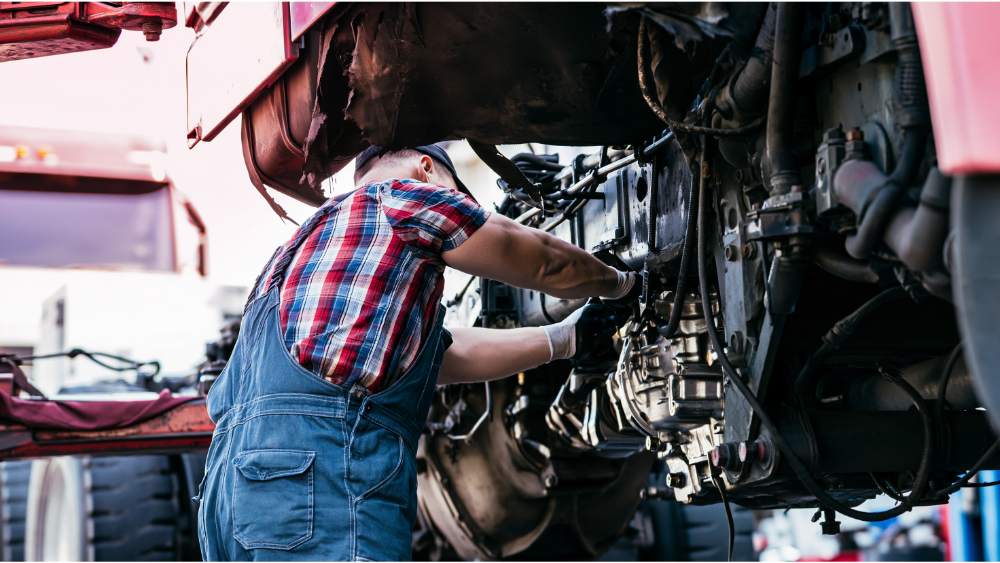
Transmission fluid carries heat out of the case. Less fluid means less heat capacity and a faster temperature climb, especially loaded, on grade, or working in low gears. The 240°F figure you see quoted is a commonly referenced damage threshold for automatic transmission fluid, not a universal spec for every heavy-duty gearbox.
Current Endurant diagnostics list several causes for a transmission oil temperature fault: low oil level, excessive operating weight or grade, a temperature sensor problem, or insufficient lubrication from an internal failure. A burning smell may be overheated fluid, or leaking fluid hitting hot metal anywhere from the engine bay back.
Excessive heat also cooks the fluid, so a unit that ran hot needs the fluid inspected for burnt odor and metal even after the root cause is corrected.
Transmission warning light, check engine light, and dash messages
What appears on the dash varies. Some trucks display an explicit low-oil message. Others show a general transmission warning light, a red stop lamp, a high-temperature warning, a check engine light, or nothing but a stored fault code. Current Endurant instructions note that messages, tones, and gear-display behavior depend on TCM configuration and how the truck manufacturer implemented the system. Volvo’s current VNL I-Shift includes an oil level sensor that reports a low fluid level to the instrument cluster.
Here is the part most articles get wrong. On the current Endurant HD, a fluid pressure sensor monitors lubrication pressure, and critically low pressure lasting five seconds can set a fault, with responses that can include an amber lamp, a red stop lamp, low starting gears, and prohibited upshifts. Official causes include incorrect initial fill, a leak, a damaged sensor, wiring or TCM issues, and internal lubrication failure.
A code tells you where to start. It does not confirm the fluid level.
Fluid leaks: what to look for under the truck
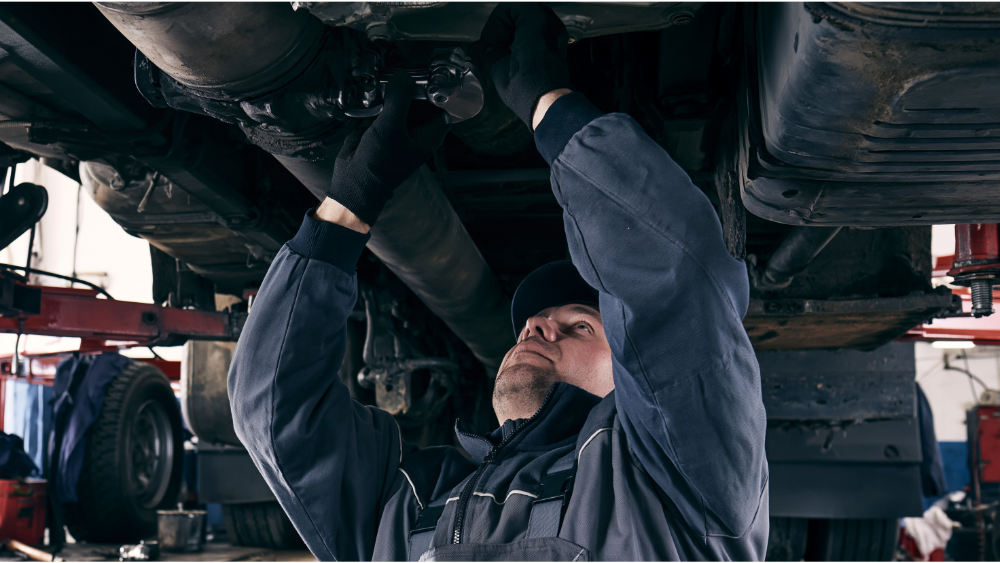
Passenger-car guidance says look for red or pink fluid and treat brown fluid as burnt. That rule does not transfer to commercial trucks. Current heavy-duty specifications include DT12-approved 75W-85 and approved 75W-90 products, Eaton PS-386 SAE 40 synthetic transmission lubricant, and approved synthetic oils for mDRIVE. None of it looks like automotive ATF.
Look for fresh wetness, streaking, and spray patterns, and note where the puddle sits. Leaks show at the case, plugs, seals, cooler lines, or the PTO interface, and location tells you more than color does. A leak does not have to dump all the fluid to do damage, and leaks that only open up hot are easy to miss on a cold walkaround.
Is it low fluid or a failing transmission, clutch, or sensor?
The same symptom can come from a pressure sensor or wiring fault, a TCM or calibration issue, an AMT clutch or actuator problem, worn clutch packs, synchronizer or bearing wear, or a cooler restriction combined with load and grade. Every one of those can put a warning on the dash and make the truck shift badly.
Topping off a transmission that is already full, or one with a failed pressure sensor, buys you nothing and hides the actual failure. You pay for fluid, lose the day, and break down again with the load still on.
Incomplete diagnosis is the root cause of most repeat work in this industry. Fault codes, pressure readings, and a fluid level verified by the OEM procedure tell you which problem the transmission system actually has.
How to check the transmission fluid level on a heavy-duty truck
Most modern vehicles in this weight class have moved away from the transmission dipstick. The procedure is model-specific, and the owner’s manual or OEM service literature governs:
- Allison 3000/B300 (per current DTNA instructions): level surface, Neutral, parking brake applied, engine at idle. The electronic fluid level check displays its result after a two-minute countdown.
- PACCAR transmission operator’s manual: engine idling in Neutral at least two minutes, with fluid temperature between 60°F and 120°F for the specified check.
- Endurant HD: dedicated fill and oil-check openings, with service fill varying by transmission angle. PTO-equipped units require running the engine one to two minutes, then shutting down and repeating the verification.
Do not check the fluid at an arbitrary temperature. Cold temperatures thicken it and skew the reading, which is why OEM procedures specify an operating temperature window. Do not pull a plug on a hot or unsecured truck, and do not add an estimated number of quarts. If you cannot identify the transmission and its check procedure, do not guess.
Why the fluid level dropped, and can you just add trans fluid?
Transmission fluid is not consumed like diesel fuel. Current Eaton diagnostics list exactly two causes for a low level: not properly filled, or a leak. In practice that means a leak at a seal, plug, case, cooler line, filter, or fitting, an incorrect fill during previous service, a PTO-related fill error, or fluid pushed out after overheating. A truck can be low without a puddle in the yard if it has been weeping onto the driveline and burning off.
So can you just add trans fluid? Adding the right transmission fluid may be one step in the repair. It does not fix a leak, it does not prove the warning came from a low level, and it can cause damage if the unit is already full or the wrong product goes in. Bad fluid, burnt or carrying metal, calls for diagnosis before any routine fluid and filter change.
Ignore the 30,000 to 60,000 mile interval you see quoted. That is car maintenance guidance. Heavy-duty transmission fluid changes are set by transmission family and vocation.
What a verified diagnosis includes, and how to prevent low transmission fluid

- Identify the transmission make, model, and configuration.
- Record the warning messages and pull TCM fault codes.
- Verify the fluid level using the OEM procedure for that unit.
- Confirm the exact fluid specification.
- Inspect for leaks at seals, plugs, cooler lines, and the PTO interface.
- Check pressure, temperature, sensors, wiring, and clutch or actuator operation.
- Determine whether it is underfill, a leak, an electronic fault, or internal damage.
- Deliver an itemized estimate before work starts.
Prevention is PM work, not luck. Build level and leak checks into your PM service and check the fluid regularly. The cited PACCAR manual calls for on-highway level and leak checks at PM intervals not exceeding 12,000 miles, and weekly checks for off-highway work. Re-inspect after any transmission, PTO, clutch, cooler, or driveline job. Log the correct fluid type by unit so the next fill is right. Proper functioning comes down to the correct fluid at the correct level, and that is what keeps the vehicle running smoothly under load.
Transmission and clutch repair in the Seattle-Tacoma freight corridor
If your truck is slipping, overheating, losing gear engagement, or showing a transmission stop warning near I-5, Hwy 167, or SR-512, get to a safe location and call (253) 449-0100. 24/7 Emergency Road Service with mobile dispatch covers 50 miles from our Fife shop, including Tacoma, Auburn, Sumner, Puyallup, Milton, Algona, and Pacific.
Driveable units come to Transmission And Clutch Repair at 7495 26th St E Ste B, Fife, Mon through Fri, 8:00 AM to 5:30 PM. Certified technicians, OEM diagnostic software, verified fluid level checks by OEM procedure, an itemized estimate before a bolt is turned, and same-day service when possible. 4.9 stars across 146 Google Reviews.
Frequently Asked Questions
Can I just add transmission fluid if it’s low?
Adding the correct fluid may be part of the repair, but it is not the repair. It does not fix the leak or bad fill that caused the drop, and overfilling or the wrong specification can damage the transmission. Confirm the level with the OEM procedure first.
Can I drive on low transmission fluid?
Not with a red stop lamp, a low-oil message, heavy slipping, overheating, or restricted shifting. Get to the nearest safe location, select Neutral, set the parking brake, and shut down. There is no safe mileage figure, because damage depends on load, grade, and how low the level actually is.
What happens if you keep driving when the transmission fluid is low?
Friction and heat climb, clutch packs and bearings wear fast, and the truck loses the ability to shift gears normally. That path ends in slipping gears you cannot drive through and even complete transmission failure, which means a rebuild or replacement instead of a seal and a fill.
Can transmission fluid go low without a leak?
Yes. A unit can be low because it was filled incorrectly during previous service, including PTO fill errors. Current Eaton diagnostics list improper fill and a leak as the two causes. A slow leak can also weep onto hot components and leave no puddle.
How do you check transmission fluid without a dipstick?
Many heavy-duty transmissions use an electronic level check, a sight device, or dedicated fill and oil-check openings, and the required temperature, engine state, and countdown vary by model. Use the OEM procedure for that exact transmission, or get the vehicle inspected here and we will check it correctly. Call (253) 449-0100.