Key Takeaway
You do not need a CDL for air brakes alone. A commercial driver’s license is required based on vehicle weight over 26,001 pounds, passenger capacity of 16 or more, or placarded hazardous materials – not the braking system. However, if the vehicle does require a CDL and has air brakes, the driver’s license must not carry an L or Z air brake restriction. Check the restrictions field on the license before the truck moves.
Reviewed and updated August 2026. Verify current federal and state requirements with FMCSA and your state licensing agency before making a licensing or dispatch decision.
No. Air brakes alone do not require a CDL. A commercial driver’s license is triggered by what the vehicle weighs, how many passengers it carries, or whether it hauls placarded hazardous materials. The braking system is not part of that test. But if the vehicle does meet CDL criteria and it has air brakes, the driver’s license cannot carry an L or Z air brake restriction.
That’s the check to run before the truck moves, whether you’re an owner operator sizing up a job, a fleet manager assigning a unit, or a driver standing in front of an unfamiliar rig. The rest of this article walks the exact thresholds, the restriction codes, what non CDL drivers are still allowed to operate, and what rules apply when no CDL is required at all.
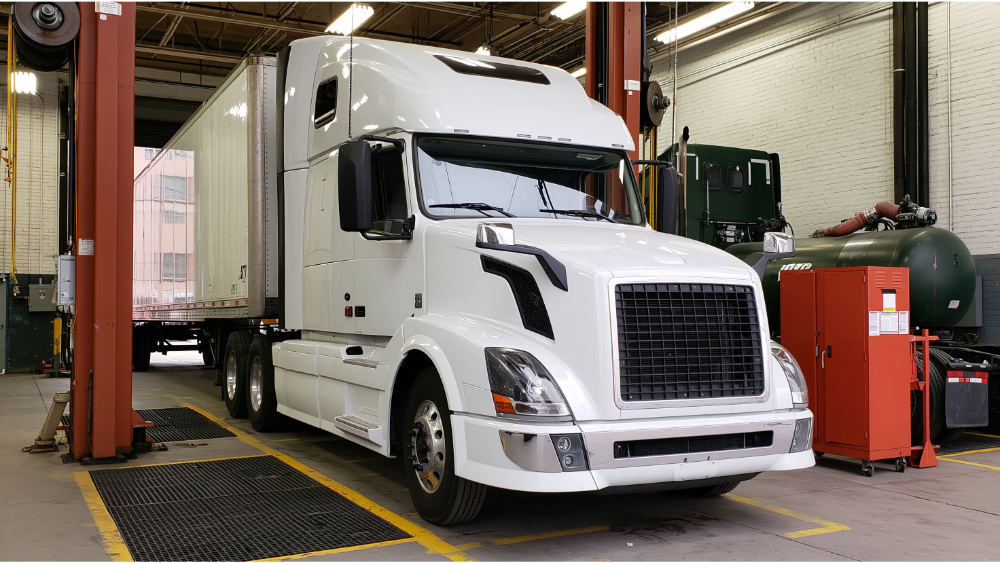
The 30-Second Check: Do You Need a CDL for This Truck?
| Question | If yes |
|---|---|
| Is the single vehicle rated or actually weighing 26,001 lb or more? | CDL required (Class B or A) |
| Is the combination 26,001 lb or more with a towed unit rated or weighing more than 10,000 lb? | Class A CDL required |
| Is it designed to carry 16 or more people, including the driver? | CDL required |
| Is it carrying hazardous materials in quantities requiring placards? | CDL with hazmat endorsement required |
| If any answer above is yes and the vehicle has air brakes: does the license show an L or Z restriction? | Driver is not qualified for that unit |
If all four vehicle questions come back no, air brakes do not change the answer, and the truck can be legally operated on a standard license. One more thing: the line is 26,001 pounds, not “over 26,000.” Most pages write it loosely. Enforcement does not.
What Actually Requires a Commercial Driver’s License: Class A, Class B, and Class C
Federal CDL license classifications are set in 49 CFR 383.5 and 49 CFR 383.91, and they apply across the country.
- Class A: Any combination with a gross combination weight rating or actual gross combination weight of 26,001 lb or more, where the towed unit is rated or weighs more than 10,000 lb. Tractor-trailers, heavy truck-and-trailer setups.
- Class B: Single vehicles rated or weighing 26,001 lb or more, or such vehicle towing a unit at 10,000 lb or less. Heavy straight trucks, dump trucks, large buses.
- Class C: A vehicle that doesn’t meet Class A or B criteria but is designed to transport 16 or more passengers including the driver, or carries hazardous materials in quantities requiring placards. Federal regulations also pull in any quantity of a material listed as a select agent or toxin.
Here’s the detail most articles skip. The federal definition uses the gross vehicle weight rating or the actual gross weight, whichever is greater. The gross vehicle weight rating is what the manufacturer stamped on the certification label inside the door jamb. A label reading 25,999 lb does not automatically settle the question if the vehicle is being operated heavier than that. On a combination, the same logic applies to the gross combination weight rating. Borderline cases get confirmed with the state licensing agency or department of transportation, not with a guess in the yard.
Nothing in any of those three definitions mentions brakes. See the FMCSA drivers page for the same breakdown.
Air Brakes Are a Restriction, Not One of the Required Endorsements
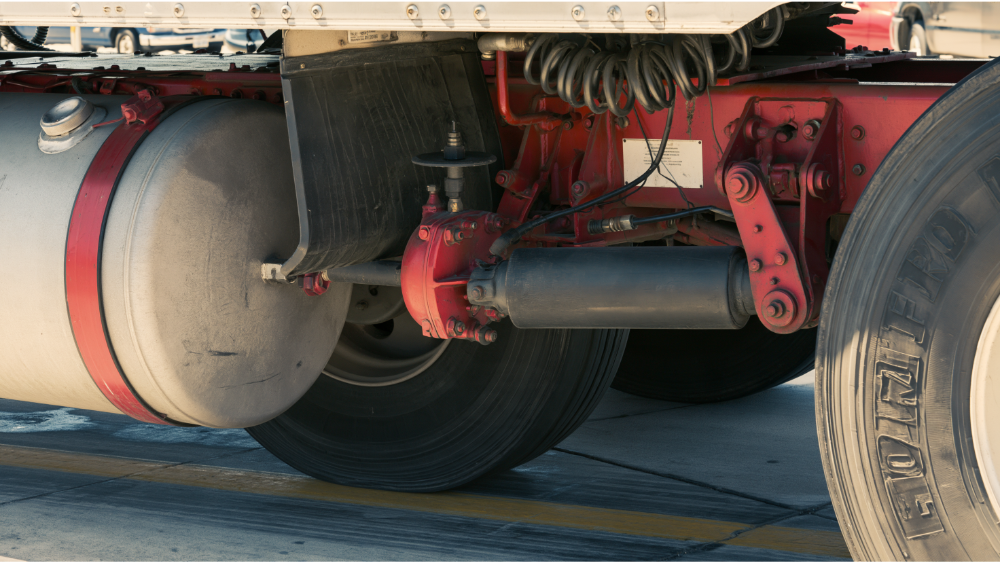
Drivers say it. Recruiters say it. Job postings say it. “Must have air brake endorsement.” Federally, there is no such thing.
The five federal endorsement categories under 49 CFR 383.93 are:
- T: Double and triple trailers
- P: Passenger vehicles designed to carry 16 or more passengers including the driver
- N: Tank vehicles
- H: Hazardous materials
- S: School bus, which is layered on top of the P endorsement
Those are the required endorsements. None of them cover a braking system. Air brakes are handled the other direction. Instead of adding a privilege, the state adds a restriction when a driver fails to demonstrate air brake competence. A driver cleared for air braked vehicles simply has nothing printed in that field. You avoid the code by passing the air brake knowledge test and testing in the right vehicle. You remove it the same way.
The terminology matters more than it sounds. A driver who believes he has an “air brake endorsement” and never checks his restrictions line is a driver who finds out during a roadside inspection that he was never cleared to operate the truck he’s been running.
L vs. Z: The Two Air Brake Restrictions on a CDL
| Code | What caused it | What it prevents |
|---|---|---|
| L | Air brake knowledge test not taken or not passed, or skills test taken in a vehicle without air brakes | Operating a CDL-required CMV equipped with air brakes |
| Z | Skills test taken in a vehicle with air-over-hydraulic brakes | Operating a CDL-required CMV with full air brakes |
Under 49 CFR 383.95, the rule counts any system operating fully or partially on the air brake principle. A full air system uses compressed air to apply the foundation brakes directly. Air-over-hydraulic uses air pressure to boost a hydraulic brake system. Both count as air brakes for restriction purposes, which is exactly why the Z code exists: skills testing on air-over-hydraulic proves less than testing on full air.
Washington DOL displays the same two codes on its endorsements and restrictions page: L is “No air brake-equipped CMV,” Z is “No full air brake-equipped CMV.” Read the restrictions field on the physical license before you assign the unit or accept the load.
Common Scenarios: When Non-CDL Drivers Can Operate Air Brakes
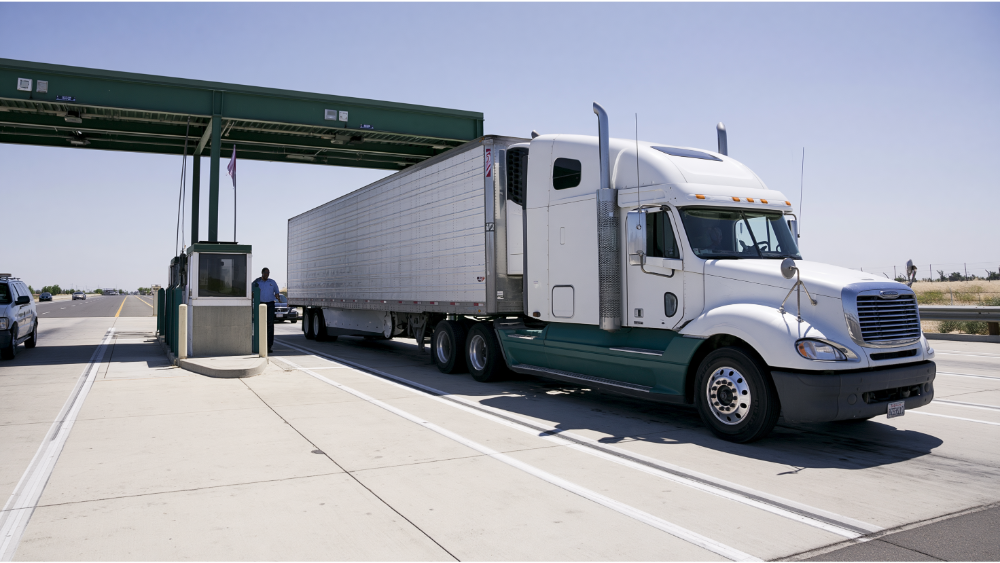
Illustrative examples, using rated weights only:
- Box truck rated 26,000 lb with air brakes. No CDL license required on weight alone. Non-CDL drivers can operate it on a standard non CDL license. The air brakes are irrelevant to the licensing question.
- Straight truck rated 26,001 lb with air brakes. Class B CDL, and the license must not carry an L or Z restriction.
- Tractor pulling a trailer rated 20,000 lb, combination over 26,001 lb. Class A.
- 20-passenger bus with air brakes, under the weight line. Class C with a P endorsement, triggered by passenger capacity, not brakes. Add the S endorsement if it operates as a school bus.
- Qualifying farm vehicle inside the state farm exemption. A covered farm vehicle operated by the farmer, an immediate family member, or a farm employee can be exempt from the CDL requirement even at Class A or B weights, air brakes included. The exemption is narrow and usually limited by distance from the farm.
- Air-brake motorhome driven for personal use. Generally exempt in Washington and many states. Licensing rules for large noncommercial vehicles vary, so confirm in the state where it’s registered.
- Interstate commercial truck over 10,000 lb but under 26,001 lb. No CDL. Other federal rules still apply. More on that below.
Federal and state exemptions also exist for certain farm operations, firefighters and emergency response personnel running emergency vehicles, snow removal, and military drivers under 49 CFR 383.3. These depend on the specific use, the vehicle, and often the distance from the home base. They are not blanket exemptions, and states administer big pieces of them under their own law.
Does Washington Require a CDL Just Because a Truck Has Air Brakes?
Washington State answer: No. Washington DOL states directly that a vehicle does not require a CDL simply because it has air brakes. The vehicle still has to meet Washington’s weight, passenger, or hazardous materials criteria. See Washington DOL: Do I need a CDL?
Washington separately lists qualifying farm operations, emergency personnel, military operations, and noncommercial recreational vehicle use among its CDL exemptions. Certain vehicles fall outside the requirement entirely, but a farm vehicle running under that exemption still has to be operated within the terms of it, and the driver still answers for the condition of the equipment. Those are Washington rules. Do not carry them across a state line and assume they hold. If the vehicle is registered or operated elsewhere, check that state’s licensing agency.
How Do You Remove an Air Brake Restriction? Knowledge Test and Skills Testing
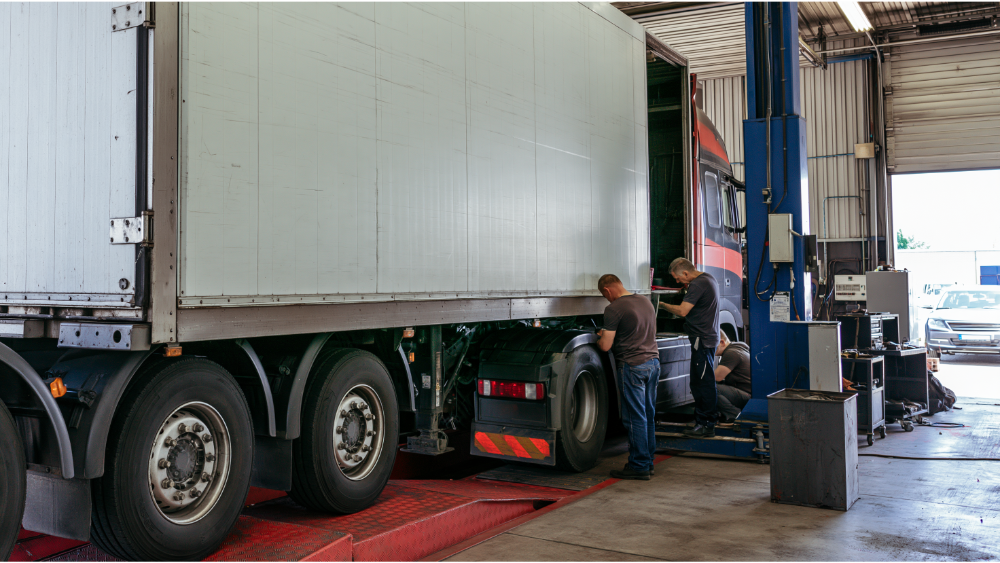
Four steps, per 49 CFR 383.135:
- Pass the air brake knowledge test. Federal minimum is 80 percent correct. Washington’s current air brake knowledge test runs 25 questions with 20 correct required, which is the same 80 percent.
- Test in a vehicle equipped with the system you want cleared. To clear a Z, that means full air brakes, not air-over-hydraulic.
- Perform the air brake portion of the pre-trip inspection correctly. That includes the leak-down check, the low-air warning, and the spring brake application at the pressures the examiner expects.
- Demonstrate safe operation of that air brake system during the skills test.
Federal rules allow states to use a modified CDL skills test rather than repeating the entire test. The state’s procedure controls. In Washington, a commercial learner’s permit is required, valid 180 days with one qualifying 180-day renewal, and current guidance requires a 14 calendar day wait after an original or upgraded CLP before skills testing.
One thing that saves drivers time: removing an L or Z restriction by itself does not trigger Entry-Level Driver Training, which has applied to drivers who obtain a first Class A or B CDL and to certain endorsements since February 7, 2022. State test formats and wait periods change. Confirm with the licensing agency before scheduling.
No CDL Required Does Not Mean No DOT Rules
Most articles stop at “under 26,001 and you’re fine.” That’s where operators get burned.
The CDL threshold and the commercial motor vehicle threshold are two different lines. FMCSA generally defines an interstate CMV starting at 10,001 pounds. See FMCSA’s CMV vs. non-CMV guidance. Cross that line in interstate commerce and you can pull in a valid Medical Examiner’s Certificate, the medical card the driver carries, hours of service, driver qualification files, inspection and maintenance records, and CSA exposure, depending on the operation.
If you run a non CDL straight truck, or your company manages a fleet with small commercial vehicles sitting outside the compliance program, that gap is where audit findings come from. Keep those units inside the same DOT inspection and compliance documentation as the heavy iron.
Licensed to Drive It Is Not the Same as Safe to Drive It
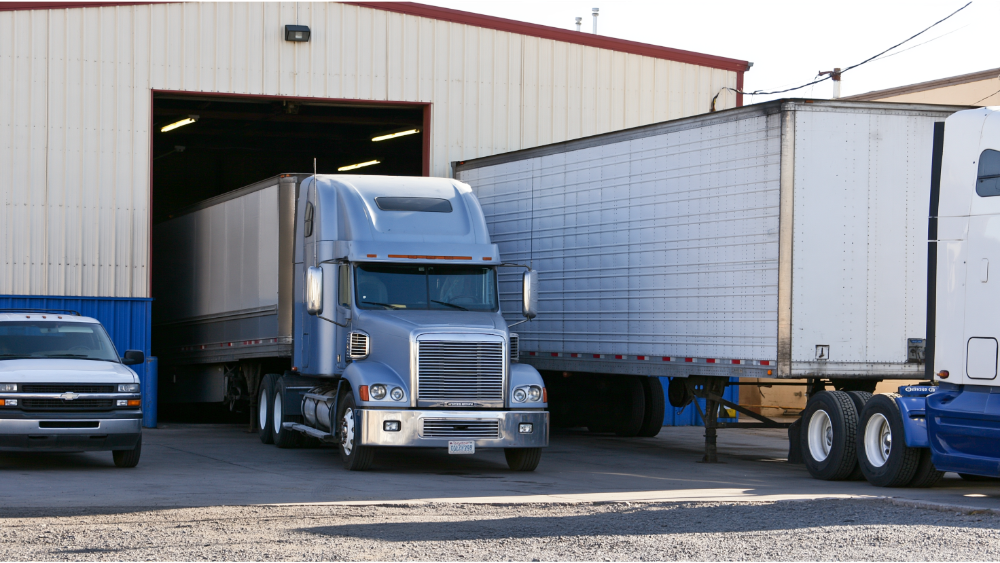
The license tells you whether the driver is qualified. The inspection tells you whether the vehicle should move. Those are separate questions and only one of them is on paper.
A non CDL air-brake box truck is held to the same mechanical standard as a Class 8 tractor. Vehicles with air brakes under the CDL line get inspected like everything else in the yard. The system either holds pressure and stops the load or it doesn’t. Get the unit diagnosed before dispatch, not after, if you see any of this:
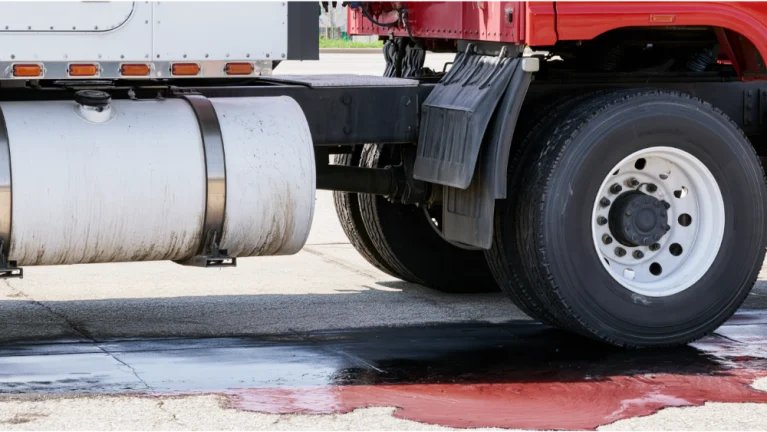
- Air pressure dropping at idle or bleeding down on the road
- Low-air warning light or buzzer, intermittent or steady
- Delayed application or slow release
- Pulling to one side under braking
- Uneven lining or drum wear across axles
- Audible leaks at chambers, fittings, or lines
- Slack adjusters out of adjustment
- Any brake item written up on a roadside inspection
Frequently Asked Questions
Can a non CDL truck have air brakes?
Yes. The braking system does not set the CDL line. Plenty of medium duty commercial vehicles under the weight thresholds run full air or air-over-hydraulic systems and require nothing more than a regular non CDL license.
Do I need a CDL license for air brakes even if the truck is under 26,000 pounds?
No, and the correct number is 26,001 pounds. Weight alone isn’t the whole test, though. Check the combination weight with any towed unit over 10,000 lb, passenger capacity of 16 or more, and placarded hazardous materials before you call it clear.
Can you drive a truck with air brakes with a regular license?
Yes, if the vehicle doesn’t otherwise meet CDL criteria and no state-specific rule applies. Washington DOL confirms air brakes alone do not make a vehicle CDL-required.
Should non CDL drivers get air brake training anyway?
Yes. Nothing requires it, but a driver who can’t read a low-air warning or run a proper leak-down check is a liability on any vehicle. Train them on the pre-trip like you would a Class A driver.
Do you need a CDL for air brakes in PA?
Same federal answer. Pennsylvania follows the federal Class A, B, and C thresholds, and air brakes by themselves are not the trigger. Confirm the details with PennDOT for any borderline vehicle.
What about New York?
New York State applies the same federal weight, passenger, and hazmat thresholds. Air brakes do not create a CDL requirement on their own. Check with the NY DMV on any unit sitting close to the line.
How do I know if my CDL has an air brake restriction?
Read the restrictions field printed on the license. L blocks you from any CDL-required vehicle with air brakes. Z blocks you from any CDL-required vehicle with full air brakes but allows air-over-hydraulic.
Brakes Diagnosed Right, So the Truck Goes Back on the Road
Once the licensing question is settled, the only thing between the vehicle and the load is the condition of the brake system.
Torpedo Truck Repair handles Truck And Trailer Brake Repair on Class 6 through 8 trucks and trailers, air system diagnostics, and DOT inspection and compliance support. You get an itemized estimate before work starts. No surprises, no upsell, same-day service focus.
We’re at 7495 26th St E Ste B, Fife, WA 98424, near I-5 and Hwy 167, serving the Seattle-Tacoma freight corridor. Shop hours are Mon through Fri, 8:00 AM to 5:30 PM. 24/7 emergency roadside dispatch runs within 50 miles of Fife along I-5, Hwy 167, and SR-512.
Call (253) 449-0100. Or request a service quote. Takes under 60 seconds, no obligation.