Key Takeaway
Glow plugs in a diesel engine are electrically heated elements threaded into each combustion chamber that raise temperature to support compression ignition during cold starts. They are not spark plugs and do not ignite fuel directly. Operating temperatures range from 850 to 1,100°C, and many modern systems keep plugs energized after startup to reduce white smoke and cold-start misfires. Not all diesel engines use them: some platforms use intake grid heaters instead.
Glow plugs are electrically heated elements that warm a diesel engine’s combustion chamber before, and sometimes after, a cold start. They add heat. They do not create a spark. Diesel fuel ignites from the heat of compressed air, and a glow plug tops up that heat when a cold engine can’t hold enough of it on its own.
You’re probably here because a truck is cranking too long, blowing white smoke at startup, or sitting on a wait-to-start light, and you’re wondering whether the plugs are the problem. Below: what glow plugs do, which diesel engines use them, and what has to be tested before anything gets replaced.
What Are Glow Plugs? The Heating Element in Your Combustion Chamber
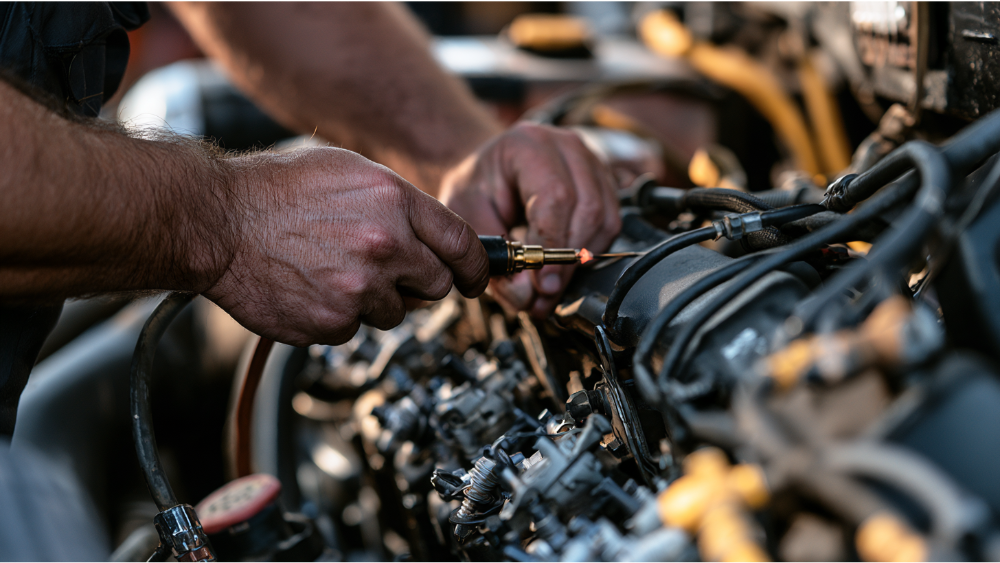
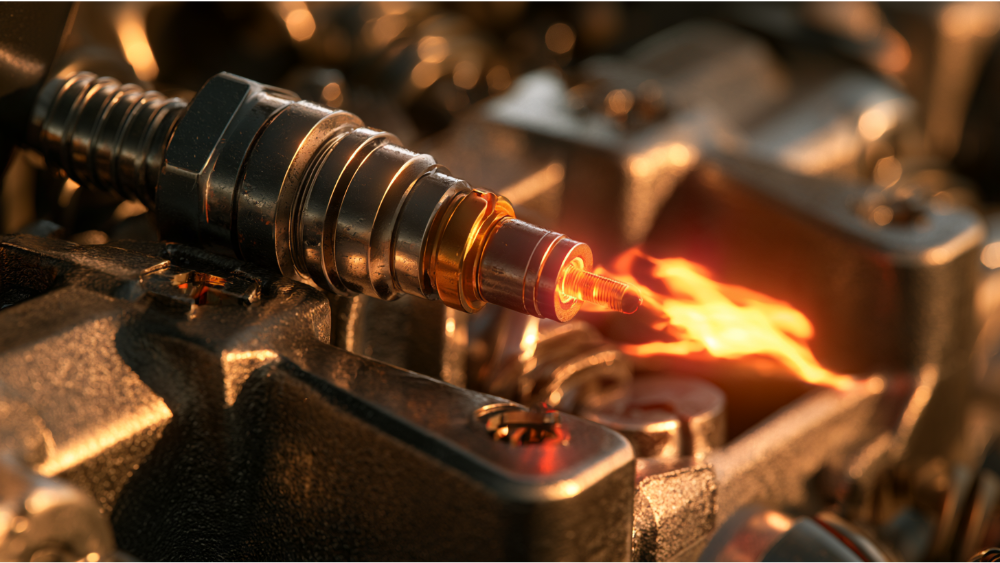
A glow plug is a pencil-shaped, high-resistance electrical heating element. Where glow plugs are used, one is threaded into each cylinder with the tip in the combustion chamber or prechamber. Turn the key and current flows through a relay or control module into the plugs, and electrical resistance turns that current into heat rapidly.
- What a glow plug is: a heating element whose only function is raising combustion chamber temperature during cold starting.
- What it is not: an ignition source. Calling glow plugs “diesel spark plugs” sends drivers down the wrong diagnostic path.
Glow plugs are only one piece of the glow plug system: the plugs, the relay or glow control module, the wiring and grounds, and the sensor inputs that tell the ECU how much heat the engine needs.
Why Does a Diesel Engine Need Extra Heat in Cold Weather?
Diesel engines rely on compression ignition. Air gets drawn in and squeezed until it’s hot enough to ignite the fuel. No spark anywhere in the cycle.
Cold weather breaks that math. A cold block and head pull heat out of the compressed air faster than the compression stroke can build it, so peak temperature lands below what the fuel needs to ignite cleanly. Glow plugs put that heat back. It’s why the same engine that fires instantly in August cranks for ten seconds in January. The heat budget changed, not the engine.
How Do Glow Plugs Work: Pre-Glow, Cranking, and Post-Glow?
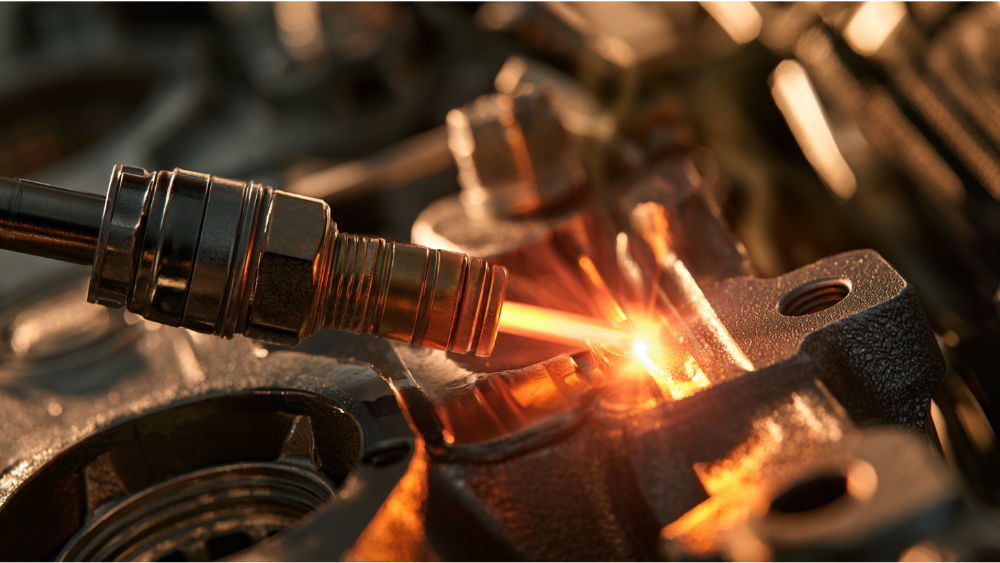
Glow plugs work in three stages:
- Pre-glow. At key-on, current runs through the relay or control module into the glow plugs and they heat up. Bosch cites at least 850°C (1,562°F) as the threshold for reliable cold starting in the systems its technical literature covers, and DENSO gives an 850 to 1,100°C operating range in its fault-finding guide.
- Cranking. Glow plugs stay energized while the starter turns the engine, holding chamber temperature up through the first combustion events. Weak batteries or a dragging starter shorten that window and make healthy plugs look faulty.
- Post-glow. Many modern systems keep the glow plugs powered after the engine fires. That smooths combustion during warm-up, cuts cold-start misfires, and reduces startup smoke and unburned hydrocarbons in the exhaust.
Glow plug time isn’t a fixed countdown on an electronically controlled system. Coolant temperature, ambient temperature, and engine speed can all factor in. Treat every number above as manufacturer-specific, not as a spec for your vehicle.
Different Types of Starting Aids: Glow Plugs vs. Spark Plugs vs. Grid Heaters
| Component | Location | What it does |
|---|---|---|
| Glow plug | Combustion chamber or prechamber | Adds heat inside one cylinder |
| Intake / grid heater | Intake manifold or intake tract | Heats incoming air for all cylinders |
| Spark plug | Gasoline engine combustion chamber | Produces an electrical spark to ignite fuel |
These are not interchangeable parts. A diesel engine has no spark ignition in the way it operates, so spark plugs have nothing to do on one. A grid heater and a glow plug both add heat, but the difference matters: one warms the air charge feeding every cylinder, the other heats a single chamber directly.
Metal-sheathed glow plugs are the long-standing standard. Ceramic elements heat faster and tolerate higher temperatures, and their resistance values and test procedures differ, which matters the moment a wrench goes on the engine.
Do All Diesel Engines Have Glow Plugs?
No. Many diesel engines use glow plugs. Plenty don’t.
Where cylinder-mounted glow plugs are used, it’s typically one per cylinder. Ford’s 2026 F-650/F-750 6.7L diesel runs eight with a dedicated control module. Heavier platforms often go another route: International’s A26 cold-start documentation describes an inlet air heater rather than glow plugs in every cylinder, and Cummins applications commonly use a grid heater managed by coolant and air temperature.
Before anyone orders new glow plugs, confirm what cold-start system the engine actually has.
What Does the Glow Plug Light or Wait-to-Start Light Mean?
The coil-shaped glow plug light comes on at key-on and goes out when the system says it’s ready. On Ford’s medium-duty diesel, the operator waits for the preheat indicator to go out before cranking, and the plugs can stay energized after the engine starts.
Glow plug light behavior is engine-specific, and the vehicle’s operator manual is the authority. A wait-to-start lamp doesn’t prove the engine has cylinder-mounted glow plugs. A light that stays on after startup, or shows up alongside a fault code, is a diagnostic trigger, not a wait.
What Are the Signs of a Faulty Glow Plug?

A few signs come up over and over:
- Difficulty starting or extended cranking, worst in cold conditions
- Rough running instead of a smooth idle, or a cold-start misfire
- White smoke at startup
- Glow plug light, warning lamp, or a stored trouble code
- Louder combustion noise during cold running
- Reduced fuel efficiency or soft performance in some cases
The classic pattern is symptoms that clear once the engine warms up. On a multi-cylinder engine, one weak plug can stay hidden for months, and the driver won’t notice until the coldest morning of the year.
Why Those Symptoms Don’t Prove the Glow Plugs Are Faulty
Every symptom on that list has other causes:
- Weak batteries, a tired starter, or low cranking speed
- Failed relay or glow control module
- Damaged wire insulation, broken connectors, or bad grounds
- Faulty coolant or intake temperature sensors
- Injector faults or fuel delivery problems
- Low engine compression
- Intake or grid heater failure on engines that use one
Replacing glow plugs off a symptom list is guessing, and guessing costs a second round of downtime. A dead glow plug is frequently the result of something else: excess voltage, a charging system fault, a failed controller, or oil contamination. If the cause doesn’t get fixed, you’ll be back in the bay with the same complaint.
How Technicians Diagnose a Glow Plug System the Right Way
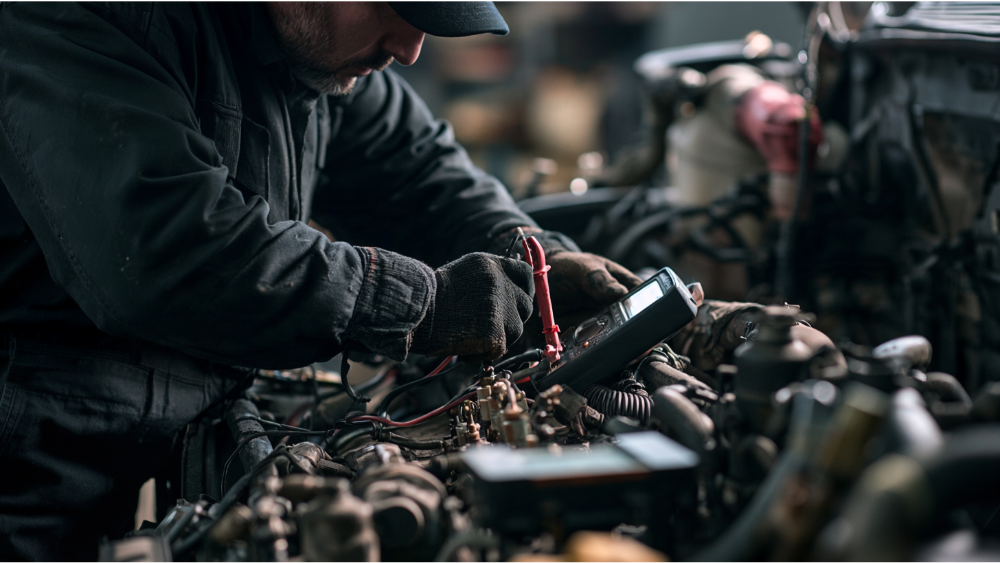
- Confirm which cold-start system the engine actually uses.
- Scan for engine and starting-assist fault codes with OEM diagnostic software.
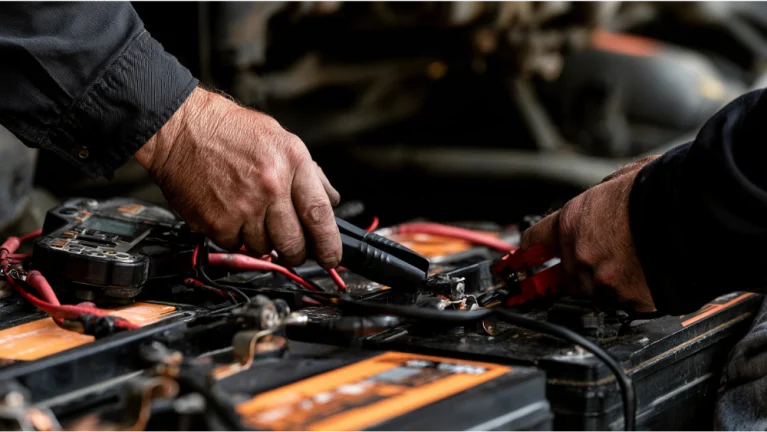
- Verify battery condition, starter draw, and cranking voltage first.
- Check power supply, fuses, relay or control module, connectors, and grounds.
- Measure glow plug resistance or current draw to the manufacturer’s procedure and compare across cylinders.
- If the plugs test correct, move to injectors, compression, and temperature inputs.
There is no universal acceptable resistance value for glow plugs, so use the engine-specific service spec. Connecting an unidentified modern glow plug straight to battery voltage is not a safe test; it can destroy certain designs and it’s a burn hazard.
Our certified technicians work this as a structured, verified sequence, and you get a full itemized estimate before a single bolt is turned.
When Do Glow Plugs Need Replacing?
Glow plugs are wear items, but replacement should be driven by test results and OEM guidance, not a number on a calendar. You’ll see figures like 40,000 to 60,000 miles quoted online; treat that as a generic estimate. Service life swings with glow plug design, how often the vehicle cold-starts, electrical system health, and engine condition.
Some manufacturers recommend that new glow plugs be installed as a full set, since every plug on the engine has shared the same duty cycle. Whether that’s the right call depends on access, labor time, and test results. Removal carries real risk: carbon buildup or corrosion can leave a broken tip inside the cylinder head, and that turns a routine repair into a long one.
Cold-start system checks belong in your PM service before freezing weather arrives, not after a driver is stranded with a no-start. Fleets that operate through winter build that check into the PM schedule.
Frequently Asked Questions
Get the Cold-Start Problem Diagnosed Before You Replace Parts
Cold-start complaints get diagnosed as a system, not guessed at as a part. OEM diagnostic software, certified technicians, an itemized estimate before work starts, same-day service focus when possible. Call (253) 449-0100 or request a service quote. Takes under 60 seconds. No obligation.
What happens when glow plugs fail in a diesel engine?
Cold starts get longer and rougher, startup smoke increases, and the engine may misfire until it warms. A fault code or glow plug light often appears.
Will a diesel engine run without glow plugs?
A warm engine will usually keep running with a failed glow plug; compression heat alone is enough once the block is up to temperature. Cold restarts are where it falls apart, and multiple failed plugs can leave you with a no-start.
How much does it cost to replace diesel glow plugs?
It depends on the engine platform, plug count, labor access, whether the control module or wiring is also faulty, and whether a plug breaks during removal. We quote from the actual engine after diagnosis and put it in writing. No surprises, no upsell.
Can faulty glow plugs cause white smoke at startup?
Yes. White startup smoke is unburned fuel, and a cold chamber that isn’t getting enough heat to ignite it cleanly will produce it. Injector faults and low compression cause the same thing, which is why the glow plug system gets tested, not assumed.