Key Takeaway
Allison transmission fluid for 1000, 2000, 3000, and 4000 Series on-highway units should carry a TES 668 approval number, the current preferred spec. TES 295 and TES 468 remain approved for listed products. Refill capacity ranges from about 7.4 quarts on a 1000/2000 shallow sump to 39 quarts on a 4000 Series four-inch sump. Always confirm the approval number on Allison’s current approved-fluids list before buying.
For Allison commercial on-highway 1000, 2000, 3000, and 4000 Series transmissions, use a fluid carrying an actual TES 668 approval number. TES 295 and TES 468 are still approved for listed on-highway products, so an existing fill is not suddenly wrong. The exception matters: the Allison-branded 10-speed in newer GM 2500/3500 pickups is manufactured by GM and requires DEXRON ULV, not TES 668.
This is written for owner-operators, fleet managers, and techs who are either buying fluid today or setting a PM interval on a truck that cannot afford downtime. You get the spec, the change intervals, the capacity, and the level-check numbers by transmission series. Figures here are current as of publication. Ten minutes of research beats a guess at the parts counter, so confirm against Allison’s current approved-fluids list before you buy.
What Transmission Fluid Does an Allison Transmission Take?
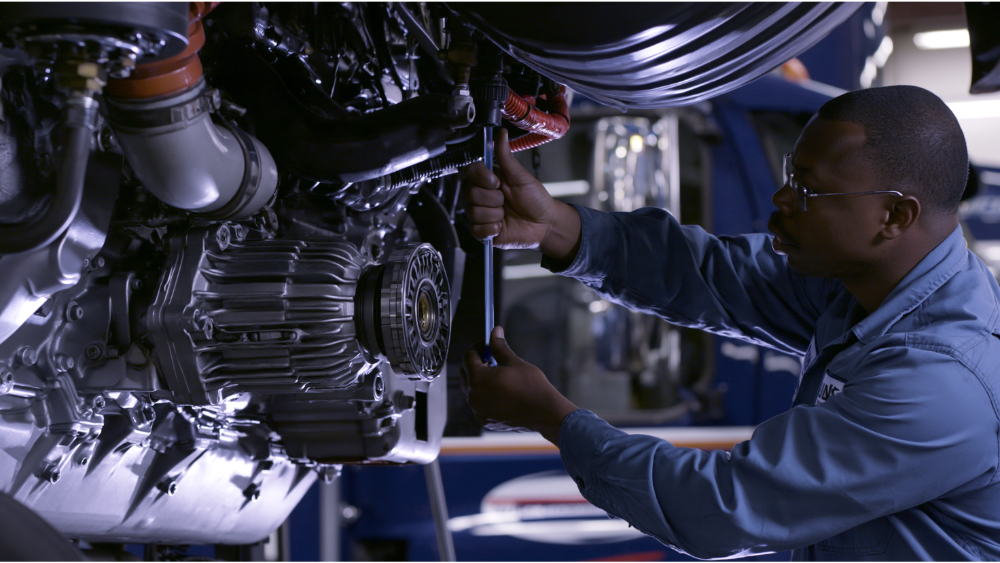
The badge on the truck does not determine the fluid. The transmission series and who built it do. Start at the transmission nameplate and serial number found on the case, then check sump depth and PTO configuration, then read the vehicle OEM manual. Not a forum thread. The factory fill on a ten-year-old unit tells you what was approved then, not what is approved now.
- 1000, 2000, 3000, 4000 Series on-highway: TES 668 preferred. TES 295 and TES 468 still approved.
- Hybrid systems: TES 468.
- Off-highway products: TES 439.
- Stationary and fracking applications: TES 781.
- GM-manufactured Allison-branded 10-speed pickup transmission: DEXRON ULV.
DEXRON III, DEXRON VI, and C4/TES 228 fluids are no longer approved for commercial on-highway Allison products. Running one because it says “for automatic transmissions” on the jug is how you buy a shift complaint.
One more thing that costs people money: “approved” and “recommended for” are not the same claim. Bottle language like “meets the requirements of TES 295” means nothing on its own. View the exact product and its approval number on Allison’s current approved-fluids list. The TES 668 list in force at the time of writing is dated June 24, 2026. TranSynd fluid is the Allison-branded product most shops know by name, and other suppliers such as Valvoline carry approved products of their own. The label does not settle it. The approval number does.
How Allison Fluid Specifications Enhance Transmission Performance: TES 668, TES 295, TES 468, and TES 389
TES 668 is the current preferred formulation, built on TES 295. Allison improved oxidation stability, anti-wear performance, friction durability, and shift quality as the fluid ages. If you are already running TES 295 or TES 468, Allison’s guidance is to switch to a synthetic TES 668 product at your next service.
TES 295 and TES 468 remain approved for their listed on-highway products and carry the same extended drain capability as TES 668 in the current schedule. TES 468 is the requirement for hybrid systems.
TES 389 is still approved for traditional on highway products, but the intervals are dramatically shorter, and it is not permitted in Model Year 2009 applications covered by the current bulletin. Approved is not the same as economical.
This fluid is the hydraulic medium inside the torque converter and the clutch packs, not just a lubricant. That is why the spec drives shift feel and why a cheaper approved fluid shows up later as extra shop visits. Fluid quality is not a place to economize, and neither is the recommended filter that goes in with it.
How Often Should Allison Transmission Fluid and Filters Be Changed?

The change intervals below apply when prognostics are off or not calibrated. Service is due at whichever limit you hit first: miles, hours, or months.
| 1000/2000 Series | Fluid interval |
|---|---|
| TES 668/295, general duty | 150,000 mi / 4,000 hr / 48 mo |
| TES 668/295, severe duty | 75,000 mi / 3,000 hr / 36 mo |
| TES 389, general duty | 50,000 mi / 2,000 hr / 24 mo |
| TES 389, severe duty | 12,000 mi / 500 hr / 6 mo |
With TES 668/295 in a 1000/2000, the control-main spin on filter goes at 50,000 miles, 2,000 hours, or 24 months, whichever comes first. That is an external filter and it comes off with the truck on the ground. The pan suction filter is an internal filter and an overhaul item in Allison’s commercial schedule, so it does not come out at a routine fluid change.
| 3000/4000 Series | Fluid interval |
|---|---|
| TES 668/295, general duty | 300,000 mi / 6,000 hr / 48 mo |
| TES 668/295, severe duty | 150,000 mi / 6,000 hr / 48 mo |
| TES 389, general duty | 25,000 mi / 1,000 hr / 12 mo |
| TES 389, severe duty | 12,000 mi / 500 hr / 6 mo |
Main and lube/auxiliary filters with TES 668/295 run 75,000 miles, 3,000 hours, or 36 months, whichever comes first. Extended change intervals require the specified high-capacity filters, so filter selection is part of the interval, not a detail. Order the filter kit by transmission model and sump depth, since shallow and deep sumps take different part numbers, and confirm the kit carries the correct seals and gaskets before the pan comes down.
Allison defines severe service here as on/off-highway, refuse, city transit, and shuttle transit. Those operating environments push heat through the converter, and the fluid ages faster than road miles alone suggest. Mixing TES 668/295 with TES 389 puts you on the shorter TES 389 schedule. A converted unit isn’t considered a 100% TES 668/295 fill until the second consecutive change with approved fluid, and mixtures should not be used with Prognostics for the extended schedule. If you run a fleet with an oil-analysis program, a post-service sample and a trend line beat any universal mileage number for setting intervals.
Allison Transmission Fluid Capacity: How Many Quarts Does a Refill Actually Take?
Initial (dry) fill and service refill are different numbers, and both are approximate.
| Transmission | Configuration | Initial fill | Refill |
|---|---|---|---|
| 1000/2000 | Standard sump | 14.8 qt | 10.6 qt |
| 1000/2000 | Shallow sump | 12.7 qt | 7.4 qt |
| 3000 | 4-inch sump | 29 qt | 19 qt |
| 3000 | 2-inch sump | 26 qt | 17 qt |
| 4000 | 4-inch sump | 48 qt | 39 qt |
| 4000 | 2-inch sump | 40 qt | 31 qt |
Listed 4000 Series configurations with a PTO take an additional 3 quarts. Ordering trans fluid by the gallon: a 4000 Series four-inch sump refill is close to ten gallons, a 3000 Series refill runs under five gallons, and a 1000/2000 standard sump refill lands under three gallons. Buying by the gallon instead of the quart usually leaves you the extra you need for the post-fill top-off. Knowing your sump depth before the fluid is purchased keeps a cart of the wrong quantity out of your shop. External coolers, hoses, accumulators, a rear-mounted PTO, and vehicle configuration all move the real number, so the safe approach is to buy to the high side and set the final level by procedure rather than by the chart.
How to Check Allison Transmission Fluid, and Why a Drain and Refill Beats a Flush
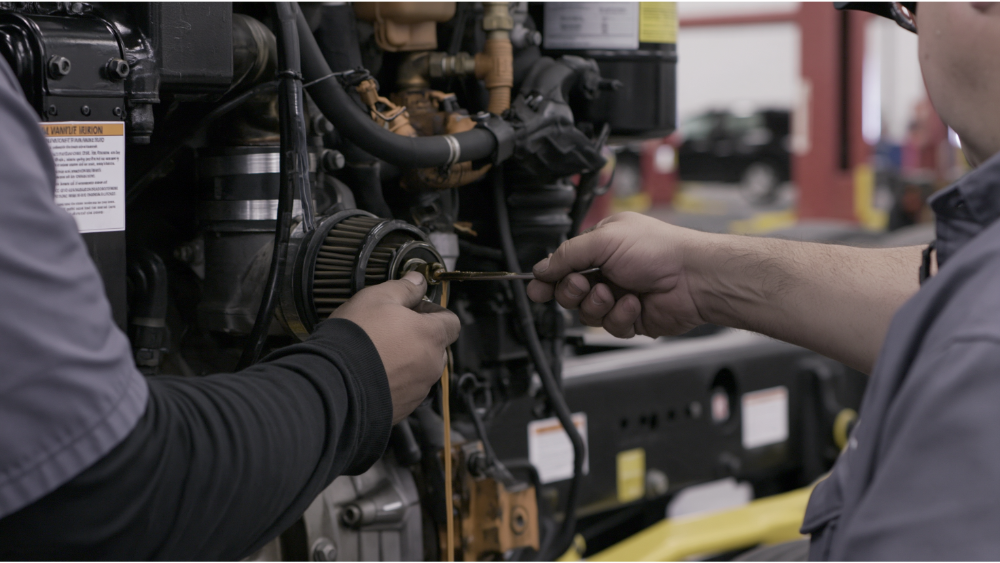
Allison 1000 dipstick check:
- Park on a level surface.
- Set the parking brake and chock the wheels.
- Keep the engine running at low idle.
- Put the transmission in Park or Neutral as specified.
- Take the reading more than once.
Thanks to normal drainback and aeration, a single reading tells you very little. The cold check is preliminary only. The hot check is the accurate one, at 160 to 200°F sump temperature or 180 to 220°F converter-out temperature. Take care at the top end of the fill. Underfill starves the pump. Overfill aerates the fluid and overheats the unit as it expands. On selector-equipped commercial units, use the electronic oil-level function and the operator’s manual, not the pickup dipstick procedure.
On flushing: Allison does not recommend or recognize fluid exchange machines, because the process may not reliably remove all of the previous fluid. We agree with that position. A documented drain and refill with the correct filter kit is the right service. Letting the pan drain hot pulls more of the used fluid and suspended debris out with it, then the spin-on filter goes in dry-torqued to spec. Your invoice should show the exact product and approval number, the quantity installed, filter part numbers, mileage, hours, date, and the post-service level check.
When New Fluid Won’t Fix the Problem
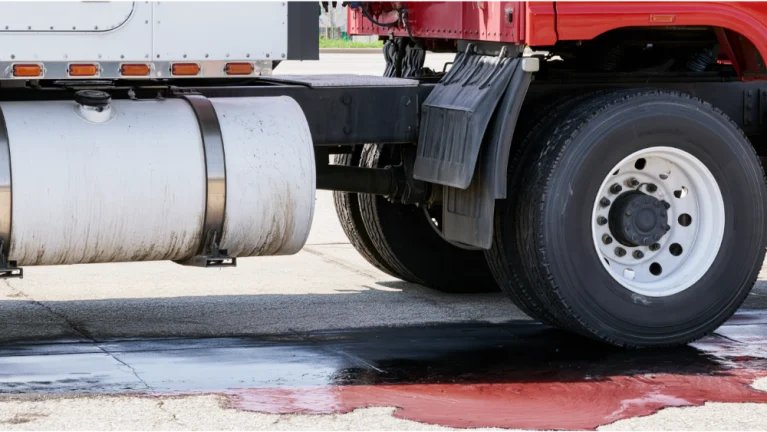
A fluid change is maintenance, not a repair. Correct fluid and clean filters protect transmission performance. They do not restore a worn clutch pack, and selling them as the cure for every shift issue is how drivers pay twice. Get a diagnosis first if you have an active leak, milky fluid (water or coolant intrusion means the cooler, often integral to the radiator, gets inspected and pressure-tested, not just topped off), overheating, delayed engagement, slipping or shift flare, a selector warning light, or stored codes.
Allison’s oil-analysis limits: viscosity change within ±25% of new fluid, TAN increase no more than +3.0, water 0.2% maximum, no trace of glycol. Any alien fluid detected means change the fluid. Wear metals are a trend, not a verdict, and need at least four data points. Allison is explicit that wear-metal results alone should never justify pulling a transmission or quoting an overhaul.
Torpedo Truck Repair handles Transmission And Clutch Repair and Preventive Maintenance PM Service from the Fife shop for operators running the Seattle-Tacoma freight corridor: Class 6 through 8 trucks, box trucks, and trailers. Fleet customers get consistent documentation across units. Itemized estimate before a bolt is turned, same-day service focus when possible. Questions about your spec or your interval? Call (253) 449-0100 or request a service quote. Shop hours are Mon through Fri, 8:00 AM to 5:30 PM, and a weekend breakdown gets 24/7 emergency dispatch within 50 miles of Fife along I-5, Hwy 167, and SR-512.
Frequently Asked Questions
What transmission fluid goes in an Allison?
TES 668 is preferred for 1000, 2000, 3000, and 4000 Series on-highway units. TES 295 and TES 468 remain approved. Confirm the transmission model first, then verify the product’s approval number on Allison’s current list.
Is DEXRON VI Allison approved?
Not for commercial on-highway Allison products. DEXRON III, DEXRON VI, and C4/TES 228 are out. The GM-built Allison-branded 10-speed in newer 2500/3500 pickups is the exception and requires DEXRON ULV.
How many quarts of fluid does an Allison transmission take?
It depends on series and sump depth. Approximate refills run 7.4 to 10.6 qt on 1000/2000, 17 to 19 qt on 3000, and 31 to 39 qt on 4000, plus 3 qt for listed PTO configurations. Coolers and external lines add more.
Does the internal filter get changed with the fluid?
On 1000/2000 Series units the pan suction filter is an internal filter Allison schedules at overhaul, not at a routine drain and refill. The control-main spin-on filter is the one you replace on interval. On 3000/4000 Series units, main and lube filters come in the service kit and go in with every fluid change on the recommended schedule.
Can TES 668 and TES 295 be mixed, and can TES 668 replace TES 295?
TES 668 is the recommended move at your next service. Mixing with TES 389 drops you to the shorter TES 389 interval, and a converted unit isn’t treated as a 100% TES 668/295 fill until the second consecutive change with approved fluid. Thanks to that rule, keeping clean service records is what protects your extended interval and the long-term durability of the unit.