Key Takeaway
The diesel coolant flush interval depends on the engine manufacturer and coolant chemistry installed in your truck, ranging from 300,000 miles or 3 years on some Si-OAT systems to 750,000 miles or 8 years on extended life coolant systems, with extender programs reaching 1,000,000 miles. Use whichever limit arrives first among mileage, engine hours, and calendar time. Change coolant early if the system shows contamination, oil intrusion, foaming, or failed test results.
There is no universal diesel coolant flush interval. Follow the engine or chassis manufacturer’s schedule for the coolant actually installed in your truck, and use whichever limit comes first: mileage, engine hours, or calendar time. Current heavy-duty schedules run from 300,000 miles or 3 years on some Si-OAT systems up to 750,000 miles or 8 years on some extended life coolant systems, with approved extender programs reaching 1,000,000 miles.
Replace or service the coolant sooner if it is contaminated, the wrong chemistry was added, test results come back out of spec, or the system has had an oil or fuel leak, foaming, or repeated overheating.
Two terms carry this whole article. A coolant service interval is the OEM’s scheduled replacement point. A flush is physically clearing the system with water or a chemical cleaner. They are not the same job. And whichever comes first means miles, engine hours, and years are three separate limits running at the same time, not three options you get to pick from.
What Is The Diesel Engine Coolant Flush Interval By Manufacturer?
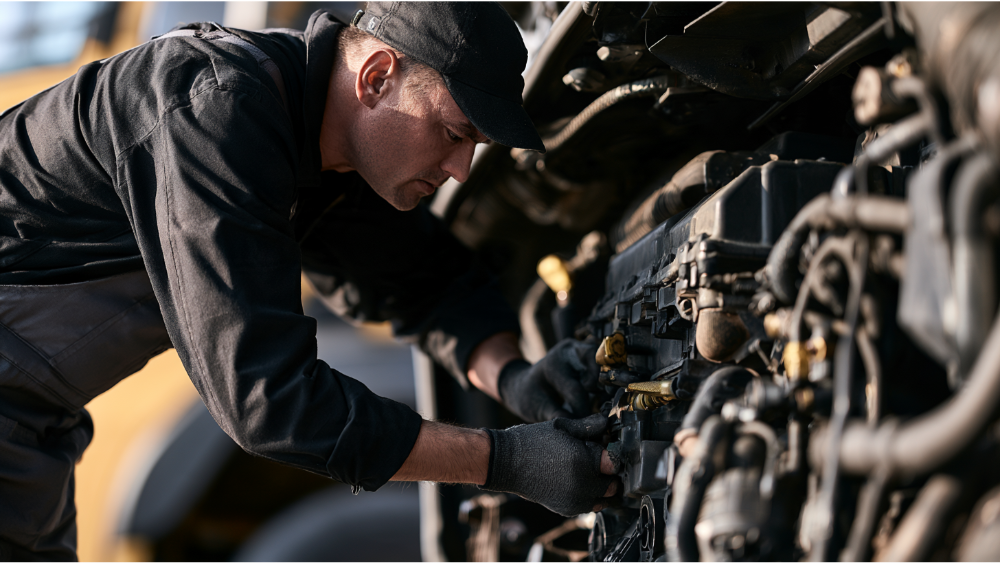
The spread between published intervals is exactly why generic advice fails. One engine family is due at 300,000 miles. Another runs past 750,000. Same fluid category, different approval spec.
Examples only. Verify the manual for your exact engine, model year, and installed coolant.
| OEM / coolant system | Published interval | Required maintenance or qualification |
|---|---|---|
| Detroit Si-OAT (DD5, DD8, DD13, DD15, DD16 applications) | 300,000 miles or 3 years | Approved Si-OAT system, follow testing guidance |
| Detroit ELC / OAT, listed engine families | 600,000 miles or 4 years | Testing frequency varies by engine and duty cycle |
| PACCAR nitrited ELC / NOAT | 750,000 miles, 12,000 on-road hours, or 8 years | Coolant checks at least twice annually |
| PACCAR nitrited ELC with approved extender | 1,000,000 miles, 20,000 hours, or 8 years | Extender added at 500,000 miles, 10,000 hours, or 4 years |
| PACCAR nitrite-free OAT | 600,000 miles or 6 years | No extender. Do not add coolant extender |
| Volvo Driver Guide example | 750,000 miles or 96 months | Test at every engine-oil interval |
| Mack heavy-duty ELC | 750,000 miles, 15,000 hours, or 8 years | Approved extender raises mileage and hours to 1,000,000 / 20,000. The 8-year limit stands |
Conventional fully formulated coolant sits far below all of that, commonly 2 to 3 years or 2,000 to 3,000 operating hours, because its inhibitor package depletes much faster. Sources: Detroit coolant requirements, PACCAR operator’s manual, Volvo Driver Guide, and Mack heavy-duty coolant requirements.
How Do You Find Your Truck’s Actual Coolant Change Interval?
Five questions. If you can answer all five without guessing, you have your interval.
- What diesel engine and model year is in the truck?
- What exact coolant specification is installed? Not the color. The approval spec.
- When was it filled, and has the first coolant change already been done?
- What are the current mileage, engine hours, and last test results?
- Has the system had coolant loss, incompatible top-offs, overheating, or contamination?
The engine manual and the chassis manual can list different requirements for the same vehicle. When they disagree, the shortest controlling limit wins. The same rule applies to the jug. Cummins publishes product-life figures of 1,000,000 miles or 20,000 hours for listed OAT, NOAT, and hybrid coolants in its Fleetguard aftermarket portfolio, and 300,000 to 400,000 miles for its listed conventional fully formulated product. Those are coolant-product numbers. They do not override a shorter engine schedule.
If the answers aren’t documented, the next step is identification and testing. Not a guessed flush.
Does duty cycle change the interval, or is 100,000 miles close enough?
Duty cycle changes it, and hours matter as much as miles on high-idle, vocational, and low-mileage units. A truck that idles hard or works grades under load in high ambient temperatures runs the coolant hotter and pulls service in. Severe-duty schedules on some platforms land near 50,000 miles. A lightly worked diesel pickup such as a Ford Super Duty may be published at 100,000 miles. Same fluid, different operating reality.
Why Do Extended Life Coolant Intervals Vary So Much?

Interval length tracks the inhibitor package, not the dye. The antifreeze base protects the block in cold conditions and raises the boil point in summer, but it is the additive chemistry that decides how long the fluid lasts. Conventional fully formulated ethylene glycol coolant depletes fast and depends on supplemental coolant additive management to keep cavitation and corrosion protection in range. Propylene glycol products exist and carry their own approvals. Silicate-heavy conventional products are often published near two years or 30,000 miles in light-duty use. Carboxylate chemistries (OAT and NOAT) hold protection far longer and are gentler on water pump seals, which is how the 600,000 to 750,000 mile numbers exist at all. Si-OAT blends silicate back in for aluminum protection and accepts a shorter published drain interval in return.
ASTM D6210 is a performance specification, not a drain schedule. Its public scope covers corrosion, cavitation, freeze and boil protection, and calls for 40% to 60% glycol by volume (or prediluted product at 50% minimum), while leaving SCA maintenance instructions to the engine or vehicle manufacturer. A coolant passing D6210 does not give every truck the same interval.
This is where universal coolant marketing and green coolant versus red coolant guessing do real damage. On wet-liner engines, vibration collapses vapor bubbles against the liner wall, and a depleted or wrong-chemistry coolant lets that pitting cut through. On engines with EGR coolers, the same fluid is also carrying exhaust heat, so chemistry matters even more. Cummins identifies liner cavitation and eventual perforation as a primary risk of improper coolant use. That is why OEM approval lists exist.
Coolant Flush vs. Drain-And-Fill: What Does Your Truck Actually Need?
Three different operations get called the same thing.
- Scheduled drain-and-fill. The OEM’s routine replacement of old coolant with new. On a clean extended life system, a chemical cleaner is not automatically required.
- Water flush. Distilled water or deionized water run through the radiator, block, and hoses to clear loosened rust, scale, and deposits. Tap water introduces minerals that scale and corrode, which defeats the point.
- Chemical clean. Reserved for contaminants, oil or fuel intrusion, heavy sludge, or conversion to a different chemistry. Caterpillar calls for cleaning and flushing ahead of the normal interval when overheating, foaming, or oil and fuel contamination is present.
All three end the same way: refill to the correct concentration, purge the air, pressure-check the system, and verify no leaks before the truck moves. Neglected coolant that has dropped its additives leaves scale and debris that plug a radiator, and scale insulates metal and kills heat transfer across every cooling component you paid for.
Refilling With New Coolant And Distilled Water
Mix concentrate with distilled water at the ratio the OEM publishes, or buy the prediluted product and skip the math. Wait for the engine to cool before opening anything. Fill slowly, run the engine with the heater valve open, and work the air pockets out, because trapped air reads as an overheat and can cook a water pump. Bring the reservoir to the cold mark, then recheck after a heat cycle. Use the correct coolant spec on the fill, not whatever is on the shelf. If you switch chemistries, the old coolant has to come all the way out first. Different types do not blend safely, and a half-converted system protects nothing. Correct concentration and clean passages are what prevent overheating under load.
When Should You Change The Coolant Before The Scheduled Interval?
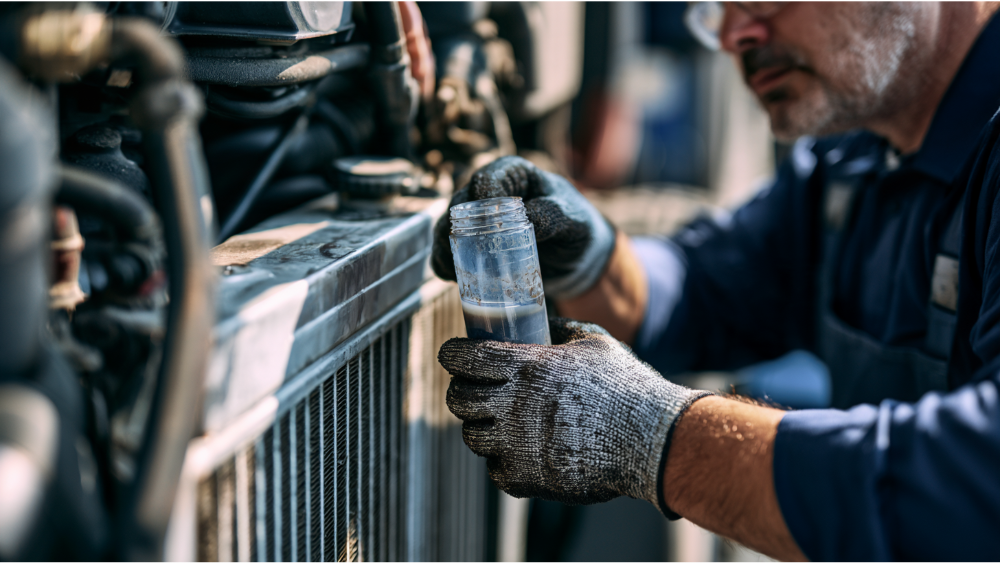
Pull the service in early when any of these show up:
- Oil or fuel in the coolant. Coolant turning up in the oil pan points the same direction. That is an internal failure, not a fluid problem.
- Sediment, sludge, or foaming. The additive package has broken down or something incompatible went in.
- Incompatible coolant or additive added. Mixed chemistries can drop inhibitors out of solution.
- Repeated coolant loss or a falling coolant level. Something is leaking or being consumed.
- Failed freeze point, pH, or inhibitor test. Results that suggest the package is spent mean the fluid is out of spec regardless of mileage.
- Unknown service history. A used truck with no records gets identified and tested, not assumed.
- Repeated overheating. Heat damages the fluid and tells you something upstream is wrong.
What A Dropping Coolant Level Is Telling You
Coolant loss is a diagnostic finding. It is not permission to keep adding water until the next scheduled flush. Cummins is direct about this: repeated water top-offs dilute the additive package and cut corrosion, cavitation, freeze, and pH protection.
And overheating is not automatically a flush. It can be a leak, restricted airflow, a failing thermostat or water pump, a plugged radiator, contamination, or an internal engine failure. Fresh coolant poured into an undiagnosed system buys you a second breakdown at a worse time. Find the cause, then fill.
How Often Should Diesel Coolant Be Tested Between Changes?
Long-life coolant is not no-maintenance coolant. It makes sense to test it on a schedule between changes.
- PACCAR calls for freeze point, pH, nitrite, and carboxylate checks at least twice annually.
- Volvo recommends testing at every engine-oil interval, with SCA levels checked at least twice per year or after any coolant loss.
- Detroit calls for a refractometer freeze-point check at each service interval, publishing an optimal protection range of −24°F to −44°F except where colder climates require more, plus daily visual checks of the reservoir for level and leaks.
Fully formulated conventional coolant generally needs testing every six months at minimum because its inhibitors deplete on a shorter curve. For problem systems, or for fleets trending condition across a lot of similar units, send samples out for lab analysis. Trend data catches a chemistry problem across five trucks before it becomes five engine repairs.
What Belongs In Fleet Cooling System Maintenance Records?

FMCSA requires motor carriers to systematically inspect, repair, and maintain their vehicles under 49 CFR §396.3. It does not prescribe a coolant flush interval. FMCSA’s own interpretation states that intervals are fleet- and vehicle-specific and are set by the carrier. So no mileage figure is a “DOT requirement.” Yours is whatever your program defines and documents.
Per unit, record:
- Coolant brand, chemistry, and OEM approval spec
- Fill date, mileage, and engine hours at fill
- Every test result with its date
- Every top-off, including how much and with what
- Every extender addition
Documented per-unit history is what lets you defend an interval at audit and stop paying to flush good coolant. Build it into your Preventive Maintenance PM Service schedule so maintaining it happens without anyone chasing it.
What A Professional Cooling System Repair And Service Should Verify
Hold any shop to this list before they drain anything:
- Confirm the installed coolant’s OEM approval spec first, by documentation and testing, not by color
- Test freeze point, pH, and inhibitor level
- Inspect for oil, fuel, sludge, and scale
- Pressure-test for leaks across the radiator, hoses, water pump, and the rest of the components
- Decide drain-and-fill, water flush, or chemical clean based on findings, not habit
- Refill to correct concentration and purge all air
- Recheck for leaks before release
- Document coolant, spec, mileage, hours, and results for the PM file
That is the standard we run on Cooling System Repair And Service for Class 6 through 8 trucks and trailers. Certified technicians, OEM diagnostic software, and a full itemized estimate before a single bolt is turned. No upsell, no surprises. If the coolant tests good, we tell you it tests good.
Call (253) 449-0100 for 24/7 emergency road service, or Request a Service Quote to set up fleet PM scheduling. Takes under 60 seconds, no obligation. Shop hours are Mon through Fri, 8:00 AM to 5:30 PM. The 24/7 line is emergency dispatch.
Frequently Asked Questions
How often should you do a coolant flush on a diesel truck?
Whatever the engine manufacturer publishes for the coolant installed in your truck, using the first limit reached among miles, engine hours, and years. Current heavy-duty examples range from 300,000 miles or 3 years up to 750,000 miles or 8 years. Conventional coolant comes due far sooner. There is no universal number.
Are coolant flushes really necessary?
Yes, though most trucks need a scheduled drain-and-fill rather than a full flush. Additives deplete, deposits build, radiators plug, and spent coolant lets corrosion and liner cavitation start. A true flush is for contamination, sludge, or a chemistry change.
How often should I change the coolant in my 6.7 Powerstroke?
Follow the Ford Super Duty schedule in your owner’s manual for the coolant type in your truck. Some published intervals reach 100,000 miles, but severe-duty work and heavy towing pull that in. Test the coolant instead of assuming the mileage.
How long should a coolant flush last?
As long as the replacement coolant’s approved interval and the truck’s operating conditions allow. Same coolant in two trucks on different duty cycles gives you two different outcomes, which is why testing between changes decides the real service life, not the calendar.