Key Takeaway
Yes, diesel engines need special coolant – most medium- and heavy-duty diesels require a fully formulated heavy-duty coolant that meets the exact OEM specification, such as Cummins CES 14603 or Detroit DFS 93K217, not standard green automotive antifreeze. Diesel coolant must include a cavitation inhibitor package to prevent liner pitting, which can punch holes through cylinder walls and destroy an engine. A 40 to 60 percent glycol mix using distilled water is the standard target, and the engine manual – not the parts store shelf – is the final authority.
Yes. Most medium- and heavy-duty diesel engines require coolant that meets the exact engine manufacturer specification. “Special” does not mean a brand name and it does not mean a color. It means an approved, fully formulated heavy-duty coolant your engine maker has signed off on. The generic green stuff on a parts store shelf is not that product.
If you’re looking at a low reservoir or planning a coolant change, here’s what matters: finding the right spec, knowing whether your engine needs supplemental coolant additives, and handling a system where the coolant is mixed or unidentified. Fully formulated means the inhibitor package is already built in. Specification means the OEM-approved standard the product has to meet, usually an ASTM number plus the engine maker’s own number.
What Makes Diesel Engine Coolant Different From Regular Antifreeze?
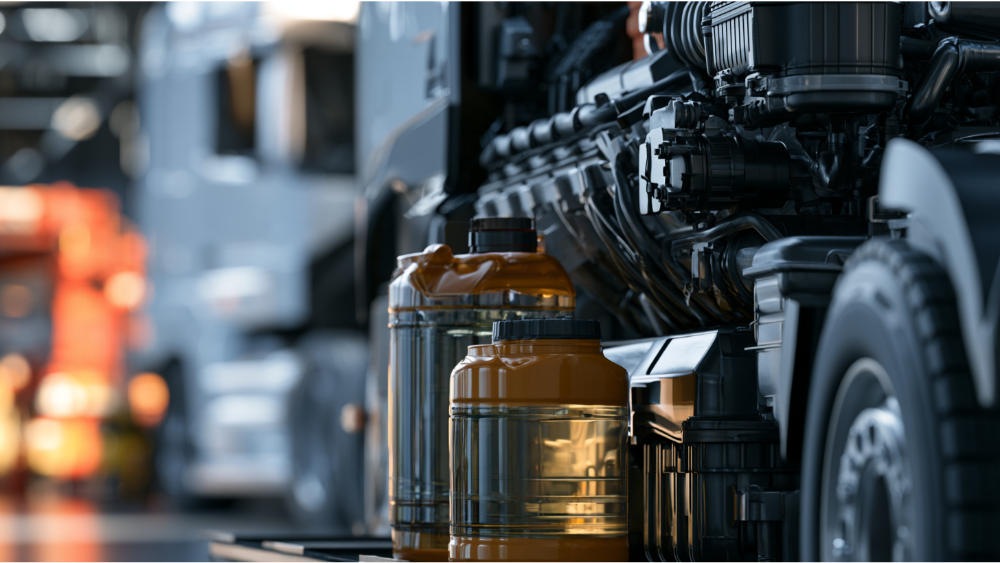
Start with cavitation, not heat. Diesel engines run high compression, and that combustion pressure makes cylinder liners vibrate. The vibration creates microscopic vapor bubbles in the coolant right against the liner wall. When those bubbles collapse, they tear material off the metal. Cummins describes exactly this process. Engines built with wet cylinder sleeves are the most exposed, because coolant sits directly against the liner. Cavitation erosion turns pits into holes through the liner wall, coolant gets into the oil, and now you’re looking at a tow and a teardown instead of a service. That is engine failure caused by the wrong jug of antifreeze.
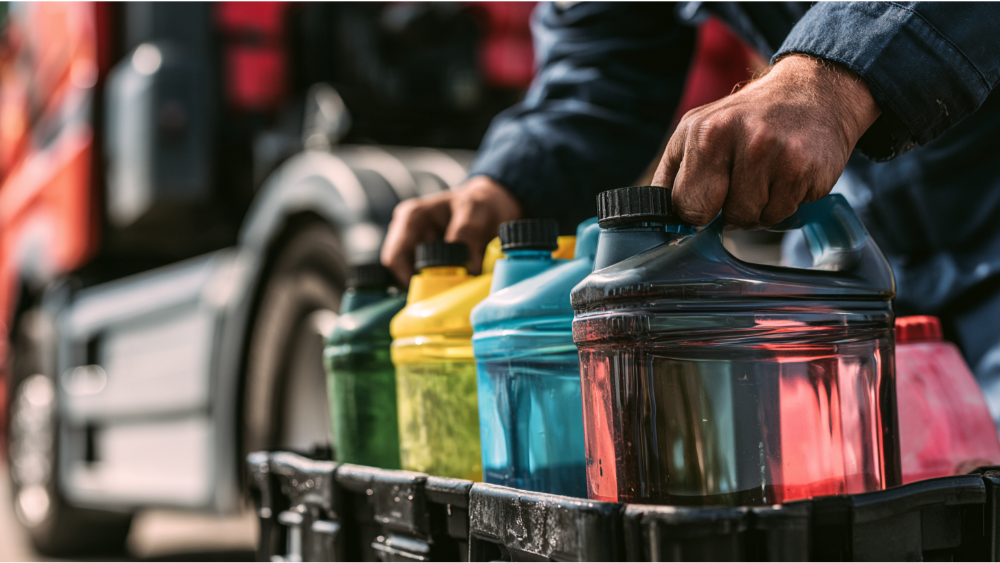
Heavy-duty coolant carries an inhibitor package built to stop that. The additives also protect the mixed metals in a diesel cooling system: cast iron block, aluminum, copper, solder, plus seals and hoses. Some packages carry nitrate for aluminum protection. They hold off rust and scale, because mineral deposits on a hot liner wall add thermal resistance and wreck heat transfer, and they manage foam and pH. ASTM D6210-25, the current heavy-duty standard, requires protection against corrosion, cavitation, freezing, boiling, and scale on hot surfaces.
Silicate levels matter here too. High-silicate formulations can drop out and form abrasive gel that chews up water pumps long before they should be replaced. Detroit states flatly that passenger-car coolant must not be used in its engines, because it does not provide the liner-pitting protection those engines need. That’s Detroit’s position on Detroit engines, not a blanket rule for every diesel ever built, but it tells you how seriously the OEMs treat it.
How Do You Find the Right Engine Coolant for Your Truck?
- Identify the engine make, model year, VIN, and engine serial number.
- Read the coolant reservoir decal or factory-fill label.
- Check the engine and chassis manuals.
- Find the exact OEM coolant specification, not just a category.
- Confirm what chemistry is actually in the system now: conventional, OAT/ELC, NOAT, or Si-OAT.
- Confirm whether you need premix or concentrate.
- If anything is uncertain, start with testing, not pouring.
The hierarchy is simple. Manual and factory fill first. OEM specification second. Industry standard third. Chemistry and concentration fourth. Color last, and only as a clue. The engine manual is the key document, not the parts counter.
One safety item: the engine must be off and cool before you open a pressurized cooling system. Never top off a hot engine.
Coolant Standards: ASTM D6210, D4985, D3306 and OEM Specs
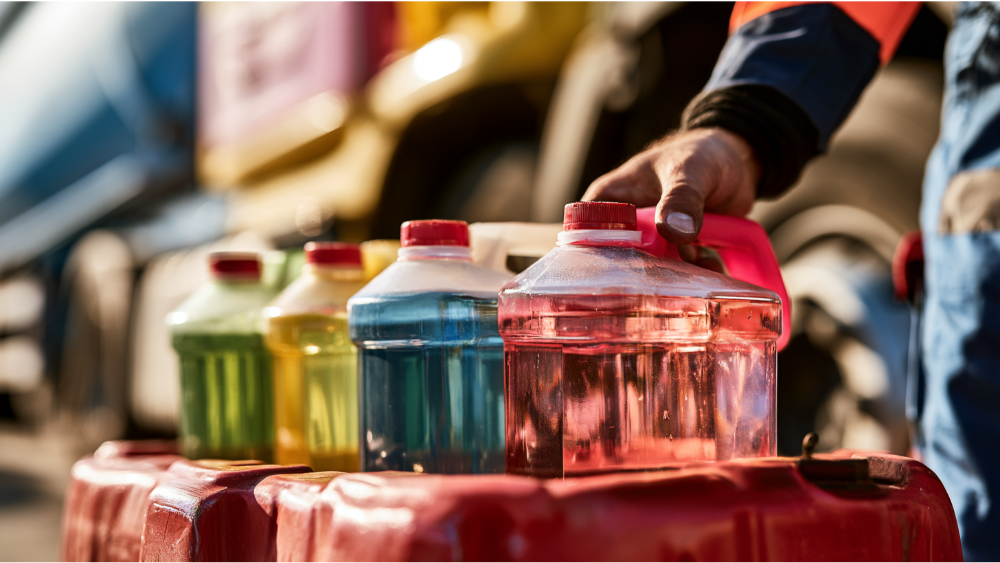
ASTM D6210-25 is the current heavy-duty standard for fully formulated glycol coolants. It covers concentrate used at 40 to 60 percent glycol by volume, and prediluted coolant containing at least 50 percent concentrate.
ASTM D4985 covers low-silicate heavy-duty formulations that require an initial SCA charge before service.
ASTM D3306-21 is the automobile and light-duty standard. A jug carrying only D3306 is not proof of heavy-duty suitability. Some products meet both, so read the whole label, not the front of the bottle.
Here’s what most articles on this topic miss: an ASTM number alone may not satisfy your engine. Cummins calls for coolant meeting CES 14603 and notes that while most D6210 coolants meet it, some OAT products pass D6210 and fail a CES elastomer-compatibility test. Detroit requires DFS 93K217 on current engines. The OEM spec is the gate. The ASTM number is the baseline.
Conventional, Extended Life Coolant, and NOAT: What the Coolant Technology Means
OAT stands for organic additive technology. The inhibitors are organic acid salts rather than inorganic minerals, which is why the service approach is completely different from conventional coolant.
| Type | Inhibitor chemistry | Maintenance method |
|---|---|---|
| Conventional / IAT | Inorganic salts, often silicate based | SCA charge and regular maintenance dosing |
| Fully formulated conventional | Inorganic, inhibitors pre-charged | No SCA at fill, monitoring and maintenance dosing |
| OAT / ELC | Organic acid inhibitors | Approved extender only |
| NOAT | Organic acids plus nitrite | Nitrite replenishment per OEM |
| HOAT / Si-OAT | Organic acids plus silicate or other inorganics | OEM-specific, do not substitute |
An acronym is not an approval. Extended life coolant does not mean maintenance-free, and extenders and SCAs are not interchangeable. Published service intervals swing wildly. For example, some Cummins medium-duty applications list 60,000 miles or 24 months for standard coolant, while Mack publishes 750,000 miles or eight years on eligible ELC systems. That spread is why the manual decides and why no generic mileage number belongs in your PM plan.
Can You Mix Diesel Coolants, and Does Color Matter?
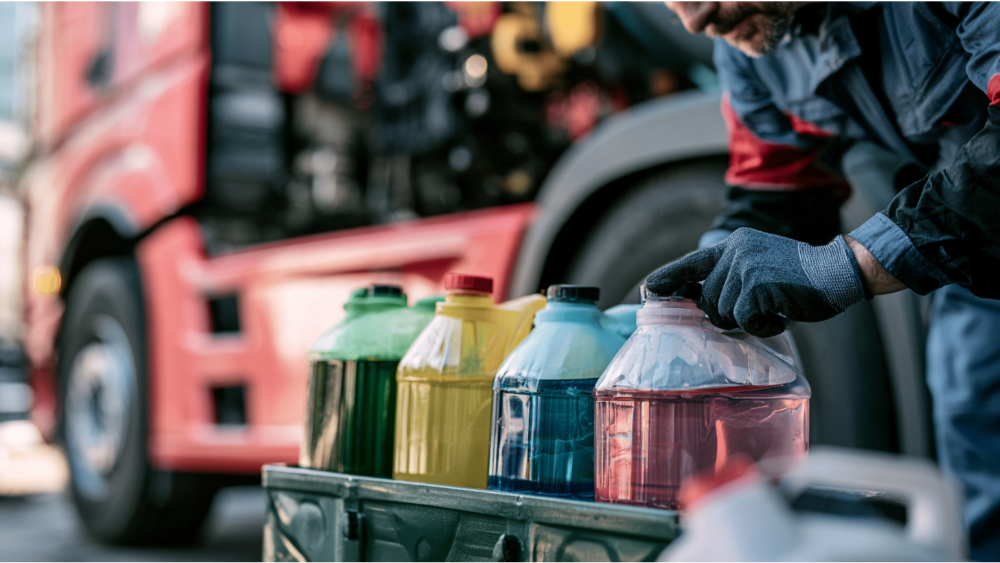
Color is not a specification. It may help you guess what was installed. It proves nothing about chemistry or compatibility.
Detroit’s guidance warns directly against mixing coolants just because they match in color, and colors are not standardized across the industry. Green used to mean conventional low-silicate antifreeze on most yards. Now it tells you almost nothing. Mack documentation lists conventional coolant as purple/pink, optional ELC as red, and a newer POAT factory fill as orange. Two orange jugs on a shelf can hold entirely different formulations.
Be accurate about what mixing actually does. A quart added on the shoulder and a full chemistry conversion are different problems. Detroit notes that mixing extended life coolant with standard-life coolant may not cause immediate damage, but it can wipe out the extended-life advantage and convert that unit to standard-life maintenance. A small top-off may be fine, and it still has to be recorded. The right course is testing first, then correcting, re-inhibiting, or flushing based on the verified OEM procedure.
Mix Ratio, Water Quality, and Heat Transfer: Is 50/50 Right for Every Diesel Engine?
A 50/50 antifreeze-to-water mix is the common OEM target, with 40 to 60 percent as the acceptable band. More antifreeze is not better. Glycol moves heat less efficiently than water, so a heavy pour costs you cooling capacity on grade. Detroit warns that above 60 percent you lose effective heat transfer and risk silicate dropout, and below 40 percent freeze and corrosion protection may be inadequate. Volvo lists ethylene glycol freeze protection at roughly minus 12 degrees F at 40 percent, minus 34 at 50 percent, and minus 62 at 60 percent. Chicago winters put that number on the hook every January.
Water quality is the part people skip, and it is critical. Detroit publishes these maximums for water used in mixing:
- Chlorides: 40 ppm
- Sulfates: 100 ppm
- Total dissolved solids: 340 ppm
- Combined magnesium and calcium: 170 ppm
Distilled water or deionized water is preferred. Hard water builds scale and neutralizes the inhibitor additives. Premix removes two errors at once: wrong ratio and bad water. Be careful on the shop floor, because if you’re mixing concentrate the water matters as much as the jug.
Do All Diesel Engines Need Supplemental Coolant Additives?
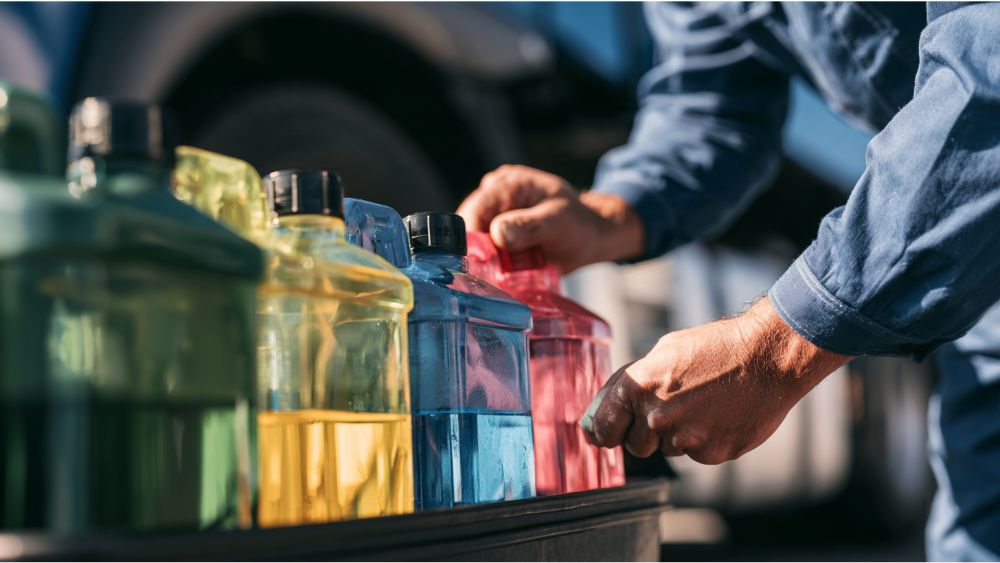
“All diesels need additives” is wrong, and dosing an ELC system that doesn’t call for it creates its own problem. Work the decision tree:
- ASTM D4985 low-silicate system: initial SCA charge plus maintenance dosing to maintain inhibitor level.
- Fully formulated D6210 system: no SCA at initial fill. The OEM may require a maintenance dose at a service interval, particularly on wet-liner engines.
- ELC/OAT or NOAT system: use only the approved extender or nitrite chemistry. Detroit says traditional SCAs should not be added to ELC unless the exact OEM procedure calls for it.
- Unknown system: test before you add anything.
What To Do If You Do Not Know What Coolant Is in the Truck
Used trucks and mixed fleets make this the most common real situation, and most coolant articles ignore it. Good maintenance records help. If a prior owner switched chemistry mid-life, the paperwork may be your only evidence.
- Stop adding coolant.
- Write down exactly what went in and how much.
- Check the factory-fill decal and the service records.
- Pull a sample.
- Test concentration and inhibitor condition with coolant test strips or a lab analysis.
- Correct, drain, or flush according to the verified specification.
Some symptoms mean the system needs diagnosis, not another jug:
- Coolant level low again every week
- Temperature swings or overheating under load
- Visible leaks or residue at hoses, the pump, or the radiator
- Cloudy coolant, oil film, or debris in the reservoir
- Heater output that changed, or a system that won’t hold pressure
A poor chassis ground can push stray current through the coolant and accelerate corrosion, so electrical faults belong on the list too. Repeated top-offs are not maintenance. They’re an undiagnosed leak.
How Fleets Keep Cooling System Mistakes From Becoming Downtime
- Record the coolant specification by unit, not by truck type.
- Standardize only where every engine approval in the fleet permits it.
- Stock the correct premix so the good stuff goes in, not whatever is open on the bench.
- Label bulk tanks, drums, and transfer equipment, and keep incompatible chemistries physically separated.
- Build coolant testing into every PM service, not just the annual.
- Track top-off volume per unit so small leaks don’t disappear into routine work.
Cooling system maintenance is cheap by comparison. One wrong pour that pits a liner costs a tow, a teardown, and days of lost revenue.
Frequently Asked Questions
Is diesel coolant different from regular coolant?
For heavy-duty engines, yes. Heavy-duty coolant is fully formulated with cavitation and liner protection, controlled silicate levels, and an inhibitor package approved by the engine maker.
Can I use regular car antifreeze in a diesel truck?
Not in a Class 6 through 8 engine. A green jug carrying only ASTM D3306 is a light-duty coolant with no proven liner-pitting protection. What’s correct for a VW or any passenger car does not transfer to a Class 8 diesel. In a diesel pickup, follow the owner’s manual.
Can I mix OAT and conventional diesel coolant?
Mixing them may not damage anything immediately, but it can eliminate the extended-life performance and move that unit to standard-life maintenance. Test the system, then correct or flush per the OEM procedure.
Can I use plain water in an emergency?
Only to get off the shoulder. Water gives you no freeze, corrosion, or cavitation protection, and it has to be corrected at a shop before the truck goes back to work.
What coolant does a 7.3 Powerstroke take?
Answer it by spec, not by category. That’s a light-duty diesel pickup, so use the chemistry listed in the owner’s manual and match the factory fill.
Get Your Cooling System Tested Before It Costs You a Day
We verify what coolant is actually in your unit, test concentration and inhibitor condition, correct mixed or contaminated systems, diagnose unexplained coolant loss, and build coolant testing into fleet PM schedules under Cooling System Repair And Service and Preventive Maintenance PM Service. You get an itemized estimate before work begins. No surprises, no upsell.
Call Now: (331) 299-1322. Torpedo Truck Repair, 2940 W 36th St Unit A, Chicago, IL 60632. Shop hours Mon through Fri, 24/7 emergency road service for breakdowns. Prefer to start online? Request Service Quote.