Key Takeaway
In a diesel engine with selective catalytic reduction (SCR), DEF is sprayed into the hot exhaust stream after combustion, where heat breaks the urea down into ammonia. That ammonia reacts with nitrogen oxide emissions inside the SCR catalyst, converting them into nitrogen gas and water vapor. Under the right conditions, this process can reduce NOx emissions by up to roughly 90%. DEF never enters the engine, the fuel system, or the DPF.
Diesel exhaust fluid (DEF) never enters the engine. On a truck built around selective catalytic reduction (SCR), diesel exhaust fluid sits in its own separate tank and gets sprayed into the hot exhaust after combustion. The urea in it converts to ammonia, and that ammonia drives a chemical reaction with the NOx gases produced by diesel combustion inside the SCR catalyst, turning them mostly into harmless nitrogen and water vapor. That is the whole job.
If you’re a driver or fleet manager looking at a DEF warning light right now, the thing that decides whether you keep rolling is simple: is this a refill problem or a DEF system fault? Those are two different situations with two different fixes.
How DEF Works in a Diesel Engine
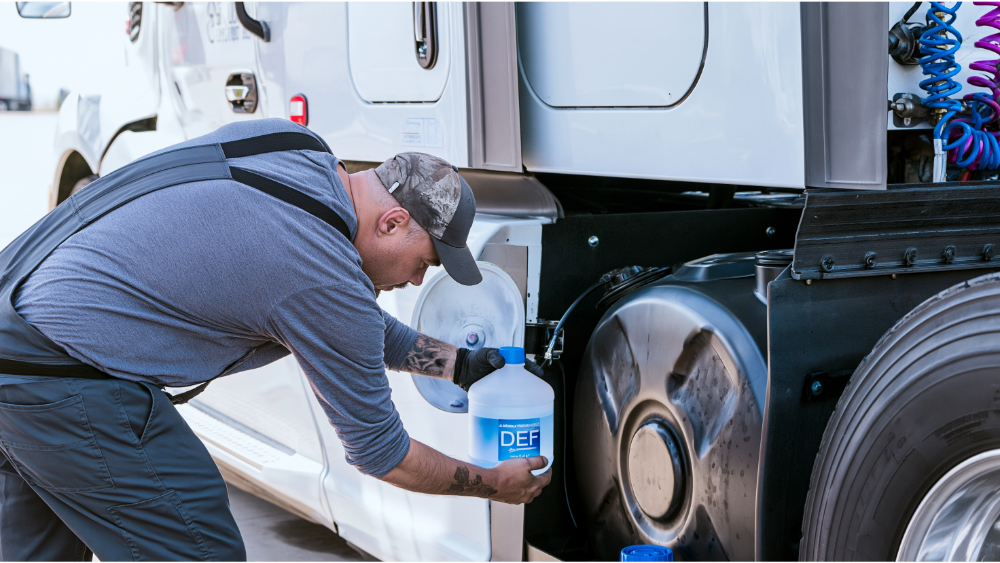
DEF works downstream of the cylinder, in the aftertreatment section of your truck’s exhaust system. Combustion happens first. Most diesel engines burn hot, and high combustion temperatures produce harmful nitrogen oxide emissions. Then the aftertreatment hardware cleans up the harmful gases that come out.
A common heavy-duty layout looks like this:
Engine → DOC → DPF → DEF doser/mixer → SCR catalyst → ammonia-slip catalyst → tailpipe
Component packaging and order vary by engine platform and truck build. What stays consistent is the sequence of work: the DOC and DPF handle hydrocarbons, carbon monoxide and soot, and the DEF/SCR section handles nitrogen oxide emissions. DEF is dosed upstream of the SCR catalyst, never into the fuel system and never mixed with diesel fuel.
What Diesel Exhaust Fluid Is, and What It Is Not
On-road diesel exhaust fluid for commercial vehicles, also called AUS 32, is 32.5% technically pure urea and 67.5% deionized water. The urea is synthetically produced. The water is deionized so it doesn’t carry minerals or contaminants into the SCR system, which is sensitive to anything outside spec.
What DEF is not:
- Not diesel fuel
- Not a fuel additive
- Not coolant
- Not a DPF cleaner
- Not something you dilute, stretch or substitute
Quality requirements are defined by ISO 22241. API licenses qualifying products to carry its DEF Certification Mark. The program is voluntary, but that mark is the practical way to confirm the fluid in the jug meets spec before it goes in your DEF tank.
How the DEF Supply System Fits in the Exhaust System
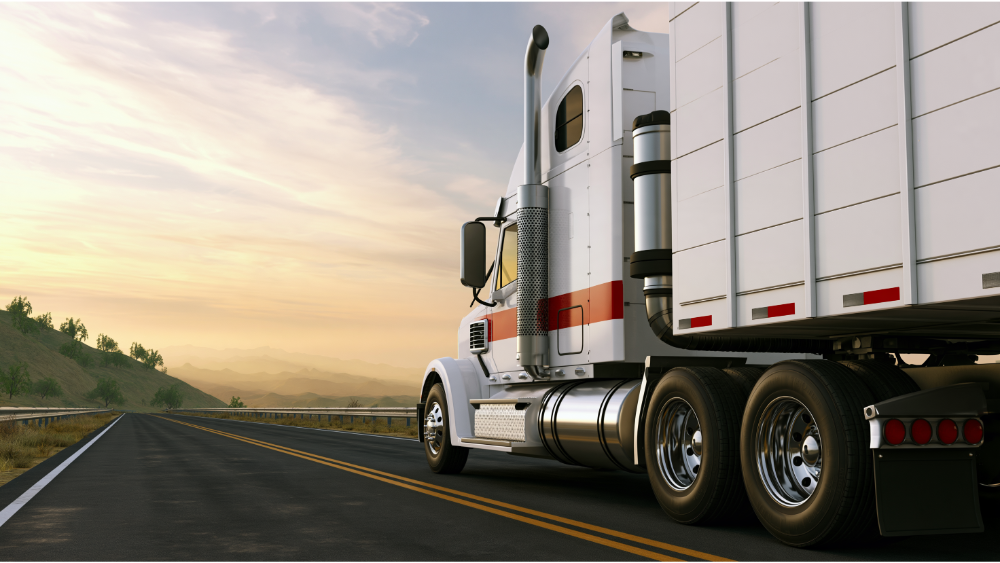
The DEF supply path on modern diesel trucks has more parts than most drivers realize, and every one of them can fault:
- DEF tank with level sensing and quality sensing
- Supply and return lines, usually heated
- DEF pump and pressure control
- Dosing injector (the doser)
- Mixer in the exhaust
- SCR catalyst, the catalytic converter built specifically for NOx
- Upstream and downstream NOx sensors
- Exhaust temperature sensors
That list is the reference point for why a full DEF tank doesn’t always clear a warning.
How Diesel Exhaust Fluid Reduces NOx Emissions, Step by Step
- Diesel fuel burns in the cylinder. High combustion temperatures produce nitrogen oxides.
- The engine and aftertreatment controls calculate the dose using operating data: engine load, exhaust temperature and NOx sensor readings.
- The dosing injector atomizes diesel exhaust fluid into the hot exhaust ahead of the SCR catalyst.
- The water flashes off. Exhaust heat breaks the urea down through thermolysis into ammonia and isocyanic acid, and hydrolysis produces additional ammonia plus carbon dioxide.
- As the exhaust gases pass through the SCR catalyst, the ammonia reacts with NO and NO₂. That chemical reaction converts the nitrogen oxides primarily into nitrogen gas and water vapor, which leave the tailpipe.
DEF does not “turn exhaust into water.” It supplies the ammonia that makes the reaction possible. Under suitable operating and system conditions, selective catalytic reduction can reduce nitrogen oxide emissions by up to roughly 90%. That’s a ceiling under the right conditions, not a number every truck hits on every duty cycle.
Why Is DEF Required on Modern Diesel Engines?
2010 is the dividing line. With the fully phased-in model-year 2010 heavy-duty standard set at 0.20 grams of NOx per brake horsepower-hour, nearly all on-road diesel vehicles in the U.S., plus a large share of nonroad diesel equipment, moved to DEF/SCR aftertreatment. To be precise: the requirement applies to diesel engines designed around an SCR system, not literally every diesel engine on the road.
Manufacturers went that direction for a practical reason. Selective catalytic reduction (SCR) let them calibrate for engine efficiency and better fuel economy, then reduce emissions in the exhaust stream afterward, instead of choking combustion to control NOx inside the cylinder alone.
EPA identifies trucks, buses, cars, power plants and off-road equipment as significant sources of NO₂, one of the harmful emissions that irritates airways, aggravates asthma and feeds ozone, particulates and urban air pollution. That is why the emissions standards exist, and why most modern diesel engines leave the factory with SCR.
DEF vs. DPF vs. EGR: What Each System Actually Does
| System | Main job |
|---|---|
| EGR | Recirculates exhaust gases to reduce NOx formation inside the engine |
| DPF | Captures particulate matter and soot |
| DEF/SCR | Converts nitrogen oxides in the exhaust into nitrogen and water vapor |
| DPF regeneration | Raises filter temperature to burn off accumulated soot. DEF plays no part in this. |
These are separate systems with separate failure modes and separate diagnostics. On a repair order that distinction is the difference between a two-hour fix and a truck that comes back derated a week later. If you want the deeper breakdown, see our guide on DEF vs. DPF: What Is the Difference?
Does DEF Clean the DPF or Cause a Regen?
No. DEF doesn’t clean the DPF, doesn’t trigger a regen and doesn’t “burn.” Regeneration oxidizes soot with heat. DEF dosing reduces NOx emissions. Blur those two and you chase the wrong repair.
DEF also doesn’t clean the engine, extend engine life or improve fuel economy on its own. Any efficiency or engine performance gain comes from how the diesel engine and aftertreatment were calibrated together.
DEF Consumption: How Much DEF Should a Truck Use?
There is no fixed rate. The ECM meters dosing continuously against engine load, duty cycle, fuel burn, exhaust temperature and live NOx sensor readings. Two identical tractors running different lanes will use different amounts of DEF.
Manufacturer references give you a ballpark. Cummins cites average DEF use of roughly 3% to 5% of diesel fuel consumption for its industrial applications. A current Volvo heavy-duty guide says a highway truck may cover approximately 225 to 300 miles on one gallon of DEF. Treat both as manufacturer examples, not universal rates. Either way, DEF is a small line item next to your diesel fuel expenses.
Ignore any source that hands you a universal tank size or one fixed consumption percentage across all Class 6 through 8 platforms. Here’s the part that matters operationally: a sudden change in DEF consumption on a route you run regularly, up or down, is a diagnostic signal. Higher use can point to a dosing or catalyst efficiency problem. Lower use can mean the DEF system isn’t dosing at all.
What Happens When DEF Levels Get Low or the DEF Tank Runs Empty
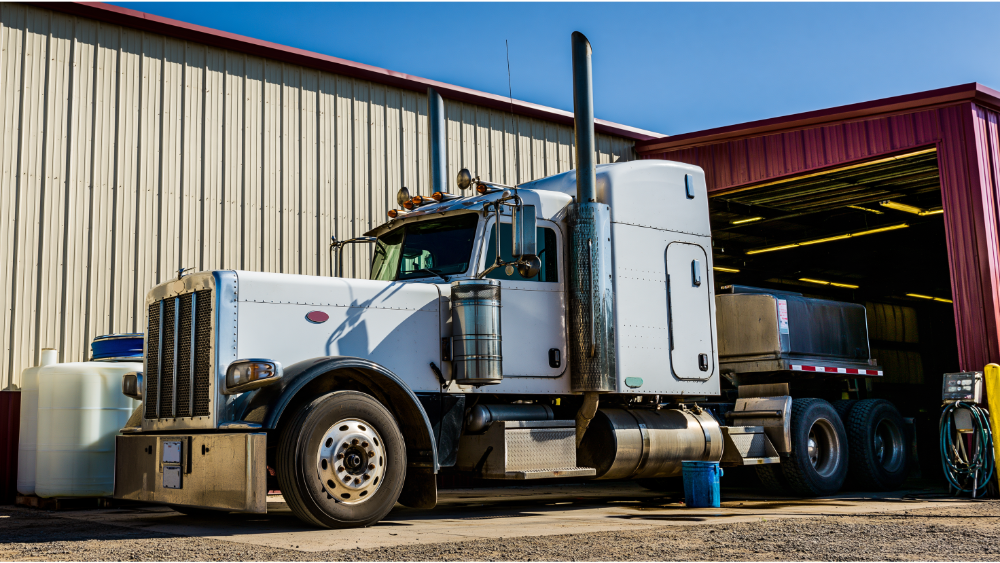
The general progression is a dash warning light, then escalating audible and visual alerts, then reduced engine power or limp mode, then speed limitation or a no-restart condition. A derate is an emissions control action built into the calibration to prevent excessive emissions, not an engine performance failure, and the truck will not talk you out of it. Thresholds, timing and severity vary by manufacturer, model year and calibration, so don’t rely on a single published warning percentage or derate timeline. EPA confirms some existing inducement strategies can reduce a vehicle to as little as 5 mph.
Treat the first warning as a scheduling decision, not a suggestion. Monitor DEF levels the same way you watch fuel. A derate on the shoulder of a freight corridor with loaded freight costs a lot more than a top-off at your next fuel stop.
Where DEF Derate Rules Stand (as of August 2026)
On March 26, 2026, EPA issued guidance clarifying that manufacturers may use alternate DEF-quality monitoring strategies, including NOx-sensor-based methods, and that approved software updates using those methods can be installed on existing products without being treated as illegal tampering. On July 14, 2026, EPA published a proposed rule, not a final one, that would replace required DEF-related derates and speed reductions with audible or visible notifications on newly manufactured diesel vehicles, engines and equipment. EPA still listed it as a proposal as of August 25, 2026.
Derates have not been eliminated. Not every truck receives an update. And none of this authorizes an owner or shop to modify emissions software.
Why a Full DEF Tank May Not Clear the Warning Light
Take the position seriously: a low DEF level is a refill problem. A recurring warning or derate with fluid in the tank is a diagnostic problem. Treating both the same way wastes time and usually puts the truck back in derate.
A full DEF tank proves nothing about DEF system health. Common faults include:
- Out-of-spec or diluted DEF fluid: contamination from diesel fuel, oil, dirt, tap water, coolant or shared dispensing equipment
- Failed level or quality sensing: the DEF tank is full, the sensor disagrees
- Low DEF pump pressure: not enough fluid delivered to the doser
- Clogged or leaking dosing injector: poor atomization, wrong dose
- Bad upstream or downstream NOx sensor readings: the ECM doses against bad data
- Exhaust temperature sensor faults: dosing is blocked or mistimed
- Wiring and connector problems: heated lines and sensors live in a rough environment
- Reduced SCR catalyst efficiency: the conversion rate falls below threshold
The visual tell to look for: white crystallized urea deposits around the doser, the lines or the clamps. That’s DEF going somewhere it shouldn’t. Our breakdown of Why Is My Truck in DEF Derate With a Full Tank? walks through this in more detail.
Clearing Codes and Forcing a Regen Are Not Repairs
A cleared code doesn’t restore pump pressure, unclog a doser or replace a failed NOx sensor. A forced regen addresses soot in the DPF, not NOx dosing, which is why What a Forced DPF Regen Can and Cannot Fix matters here. If the warning comes back three days later, it never left.
A verified workflow looks like this: DEF fluid quality test, pump pressure test, dosing injector test, upstream and downstream NOx sensor checks, exhaust temperature verification, SCR efficiency evaluation, then a full post-repair diagnostic cycle to confirm the fault stays gone. OEM diagnostic software, structured steps, no stage skipped.
Does DEF Freeze? Does DEF Expire? Storage and Handling
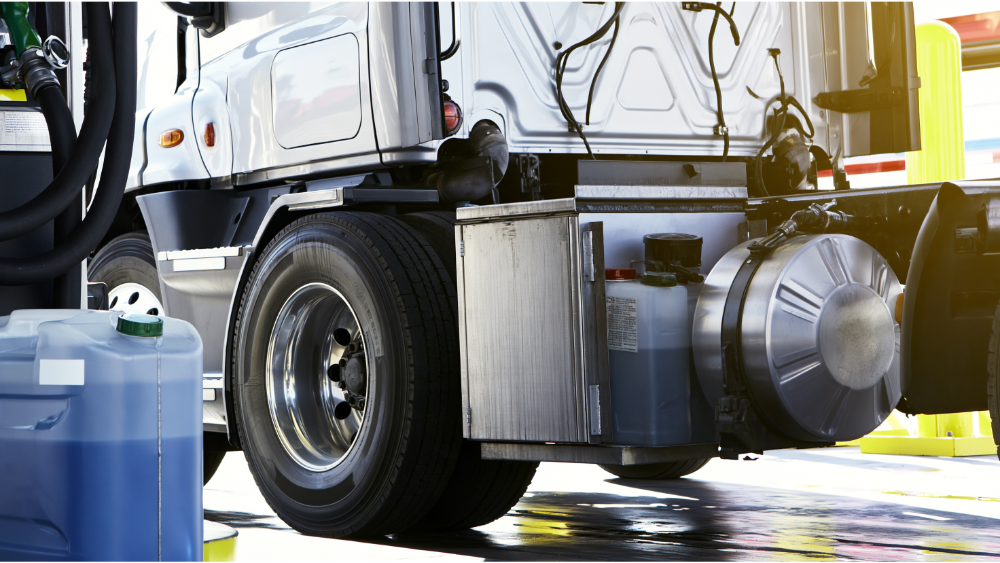
DEF Fluid Freezes at About 12°F, By Design
DEF freezes at roughly 12°F (-11°C). The 32.5% concentration is chosen because it gives the lowest practical freezing point and lets the urea and water freeze and thaw at a consistent concentration. SCR-equipped diesel vehicles use DEF tank and line heaters to thaw the fluid after startup, so frozen DEF doesn’t ruin it. API notes DEF can expand up to about 7% when frozen, so leave headroom in stored containers. Never add anti-gel or a freeze-point improver.
How Long DEF Fluid Lasts in Storage
There’s no single shelf-life number. API says diesel exhaust fluid stored at 86°F or higher may last about six months, and properly stored fluid kept cool and shaded may last 12 months or longer. Cummins cites up to roughly two years when stored below 65°F, per container instructions.
Proper storage is the controllable part: check container dates, rotate stock, keep containers sealed and out of direct sunlight, and use dedicated DEF-only dispensing equipment. Purchase DEF at high-turnover fuel stations to lower your odds of getting aged fluid. Expired DEF that has drifted out of concentration can set a quality fault on an otherwise healthy system.
What Never to Do With DEF or Your SCR System
- Don’t add water or top off with anything other than certified diesel exhaust fluid.
- Don’t add anti-gel, freeze-point improvers or any additive.
- Don’t substitute agricultural or fertilizer-grade urea.
- Don’t put DEF in the diesel fuel tank or diesel in the DEF tank. If it happens, stop and do not start the engine.
- Don’t clear codes repeatedly instead of diagnosing the fault.
- Don’t install or request an emissions delete.
The Clean Air Act and federal emissions regulations prohibit tampering with emissions control systems and prohibit manufacturing, selling or installing defeat devices. EPA’s 2026 guidance on manufacturer-approved updates doesn’t change that.
When Your Truck Needs DEF and SCR System Diagnostics
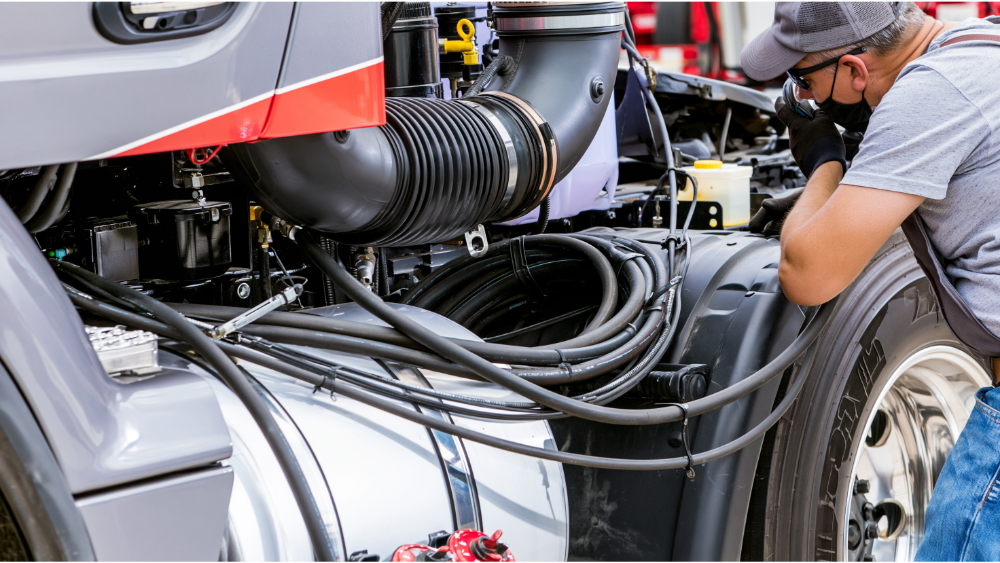
Get it on a diagnostic schedule if any of these apply:
- DEF warning stays on after a verified refill with certified diesel exhaust fluid
- Derate or limp mode with a full DEF tank
- Unusually high or low DEF consumption on a route you know
- White crystallized deposits at the doser, lines or clamps
- Recurring SCR efficiency codes
- Pump pressure or dosing faults
- Warning returns days after a code clear or forced regen
This applies across the diesel engines and platforms we work on daily: Freightliner Cascadia, Kenworth T680, Peterbilt 579, Volvo D11 and D13, Mack MP7 and MP8, International A26 and MX-13, and Western Star. If you want to read fault patterns yourself first, start with Common SCR and DEF Fault Codes on Heavy-Duty Trucks.
Frequently Asked Questions
How does diesel exhaust fluid work?
It is dosed into hot exhaust ahead of the SCR catalyst, where it releases ammonia that converts NOx into nitrogen and water vapor. It never touches fuel or engine internals.
How many miles will 1 gallon of DEF last?
There’s no universal number. A current Volvo heavy-duty guide cites roughly 225 to 300 highway miles per gallon for that platform, and Cummins references 3% to 5% of fuel consumption for industrial applications. Both are manufacturer examples. Idle-heavy and heavy-haul duty cycles use more.
How often do you have to fill a diesel with DEF fluid?
Tank capacity and refill interval vary by truck, so a mileage number isn’t useful. Most operators top off at fuel stops and watch the gauge. Don’t run it down to the warning threshold on purpose.
Can you fill up diesel and DEF at the same time?
Yes. They’re separate tanks with separate fills, and many fuel stations offer both. Use DEF-only nozzles, keep the diesel fuel fill and the DEF fill physically separate, and confirm the cap before you close it. The DEF fill neck is smaller and marked for a reason.
Will insurance cover it if you put DEF in a diesel tank?
That depends entirely on the policy. Some physical damage or misfueling coverage may apply, and many policies exclude it, so check with your carrier. Operationally: do not start or crank the engine, get the truck towed, and have the fuel system drained and flushed. Running it pushes contamination through the injectors and turns a cleanup into a rebuild.
Get DEF and SCR Faults Diagnosed Right the First Time
Torpedo Truck Repair runs Exhaust And DPF Repair out of our shop at 7495 26th St E Ste B, Fife, WA 98424, near I-5 and Hwy 167, with 50-mile mobile dispatch along I-5, Hwy 167 and SR-512 across the Seattle-Tacoma freight corridor. DEF quality testing, pump pressure testing, doser testing, upstream and downstream NOx sensor checks, and a full aftertreatment diagnostic cycle before we call it fixed. You get an itemized estimate before a single bolt is turned. No surprises, no upsell, and a same-day service focus when possible.
Licensed and insured. DOT certified. 4.9 stars across 146 Google Reviews. Shop hours are Mon through Fri, 8:00 AM to 5:30 PM, with 24/7 emergency roadside dispatch.
Call Now: (253) 449-0100. Not urgent? Request a service quote. Takes under 60 seconds, no obligation.