Key Takeaway
Heavy-duty diesel engines commonly last 750,000 to 1,000,000 miles before a major overhaul, and some linehaul engines are designed around a million-mile service life. Maximizing mileage from heavy-duty diesel engines depends on duty cycle, maintenance history, and engine hours far more than the odometer reading. Two trucks at 600,000 miles can be in completely different condition based on how well each was maintained.
A well maintained diesel engine commonly reaches 750,000 to 1,000,000 miles before a major overhaul becomes likely, and plenty of linehaul engines are designed around million-mile service life. But mileage alone does not decide when your engine is done. Duty cycle, engine hours, and maintenance history do. Two diesel trucks at 600,000 miles can be worlds apart. If you’re an owner-operator wondering whether your rig is getting old, a fleet manager planning rebuilds, or a driver weighing a high-mileage used truck, the number on the odometer is the wrong thing to fixate on. How long heavy duty diesel engines last and maximizing mileage comes down to diagnostics and preventive maintenance, not luck.
Why Diesel Engines Last Longer Than Gas Engines

Diesel engines outlive gas engines for mechanical reasons. A gas engine often runs out of life somewhere around 200,000 miles. A heavy duty diesel is built to do five times that or more. A diesel engine operates at lower RPM, so internal components see less cyclic stress over the same distance. Higher compression ratios and stronger internal components let it work harder for longer. The engine block, cylinder heads, and piston rings are heavier and built to carry heavy loads over a long service life. That’s the whole point of the platform: haul freight, run hard, and keep going. Those design choices are why diesel engines last longer, and why the mileage numbers on a Class 8 truck look impossible next to a pickup. Gas engines were never built for that duty.
What “Diesel Engine Life” Actually Means
People throw around “engine life” loosely. Here’s what the terms actually mean:
- First life: the miles an engine runs before a major overhaul becomes likely, usually 750,000 to 1,000,000 miles.
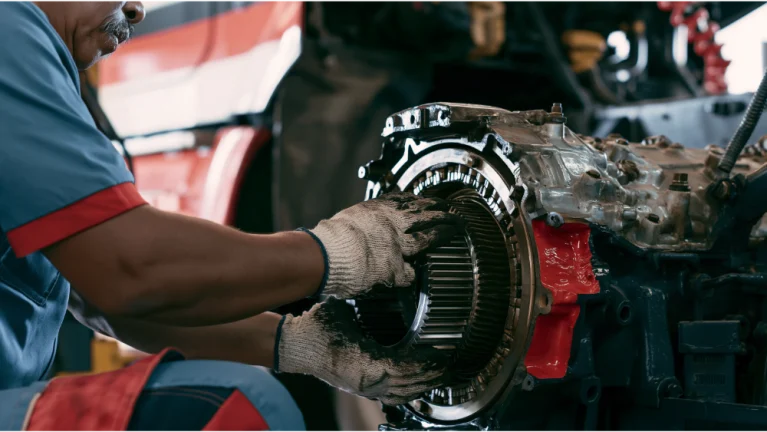
- In-frame rebuild: the engine stays in the truck; you replace liners, pistons, bearings, and seals.
- Out-of-frame rebuild: the engine comes out for a full teardown and machine work.
- Chassis life vs diesel engine life: the truck body can outlast the engine, or the reverse. They age separately.
- EPA useful life: an emissions-compliance concept, not an overhaul limit. For MY2021+ Heavy HDE it’s listed at 435,000 miles, 10 years, or 22,000 hours. EPA rules in this area are changing, so verify current figures before relying on them.
- B10/B50 design life: statistical ratings, not promises. PACCAR rates the MX at a B10 of one million miles in linehaul (90% reach it without a major overhaul). Detroit lists the DD15 at a B50 of 1.2 million miles.
Mileage Benchmarks for Class 6 Through 8 Diesel Engines

Torpedo services Class 6 through 8 platforms. Class 6 is 19,501 to 26,000 lb GVWR, Class 7 is 26,001 to 33,000, and Class 8 is anything over 33,000. Here’s how mileage tends to read across that range for heavy duty diesel engines:
| Mileage | What it usually means |
|---|---|
| 300,000 | Not automatically “old” for a commercial diesel engine. Often just getting started. |
| 500,000 | Records and condition decide everything. Could be strong, could be tired. |
| 750,000 | Deeper inspection matters. Overhaul planning should be on the table. |
| 1,000,000 | Possible, but earned through consistent maintenance and often a rebuild along the way. |
Light duty diesel pickups like the F-450 or Ram 3500 and up run a shorter arc, typically 300,000 to 500,000 miles when well maintained. Same diesel fuel, different platform. These lighter diesel trucks work hard, but they don’t carry the internal mass of a Class 8 engine.
Why Mileage Alone Is Not Enough: Duty Cycle and Operating Conditions
Engine hours often tell the truth the odometer hides. Commercial diesel engines can run 15,000 to 30,000 hours before significant work is needed, but idle-heavy and vocational trucks burn hours the miles never reflect. A truck idling on a jobsite ages internally while the odometer barely moves.
Idle time is a real number, not a footnote. Mack’s service guidance says if idle time is above 30%, drop to the next lower oil-drain interval. Highway miles at steady load are gentle. Local stop-start work, heavy grades, high heat, and constant idling are not. Duty cycle and operating conditions like these are exactly why two engines at 600,000 miles are not the same truck. Pull the ECM hours and idle percentage, look at the records, and you’ll see what mileage can’t show you.
The Systems That Decide Whether a Diesel Reaches High Mileage

An engine reaches high mileage because the systems around it are controlled. Let one slide and it turns into downtime. Overall system health, not any single part, determines how long diesel engines last. Diesel engines generally hold up when every one of these critical components is kept in spec:
- Oil and filters: clean engine oil is the difference between engine wear held in check and metal grinding on metal. Regular oil changes and filter replacements are the foundation of engine life. Light oil in the wrong grade won’t protect a loaded top end.
- Fuel filtration and water separation: water and dirt in the diesel fuel destroy fuel injectors. Fuel quality and high quality fuel protect the top end, so guard the fuel system.
- Cooling system and coolant testing: overheating kills engines fast. Test coolant, don’t just eyeball the reservoir. Cooling system health drives everything above it.
- Air intake and turbo: a restricted intake or a failing turbo starves the engine and drops power and fuel efficiency.
- Valve lash / overhead adjustment: skip it and you lose engine performance and invite valvetrain damage.
- DPF, DEF, EGR, and SCR: aftertreatment problems drive backpressure, oil contamination, and derates. Ignore a stacking fault and you park the truck.
- Electrical sensors and diagnostics: a bad sensor can throw the whole engine into limp mode. OEM diagnostic scans catch it before it snowballs.
Diesel Fuel, Oil Quality, and Aftertreatment: The Basics That Protect the Engine
Modern diesel engines are built around ultra-low sulfur diesel fuel, capped at 15 ppm sulfur since 2006. The oil and aftertreatment assume you’re running it. Oil quality and oil spec matter just as much: API CK-4 covers 2017 and later engines and older ones, while FA-4 is not backward compatible with CK-4 or earlier grades. Don’t mix them. DEF for your SCR system is a fixed formula, 32.5% urea and 67.5% deionized water, so quality and correct fill are not optional. Efficient combustion depends on all three staying right.
Oil changes and drain intervals depend on duty cycle, not a generic mileage. Cummins X15 examples run 25,000 miles severe, 40,000 short-haul, 50,000 normal, and 75,000 light, with extensions up to 100,000 under qualifying conditions. Follow your engine’s schedule, not a number you heard at a truck stop. Skipping regular oil service is the fastest way to cut an engine’s lifespan in half.
Warning Signs Your Diesel Is Aging Faster Than the Odometer Says
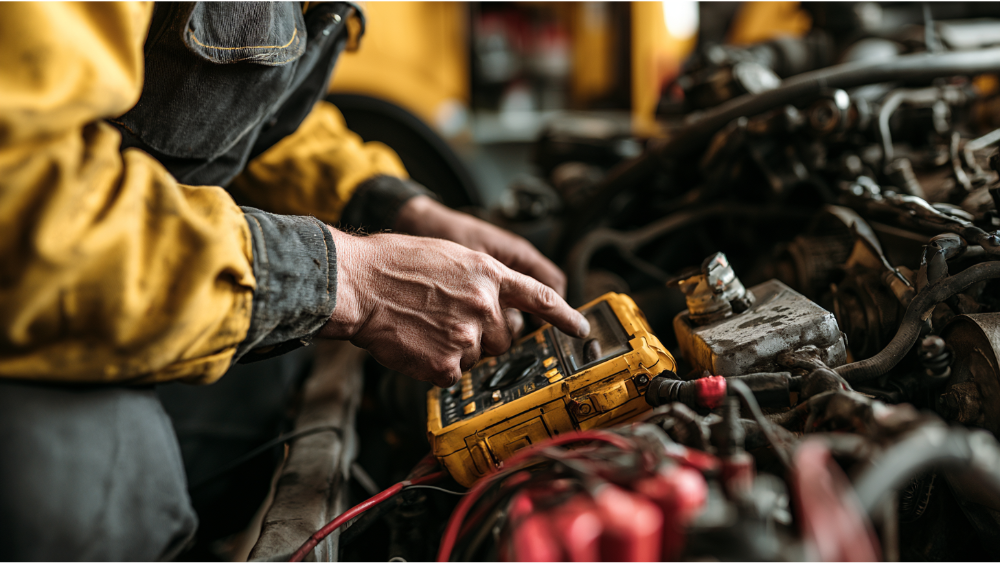
These are early warnings. Catch them and you avoid catastrophic failure and the costly repairs that follow.
- Rising oil consumption between changes
- Excessive blow-by (worn piston rings or cylinder walls)
- Hard starts, especially cold
- Loss of power under load
- Excessive smoke
- Fuel dilution or coolant in the oil
- Frequent regens
- Derates and aftertreatment fault codes
- Low oil pressure or temperature that won’t hold steady
- Unusual noises under load
Don’t wait for the engine to quit on the shoulder. The truck is telling you something well before that.
Maintenance Practices and Driving Habits That Maximize Mileage
Longevity comes from proper care and good driving habits, not a magic additive. Proper maintenance and consistent maintenance protect the engine’s lifespan far more than any product poured into the tank. These are the key factors that actually move the needle:
- Follow OEM intervals by your real duty cycle, not a rounded-off number. Regular maintenance and consistent speeds are what carry heavy duty vehicles to a million miles.
- Use the correct oil spec every time, and stay current on oil changes and filter replacements.
- Sample oil and coolant. Analysis catches internal problems and confirms system health before they become a roadside failure.
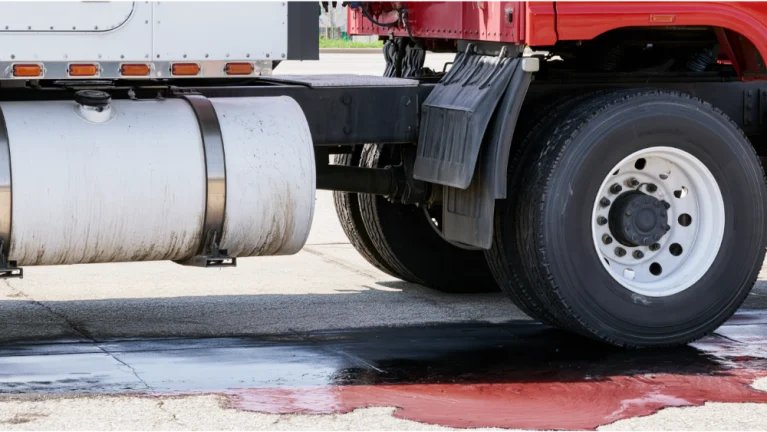
- Fix leaks early, while they’re cheap.
- Keep DPF, DEF, and SCR faults from stacking into a derate.
- Warm up and cool down properly, especially with a turbo. Avoid excessive idling to keep a clean engine and hold down carbon buildup.
- Drive smooth. Efficient driving habits can cut diesel fuel use 12 to 15%, improve fuel economy, and reduce stress on engine components.
- Document everything for resale, maintenance history, and DOT readiness.
- Schedule PM before freight gets interrupted, not after.
Do this and you get longer engine life, fewer derates, fewer roadside calls, and uptime you can plan around. Good maintenance practices are why heavy duty diesel engines last longer than the platforms they replace.
Buying a High-Mileage Diesel Truck: What to Check First

Mileage without records is a gamble. A documented million-mile truck can beat an unknown 500,000-mile truck every time. Compare two engines with different histories and the records win. Before you buy one of these diesel trucks, check:
- Full PM and maintenance history records
- ECM hours and idle percentage
- Cold-start behavior
- Blow-by check
- An oil sample sent for analysis
- Coolant pressure and leak check on the cooling system
- DPF and regen history
- Injector, turbo, and aftertreatment history
- Belts including timing belts and any prior in-frame or major repairs
- Suspension components and DOT inspection history
Repair, Rebuild, or Replace: How to Make the Call
Never decide from mileage alone. Verify compression, blow-by, oil analysis, coolant condition, and fault history first. A failed sensor, a bad injector, or an aftertreatment fault is not engine death, and no one should be quoting you an overhaul because of a code. Most diesel engine parts can be replaced without touching the core. An in-frame, an out-of-frame, or a replacement only makes sense once inspection confirms the core is worth saving. This is exactly where diagnosing it correctly the first time saves you real money and real downtime.
How Torpedo Keeps Diesel Engines Road-Ready
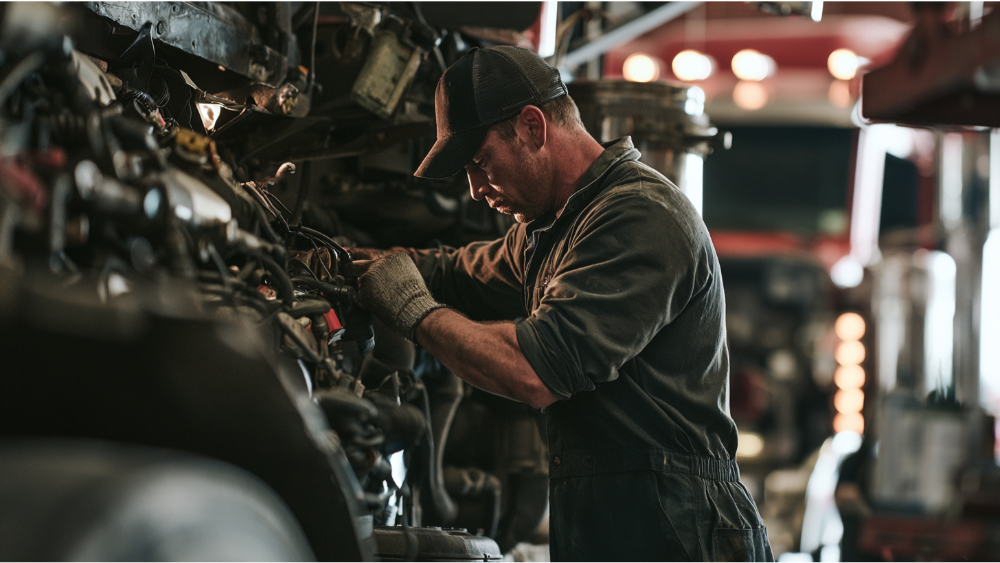
Torpedo Truck Repair didn’t start behind a service desk. It grew out of real trucking operations, built by people who know what a down engine costs because they ran the freight. That’s why the work starts with diagnostics, not guesses, and why long haul trucks trust us with reliable service.
We handle Diesel Engine Repair And Maintenance, Electrical Diagnostics And Repair, Exhaust And DPF Repair, Cooling System Repair And Service, Fuel System Repair And Diagnostics, Preventive Maintenance PM Service, and 24/7 Emergency Road Service. We run OEM diagnostic software, our technicians are certified, and you get an itemized estimate before a single bolt is turned. No surprises, no upsell, same-day service focus when possible. Our Fife shop sits near I-5 and Hwy 167, with mobile dispatch across a 50-mile radius when a breakdown hits the road.
Call now: (253) 449-0100. Or request a service quote online. Takes under 60 seconds, no obligation.
Frequently Asked Questions
How long do diesel engines last on a heavy duty truck?
Commonly 750,000 to 1,000,000 miles before a major overhaul becomes likely, and some linehaul engines are designed around million-mile service life. Maintenance, operating conditions, and duty cycle decide where in that range you land.
Is 500,000 miles high mileage for a semi truck?
Not by itself. At 500,000 miles the records and mechanical condition decide the truck’s worth far more than the odometer does.
What matters more, engine hours or mileage?
Both, but hours often tell the truth mileage hides, especially on idle-heavy or vocational diesel trucks. Pull the ECM hours and idle percentage before judging wear.
Does idling shorten diesel engine life?
Yes. Excessive idling increases wear and carbon buildup, cutting into the engine’s lifespan. Mack guidance says over 30% idle time, drop to the next lower oil-drain interval.
Can preventive maintenance prevent roadside breakdowns?
It’s the most reliable way to. Regular oil changes, filter replacements, coolant analysis, early leak repair, and catching aftertreatment faults before they stack keep small problems from turning into a call from the shoulder.