Key Takeaway
To release air brakes manually, you cage the spring brake chamber by inserting the release bolt, seating it correctly, and tightening it with a hand wrench to compress the power spring until the pushrod retracts and the shoes clear the drum. This is how to release air brakes manually during towing or recovery only, not a road-ready repair. Chock all wheels before caging because the chamber provides zero holding force once caged. Torque limits vary by design, from 26 ft-lb to 55 ft-lb, so always follow the manufacturer’s procedure.
Your truck won’t roll. Releasing air brakes manually means caging the spring parking and emergency brakes inside the brake chamber so the shoes pull off the drum and the wheels turn. It is a towing and recovery step. It does not release the service brakes, and it does not fix what made the brakes apply. A caged chamber has no holding force until the cage comes out.
This covers which brakes to release, when caging is safe, when to stop, and what has to happen before the truck is road-ready.
What “Release Air Brakes Manually” Actually Means
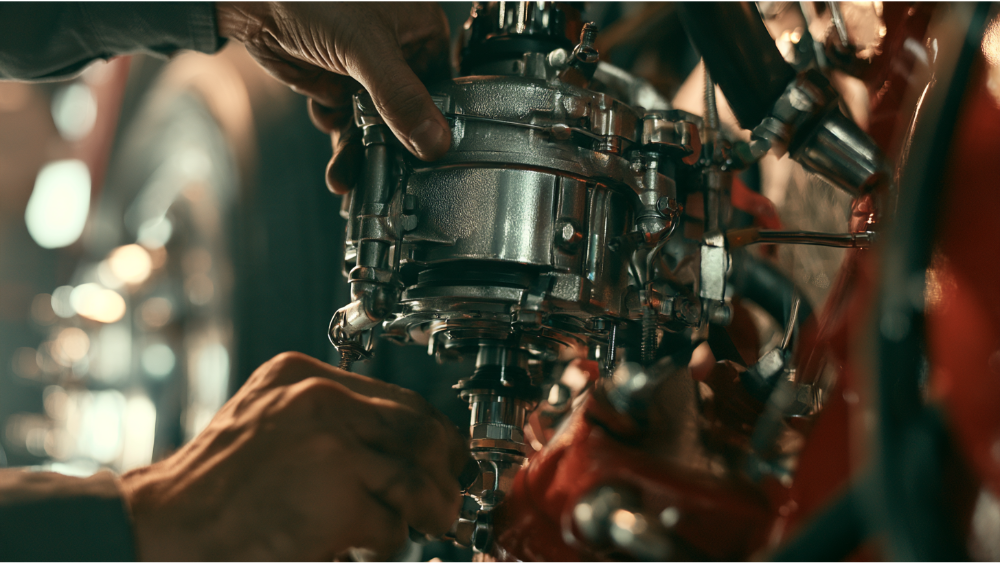
Two sets of brakes share the same foundation brake. FMCSA training material separates them: service, parking, and emergency. Knowing which set you are dealing with decides everything.
Service brakes are air-applied. You press the brake pedal, air pushes the pushrod, the shoes go into the drum. Spring parking and emergency brakes work the opposite way: spring-applied, air-released. Air pressure holds a big spring compressed inside the chamber. Lose that air and the spring applies the brakes.
Compressing that spring with a release bolt so the pushrod retracts is called caging. It does not fix anything.
Before You Touch the Brake Chamber: Secure the Truck
Once that chamber is caged, your chocks are the only brakes holding the truck. Treat this as a safety step, not a shortcut.
- Level, stable ground. No slope, no soft shoulder, no loose gravel.
- Chocks in both directions, on more than one wheel, set in place before the tool comes out.
- Do not rely on the transmission, another axle’s spring brakes, or landing gear.
- Confirm the recovery plan, including where the wrecker hooks up, before anything moves.
- Keep people out of the roll path and off the spring side.
- Identify the exact brake chamber and get its written procedure first.
First: Can the Air Brake System Build and Hold Enough Air?
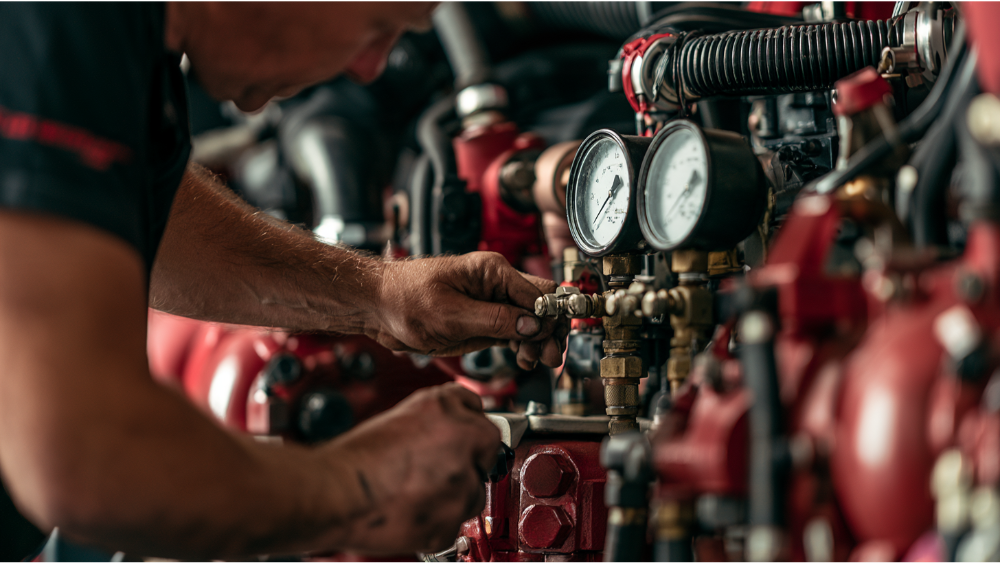
Most drivers reach for the caging bolt too early. Work through this first.
- Builds and holds air: release from the dash. Pump the tanks up, apply the service brakes, then push in the tractor parking and trailer supply controls.
- Builds air but the brakes stay applied: stop. Do not cage. Something between the tank and the chamber is wrong.
- No air at all: dead compressor, blown line, disconnected trailer. Check for an OEM external-air or electronic release procedure. Several current platforms have one. Cage only if that route is unavailable.
- Visible chamber damage, or a frozen or seized foundation brake: call a technician.
FMCSA puts full spring brake application in the 20 to 45 psi range, typically 20 to 30, and the low-air warning activates before service reservoir pressure drops below 60 psi. There is no universal release pressure. If the system cannot hold enough air to keep the springs off, you have a leak, not a caging problem.
When Caging a Spring Brake Chamber Is the Right Call
Four legitimate uses:
- Loading a disabled unit for towing.
- Moving a unit out of an immediate hazard under control.
- Brake chamber removal or authorized foundation brake work, where caging keeps the spring from letting go on the technician.
- A disconnected trailer that has to be repositioned.
Caging makes a truck movable. It does not make it road-ready. The brakes at that wheel are out of service until the cage comes out. Federal rules generally require installed brakes to remain operative, with a narrow exception for a disabled vehicle under tow. Running a load on a caged chamber is not what that exception is for.
Stop, Do Not Cage the Brake Chamber If…
- The chamber is cracked, distorted, impact-damaged, heavily corroded, or leaking structurally. Stored spring force can let go violently.
- The correct release tool is missing. Never improvise with a random bolt, nut, or fitting.
- You cannot identify the chamber type or find its procedure.
- The truck cannot be positively secured, or the ground is sloped or soft.
Never loosen a clamp band on the spring side. Never cut, drill, strike, or torch a spring chamber. Many are sealed assemblies, replaced as a unit. While any of this applies, the answer is a technician and a tow.
How to Cage a Spring Brake Chamber: The General Sequence
High level only. Every step is chamber-specific, and air brakes vary by manufacturer.
- Locate the chamber’s release tool, usually clipped to the chamber body or stored on the unit. Keeping one handy on every unit saves a wait during recovery.
- Inspect the bolt, washer, and nut for damaged or stretched threads.
- Remove the weather plug from the access hole in the center of the spring brake end.
- Insert the release bolt and seat the T-head exactly as the manufacturer directs. A quarter turn is common on some removable T-bolt designs, not all.
- Install the washer and nut, then pull the spring back with a hand wrench.
- Stop at the manufacturer’s stated travel or torque limit.
- Confirm the pushrod retracted, the shoes are clear of the drum, and your other axles are still holding.
Published limits vary widely.
| Release design | Published release-bolt limit |
|---|---|
| Piston-style actuator | 26 ft-lb |
| Removable-bolt families | 35 or 50 ft-lb |
| Integral-caging models | 55 ft-lb |
| One OEM towing manual | About 34.67 ft-lb, roughly 45 turns |
Treating any of those as universal is how pressure plates and release bolts get destroyed. Hand tools only. No impact, no air wrench.
Why Air Brakes Won’t Release Even With Air Pressure
If the gauge reads full and the wheels are still locked, caging hides the fault. Likely causes:
- Compressor or governor not building or holding, so the system never pumps up.
- A major leak at a line or fitting, dumping air faster than the compressor can replace it.
- Ruptured spring brake diaphragm.
- Restricted, crossed, frozen, or crushed air line choking flow to the chamber.
- Relay, quick-release, or tractor protection valve fault.
- Failed dash control.
- Seized foundation brake: shoes rusted to the drum, seized slack adjuster, stuck S-cam.
- Broken or corroded power spring.
Air brakes that will not release are a symptom. Diagnosis comes first. Every time.
Uncaging and Getting the Truck Road-Ready
Getting the brakes back in service is its own sequence.
- Repair what started the problem.
- Restore air pressure to the level the chamber procedure specifies.
- Reverse the caging exactly per the manufacturer’s instructions.
- Remove the release bolt and return it to its clip.
- Reinstall the weather plug so the chamber is sealed.
- Leak-check the air brake system, including every fitting and connection point you touched.
- Verify service, parking, and emergency brakes before the unit moves loaded.
Federal rules require brake inspection, service, and repair be handled by task-qualified personnel. One qualifying path is a year of relevant brake training or experience. For fleets, document it. That record holds up in a DOT audit.
Frequently Asked Questions
What do you do if the emergency brake won’t release?
Let the compressor pump the tanks up and check the gauge. If pressure is normal and the brakes stay applied, stop and diagnose. Most stuck brakes are a supply problem, not mechanical.
What can I do if my brakes won’t disengage?
Triage in this order: pressure at the air tank, air reaching the chamber, chamber condition, then the foundation brake. Shoes seized to the drum feel identical to an air fault from the cab.
What causes air brakes to lock up?
Pressure dropping into the spring application range, a significant leak, moisture freezing in the lines, a failed valve, or shoes seized to the drum.
Can you drive a truck with a spring brake caged?
No. That wheel has no parking or emergency brakes. Cage it only long enough to hook up and load out.
Brakes Locked Up? Get It Diagnosed Right the First Time
Call (253) 449-0100. Torpedo Truck Repair runs 24/7 emergency road service and dispatches for air brake faults and locked brakes. Truck And Trailer Brake Repair, valve and chamber work, air system diagnostics. You get an itemized estimate before a single bolt is turned. No surprises, no upsell.
Caging gets you moving. A verified repair gets your brakes back in service and your truck back on the road.