Key Takeaway
A runaway diesel engine occurs when the engine burns an unintended fuel source, typically engine oil or external vapors, causing uncontrolled RPM climb that the key cannot stop. The only reliable way to stop a runaway diesel is to cut off the intake air supply. Do not stand near the fan, belts, or turbo, and never restart the engine until the root cause is diagnosed and repaired.
What To Do If a Diesel Engine Runs Away Right Now

A runaway diesel engine is burning a fuel source it was never supposed to touch, usually engine oil or an outside vapor, and it will not respond to the key. The engine keeps climbing in RPM on its own. The only reliable way to stop it is to cut off the air supply feeding combustion. If you can’t do that safely, get people clear, because an overspeeding diesel can destroy itself or blow apart within seconds.
Here is the order that keeps you alive:
- Get the vehicle stopped and off the road if you’re driving. Set the brakes.
- Activate the positive air shutoff or emergency engine shutdown if your truck is equipped with one.
- Keep your body away from the belts, fan, turbo, and intake. Nothing is worth losing a hand.
- If there’s fire, smoke, or a risk of violent engine failure, get clear and call for help.
This is written for drivers, owner-operators, and fleet managers who need the safe sequence under pressure, not a lecture on engine theory. The next sections explain why the key doesn’t work, what caused it, and what has to happen before that truck moves again.
What Is a Runaway Diesel Engine?
A diesel engine runaway is uncontrolled overspeed. The engine finds a fuel source it isn’t supposed to have and keeps accelerating past anything the operator can control until it seizes or tears itself apart. As RPM climbs, torque and power spike far beyond what the engine was designed to handle.
A diesel engine ignites fuel by compression, not spark. That’s the whole reason a runaway is possible. When engine oil, crankcase vapor, a fuel system fault, or an outside flammable vapor gets into the cylinders, the heat of compression lights it just like diesel fuel from the tank. Oil leakage into the combustion chamber acts as a second fuel source that has nothing to do with your throttle, and it corrupts the normal combustion process the engine was tuned around.
So the engine keeps running because it’s being fed by something other than the diesel fuel supply you control. Two facts drive everything that follows. First, the engine is burning an unintended fuel source. Second, that’s exactly why the normal controls stop working. Hold onto both.
Why Turning the Key Off Won’t Stop It
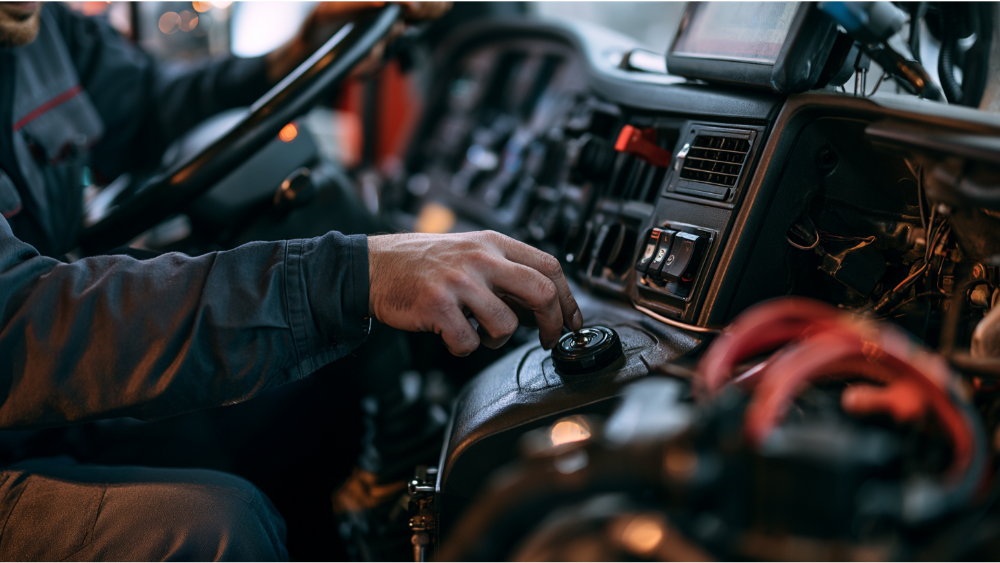
There’s no spark plug to kill. On a gas engine, cutting the ignition ends combustion. A diesel engine lights fuel through compression alone, so turning the key removes the one ignition source you’d expect to matter without touching what’s keeping the fire going.
Cutting the fuel supply doesn’t help either when the engine is drinking its own oil or pulling vapor through the intake. That fuel is already inside the engine. The injectors could be dead and it would still scream.
OSHA is direct on this point: when a diesel overspeeds on fuel present in the intake air, shutting off the ignition or the fuel supply may be ineffective, and the only way to prevent mechanical failure is to cut off the incoming air supply (see OSHA’s fact sheet).
Three things keep any engine running: fuel, ignition, and air. In a runaway, the fuel is uncontrolled and the ignition is just compression heat you can’t switch off. Airflow is the only one left in your hands.
Root Causes: Runaway Diesel Engine, What Causes It and How to Stop One Safely at the Source
Almost every runaway traces back to a fuel source the engine was never meant to burn. On heavy-duty Class 6 through 8 platforms, these are the most frequent causes you’ll see:
- Turbocharger oil seal failure. A failed seal on the turbocharger pushes engine oil straight into the intake charge, feeding the cylinders a fuel they can’t refuse. Burning oil from this path is one of the classic triggers.
- Excessive crankcase blow-by or a failed CCV system. Worn cylinders and a plugged or broken crankcase ventilation system route oil mist back into the intake airflow.
- Worn piston rings. Rings that no longer seal let oil seep past into the combustion chamber, adding more oil to what gets burned.
- Overfilled engine oil or oil aeration. Too much oil, or oil that’s whipped into foam, can find its way into the intake tract in large amounts once the level rises high enough.
- Fuel injector or high-pressure fuel system fault. A stuck injector or failed high-pressure component can dump extra fuel and raw diesel past the operator’s control. That injected fuel arrives with no throttle behind it.
- External hydrocarbons and flammable vapors. Fuel spills, terminals, chemical yards, and other vapor sources can put external vapors in the air the engine breathes. This unintended fuel source is why an idling diesel becomes a hazard in industrial settings. OSHA has documented fires and explosions where an idling diesel was the ignition point, including a refinery disaster that killed 15 and injured nearly 200.
One more, because operators still do it: never spray starting fluid or ether into the intake to chase a hard start. Ford’s medium-duty manual for the F-650 and F-750 warns it can cause explosive engine damage and personal injury (Ford owner manual). You’re pouring accelerant into a compression engine. Don’t.
Early Warning Signs of a Diesel Engine Runaway

Several of these show up on a PM inspection long before the engine ever runs away. Catch them early and you never see the emergency.
- RPM climbing with no throttle input.
- The engine keeps running after you turn the key off.
- Dense blue-gray, white, or black smoke pouring from the exhaust.
- A sudden change in engine note or pitch.
- Oil leakage or oil residue showing up in the intake or charge-air piping.
- Rising oil consumption, or an oil level that’s climbing for no obvious reason (a fuel dilution warning that oil analysis can confirm).
- Turbo whine or bearing noise.
Oil in the charge piping and an unexplained rising oil level are the two that tell a tech something is already feeding the engine off-book. Those are worth stopping for.
How To Stop a Runaway Diesel Safely
Work the priorities in order. Your body comes before the truck, every time.
Priority 1: Stop the vehicle and get people clear. If you’re moving, bring it to a controlled stop off the road and set the brakes. Move anyone standing near the engine out of the danger zone. A runaway engine can throw parts and cause an explosion within seconds.
Priority 2: Use the built-in shutdown if you have one. Many heavy-duty trucks are equipped with an emergency engine shutdown or positive air shutoff. Some OEMs build in engine runaway protection that can close an air shutoff or decompress the engine and shut it down automatically when it senses a fault or flammable vapor. Know whether your unit has one and where the control is before you ever need it.
Priority 3: Cut off the intake air, but only through a designed shutoff or trained, safe access. Cutting off the air supply is the physics that ends a runaway. Choke off the airflow and the fire has nothing to feed on. It’s also why high-risk industries engineer it in. Offshore rules under 30 CFR 250.610 require diesel air intakes to have a runaway shutdown device, and MSHA requires certain mining diesel packages to stop within 15 seconds of activating an emergency air shutoff. That’s the standard for equipment that can’t afford to guess. Do not put your hands or any loose material near the belts, fan, or turbo to try to reach the intake.
Fire extinguisher, with a caveat. A CO2 or dry chemical fire extinguisher directed into the air intake can smother combustion because it will displace oxygen the fire needs. Ram’s diesel supplement lists this as a procedure, but it is vehicle-specific guidance, not a universal move for every truck (NHTSA document). Do it only if you’re trained and it matches your vehicle or site procedure.
Manual transmission, last resort. On a manual, you can drop it into a high gear, hold the brakes, and let the clutch out to stall it. The load can stall the engine when the air supply option isn’t reachable. This can damage the transmission and its moving parts along the driveline, and it’s not an option on an automatic. It’s a last resort, not a fleet SOP.
Air is the control that matters. Everything else is either a backup or a way to reach the air.
What Not To Do During a Diesel Runaway
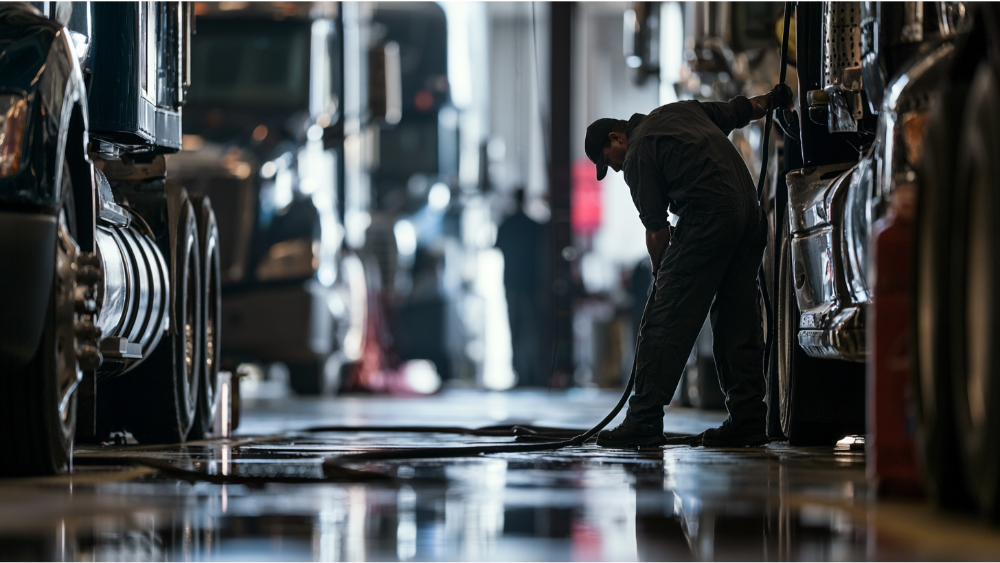
- Don’t stand in front of the fan, belts, turbo, or intake.
- Don’t assume the key-off fixed it. Watch and listen.
- Don’t keep driving it.
- Don’t feed rags, clothing, or objects into the intake. They get ingested and make it worse.
- Don’t open the hood if fire, smoke, or traffic makes it unsafe. Watch the engine compartment for signs of ignition.
- Don’t ignore vapor risk at terminals, fuel spills, and industrial sites.
- Don’t restart it once it stops.
What a Shop Should Inspect After a Runaway
Do not restart or dispatch the truck until the root cause is verified. This is the step most write-ups skip, and it’s where a second runaway comes from. Replacing the obvious part and hoping is how you end up back on the shoulder. If a component needs to be replaced, it gets replaced because the data says so, not because it was the easy guess.
A proper post-event workup checks:
- Turbocharger compressor side, shaft play, and seal failure.
- Charge-air piping and the charge-air cooler for pooled oil.
- Engine oil level, oil condition, and fuel dilution.
- Crankcase ventilation, CCV filter, and breather for restriction.
- Crankcase pressure and blow-by.
- Injectors, high-pressure pump, rail data, and leakdown.
- ECM overspeed and fault data.
- Compression or cylinder leakdown if overspeed damage is suspected.
- DPF, DOC, and SCR aftertreatment for contamination from burned oil.
- Air filter and the full intake tract.
Overspeed and oil starvation may have already damaged the engine internally, so the diagnosis isn’t just about finding the fuel source. It’s about knowing what the event broke and what has to be replaced before the truck can operate again. At Torpedo, that means OEM diagnostic software and a verified workflow, not a parts-cannon and a prayer. The diesel engine doesn’t leave until the cause is confirmed.
How To Prevent a Runaway: Root Causes for Diesel Owners and Fleets

Prevention is a maintenance problem, and maintenance is measurable. Every item below targets one of the root causes that lets a diesel engine run away.
- Inspect the turbo for oil leakage and shaft play during PM.
- Track oil consumption unit by unit and use oil analysis to catch fuel dilution.
- Investigate any rising oil level. That’s often fuel dilution warning you early.
- Maintain the CCV system and breather. A plugged crankcase vent routes oil mist where it doesn’t belong and chokes the incoming air the engine depends on.
- Don’t overfill the oil.
- Keep the intake system sealed and inspected end to end so the air supply stays clean.
- Train drivers on the runaway response sequence before they need it.
- For operations near flammable vapors, look at positive air shutoff systems and site vapor controls to lower the fire risk.
For a fleet, this belongs in a custom PM schedule and a written driver SOP, not in luck. Diesel owners running one truck carry the same risk as a hundred-unit fleet. Torpedo builds Preventive Maintenance PM Service around exactly these failure points so a rising oil level or a weeping turbo seal gets caught on the lift instead of on the road.
When To Call Torpedo Truck Repair
For a suspected runaway, oil ingestion, turbo failure, a fuel system fault, or aftertreatment contamination, call (253) 449-0100. Our 24/7 emergency dispatch is always live, and mobile service covers a 50-mile radius from Fife along I-5, Hwy 167, and SR-512, including Tacoma, Auburn, Sumner, Puyallup, Pacific, Algona, and Milton.
Don’t restart it. Get it diagnosed. Torpedo was built from inside trucking, so we treat a runaway as freight risk and driver risk, not just a broken diesel engine. Certified technicians and OEM diagnostic software find the fuel source that fed it before that truck moves again, with same-day service focus when possible and honest estimates before any work starts.
Frequently Asked Questions
Can a runaway diesel be stopped by turning off the key?
Usually no. Diesels ignite by compression, so there’s no spark to kill, and if the engine is burning oil or vapor, cutting fuel does nothing either. Cutting off the intake air supply is the reliable stop.
Can I use a fire extinguisher to stop a runaway diesel?
A CO2 or dry chemical fire extinguisher aimed into the air intake can smother combustion, but this is vehicle-specific. Use it only if you’re trained and it matches your truck or site procedure.
What are the root causes of most diesel runaway events?
Most come from oil reaching the intake through a failed turbo seal, heavy blow-by, or worn rings. External flammable vapors and fuel system faults account for the rest.
Should I restart the engine after it stops?
No. Overspeed and oil starvation may have already caused damage, and the fuel source is still there. Once an engine has been in a runaway state, get it diagnosed and corrected first. Any damaged part gets replaced before the engine runs again.
Can a modern semi truck have a runaway diesel?
Yes. Some newer trucks include engine runaway protection with air shutoff, but not all do, and any diesel engine can run away if oil or vapor reaches the cylinders.