Key Takeaway
Signs of a blown head gasket on a diesel engine include unexplained coolant loss, persistent white exhaust smoke after warm-up, milky or rising engine oil, fast cooling system pressure buildup, and power loss under load. Where the seal fails determines which symptoms appear, and no single symptom is proof. A 2025 Detroit Diesel report found 44% of inspected warranty returns were classified No Trouble Found, so proper step-by-step diagnosis must come before any cylinder head is removed.
The common blown head gasket symptoms on a diesel engine are unexplained coolant loss with no visible leaks, an overheating engine under load conditions, persistent white exhaust smoke, coolant pushed out of the surge tank, bubbles or fast pressure buildup in the cooling system, milky oil or an unexpectedly overfull crankcase, rough idling, and lost engine power. Where the head gasket lost its seal decides which of those common symptoms you actually see.
If you’re an owner-operator watching the temperature gauges climb on a grade, or a fleet manager reading a driver’s message about white smoke, here’s our position up front: every symptom above is a warning sign, not proof. A head gasket seals three separate circuits inside the engine, so the failure pattern changes with the leak path. And plenty of other diesel engine components produce the exact same warning signs.
When Should You Shut a Diesel Engine Down to Prevent Engine Damage and Costly Repairs?
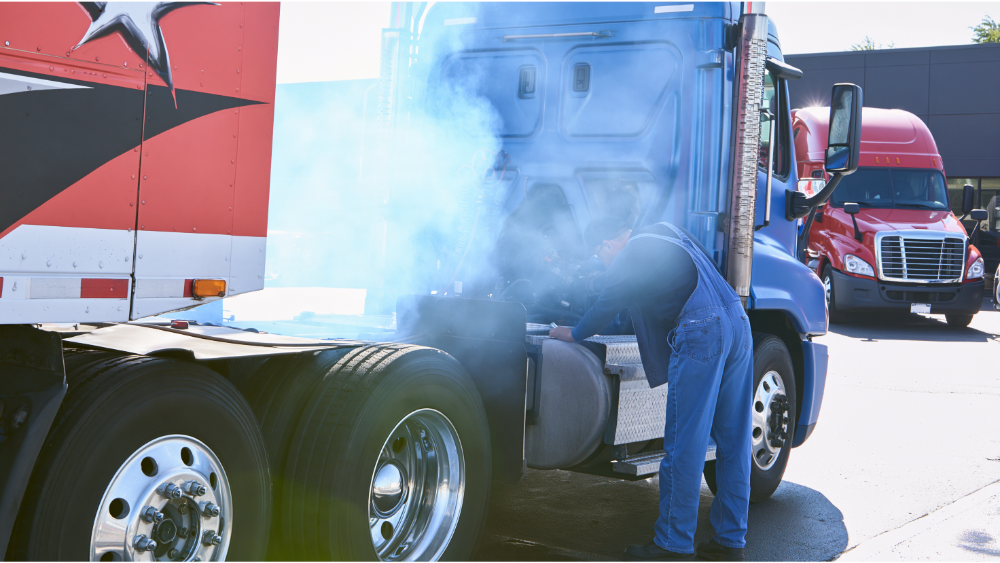
Shut the engine down and call for professional help if any of these are present:
- Red stop lamp, high-temperature stop warning, or engine-protection derate
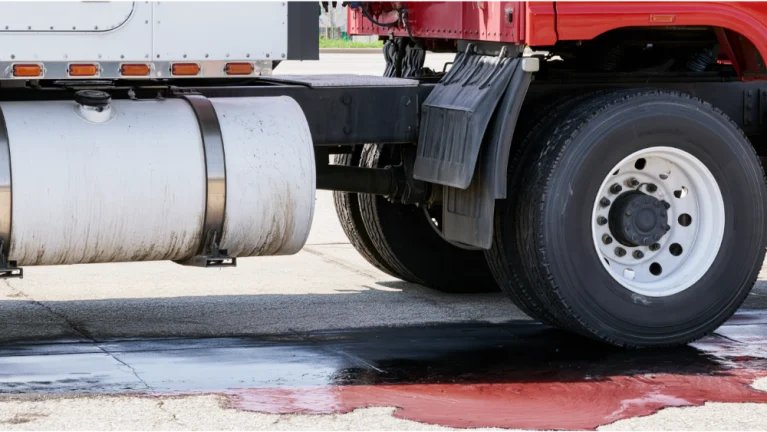
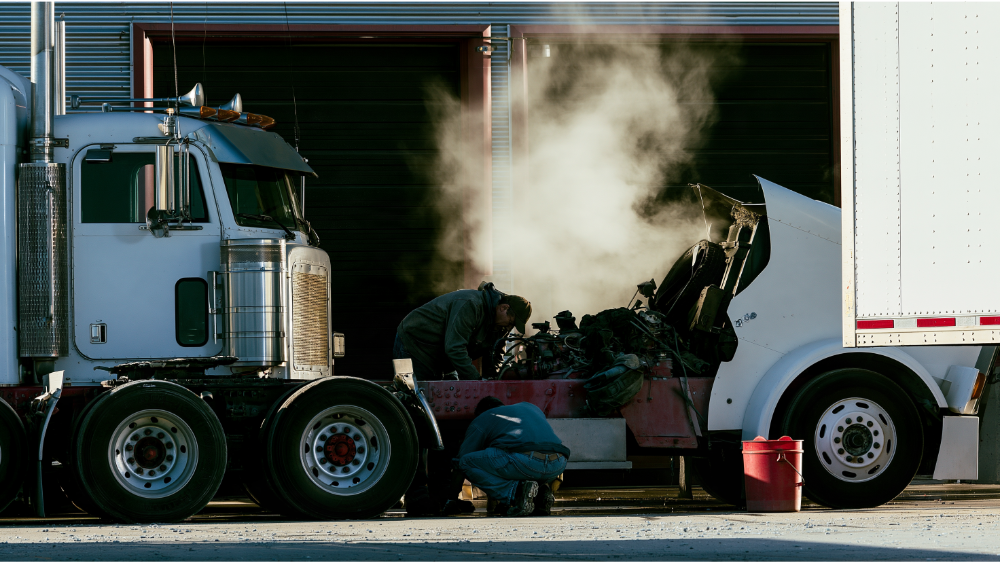
- Steam or coolant escaping from anywhere
- Milky oil or brown engine oil, or an oil level that rose without oil being added
- Coolant levels dropping fast between stops
- Knock, severe misfire, or hard cranking
An oil level that climbs on its own is a red flag that needs immediate attention. Never open a hot, pressurized surge tank, coolant reservoir, or radiator cap. Hot coolant and steam come out under pressure.
Combustion gases in the cooling system create air pockets that stop coolant flow, and engine temperatures spike from there. Keep running an overheating engine and a head gasket job turns into a bearing, liner, and aftertreatment job. The engine damage compounds by the mile, and so do the costly repairs that follow. If it isn’t safe to drive, get road service to you instead of limping it in.
What Does a Head Gasket Seal Between the Cylinder Head and Engine Block?
The head gasket sits between the cylinder head and the engine block and seals three things at once: combustion pressure in each combustion chamber, the coolant passages, and the oil galleries. It also maintains heat transfer between the cylinder head and the block, which is part of how the engine manages its own temperature.
Diesel platforms run compression ratios of 20:1 and higher, so cylinder pressures are far above what a gasoline engine sees. That’s why a small clamping problem, a distorted deck, or incorrect liner projection becomes a full head gasket failure instead of a weep.
Here’s the part most articles skip: the seal can fail into the coolant, into the engine oil, between two cylinders, or straight out the side of the engine as external oil leaks or crusted coolant. “No milky oil” does not clear the head gasket.
Eight Blown Head Gasket Symptoms on a Diesel Engine
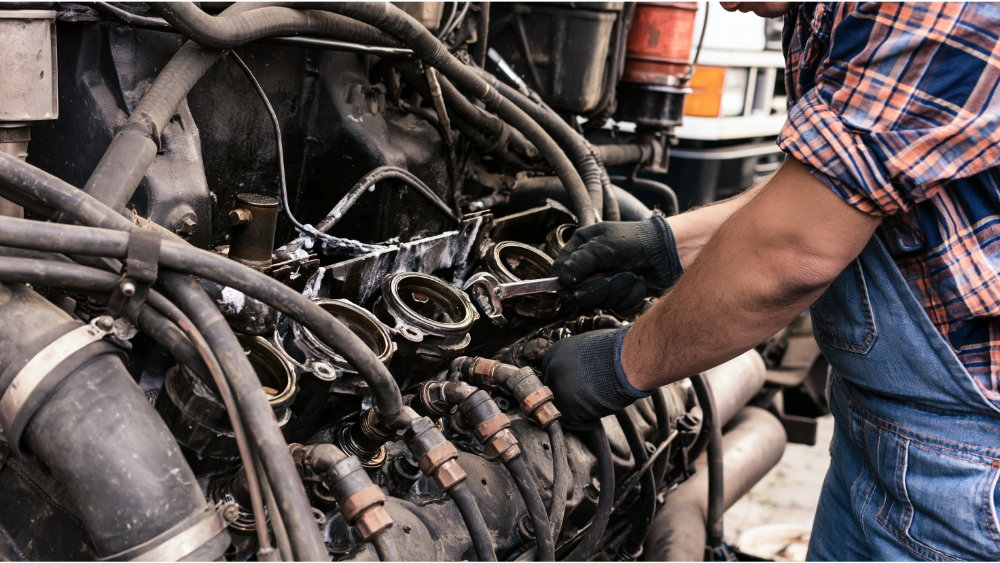
Group the warning signs by leak path and they start making sense.
| Leak path | What you’ll notice |
|---|---|
| Combustion chamber to coolant | Fast cooling system pressure buildup, firm hoses, bubbles in the coolant reservoir, coolant pushed from the surge tank, an overheating engine under load |
| Coolant to cylinder | Persistent white exhaust vapor, sweet coolant odor, dropping coolant levels, rough start or misfire |
| Coolant to oil | Brown or milky engine oil, sludge, oil level rising with no oil added, possible low oil pressure |
| Cylinder to cylinder | Low compression, rough idling, hard starting, sudden loss of engine power |
| Oil or coolant to outside | Wetness, staining, oil leaks, or crusted coolant at the cylinder head-to-block joint |
Four of these carry the most diagnostic weight.
Pressure and Bubbles in the Coolant Reservoir
High pressure combustion gases pushed past the gasket into a coolant passage will pressurize the system faster than the cap can vent it. Hoses go rigid within a few minutes on a cold engine that hasn’t reached operating temperature. You get bubbling in the coolant reservoir, and the truck starts puking coolant out of the overflow every time it warms up. Hot gases in the coolant also destroy heat transfer at the exact spot that needs it most.
White Exhaust Smoke and Coolant Reaching the Combustion Chamber
Brief vapor on a cold start can be condensation, and cold weather makes that normal. Excessive white smoke that hangs around after the diesel engine is at operating temperature, paired with coolant levels you keep topping off, points toward coolant entering the combustion chamber and leaving with the exhaust gases. There’s usually a sweet smell to it rather than a fuel-heavy one. White residue at the DPF inlet means coolant is reaching the aftertreatment, and that widens the repair well past the head gasket itself.
Coolant Contamination in the Engine Oil
Milky or brown engine oil, or a dipstick reading that climbed without oil being added, is a shutdown sign, full stop. Coolant contamination destroys the oil film that keeps bearings alive, and continued operation accelerates engine wear on every rotating surface. Every mile after that trades a head gasket repair for an engine overhaul, and the cleanup involves flushing the galleries, the cooler, and anything else the contaminated oil touched.
An Overheating Engine and Falling Engine Performance Under Load
The gauge climbs on a grade or with weight behind you, then settles when you back off. Combustion gas pressurizing the cooling system does exactly that. Pressure builds faster than the system can handle, coolant gets pushed out of the coolant reservoir, and the temperature gauges tell the story before anything else does. Reduced fuel economy and a truck that won’t pull the way it did last month usually arrive with it, because compression loss in a cylinder that no longer seals shows up as power loss under load.
One clarification on fault codes: a check-engine light or a derate reflects coolant temperature, low coolant level, or misfire counts. The ECM has no sensor on the head gasket. Codes tell you the consequences, not the cause.
Why One Warning Sign Is Never Enough to Condemn a Head Gasket
White smoke, bubbles in the coolant reservoir, and milky engine oil are all real warning signs. None of them names the failed component. Search the topic and you’ll find threads that open with “hey guys, my coolant keeps disappearing” and end with a head gasket replacement that fixed nothing.
A March 2025 Detroit Diesel service communication reported that 44% of inspected Gen 5 DD13/DD15 head gaskets returned through that warranty process were classified “No Trouble Found.” That figure covers the manufacturer’s own inspected returns, not a national misdiagnosis rate. But the message is hard to miss: head gaskets get condemned when something else failed.
A teardown is the most expensive possible way to learn you were wrong, and it is where guesswork turns into costly repairs the truck never needed. Verify before the cylinder head comes off.
What Can Be Mistaken for a Blown Head Gasket on a Diesel Engine?
| Component | Symptoms it can produce | How it’s separated from the head gasket |
|---|---|---|
| EGR cooler | Combustion gas in coolant, coolant loss, white vapor | Isolate and pressure test the cooler |
| Air compressor | Coolant loss into the cooling system or the engine oil | Shut off its coolant supply and retest |
| Oil cooler | Coolant contamination in the oil and oil in the coolant | Pressure test the cooler independently |
| Cracked cylinder head | Any of the above, in any combination | Pressure test and crack test the cylinder head |
| Cylinder liner or upper O-ring | Coolant into the cylinder or crankcase | Borescope, liner projection check; cavitation from poor coolant management can perforate a liner |
| Injector or fuel-side fault, including a weak lift pump | White smoke from unburned fuel, rough running, poor performance | Fuel-side testing; coolant levels stay steady |
| Cooling system basics | Coolant loss, overheating, coolant pushed from the tank | Check radiator, water pump, hoses, a fan clutch that won’t lock up, a cap that won’t hold spec, trapped air, or an overfilled coolant reservoir that expels coolant during normal expansion |
On a modern emissions-equipped diesel engine, EGR cooler failure is the single most common look-alike. It should be ruled out before anyone talks about pulling a cylinder head.
How a Diesel Mechanic Confirms Head Gasket Failure
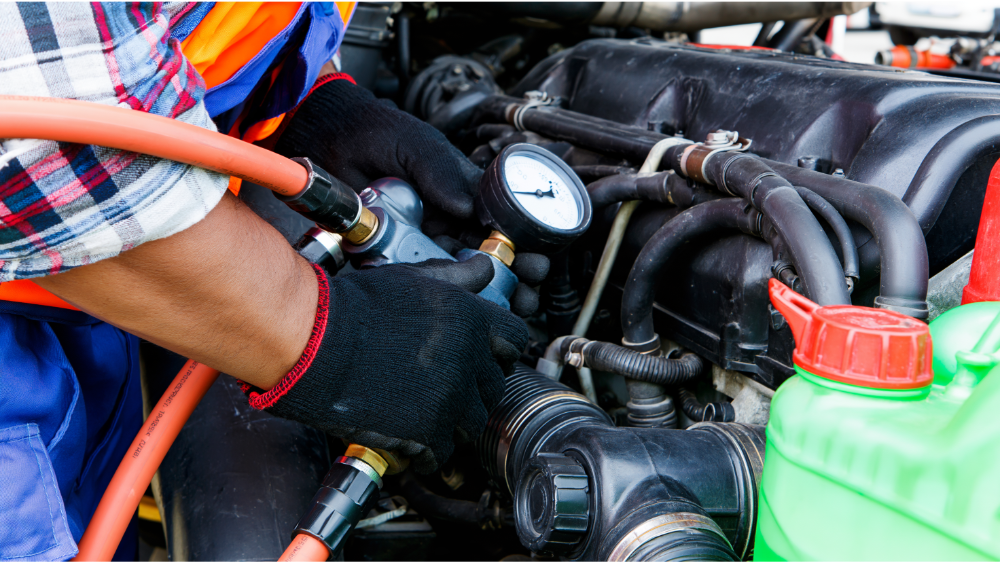
Proper diagnosis moves from least invasive to most invasive. Skipping steps is how shops guess. And there are no spark plugs to pull and read on a diesel, so cylinder-level evidence has to come from instruments.
- OEM fault-code scan and live data review. The ECM reports consequences, not head gasket condition.
- Driver history and recent repair history. Did the coolant loss start a week ago after cooling system work, a refill, or an overfill?
- Cold visual inspection of engine oil, coolant, and every external joint, including the cylinder head-to-block seam and any oil leaks around it.
- Pressure cap test and cooling system pressure test to the engine’s OEM spec.
- Combustion-gas assessment of the coolant. A combustion leak tester with a color-change fluid can show combustion gases are present. It does not localize the source on an EGR-equipped diesel engine.
- EGR cooler pressure test and air-compressor isolation.
- Compression testing, cylinder leak-down, laboratory oil analysis, and borescope inspection of each combustion chamber.
- Cylinder head removal only when the evidence supports it, followed by head and deck flatness measurement, crack testing, and liner projection and counterbore inspection.
Test specifications are engine-specific. One International I-6 procedure calls for a 15 psi (103 kPa) cooling system test. A current Volvo chassis guide lists a 16-pound pressure cap. A service bulletin for 2011 to 2016 Duramax applications describes 5 to 20 psi as normal operating cooling system pressure. There is no universal head gasket test pressure. The engine serial number and the OEM procedure decide the number.
What Causes Head Gasket Failure on a Diesel Engine?
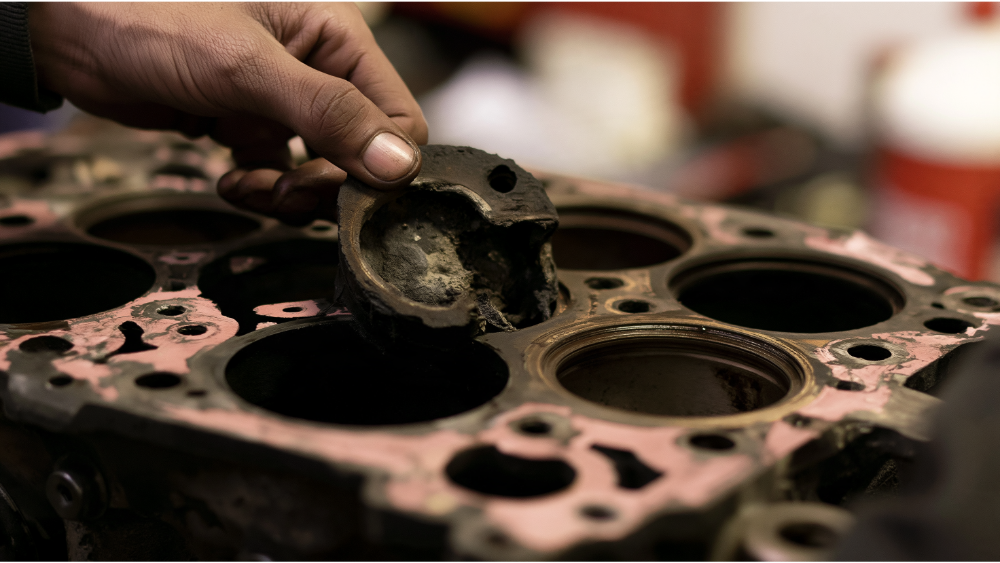
These are the leading causes we see come through the bay:
- An overheating engine or low coolant levels. The most common cause, and often the head gasket is the victim rather than the origin. A Duramax bulletin instructs technicians to find the original external leak first.
- Neglected or incorrect coolant. Poor maintenance of coolant chemistry allows liner cavitation and gasket damage where the sealing surfaces meet the cylinder head and block.
- Incorrect clamping. Reused head bolts, wrong torque, wrong sequence, or ARP studs installed without following a documented torque procedure.
- Warped or damaged sealing surfaces on the cylinder head or engine block deck.
- Incorrect liner projection or a worn counterbore, which leaves the cylinder head under-clamped.
- Excessive combustion chamber pressure from overfueling, aggressive tuning, or an EGR delete that changes cylinder temperatures and pressures. That hardware also isn’t legal on the road.
A damaged gasket between two cylinders will not survive a second install if the deck is out of flat. Replace the head gasket without correcting the cause and you’ll be doing the job again.
What a Complete Head Gasket Repair Should Include
Hold any shop to this list:
- Root-cause correction, not just a new head gasket
- Cylinder head crack and pressure testing
- Cylinder head and engine block deck flatness measurement
- Liner, O-ring, and counterbore inspection on wet-liner engines
- OEM fastener and torque procedure, with new head bolts where the manufacturer specifies
- Engine oil and coolant contamination assessment, including bearing inspection and an engine damage evaluation if the truck ran on contaminated oil
- Aftertreatment inspection if coolant reached the exhaust side
- Post-repair verification of engine performance under load
The scope should be defined and itemized in writing before the engine comes apart. No surprises, no upsell.
How to Prevent Head Gasket Failure: Coolant Levels and Cooling System Care

Preventing coolant problems is the whole game. Change and test it on schedule with the correct spec for the engine, whether that’s SCA/nitrite or an OAT formulation. Check coolant levels at the coolant reservoir daily on a cold engine and watch the temperature gauges on every grade. Inspect the radiator, water pump, hoses, and pressure cap at every PM service. Run the correct engine oil grade at the correct interval, and watch for oil leaks at the head-to-block seam while you’re under the hood. Don’t run heat-soaked and overloaded on long climbs.
Fleet PM service programs with custom schedules keep that regular maintenance documented and DOT-ready across every unit, which is how you catch a cooling system problem before it becomes head gasket failure.
Frequently Asked Questions
How much does it cost to replace a head gasket on a diesel engine?
It depends on the engine platform, whether the cylinder head is reusable, liner and block condition, how much contamination cleanup is needed, and whether the aftertreatment was affected. That’s exactly why diagnosis has to come before the quote. Torpedo provides a full itemized estimate before work begins.
Can you drive a diesel with a blown head gasket?
No. Combustion gases displace coolant, air pockets stop coolant flow, and temperatures spike fast. Keep going and you add bearing, liner, cylinder head, and aftertreatment damage to the invoice. If there’s a stop lamp, escaping steam, or milky engine oil, shut it down and get it towed or dispatched.
What can be mistaken for a blown head gasket?
EGR cooler, air compressor, oil cooler, a cracked cylinder head, a cylinder liner or upper liner O-ring, and injector or fuel delivery faults. Simple cooling system issues also qualify: a pressure cap that won’t hold spec, trapped air, or an overfilled coolant reservoir pushing coolant during normal expansion.
Is it worth fixing a blown head gasket?
Usually yes on a well-maintained Class 6 through 8 platform, as long as the root cause is corrected and the cylinder head, block, and liners measure within spec. The call hinges on what the teardown finds, which is why a verified diagnosis before authorization protects the decision either way.
Get a Verified Diagnosis Before the Cylinder Head Comes Off
Diesel Engine Repair And Maintenance at our Fife, WA shop runs OEM diagnostic software plus mechanical verification: cooling system and cap pressure testing, combustion-gas assessment, compression and leak-down testing, engine oil analysis, and cylinder head pressure and crack inspection. You get an itemized estimate before a single bolt is turned. No upsell, no surprises.
Call (253) 449-0100. If the truck is overheating or unsafe to move anywhere along I-5, Hwy 167, or SR-512, our 24/7 Emergency Road Service dispatches within 50 miles of the Fife shop. Shop hours are Mon through Fri, 8:00 AM to 5:30 PM; the 24/7 line is emergency dispatch.