Key Takeaway
Diesel engine valve lash on heavy-duty engines typically ranges from about 0.014 inch on the intake side to 0.027 inch on the exhaust side, but how tight diesel engine valves are depends entirely on the OEM specification for your exact engine model and serial number. Exhaust valves always carry more clearance than intake valves because they run hotter and expand more. Engines drift tight over time, not loose, making overdue adjustments a quiet but serious risk to cylinder heads and pistons.
There is no universal diesel valve setting. When someone asks how tight diesel engine valves are, they almost always mean valve lash: the small gap engineered between the rocker arm and the valve stem when the valve is fully closed. That clearance is set to the exact OEM specification for the engine model and serial number, measured under the temperature condition the service procedure calls out. Copying a number off a chart is how valves get burned.
If you’re an owner-operator staring at a service recommendation, a fleet manager scheduling overheads across mixed units, or a tech chasing a hard start, poor performance, or new noise under the valve cover, this covers what the valve clearance numbers mean, what tight and loose actually do to the valves inside the engine, and when the valve adjustment is due.
What “Tight” Actually Means on a Diesel Engine
Three different numbers get blended together in most articles on this topic. They are not interchangeable.
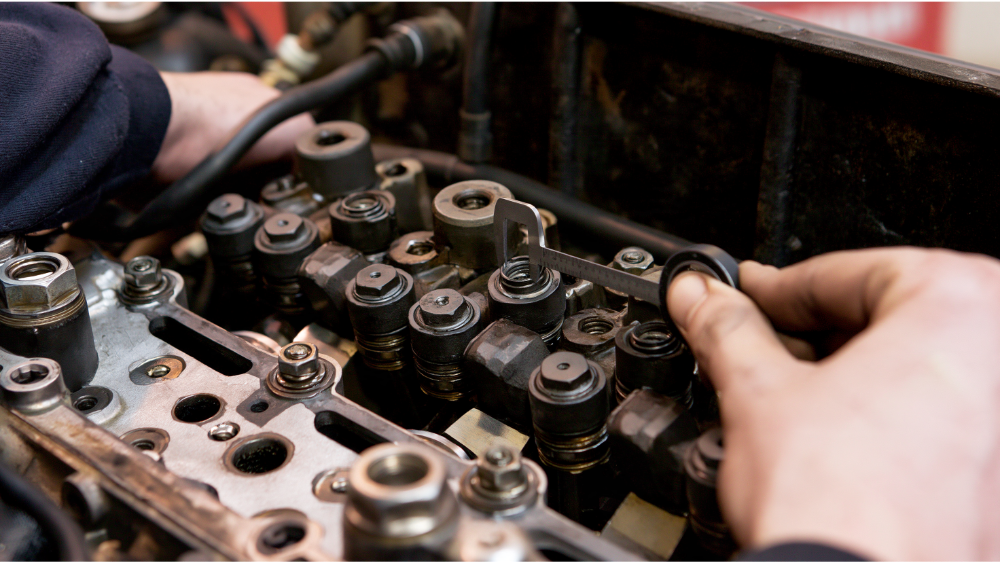
- Valve lash (clearance): the gap measured between the rocker arm and the valve stem tip, between the rocker and the crosshead that spans a pair of valves, or at another OEM-specified contact point. This is what “tight” refers to.
- Adjuster locknut torque: a fastener spec. The nut locks the adjusting screw once the clearance is set. It does not determine the clearance.
- Engine-brake (slave piston) lash: a separate specification with its own procedure and its own value.
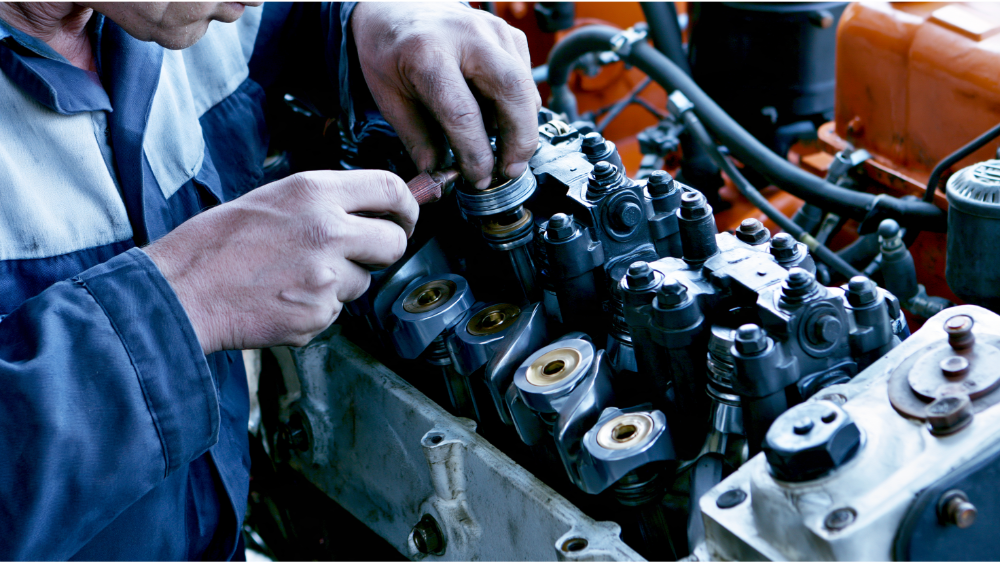
On most heavy-duty diesels the rockers ride on a rocker arm shaft bolted to the cylinder head, and every valve under that shaft gets checked and adjusted individually, since cylinder-to-cylinder balance depends on it. An overhead adjustment covers valve lash and, depending on the engine, injector settings, crossheads or bridges, and engine-brake lash, sequenced as one procedure. One number does not answer all of it.
How Tight Are Diesel Engine Valves? The OEM Spec Is the Only Answer
Three real examples from official documentation show why a generic range fails:
| Engine / application | Intake | Exhaust |
|---|---|---|
| Cummins QSX15, industrial manual example | 0.014 in / 0.36 mm | 0.027 in / 0.69 mm |
| Detroit DD15, EPA10 engine-label example | 0.4 mm / ~0.016 in | 0.6 mm / ~0.024 in |
| Detroit MBE900 (Mercedes-Benz design), published “adjust-to” setting | 0.40 mm / 0.016 in | 0.60 mm / 0.024 in |
Three things follow from that table. Exhaust valves normally carry more lash than intake valves on heavy-duty platforms because they run hotter and grow more, so an intake figure can never be carried over to the exhaust side. The 0.005 to 0.015 inch range floating around online comes from light-duty and small-engine content and does not even contain a 0.027 inch exhaust spec. And manuals frequently publish both an “adjust-to” target and a wider “check-for” inspection range. The difference matters: the outer inspection limit is not the adjustment target.
The correct specs come from service information tied to your engine serial number. That includes the medium-duty Mercedes-derived platforms, which use their own procedure and their own numbers.
Why Diesel Valves Need Clearance in the First Place
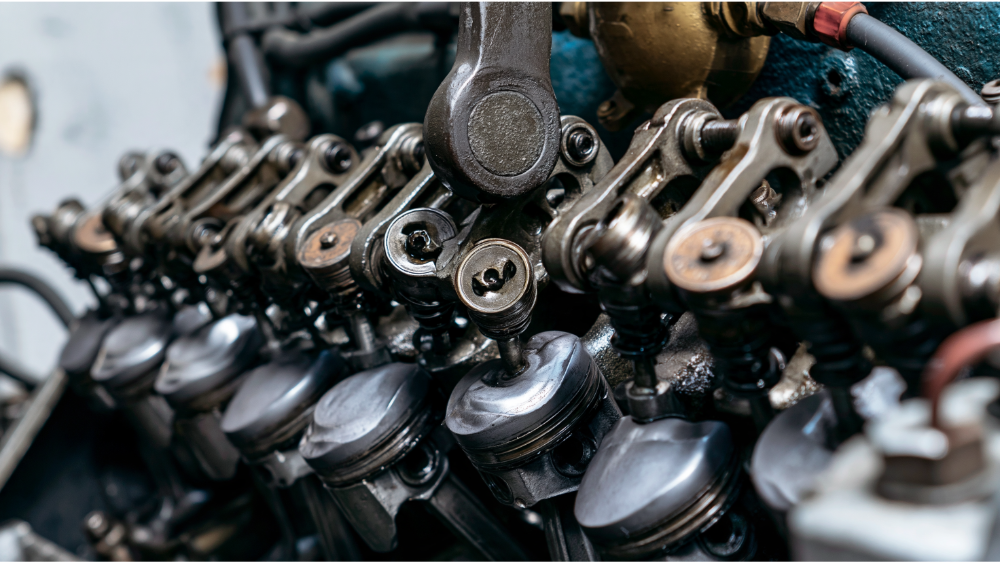
Valve stems, pushrods, and rockers all grow as they heat up. The lash guarantees the valve still returns fully to its seat when the valve spring pulls it closed. A seated valve seals, holds cylinder pressure, and dumps its heat into the cylinder head through the seat. Its opening and closing events also land on the timing the engine was designed around. Correct valve clearance is what keeps compression, airflow, engine power, and emissions performance where the manufacturer set them. Clearance is not slop in the valvetrain. It is a vital design dimension. With zero clearance the spring is fighting a rocker arm that never fully backs off, and the valve never seals.
What Happens When Valve Clearance Is Too Tight
Insufficient lash can hold a valve off its seat. That valve stops shedding heat into the head, and it burns. Exhaust valves go first because they carry the most heat.
Before it gets there, the operator notices hard starting, then low power and low boost at the intake manifold, then a jump in fuel burn as the driver adds throttle to make up the lost fuel efficiency. Caterpillar documents the same chain: reduced cylinder pressure, lost power, higher fuel consumption, burned valves, and in some cases valve-to-piston contact.
Here’s the part most people miss. The mental picture most operators carry is backwards. Valve recession pulls the valves up into the head over time, which naturally closes the gap. Engines drift toward too tight, not too loose. Too tight is the more dangerous direction, and it is usually silent.
What Happens When Valve Clearance Is Too Loose
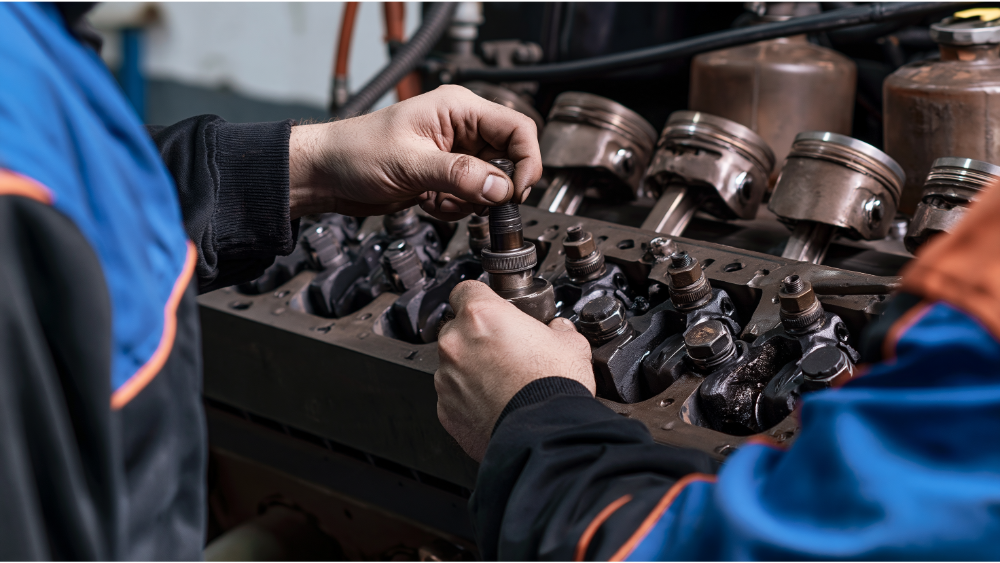
Too much gap and the rocker arm hammers the valve instead of pushing it. The valve opens late, its closing event comes early, and it slams shut with more force than the spring and seat were designed to absorb. Caterpillar warns that excessive lash can snap valves outright, and a broken valve head can lead to catastrophic failure: a scrapped piston and liner. Short of that, you get accelerated wear on the rockers, valve tips, and seats.
What you hear is ticking or tapping under the valve cover, usually with rough idle and some lost power. But quiet does not mean in spec. Tight valves make no noise at all. Sound is a clue, never a measurement. Drivers worry about the engine that rattles. The one worth worrying about is the one that went quiet.
How Valve Clearance Is Checked and Adjusted
This is an overview, not a procedure to work from. The real sequence is engine-specific.
- Identify the engine model, serial number, and emissions family, then pull the matching OEM procedure and its current specs.
- Bring the engine to the specified temperature condition.
- Shut the engine down. Valves are never adjusted with the engine running.
- Remove the valve cover and confirm the rocker arm shaft hold-downs are torqued. A shaft that is not fully bolted down leaves the assembly free to move and reads a false clearance.
- Rotate the crank with a breaker bar and barring socket to the OEM-defined timing position so the valves being set are fully closed and the rockers are off the cam ramp.
- Loosen the adjuster locknut with the correct wrench, back the screw out, then slide the specified feeler gauge into the measurement point and turn the screw down until you feel the slight drag the procedure describes. Not “snug.” Not “finger tight.”
- Hold the screw with a screwdriver and torque the locking nut to its own separate spec to secure the setting. Guessing at the locknut is how a good setting gets lost.
- Recheck the clearance. Tightening the nut moves it.
On temperature: many procedures call for the valves to be adjusted cold, but at least one official Cummins procedure publishes a setting valid hot or cold. Use the condition the procedure states. Never convert a cold spec into a hot one.
PACCAR describes valve adjustment as a complex procedure requiring specialized tools and training, and Detroit directs the work to qualified service facilities. A mixed-engine fleet is exactly where a generic sequence goes wrong. The barring points, the wrench access, and the specs change from platform to platform.
How Often Does a Diesel Need a Valve Adjustment?
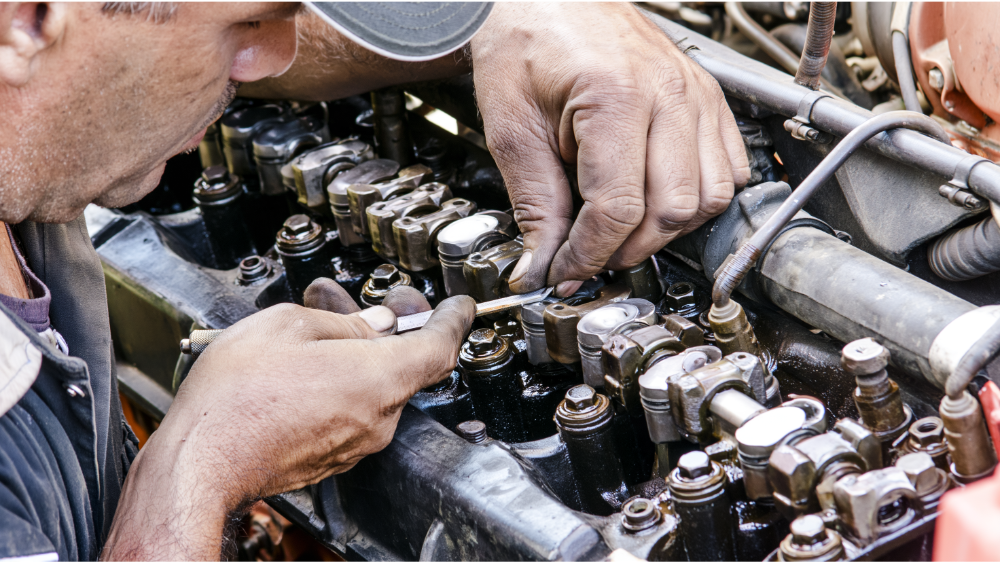
Forget “every 50,000 to 100,000 miles.” That’s a legacy light-duty figure. Current heavy-duty intervals span 60,000 to 500,000 miles depending on engine, model year, and duty cycle.
| Engine / application | Published interval |
|---|---|
| Cummins X15, 2025 fire/emergency document | 500,000 mi, 10,000 hrs, or 60 months under stated typical usage |
| Detroit GHG17 heavy-duty | 500,000 mi highway; 200,000 mi severe duty |
| Detroit EPA07 / EPA10 / GHG14 | 100,000 mi initial, again at 500,000 mi, then every 500,000 mi |
| PACCAR MX-13, line haul under 20% idle | 150,000 mi, 450,000 mi, then every 300,000 mi |
| PACCAR MX-13, severe vocational | 60,000 mi, 360,000 mi, then every 300,000 mi |
| Volvo D11 / D13, 2022 GHG and newer | 150,000 mi then every 300,000 mi (12 months, then 24 months) |
| Mack MP8 | 150,000 mi then every 300,000 mi |
Idle percentage and vocational duty pull those intervals in hard. Two diesel trucks with the same engine model can land on different intervals when one of them idles half its hours. Whichever comes first, miles, hours, or months, governs. Verify against the current service manual for your serial number.
Signs Your Truck Needs a Valve Adjustment
- Hard starting, especially cold
- Rough idle or uneven running
- Loss of power and boost on grades
- Fuel economy that drops with no other explanation
- New tapping or ticking under the valve cover
- Overhead past due per the OEM schedule
- Recent cylinder head, rockers, injector, or engine-brake work
Every one of those symptoms also shows up with fuel, air, and emissions faults. The next step is verified diagnostics, not blind adjustment or replacing parts until something changes.
Can You Keep Driving With Valve Lash Out of Spec?

Nobody can give you a safe-mileage number, and anyone who does is guessing. The line worth drawing is this: an overhead that’s due with no symptoms is a scheduling decision. Active misfire, severe power loss, abnormal smoke, or a confirmed valve that can’t fully seat is an engine-damage risk and gets handled before the next load.
A valve adjustment is planned downtime. Burned valves and a head job are unplanned downtime.
What Your Shop Needs Before It Touches the Valve Cover
- Truck make and model
- Engine model and serial number
- Model year and emissions family
- Mileage and engine hours
- Duty cycle and idle percentage
- Date and mileage of the last documented overhead
- Current symptoms and active fault codes
Fleet managers: the repair order should list the engine serial number, the spec used, and the as-found and as-set clearances for the intake and exhaust valves separately. That’s what makes the work verifiable across units.
Frequently Asked Questions
How do you adjust the valves on a diesel engine?
Identify the engine and pull its OEM procedure. Engine off, at the specified temperature condition, valve cover removed, crank barred over with a socket to the defined position, locknut loosened, feeler gauge set to slight drag, then the nut torqued with a torque wrench and the clearance rechecked. The sequence varies by platform and belongs with trained technicians.
Do valves get tighter or looser over time?
Tighter, on most heavy-duty engines. Valve recession pulls the valve up into the head and closes the gap. That’s why an overdue engine usually runs tight and quiet rather than loose and noisy.
What are the symptoms of tight valve clearance?
Hard starting, low power and boost, rough running, higher fuel consumption, and eventually burned valves. There’s usually no added noise, which is exactly why the condition gets missed until it costs a cylinder head.
Does tighter valve lash make more power?
No. Tight lash costs engine power by preventing full seating and bleeding off cylinder pressure. Power comes from proper clearance, not from deviating from the spec.
Get the Overhead Done Right: Call Torpedo Truck Repair
We work Class 6 through 8 platforms out of our shop in Fife, WA: Freightliner Cascadia, Kenworth T680, Peterbilt 579, Volvo D11 and D13, Mack MP7 and MP8, International A26 and MX-13, Western Star. Certified technicians, OEM diagnostic software, and an itemized estimate before a single bolt is turned. No surprises, no upsell, same-day service focus when possible.
Ask about Diesel Engine Repair And Maintenance or put the valve adjustment on a Preventive Maintenance PM Service schedule so it stops being a surprise. We’re at 7495 26th St E Ste B, Fife, WA, near I-5 and Hwy 167 on the Seattle-Tacoma freight corridor. Shop hours Mon through Fri, 8:00 AM to 5:30 PM. 24/7 emergency roadside dispatch runs within 50 miles of the shop, covering I-5, Hwy 167, and SR-512.
Call (253) 449-0100 to schedule diagnosis or service. Or request a service quote: takes under 60 seconds, no obligation.