Key Takeaway
Using starter fluid in a diesel engine is dangerous and prohibited on any engine equipped with glow plugs or an intake grid heater, where ether can ignite prematurely and cause detonation or explosion. A diesel that starts on starter fluid but not on fuel has an unrepaired fault such as a preheat failure, low fuel pressure, or weak batteries. Use a block heater, oil-pan heater, or battery warmer instead, and get a proper diagnostic scan.
Do not spray aerosol starting fluid into a diesel engine unless the engine manufacturer authorizes it through a factory-installed metered system. Never use starting fluid on an engine with glow plugs or an air intake grid heater. The ether can ignite before the intended combustion event and cause an explosion or serious internal damage. If you are cranking a truck that will not start, every attempt burns battery, time, and money. Here is what is safe, what it risks, and what to check.
Can You Use Starter Fluid in a Diesel Engine? (Quick Decision Table)
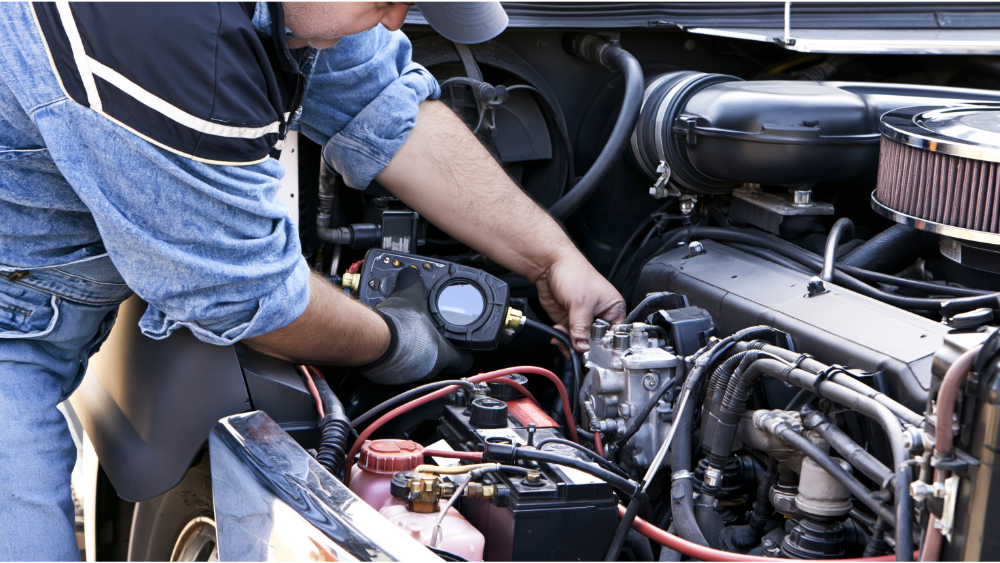
The answer depends entirely on how your engine is set up for cold weather starting. Find your configuration below.
| Your engine setup | Use starting fluid? | Why |
|---|---|---|
| Glow plugs | No | A hot glow plug can ignite starting fluid prematurely. Cummins and Detroit warn of detonation or explosion. |
| Intake, grid, or manifold heater | No | Detroit and Cummins both warn of explosion and bodily injury when ether meets a grid heater. |
| Factory-installed automatic or metered ether system | Only per that system’s manual | Dosing is controlled by the equipment, not your thumb. |
| Configuration unknown | No, verify first | Guessing on a Class 6 through 8 platform is not a diagnosis. |
| Older engine, no visible preheat | Check the engine manual | The absence of a dash lamp is not proof the engine allows starting fluid. |
One rule outranks everything else: the engine owner’s manual beats the label on the can. Detroit’s current operator manual prohibits all aerosol starting aids, while some product labels still say “safe for diesel engines.” Both statements can be true. Only one of them applies to your truck.
What Is Starting Fluid, and Why Is It So Flammable?
Starting fluid has been sold for the better part of a century for diesel and gasoline engines alike. It is mostly diethyl ether with a propellant, and some formulas add upper cylinder lubricants because ether itself has almost no lubricity. NIOSH lists diethyl ether with a flash point of −49°F, a boiling point of 94°F, and a flammable range in air of 1.9% to 36%. Flash point is not autoignition temperature. It describes how readily the vapor ignites once an ignition source is present, and a glow plug is exactly that. Cans marketed down to −65°F for tractors, farm equipment, gas engines, and light vehicles do not override what your engine manual says about your truck.
Starter Fluid Diesel Engine Damage: What Actually Goes Wrong
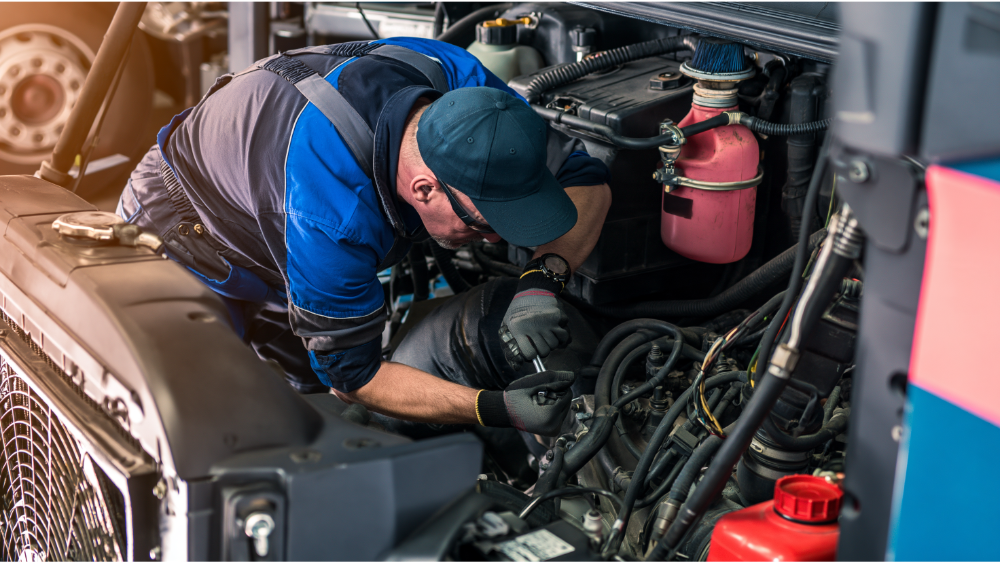
Diesel combustion is timed. The ECM delivers a metered charge at a specific point in the cycle. Starting fluid does not work that way. It arrives with the air intake charge as additional fuel, untimed and unmetered, filling the intake manifold and cylinder before you crank. If a glow plug or grid heater is hot, it can light that vapor early. What follows is either an explosion in the intake or a cylinder-pressure spike the engine was never built to absorb.
The damage list is well documented:
- Injector tip damage from external starting aids (Detroit)
- Bent connecting rods, cracked pistons, broken rings, head gasket and cylinder head damage
- Oil washed off cylinder walls by a fluid with no lubricity, accelerating wear on every start attempt
- Intake fire and personal injury
Caterpillar’s caution is blunt: excessive use can result in catastrophic engine failure, fire, explosion, and personal injury. Not every spray destroys an engine, but on a prohibited system the risk is unnecessary.
When Is Starting Fluid Actually Manufacturer-Approved?
There is a real exception. Caterpillar permits starting fluid only where the engine has a factory-installed automatic system. Some older heavy-duty trucks and tractors carried factory ether metering equipment that typically injects a small controlled dose during cold starts. If your truck has one, follow that system’s manual exactly.
Two hard rules. This page does not publish a spraying procedure, because no universal safe dose exists across diesel engines. And disconnecting glow plugs or disabling a grid heater to make starting fluid “safe” is absolutely not an approved workaround. It removes the thing that was helping the engine start.
Why Does My Diesel Start on Starting Fluid but Not on Fuel?
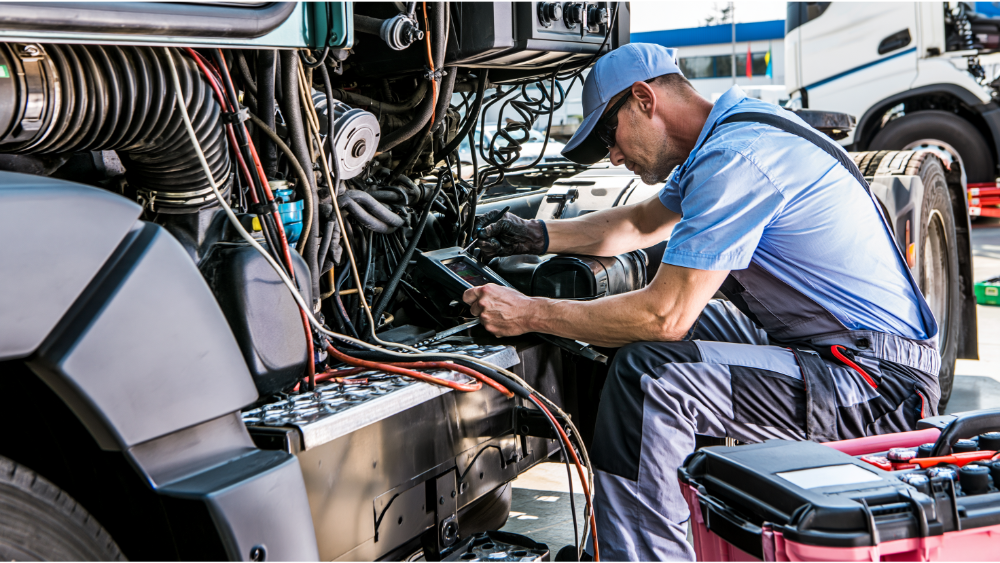
A start on ether proves one thing: the engine can still make combustion. It does not tell you which fuel, electrical, compression, or control fault is stopping the normal start. Sort by what the truck is actually doing.
- No crank: batteries, cables, starter circuit, neutral interlock, starter.
- Slow crank: weak batteries, poor connections, wrong-weight oil for the temperature, starter drag.
- Cranks normally, will not fire: fuel supply or pressure, air in the fuel, gelled filter, preheat failure, sensor or ECM fault, low compression.
- Fires on starting fluid, then stalls: normal fueling or ignition conditions are still missing.
- Difficult to start in cold weather only: points at preheat, fuel blend, battery output, or oil viscosity.
- Hard to start hot and cold: more likely fuel pressure, injectors, or compression.
“Ether addiction” is a commonly used industry expression, not a chemical dependency. An engine that only starts on starting fluid has an unrepaired fault, and it is usually getting worse every week you spray it. A can in the door pocket is not peace of mind. Every spray makes the repair longer. The can is not a solution. It is a delay with interest.
What to Check Instead of Spraying Starting Fluid
- Stop the repeat spray attempts.
- Let the wait-to-start or preheat lamp finish its cycle before cranking.
- Confirm the engine is cranking at normal speed, not dragging.
- Check fuel level, obvious leaks, and whether the tank has winter-blend fuel.
- Check the fuel/water separator and primary filter for restriction, water content, or gelling.
- At minimum, note smoke color, warning lamps, and any fault messages before you call anyone. That information shortens the diagnosis.
- Use only approved aids that warm the engine safely: block heater, oil-pan heater, coolant or battery warmer, correct seasonal oil.
- Respect the crank/rest cycle in your manual. Examples, model-specific: the cited Detroit manual says stop after 20 seconds and wait about 60. Caterpillar’s guidance is no more than 30 seconds of continuous cranking.
The cited Detroit platform may list a block heater and oil-pan heater as required below −20°C/−4°F. Those aids are effective because they attack the actual cold weather problems: thick oil, cold metal, weak battery output. The benefits show up as shorter crank times and one less thing to worry about in January. A healthy modern truck should start up in extreme cold without starting fluid. Volvo’s cold weather testing has included 12-hour soaks near −20°F to −30°F followed by starts with no starting fluid. If yours needs a can, something is broken.
Do Not Substitute Brake Cleaner, WD-40, Propane, or Gasoline
Detroit’s current manual names brake cleaner specifically among aerosol sprays not to be used as a starting aid. WD-40 and penetrating oils are not starting aids and were never designed to start engines. Propane and gasoline add fire risk and uncontrolled combustion with zero metering. Be aware that “less volatile” does not mean approved, or less flammable in a hot air intake. An improvised aerosol is how a no-start that cost nothing to diagnose turns into a rebuild.
When to Stop Cranking and Call for Diesel Engine Diagnostics
Stop immediately if you get any of these:
- A bang, backfire, or metallic knock during a start attempt
- Cranking that suddenly turns uneven or restricted
- Smoke or fire in the intake system
- Repeated crank cycles with no change in behavior
- Batteries dropping fast
- An engine that only runs while aerosol is being sprayed
- Active shutdown, fuel-pressure, preheat, or ECM faults
A real no-start diagnosis is a careful sequence, not a guess. Our Diesel Engine Repair And Maintenance workflow runs an OEM diagnostic software fault-code and live-data scan, battery and starting-system testing, fuel-pressure verification, preheat-system testing, and compression checks where the data points there. You get an itemized estimate before work starts. No guessing, no upsell, no surprises, and same-day service focus when possible.
Truck down in the Seattle-Tacoma freight corridor? Torpedo Truck Repair runs 24/7 Emergency Road Service with mobile dispatch within 50 miles of Fife, covering I-5, Hwy 167, and SR-512 through Tacoma, Auburn, Puyallup, Sumner, Milton, Pacific, and Algona. We work on Freightliner, Kenworth, Peterbilt, Volvo, Mack, International, and Western Star tractors and trailers. Call Now: (253) 449-0100. The 24/7 line is emergency dispatch. In-shop service in Fife runs Mon through Fri, 8:00 AM to 5:30 PM.
Frequently Asked Questions
What can I use for starting fluid on a diesel engine?
Use approved cold weather start aids instead: a block heater, oil-pan heater, battery and coolant warmers, correct seasonal oil, winter-blend fuel, and a preheat system that actually works. None of those come in an aerosol can.
Why is starter fluid bad for diesel engines?
Untimed ether ignition against a glow plug or grid heater can detonate in the air intake or the cylinder. That damages injectors, pistons, rings, rods, and the head, and it strips oil off the cylinder walls.
How do you use starter fluid on a diesel truck?
Generic instructions tell you to pull the air filter or air cleaner and spray a small amount into the intake. That does not apply to heavy-duty trucks with glow plugs, a grid heater, or an OEM aerosol prohibition. Follow the engine manual, and if it does not authorize starting fluid, do not use it.
Can you use WD-40 as starting fluid for a diesel engine?
No. It is not an approved starting aid, and Detroit’s guidance rules out aerosol sprays including brake cleaner. Improvised aerosols add fire risk without solving the no-start.
Can a diesel become addicted to starter fluid?
No. That phrase describes an unrepaired fault, usually weak cranking, a failing preheat system, low fuel pressure, air intrusion, or lost compression, that starting fluid has been covering up.