Key Takeaway
DEF is not bad for diesel engines when used correctly – it never contacts the engine, pistons, or oil. Problems arise when off-spec or contaminated DEF is used, DEF system components fail, or DEF is accidentally poured into the diesel fuel tank, which can destroy the high-pressure fuel system. If diesel exhaust fluid enters the fuel tank, do not start the engine and call for a tow immediately.
Correct diesel exhaust fluid (DEF) in a working selective catalytic reduction (SCR) system never touches your engine. It is sprayed into the exhaust stream after combustion, downstream of the cylinders. It never reaches the pistons, the oil, or the diesel fuel. What hurts diesel engines is off-spec fluid, a failed DEF system component, or DEF poured into the diesel tank.
If you are staring at a DEF warning light or a derate countdown, this article separates the three problems and tells you what to do about each. One hard rule first: if DEF may have gone into the diesel tank, do not start the engine and do not switch the ignition on. Call for a tow. Starting the truck turns a drain job into a fuel system rebuild.
Where Does Diesel Exhaust Fluid (DEF) Actually Go? SCR Technology and NOx Emissions
How SCR Technology Works to Reduce Nitrogen Oxide
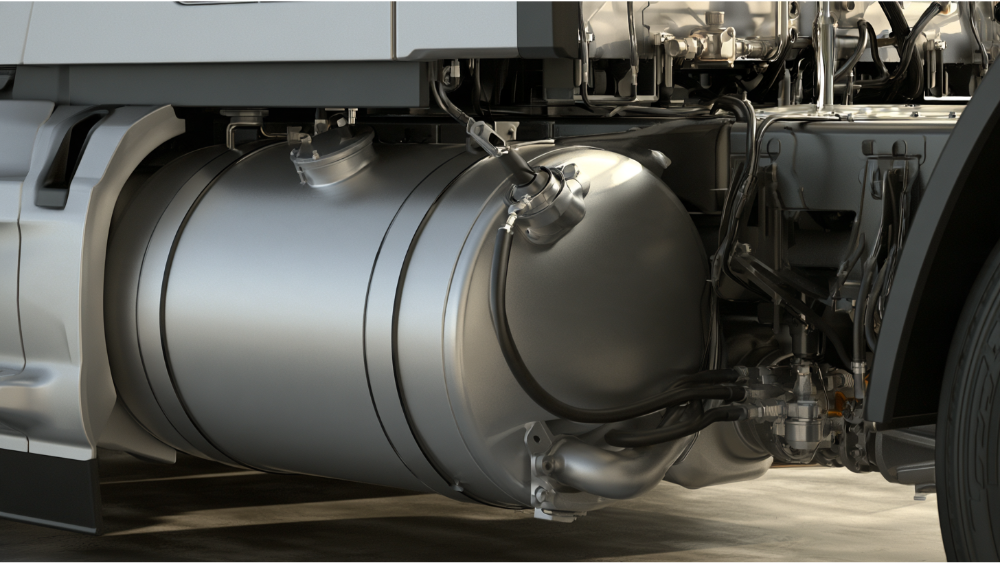
DEF lives in its own tank. A pump pulls it through dedicated lines to a dosing valve, which sprays it into the hot exhaust stream ahead of the SCR catalyst. Hot exhaust gases convert the urea into ammonia. Inside the catalyst, a chemical reaction turns that ammonia and the harmful nitrogen oxides into harmless nitrogen and water vapor, plus carbon dioxide. That is the whole job of selective catalytic reduction: cut the harmful pollutants produced during combustion so the engine can be calibrated for power and fuel efficiency.
The 32.5% Urea and 67.5% Deionized Water Standard
Standard DEF is 32.5% urea and 67.5% deionized water by weight, with purity governed by ISO 22241. SCR systems on modern diesel engines are calibrated around that exact concentration. The technology became standard on on-road trucks by 2010, when EPA’s heavy-duty emission standards for nitrogen oxides of 0.20 g/bhp-hr were fully phased in. Diesel vehicles equipped with SCR require DEF to hold those limits. Unlike gasoline engines, diesel trucks carry a second tank and a dosing system that requires DEF at spec to function properly.
SCR is not the DPF and not EGR. The DPF traps soot. EGR recirculates exhaust back into the intake to hold nitrogen oxides down during combustion. SCR treats harmful emissions after the fact. Modern trucks run all three. Only EGR touches combustion. DEF does not. The environmental benefits are the point of the hardware, and cutting NOx is a real air quality gain.
Why DEF Has Such a Bad Reputation With Drivers and Fleet Managers
The complaint was never really about the fluid. It is about the DEF tank, heater, pump, doser, wiring, control module, and sensors that came with the SCR system, and what happens to a loaded truck when one of them trips. A low-level warning becomes a countdown. The countdown becomes a derate that cuts vehicle performance and limits vehicle speed. On some engines that ends in limp mode at roughly 5 mph or a truck that will not restart, with fault codes that need a dealer-level reset. It usually shows up mid-run, under heavy loads.
Then there is the repair itself. A shop replaces the first sensor a code names, the truck leaves, and the same warning light comes back two weeks later. Blaming every emission control fault on “bad DEF” wastes time and parts. EPA’s March 2026 review found urea quality sensors were a significant source of warranty claims and unnecessary inducements.
DEF is not just another fluid on the truck. It is a crucial component of your vehicle’s emissions system, and DEF plays a direct role in whether you stay loaded and moving.
When Does DEF Actually Damage a Diesel Engine?

DEF in the diesel tank
This is the one that destroys hardware. DEF’s water content and chemistry attack the metals used in high-pressure common-rail fuel systems. You get corrosion, crystal deposits in valves, injector electrical faults, fuel pressure problems, misfires, rough running, or a no-start. An OEM technical bulletin calls for full fuel system inspection, flushing, and component replacement once contamination is confirmed. Owner’s manuals go further than do not start the engine: do not switch the ignition on at all. Tow it, drain it, inspect it.
Diesel, oil, coolant, dirt, or tap water in the DEF tank
Contamination on the DEF side will not wreck your engine, but it will wreck your uptime. Diesel or oil fouls the pump and doser. Tap water minerals and dirt foul dosing equipment and hurt the performance of your vehicle’s selective catalytic reduction catalyst. Anything that changes concentration shows up as a quality fault.
Diluted or off-spec fluid
No water. No freeze-point improvers. No aftermarket additives. No agricultural urea. API and OEM guidance are consistent on this, and the reason is simple: the SCR system is calibrated to 32.5%, and dosing hardware will not function correctly at any other concentration.
Crystallization and deposits
Crystals restrict the doser and lines, reduce dosing volume, and set SCR efficiency faults. Left alone, the deposits spread through the dosing hardware and into the exhaust system.
Anyone quoting a generic repair cost for contamination is guessing. It depends on the platform, how far the fluid traveled, and whether the truck was started. That is an inspection finding and an itemized estimate.
Is It a DEF Fluid Problem or a DEF System Problem?
These are separate diagnostic paths. Sort which one you are in before authorizing anything.
| Condition | Likely area | What you see | Immediate action |
|---|---|---|---|
| Low DEF levels | Fluid supply | Low-level warning / countdown | Refill with API certified DEF meeting ISO 22241 |
| Suspect or unknown fluid | Fluid quality | “Poor DEF quality” message | Stop adding fluid; have it tested |
| Full tank, warning stays | Sensor / dosing / SCR system | Warning persists after DEF refill | OEM-level diagnosis, not parts swapping |
| DEF in the diesel tank | Fuel system | Often no warning at all | Do not start; do not switch ignition on; tow |
| Diesel in the DEF tank | SCR supply | Quality / dosing fault | Stop; drain and inspect |
Why a Truck Derates With a Full DEF Tank

An empty DEF tank triggers an inducement on schedule, and low DEF triggers the first warning long before that. A full tank rules out exactly one cause. An inducement can still come from the urea quality sensor, the NOx sensors, the tank heater, the pump, the doser, wiring, the control module, an exhaust leak, or genuine SCR efficiency loss. Adding more DEF will not clear a sensor fault. EPA’s own sensor factsheet acknowledges that a malfunctioning sensor can trigger an inducement with no actual fluid problem. Dosing also needs hot gases: EPA cites roughly 190°C (374°F) as the minimum exhaust temperature for dosing and NOx-based quality evaluation, so idle-heavy cycles change what the system can measure.
Two things changed recently. EPA’s August 11, 2025 guidance lets manufacturers use less abrupt inducements on eligible existing and MY2025 to MY2026 engines. The March 26, 2026 guidance permits approved NOx-sensor-based quality strategies in place of urea quality sensors. That is manufacturer guidance, not a promise. Availability is OEM-, engine-, model-year-, and VIN-specific, and MY2027 engines fall under a separate schedule in 40 CFR 1036.111.
Does DEF Freeze or Expire? Cold Weather and Storage
Frozen DEF is not bad DEF. DEF freezes around 12°F (-11°C) and thaws at the same concentration it went in at. That freezing point is why diesel vehicles built since 2010 use heated tanks and lines. Store DEF in sealed containers with expansion room, since the fluid can expand up to 7% frozen. A cold-weather fault that will not clear points at a heater, wiring, or pump, not the fluid.
Heat is what actually shortens shelf life. API’s estimated shelf life at constant storage temperature:
- 50°F / 10°C or below: 36 months
- 77°F / 25°C or below: 18 months
- 86°F / 30°C or below: 12 months
- 95°F / 35°C or below: 6 months
- Above 95°F / 35°C: test before use
Those numbers assume sealed packaging, so there is no universal expiration date. Cloudiness, sediment, or a strong odor is reason enough to reject a container, but appearance cannot confirm good fluid. Concentration testing and scan data can.
What to Do When the DEF Warning Light Comes On

- Read and photograph the exact dash message and any countdown.
- Check levels, but do not assume level is the cause. If DEF runs low, refill DEF from a sealed container of known-good fluid.
- Note whether power is already reduced and how far you are from a safe stop.
- Record what fluid you added, from which container or dispenser, and when.
- Do not clear codes before the data is saved.
- If the warning light stays after a refill, get the DEF system tested before anything is replaced.
- If DEF may have gone into the diesel tank: stop, do not start, arrange a tow.
Derating on a loaded run is not a wait-and-see situation. 24/7 emergency dispatch: call (253) 449-0100.
How Owner-Operators and Fleet Managers Prevent DEF Downtime
- Buy DEF from suppliers who move volume, and use API certified DEF that meets ISO 22241. DEF availability is not the problem it once was; truck stops, gas stations, and dealer parts counters all carry it.
- Keep containers out of direct sunlight and rotate so the oldest sealed stock goes first.
- Use dedicated funnels, DEF pumps, hoses, and bulk tanks. Never shared with diesel or coolant.
- Clean DEF equipment with distilled or deionized water only.
- If you run bulk fluid for a yard of diesel powered equipment, document deliveries and keep certificates of analysis.
- Track DEF use against diesel fuel consumption (typically 3% to 5%, duty-cycle dependent) and investigate sudden changes.
High quality DEF is the easiest part of this system to get right. Proper DEF management keeps the SCR system at optimal performance and keeps inducements off your dash. We build DEF and SCR checks into custom PM schedules, with consistent documentation across every unit and DOT compliance support behind it. Request a service quote. Takes under 60 seconds. No obligation.
Frequently Asked Questions
Will DEF in diesel ruin the engine?
It can. DEF is corrosive to fuel system metals and can take out the pump and injectors. Do not start it and do not switch the ignition on. Tow, drain, inspect.
Why do truckers not like DEF?
Not the fluid itself. It is the added failure points and the derates that hit mid-run.
Are 2027 diesels going to have DEF?
Yes. MY2027 engines keep SCR under tighter NOx standards (0.035 and 0.05 g/bhp-hr) with a separate inducement schedule under 40 CFR 1036.111.
Is deleting the SCR system legal?
No. The Clean Air Act prohibits removing or bypassing emission control systems. EPA’s 2026 guidance covers manufacturer-approved software changes only, not delete tunes.
Get the DEF Fault Diagnosed Right the First Time
A fault code tells you which system noticed a problem. It does not tell you which part caused it. We test fluid quality, dosing pressure, tank heating, wiring, NOx conversion, and exhaust integrity before anything gets replaced, using OEM diagnostic software and certified technicians. You get an itemized estimate before a bolt is turned. No upsell, no surprises. We came out of real trucking operations, so we measure a repair by whether it holds up on the next loaded run.
Call Now: (253) 449-0100. 24/7 emergency road service. Shop hours Mon to Fri 8:00 AM to 5:30 PM.