Key Takeaway
Differential problems on a heavy-duty truck typically appear as a road-speed whine or howl, a clunk on throttle change, vibration under load, gear oil leaks, or a lock that will not engage. Grinding, binding, major fluid loss, or a burning smell means stop driving immediately. Wheel bearings, U-joints, and driveshaft issues mimic these symptoms, so a structured inspection is required before any repair is authorized.
Differential trouble on a heavy-duty truck usually announces itself as a whine or howl that tracks road speed, a clunk when you apply or release power, vibration under load, fluid on the ground, excess heat, or a differential lock that will not engage. Those are warning signs, not a diagnosis. Wheel bearings, U joints, driveshafts, and tires imitate every one of them. Here is when to stop, when to schedule, and what a shop should verify before you authorize an expensive differential repair.
Gear Grinding or Light Whine: Stop Driving, or Schedule an Inspection?
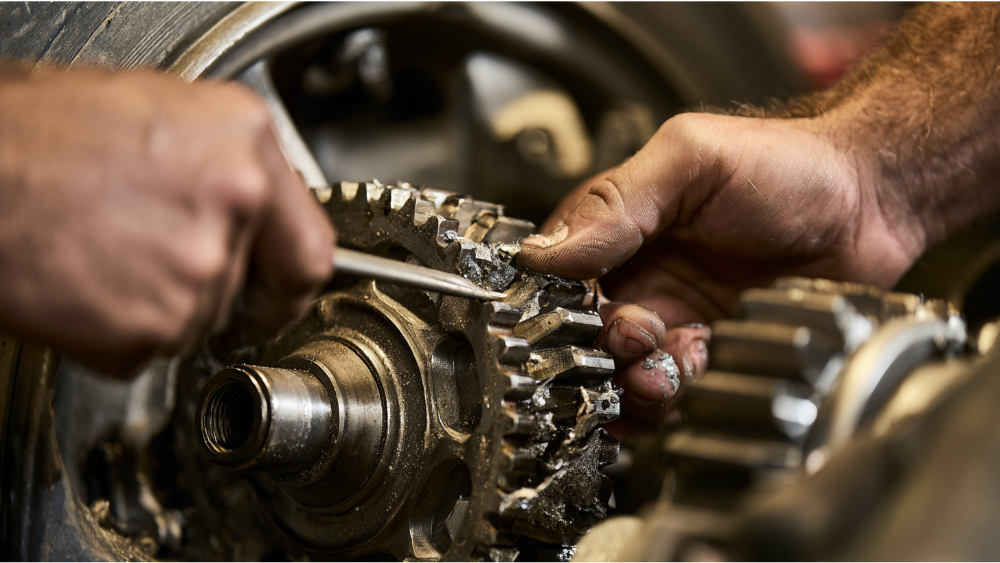
Stop and call for assistance if you have:
- Gear grinding or banging from a drive axle
- Binding, wheel hop, or poor handling under power
- Excessive vibrations at high speeds
- Smoke or a strong burning gear oil smell
- Major fluid loss or sudden loss of drive
Those are serious issues, not something to nurse to the next terminal. Schedule promptly if you have a new light whine, an occasional clunk, a damp seal area, one drive axle running hotter than the other, or a lock that engages intermittently.
No symptom list online can tell you whether your vehicle is safe to move. Under 49 CFR 396.7, a commercial vehicle must not be operated in a condition likely to cause an accident or breakdown. Call (253) 449-0100 and describe what the truck is doing before you roll another mile.
Failing Front Carrier or Rear? Which Differential Is Causing the Problem
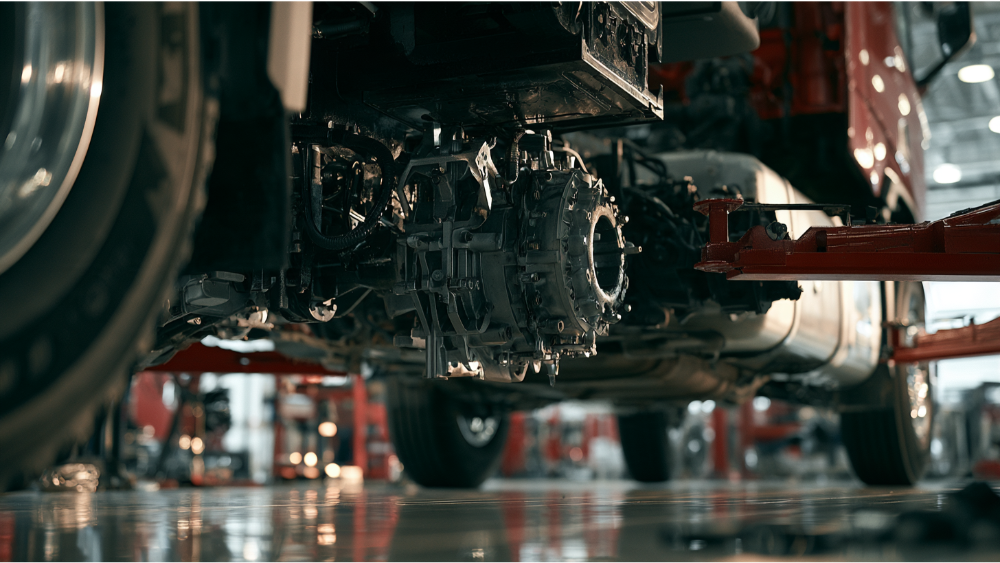
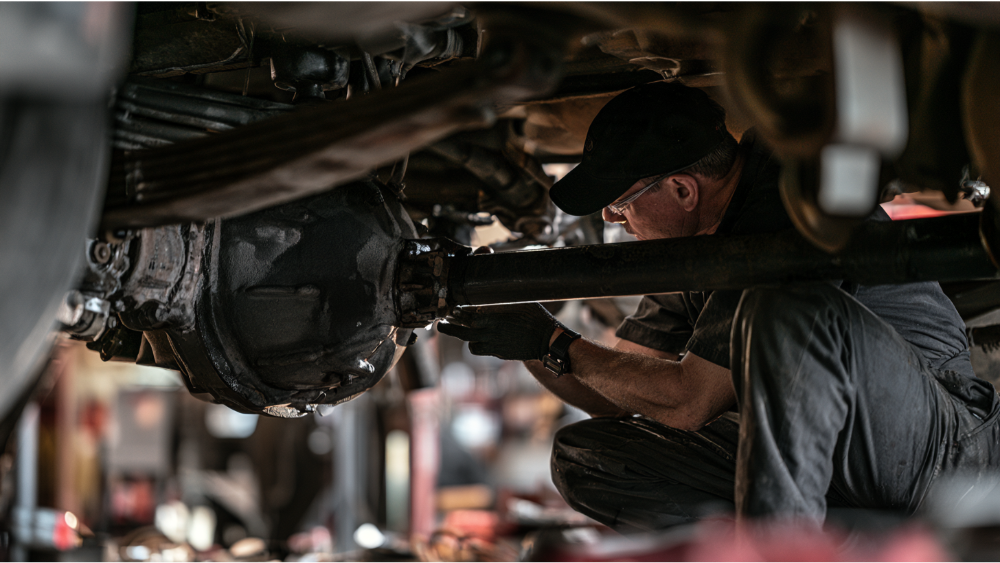
A differential transfers power from the engine, through the transmission and driveshaft, into the axle shafts, while letting the tires rotate at different speeds through a turn. Inside the housing sits the differential system you pay for when it fails: ring and pinion, spider and side gears, and the bearings holding those internal components in position. A car’s differential is simpler. Front wheel drive vehicles bury it in the transaxle, and four wheel drive vehicles run two differentials plus a transfer case. A tandem-drive Class 8 truck has a forward carrier, a rear carrier, and an inter-axle differential, the power divider, splitting torque between both drive axles. A failing front carrier sounds like a failing rear one from the driver’s seat, which is why generic advice sends people chasing the wrong axle.
Common Symptoms of a Bad Differential, by When They Happen
| What You Hear or Feel | When It Happens | Possible Source | Next Action |
|---|---|---|---|
| Whine that rises with throttle | Under acceleration | Pinion bearing, backlash, worn gears | Schedule inspection |
| Humming or howl on coast | Deceleration | Bearing preload, pinion depth | Schedule inspection |
| Clunk on throttle change | Direction or load change | Excess backlash, U joints, yokes | Schedule inspection |
| Noise or binding while turning corners | Turning, tight maneuvers | Side gears, lock engaged, mismatched tires | Stop if binding |
| Vibration under heavy loads only | Loaded, grades | Bearings, driveshaft, damaged gears | Schedule inspection |
| Lock will not engage or release | Any | Actuator, air supply, internal damage | Stop if axle binds |
Humming noises that climb with road speed and hold steady regardless of pavement point at the driveline, not the tires. Noise that tracks engine rpm instead of road speed is not coming from the differential at all. If you feel vibrations only under load, suspect bearing preload, backlash, or worn differential gears carrying torque they can no longer handle. Most drivers hear it before they see it. No row above is a diagnosis by itself. It tells a technician where to look.
Oil Leaks, Burning Smell, and Contaminated Fluid
Gear oil leaves through the pinion seal, the carrier-to-housing joint, a cracked housing, a damaged plug, or past a good seal when a clogged breather is no longer working properly and pressurizes the housing. Even a tiny leak matters, because an axle that runs low burns bearings before anyone notices fluid pooling under the truck. Meritor’s diagnostic flowchart treats milky or brownish lubricant as water entering the axle, and silvery lubricant as possible metal off the internal gears, which calls for oil analysis. Contaminated fluid does not prove the carrier is ruined on its own. Amount, particle size, and trend matter. Topping off without finding why the fluid left is not a repair, and under 49 CFR 396.5 a vehicle has to be properly lubricated and free of oil and grease leaks.
What Causes Differential Trouble in a Heavy-Duty Truck?
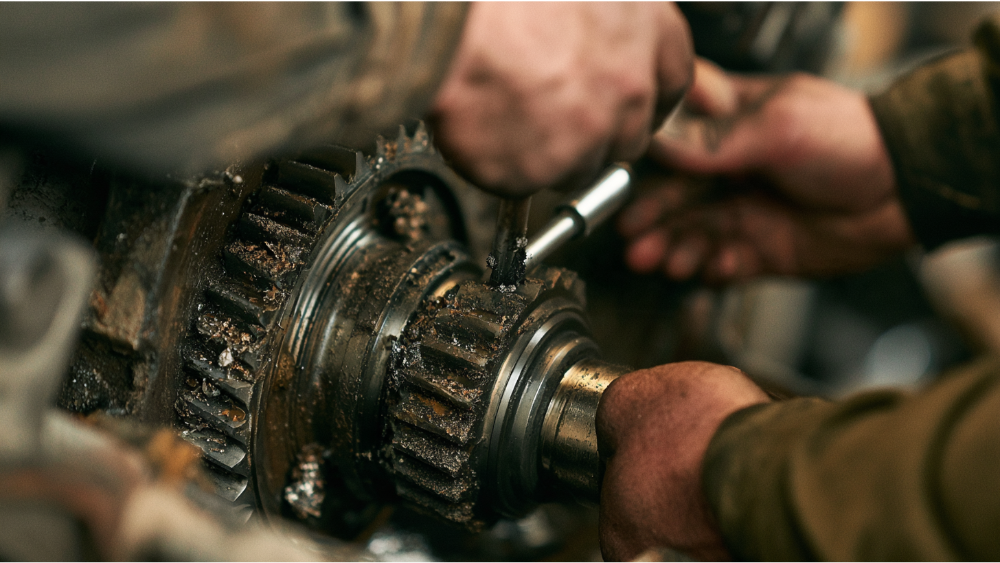
- Lubrication loss from a leak or an underfill after service.
- Wrong oil or viscosity. Meritor hypoid drive axles require GL-5 with extreme-pressure additives, and single-grade 75W is not approved above 40°F/4°C.
- Contamination from water, dirt, or metal.
- Normal wear on pinion and differential bearings, accelerated by heat and heavy loads.
- Damaged ring and pinion or differential gears.
- Incorrect backlash, pinion depth, or preload left by a prior repair.
- Shock loading and spinout that put too much stress on the ring gear.
- Differential lock misuse.
- Mismatched tire diameters or excessive tyre wear across the drive wheels, forcing inter-axle components to fight each other.
- Overloading or axle misapplication for the duty cycle.
Dana’s failure-analysis guidance makes the point that matters most: replace the parts without correcting what broke them and you buy the same broken differential twice.
Differential Lock Misuse: How Drivers Break Differential Parts
Locks exist for adverse traction. Dana says not to engage a lock while the wheels are spinning, and not to run locked when traction is good. Run the inter-axle lock with mismatched tire diameters and you build torque between the axles, raise temperature, degrade the oil, and end up with a damaged differential. One current Peterbilt operator manual lists a 25 mph / 40 km/h limit while locked. Follow the manual for your exact truck and axle, not a number from a blog.
It May Not Be the Differential
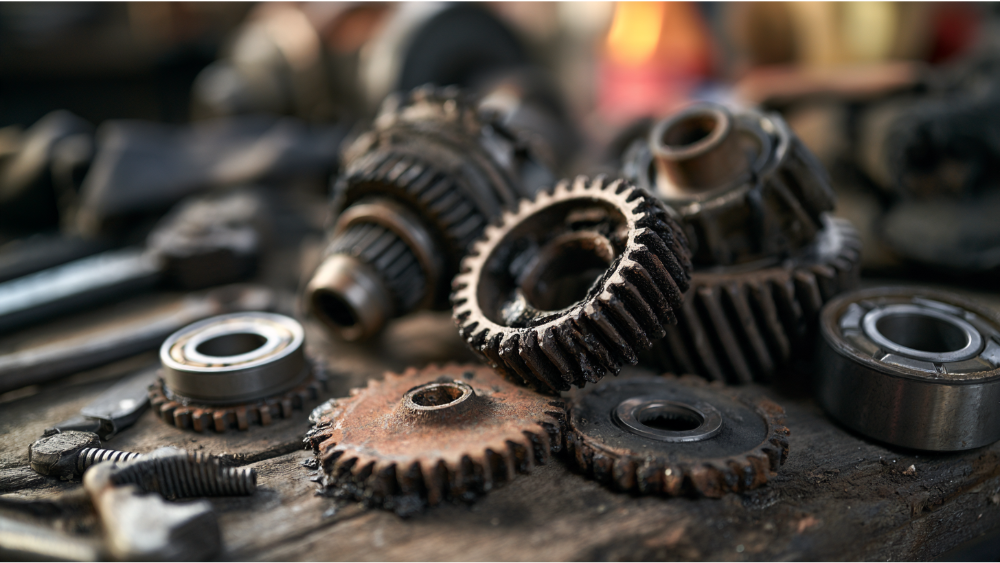
Plenty of complaints that read like a bad differential turn out to be something else. Rough wheel bearings and wheel ends produce speed-related howl. Worn U joints, driveshaft imbalance, or phasing errors produce clunk and vibration. Noise from the front tires changes with pavement type; differential noise generally does not. Transmission problems, ride height, axle alignment, and a brake dragging at one of the rear wheels all show up in the same complaint. Uneven tire wear on the drive axles is a secondary clue only. A shop that names a part from a parking-lot listen is guessing with your money.
How Differential Problems Should Be Diagnosed
Here is the workflow you can hold any shop to before anyone opens your differential:
- Confirm the complaint: road speed, load, throttle position, temperature, which axle.
- External inspection: leaks, cracked housing, plugs, breather, tire diameters, uneven wear.
- Check lubricant level, specification, and condition, with oil analysis when contamination is suspected.
- Inspect the surrounding driveline: driveshaft, U joints, wheels, wheel ends.
- Check pinion end play, bearing condition, backlash, and tooth pattern when teardown is justified.
- Identify the initiating cause, then deliver an itemized estimate in writing before a single bolt is turned.
That is what structured, verified workflows and certified technicians are for. Catching a seal early is what keeps a small defect from becoming costly repairs. No surprises, no upsell.
Differential Repair Options: Rebuild or Replacement?
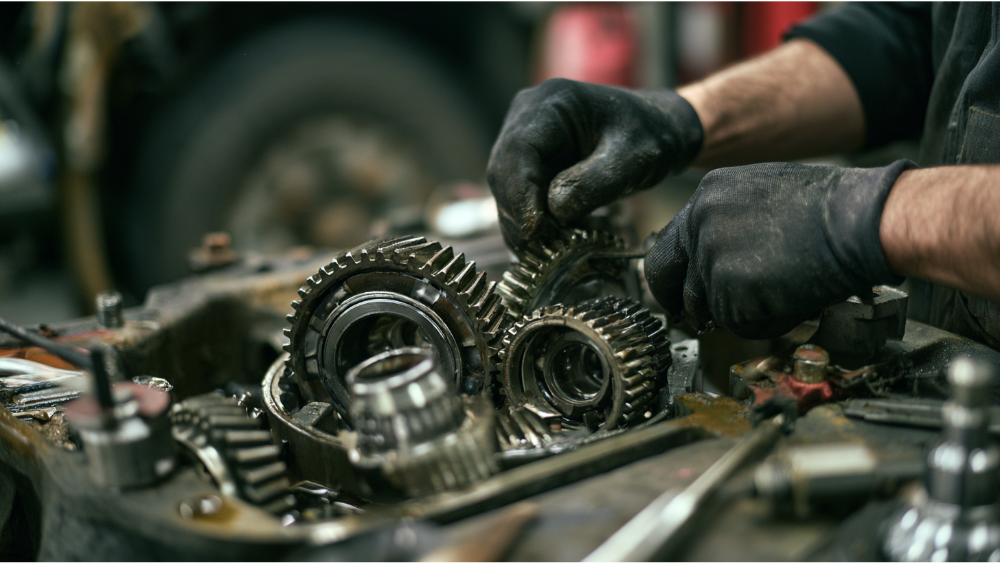
Repair options fall into tiers. Seal, breather, or plug work caught early is the smallest job, though sealing some leaks still requires pulling axle shafts at the wheels. Next is replacing bearings or individual gears, with correct setup and preload. Beyond that is a full rebuild of the carrier with gears, bearings, and seals reset to spec. At the far end sits a remanufactured carrier, or an entire differential replaced because the housing is severely damaged. The earlier the diagnosis is correct, the smaller the tier.
How Often Should Differential Fluid Be Changed?
The 30,000 to 60,000 mile figure you see everywhere comes from passenger-vehicle content and does not transfer to a heavy-duty drive axle. Meritor’s 2021 manual lists approved synthetic intervals from 100,000 to 500,000 miles and two to four years depending on application, with level checks as often as every 1,000 miles in continuous heavy-duty service. Read your axle tag and current OEM literature for specification, viscosity, capacity, and interval, because approved lubricants affect axle warranty coverage.
Preventing Repeat Differential Trouble

Build the drive axles into your PM service schedule based on the OEM and axle manufacturer, not a round number someone picked. Inspect seals, breathers, and driveline components at every PM. Use lubricant analysis to track wear as a trend before a carrier comes apart. Match tire diameters across all drive wheels. Train drivers on correct lock use. Keep records so a fleet manager can see when a truck fails twice for the same reason.
DOT Compliance and Fleet Documentation
49 CFR 396.3 requires systematic inspection, repair, and maintenance, and FMCSA reads those schedules as fleet- and vehicle-specific. 49 CFR 396.5 requires proper lubrication and freedom from oil and grease leaks, which is where a weeping pinion seal stops being only a mechanical issue. Document the defect report, the diagnosis, the repair, and the return-to-service decision.
Frequently Asked Questions
What are the most common signs of a bad differential?
A whine or howl tied to road speed, a clunk on throttle change, vibration under load, gear oil leaks, excess heat or a burning smell, and a lock that will not engage or release.
Can you drive with a failed differential?
It depends on severity. Grinding, binding at the wheels, severe vibration, or major fluid loss means stop. Federal rules prohibit operating a vehicle in a condition likely to cause an accident or breakdown, so the call belongs to a technician who has inspected it.
Is it expensive to fix a differential?
Cost tracks the repair tier. A seal caught early is a far smaller job than a differential that ran low on fluid for a month. You get an itemized estimate before work begins.
Get a Straight Answer on Your Differential
Torpedo Truck Repair was built from inside real trucking operations, not opened as a traditional shop. Structured diagnosis with OEM diagnostic software and certified technicians, an itemized estimate before work starts, and a same-day service focus when possible. Licensed and insured, DOT certified, Class 6 through 8 trucks and trailers. Call Now: (253) 449-0100, 24/7 emergency dispatch. Shop hours Mon-Fri 8:00 AM to 5:30 PM. Fleet readers: request a service quote, under 60 seconds, no obligation.