Key Takeaway
The fuel pump in a diesel engine works in two stages: a low-pressure supply pump moves fuel from the tank to the high-pressure injection pump, which charges the common rail to pressures as high as 39,160 psi on modern systems. Hard starts, power loss, and low-pressure codes point to the fuel system but never confirm the pump failed. A shop must test inlet pressure, rail pressure, aeration, and return flow before condemning any component.
A diesel engine may use a low-pressure lift or supply pump, a high-pressure injection pump, or both. The fuel pump in a diesel engine is really a chain: the supply side pulls filtered fuel from the tank and keeps volume moving toward the high-pressure stage. On a common rail engine, the high-pressure pump charges the fuel rail so electronically controlled injectors can deliver the right quantity at the right moment, as Bosch describes the architecture. There is no carburetor anywhere in this. Metering happens inside the fuel injection system.
If you’re chasing a hard start, power loss under load, or a low fuel pressure code, the pump is a suspect. It is not a conclusion. Here’s how the system actually works, and how a shop proves which part failed before anyone orders parts.
What Does the Fuel Pump in a Diesel Engine Do?

Get the vocabulary straight first, because most confusion starts here.
- Lift pump / feed pump / supply pump / transfer pump: low-pressure stage. Its job is volume and inlet pressure, not injection pressure.
- Injection pump / high-pressure fuel pump: builds the fuel pressure injection actually requires.
- Common rail: stores pressurized fuel so injectors can draw from a charged reservoir.
- Injectors: ECU-controlled delivery, timing and quantity per cylinder.
- Unit pump / unit injector: a per-cylinder arrangement used on some engines instead of a shared rail.
There are different types of diesel fuel pumps, so “diesel fuel pump” is not one universal part. Volvo D11 and D13, Mack MP7 and MP8, Cummins-family engines, Detroit, and International A26 and MX-13 platforms are not laid out identically. That’s why the engine serial number matters more than a generic parts diagram.
How Does Fuel Supply Move From the Fuel Tank to the Cylinder?
The path, in order:
Tank → pickup → water separator / primary filter → supply pump → secondary filter → high-pressure pump → rail → injectors → return circuit
Exact component order varies by engine family. The logic does not.
Filtration exists because injection components are built to tight tolerances. Heavy-duty fuel filters pull particles down into the 2 to 10 micron range and remove water as part of the same job. Cummins is blunt about it: dirt or water in the fuel can severely damage the pump and injectors.
Downstream, fuel is injected into the combustion chamber as the piston nears top dead center. Compression heat starts combustion. No spark involved.
The return circuit is a working part of the system, not a drain line. Diesel fuel pumps need proper return flow to operate correctly, and the circuit carries excess fuel back to the fuel tank. Excessive return is a diagnostic clue in its own right.
Low-Pressure Supply Pump vs. High-Pressure Common Rail Pump: Where Fuel Pressure Comes From
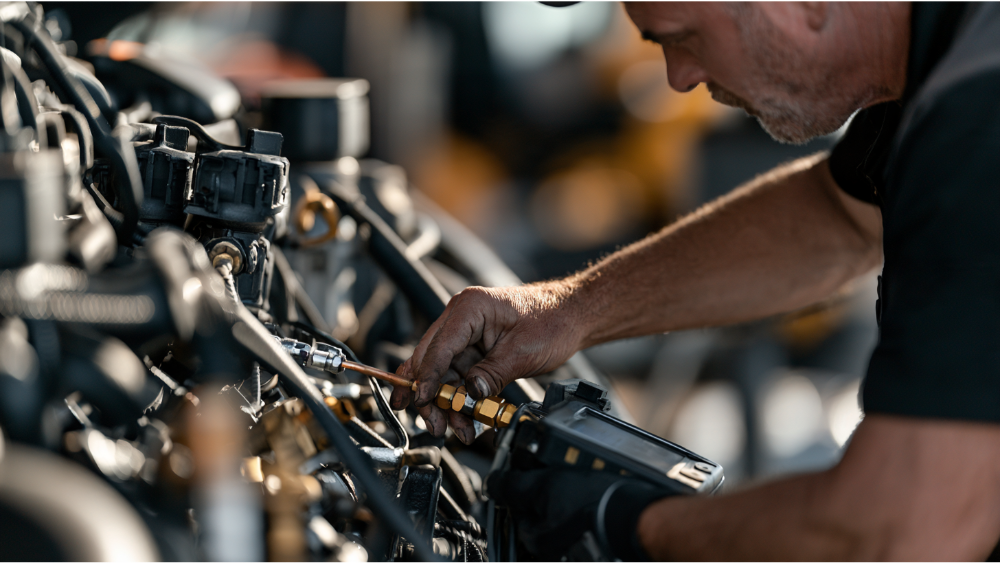
What the low-pressure fuel supply side does
It maintains volume and inlet pressure to the high-pressure stage. Designs are either an electric fuel pump or an engine-driven mechanical pump. The numbers are modest: mechanical lift and transfer pumps often work in the 10 to 15 psi range as a general example, not a spec for your engine.
This side causes more misdiagnoses than any other. A restriction, a plugged filter, or an air leak on the low pressure side starves and cavitates the high-pressure pump. The truck then behaves exactly like it has a failed injection pump.
What the high-pressure pump does
It builds and maintains rail pressure. On common rail systems, pressure generation is separated from injection timing, so the ECU, rail pressure sensor, and pressure control valve decide quantity and timing independently of pump stroke and engine speed.
Pressure figures only mean something attached to a system. The 2027 Volvo D13 lists a maximum injection pressure of 35,000 psi (2,400 bar). A cited Bosch common-rail system reaches up to 2,700 bar, roughly 39,160 psi, and can fire up to ten separate injections in one injection cycle, which is how modern engines hold power targets with lower emissions. Older architectures differ again: inline pumps use one plunger element per cylinder, rotary distributor pumps use a single pressure mechanism serving multiple cylinders, and in plunger-type designs the downward stroke draws fuel in while the opposing stroke develops pressure anywhere from about 3,600 to 26,100 psi depending on design.
There is no universal “normal” rail pressure and no universal normal lift pump pressure. Requirements scale with engine size and platform. Any shop quoting one number without naming your engine is guessing.
What Are the Symptoms of a Bad Fuel Pump in a Diesel Engine?
- Extended cranking, hard start, or no start
- Power loss, most noticeable under load
- Hesitation or surging
- Rough running or misfire
- Stalling
- Falling fuel economy on familiar runs
- Check engine light with low-fuel-pressure codes
- Diesel you can see or smell
- Water or metal found in a filter
These signs justify testing. They do not prove the pump is bad. A high-pressure pump replaced on a guess is downtime paid twice: once for the wrong repair, again for the real one.
Problems That Look Like a Failing Diesel Fuel Pump

- Restricted or plugged fuel filter starving the high-pressure stage
- Water or contaminated diesel damaging fuel-lubricated parts and causing premature wear
- Air entering the low-pressure side, which produces starvation and cavitation
- Restricted pickup or fuel lines limiting volume under load
- Weak electrical supply, relay, wiring, or ground on an electric fuel pump
- Faulty rail pressure sensor or pressure control valve reporting or commanding wrong
- Leaking pressure-relief valve bleeding rail pressure off
- Excessive injector return dumping pressure back to the tank
- Low cranking engine speed from batteries or starter
- Incorrect or degraded fuel
Low fuel pressure is a test result, not a diagnosis. Parts swapping is not diagnosis either.
How Does a Shop Confirm the Fuel Injection Pump Actually Failed?
OEM low-rail-pressure troubleshooting procedures work upstream first and condemn the pump last. The sequence:
- Identify the truck, engine family, and engine serial number.
- Verify fuel quantity and inspect for leaks.
- Pull codes and freeze-frame data with OEM-level diagnostic software.
- Compare commanded rail pressure against actual rail pressure.
- Check cranking speed.
- Inspect fuel filters for water, debris, or metal. Run from a known clean fuel source if needed.
- Test pump inlet pressure, low-pressure restriction, and aeration.
- Verify electrical supply and control signals.
- Test pressure control, relief, and return components, including injector return.
- Perform the engine-specific high pressure pump test.
- Verify the repair under operating load.
That’s the workflow our certified technicians follow with OEM diagnostic software. Structured, verified, no skipped steps, because a skipped step is the reason trucks come back.
Why this is not a roadside DIY check
High-pressure diesel penetrates skin and can cause severe or fatal injury. The risk is not theoretical. One published OEM recall procedure cites pressure reaching 2,000 bar (29,008 psi) and requires protective equipment and safe leak-inspection methods. Cummins prohibits loosening high-pressure fittings with the engine running and requires an application-specific depressurization wait after shutdown. Do not crack fuel lines on the vehicle to hunt a leak. Let a qualified diesel technician depressurize the system by procedure.
When metal shows up in the fuel
An internal high-pressure pump breakdown can send metallic debris downstream. That changes the repair scope completely: rails, injectors, lines, filter housings, the return circuit, and the tank may all require inspection under the engine maker’s procedure. Not every failed pump contaminates the system. When it does, replacing the pump alone leaves the damage in place.
How to Protect the Fuel Injection System and Prevent Premature Pump Failure

- Buy fuel from well-maintained, reputable sources
- Follow the engine-specific filter schedule (there is no universal mileage)
- Drain water separators as directed and keep fuel heaters working through cold months
- Act on water-in-fuel warnings immediately, not at the next stop
- Keep caps, transfer equipment, and storage tanks clean
- Use only approved fuel and blends, and skip unapproved additives sold as lubricity boosters
- Investigate repeated filter plugging instead of just changing filters
- Put fuel system checks in your PM records
On-road diesel for U.S. diesel vehicles is ULSD at a 15 ppm sulfur limit (EPA). Blends up to B5 can fall under ASTM D975, while B6 through B20 must meet ASTM D7467, so confirm your engine maker’s fuel requirements before running higher blends (DOE). Fuel system inspection belongs in every Preventive Maintenance PM Service interval, and on fleet units it belongs in the documentation.
What a Transparent Fuel System Repair Estimate Should Show
Ask any shop these questions before you authorize work:
- Which pump or fuel system stage failed?
- What was commanded pressure versus actual pressure?
- Was low-pressure supply tested?
- Was the filter inspected for water or metal?
- Were aeration and restriction ruled out?
- Was excessive injector return tested?
- Is contamination present anywhere else in the system?
- What exactly is included in the itemized estimate?
Fuel System Repair And Diagnostics and Diesel Engine Repair And Maintenance at Torpedo Truck Repair cover Class 6 through 8 platforms and diesel pickups. You get a full itemized estimate before a single bolt is turned. No surprises, no upsell, and same-day service focus when the job allows it. Call Now: (253) 449-0100. Or Request Service Quote online. Takes under 60 seconds. No obligation.
Frequently Asked Questions
How many fuel pumps does a diesel engine have?
Most modern engines use two stages: a low-pressure supply pump and a high-pressure injection pump. Some architectures use unit pumps, one per cylinder, with no shared rail. Confirm by engine family and serial number.
How do you know if your diesel fuel pump is bad?
Not from symptoms. You know from measured pump inlet pressure, commanded versus actual rail pressure, aeration and restriction testing, return flow measurement, and filter inspection for water or metal.
Can a clogged fuel filter cause low rail pressure?
Yes. OEM troubleshooting procedures specifically direct technicians to inspect the filter, check for aeration, and test low-pressure restriction before condemning the high-pressure pump.
How much does it cost to replace a fuel pump on a diesel engine?
There’s no honest published range. Scope depends on which stage failed, the engine platform, access, and whether contamination reached the rail, injectors, lines, filter housings, or tank. Call (253) 449-0100 for an itemized estimate.